It’s Not Just a Hike. It’s a 4 Day Conversation with Your Inner Critic
Here’s what most people don’t understand about the Wales 7 Summits Challenge: the physical challenge is the easy part.
Yes, you’ll scramble up Tryfan’s north ridge with exposure that demands your full attention. Yes, you’ll log 18 kilometers and 1,400 meters of ascent on day two. Yes, your legs will be tired, your boots will be wet, and your shoulders will ache from carrying a pack for 8 hours.
But none of that is the real challenge.
The real challenge starts somewhere around hour four on day one, when your inner critic begins to speak up. It gets louder on day two when you’re already fatigued but there are three more summits ahead. And by day three, when you’re climbing Moel Siabod on legs that are screaming for rest, that voice is having a full conversation with you about why you should stop, why this is too hard, why you’re not cut out for this.
That conversation, the one between you and the part of your brain that wants comfort, that wants easy, that wants to quit, that’s what the Wales 7 Summits Challenge is actually about.
And if you can manage that conversation properly over four days, you’ll walk away with a mental blueprint that applies to everything else in your life.
Day One: When the Doubt Starts
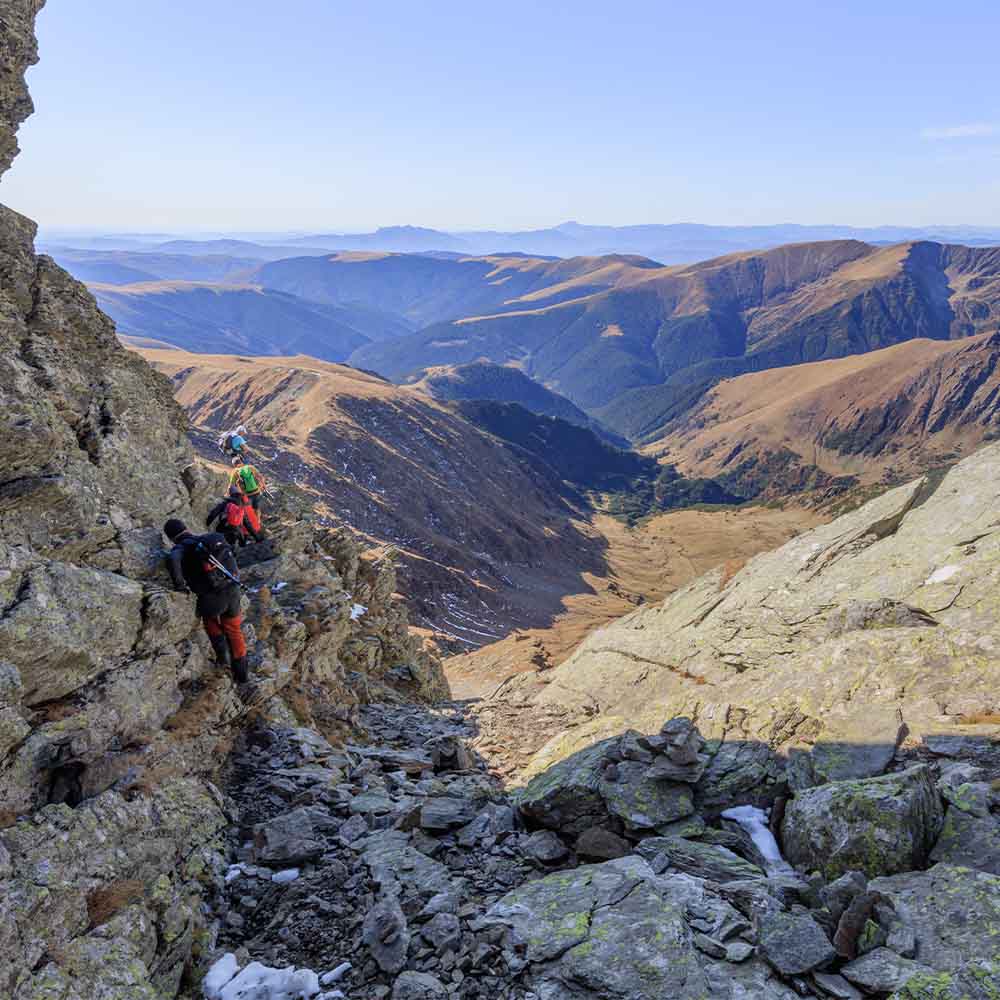
We begin at 9:00 AM from Ogwen Cottage. The first summit is Tryfan. It’s 915 meters of Grade 1 scrambling up the north ridge. This isn’t a walk. Your hands are involved. The exposure is real. A slip has consequences.
Most people are nervous at this point. That’s normal. What’s interesting is what happens around hour three.
You’re moving across Glyder Fach’s boulder field, making your way toward the famous Cantilever Stone. Your legs are starting to feel the accumulated vertical. You’ve been on your feet for hours. And somewhere in the back of your mind, a small voice starts asking questions.
“How many more summits are left today?”
“How am I going to do this for four days?”
“What if I can’t keep up?”
This is the first test. Not the scrambling. Not the exposure. Not the technical difficulty. The test is whether you can hear that voice and keep moving anyway.
Because here’s the truth: that voice never goes away. It just gets louder or quieter depending on how you respond to it.
If you acknowledge it, thank it for its concern, and then redirect your focus to the next ten steps, it quiets down. If you engage with it, negotiate with it, start running scenarios about what might happen if you can’t finish, it gets louder and more insistent.
By the time we finish day one at 4:45 PM, three summits down, 1,100 meters of ascent completed, you’ve had your first real conversation with your inner critic. And you’ve learned something important: you can hear doubt and still move forward.
Day Two: When Your Body Questions Your Decisions
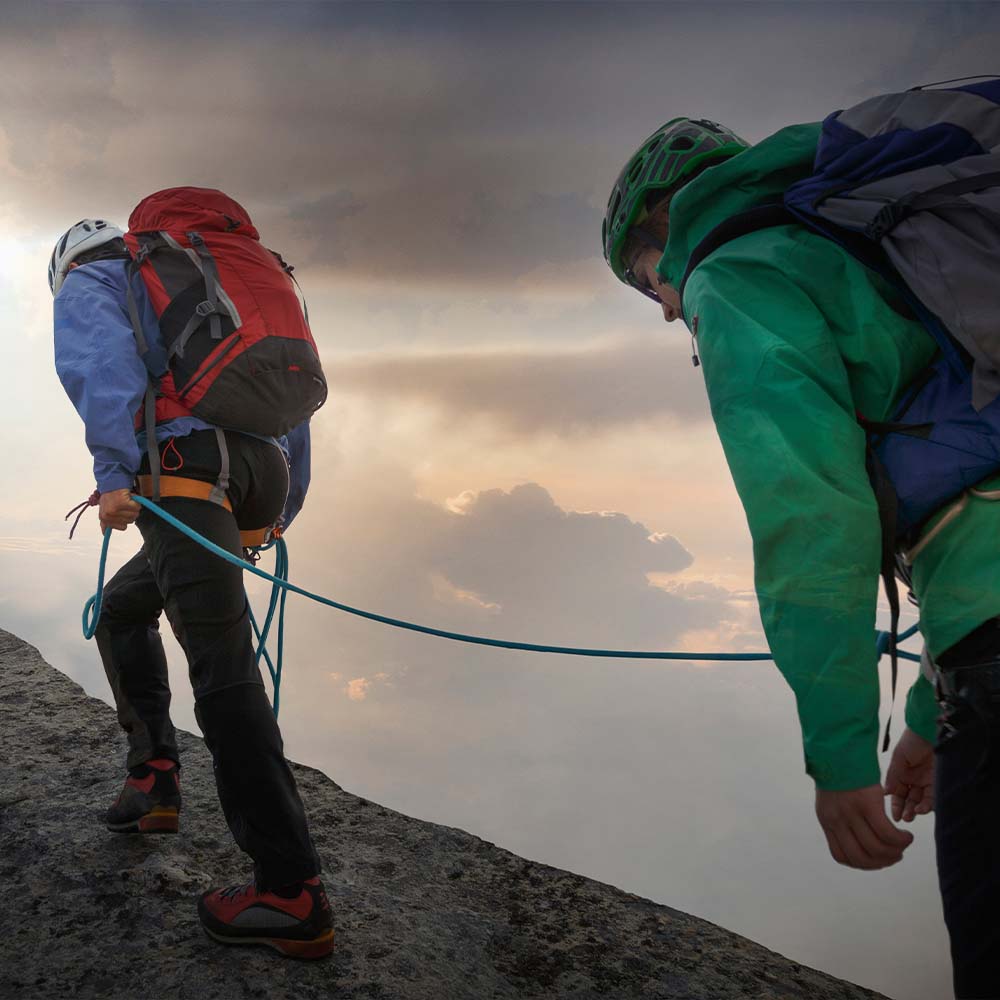
Day two is the grind. We’re summiting Snowdon (1,085m), Y Garn (947m), and Elidir Fawr (924m) in a single push. Total ascent: 1,400 meters. Total distance: 18 kilometers. Time on trail: 8 to 9 hours.
You start the day with legs that are already tired from yesterday. Your boots might still be damp. Your shoulders remember yesterday’s pack weight. And your mind knows exactly what’s coming.
This is where the mental game shifts.
On day one, you were fresh. You could push through discomfort with enthusiasm and adrenaline. On day two, that’s not available anymore. Now you’re operating on something different. You’re operating on commitment, on discipline, on the decision you made before you started this challenge.
We take the Pyg Track up to Snowdon’s summit. It’s a beautiful route. Well maintained, clear sight lines, steady gradient. But beauty doesn’t make it easier. Around hour five, when you’re somewhere between Y Garn and Elidir Fawr, your inner critic comes back. And this time, it’s not asking questions. It’s making statements.
“This was a mistake.”
“You’re not prepared for this.”
“Everyone else looks stronger than you.”
“You should stop before you get hurt.”
Here’s what I’ve learned after 25 years in the mountains: your inner critic is trying to protect you. It’s doing its job. Its job is to keep you safe, to conserve energy, to avoid unnecessary risk. The problem is that it defines “unnecessary risk” as anything that feels uncomfortable.
The mental skill you develop on day two is the ability to distinguish between real warning signs (pain, injury, genuine safety concerns) and mental noise (discomfort, fatigue, self doubt). This is not a trivial skill. This is the difference between people who achieve difficult things and people who don’t.
By the time you finish day two and return to the accommodation at 5:30 PM, you’re exhausted. But you’ve also learned that you can function well beyond the point where your mind first suggests stopping. That’s a valuable piece of information about yourself.
Day Three: When You Learn What You’re Actually Made Of
Day three is Moel Siabod. It’s “only” 872 meters. It’s “only” a 5 hour round trip. It’s “only” 720 meters of ascent.
Except you’re doing it on legs that have already climbed six summits. Your body is fatigued. Your mind knows you could just skip this one. Six out of seven is still impressive, right?
This is where the Wales 7 Summits Challenge becomes something more than a physical test. This is where it becomes a blueprint for how you handle life.
Because life is full of day three moments. Moments where you’ve already done a lot. Where you’re tired. Where stopping would be completely understandable. Where no one would judge you for saying “I’ve done enough.”
And the question isn’t whether you’re physically capable of continuing. The question is: what kind of person do you want to be?
Do you want to be someone who does 85% of difficult things? Or do you want to be someone who finishes what they start?
That’s the conversation you’re having with yourself on the approach to Moel Siabod. And it’s not happening in abstract philosophical terms. It’s happening in your quads, in your lungs, in the blister forming on your heel, in the wet spot on your back where your pack has been sitting for three days.
We climb via the Daear Ddu Ridge. It’s a beautiful approach with optional scrambling sections. The terrain demands attention. Your mind can’t wander to self pity because you need to focus on foot placement, on route finding, on the actual work of moving upward.
And somewhere around hour three, something shifts.
The inner critic goes quiet. Not because you’ve defeated it or proven it wrong. But because you’ve stopped arguing with it. You’ve accepted that yes, this is hard. Yes, you’re tired. Yes, it would be easier to stop. And you’re doing it anyway.
When you reach the summit of Moel Siabod, seven of seven complete, you’ve done more than climb a mountain. You’ve proven to yourself that you can manage discomfort, that you can persist through fatigue, that you can hear doubt and still move forward.
That’s the mental blueprint. And it applies to everything.
The Gear and Grit Reality: What Actually Matters
Let’s talk about what this challenge requires. Not just the gear list, though that matters, but the internal equipment you need to succeed.
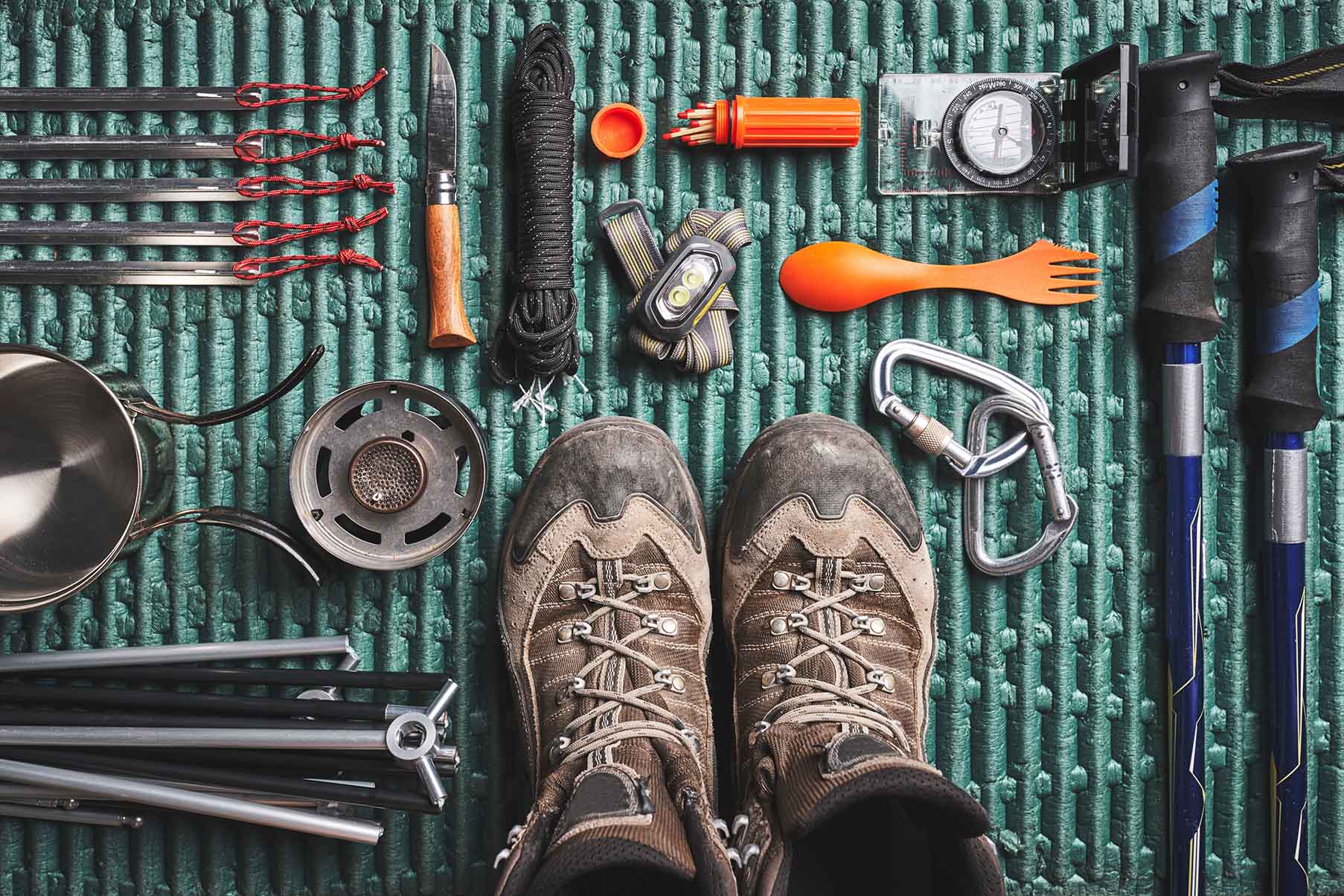
The Physical Gear:
- Robust hiking boots (well broken in, because blisters on day one ruin day two)
- Waterproof jacket and trousers (Welsh weather is unpredictable)
- Warm layers (temperatures drop on ridges)
- Head torch with spare batteries (early starts and late finishes)
- 2 to 3 liters water capacity
- High energy snacks for sustained effort
- Personal first aid kit (especially blister management)
- Map and compass (backup navigation, guides will lead)
This gear is non negotiable. Show up without proper boots and you’ll learn an expensive lesson about preparation.
The Mental Gear: This is what actually determines success.
1. The Ability to Sit with Discomfort
Discomfort is not an emergency. Tired legs are not a crisis. Wet feet are annoying but manageable. The mental skill here is distinguishing between “this is unpleasant” and “this is dangerous.” Most people bail out of difficult things because they conflate discomfort with genuine problems.
On the Wales 7 Summits, you’ll spend 25 plus hours in various states of discomfort. Tired. Wet. Hungry. Sore. The challenge is to experience those sensations without panicking, without catastrophizing, without deciding that feeling uncomfortable means something has gone wrong.
Nothing has gone wrong. This is just what hard things feel like.
2. The Capacity to Refocus
Your mind will wander. It will drift to how much further you have to go, how tired you are, how much easier it would be to stop. The mental skill is catching that drift and redirecting your attention to something productive: the next ten steps, your breathing rhythm, the scenery, the person hiking ahead of you.
This isn’t about positive thinking or motivation. It’s about attention management. Where you direct your focus determines your experience. Focus on how hard this is and it gets harder. Focus on the next small step and it becomes manageable.
3. The Willingness to Keep Moving When Stopping Would Be Easier
This is the core skill. Everything else builds toward this.
There will be moments, many moments, where stopping would be completely justified. You’re tired. You’ve done a lot already. No one would judge you for calling it.
The mental skill is the ability to hear that option and choose to keep moving anyway. Not because you’re tough or special or better than anyone else. But because you made a commitment and you’re seeing it through.
This translates directly to every other difficult thing you’ll ever attempt. Starting a business. Raising kids. Maintaining a relationship. Training for a marathon. Building a career. All of it involves moments where stopping would be easier and continuing requires you to override your brain’s preference for comfort.
The Wales 7 Summits gives you four days to practice that skill. And once you’ve practiced it successfully, you carry it with you everywhere.
What the Inner Conversation Actually Sounds Like
Let me give you the unvarnished version of what goes through your head during this challenge. Because the marketing materials talk about “testing your limits” and “pushing beyond your comfort zone,” but they don’t tell you what that actually feels like in real time.
Hour 1: This is great. I’m excited. The weather’s good. The group is friendly. I’m glad I’m here.
Hour 3: Okay, this is harder than I expected. But I’m managing. Just need to find my rhythm.
Hour 5: My legs are tired. How many more summits today? Oh right, one more. I can do one more.
Hour 7 (Day 1 evening): I’m exhausted. Tomorrow is the big day. Three summits. Can I actually do this?
Hour 10 (Day 2 morning): My legs are sore from yesterday. We haven’t even started climbing yet and I’m already tired. This is going to be brutal.
Hour 15 (Day 2, mid afternoon): I hate this. Why did I sign up for this? Everyone else seems fine. I’m the weak one. I should quit.
Hour 17 (Day 2, approaching final summit): Okay, just this last one. Then I’m done for today. I can do one more climb. Just one more.
Hour 18 (Day 2, finished): I can’t believe I just did that. Three summits. 1,400 meters. On tired legs. Okay, I’m stronger than I thought.
Hour 22 (Day 3 morning): I could just skip today. Six out of seven is still impressive. My legs are destroyed. I’ve already proven myself.
Hour 24 (Day 3, climbing): No. I’m finishing this. I didn’t come here to do 85%. Seven summits. That’s what I signed up for.
Hour 27 (Day 3, Moel Siabod summit): I did it. Seven of seven. I actually did it.
That’s the conversation. It’s not heroic. It’s not inspiring. It’s just honest. And the mental skill you develop is the ability to hear all of it, the doubt, the fatigue, the desire to quit, and keep moving anyway.
Why This Matters Beyond the Mountains
You might be reading this thinking: “Okay, but I’m not a mountaineer. Why do I care about managing my inner critic on a Welsh hillside?”
Fair question. Here’s why it matters.
The skills you develop on the Wales 7 Summits Challenge, managing discomfort, refocusing attention, persisting when stopping would be easier, these are the exact skills required for any difficult undertaking.
In Business: You’re building a company. Year two is harder than year one. Revenue is growing but not fast enough. You’re working 70 hour weeks. You’re questioning whether this was a good idea. The voice in your head is saying “maybe it’s time to get a real job.” The ability to hear that voice and keep building anyway, that’s the same skill you practiced on day two of the Wales 7 Summits.
In Relationships: You’re in a long term partnership. The initial excitement has worn off. You’re dealing with real problems. Finances, kids, aging parents, health issues. The voice in your head is saying “maybe this would be easier with someone else.” The ability to hear that voice, acknowledge it, and recommit to the relationship anyway, that’s the same skill you practiced on day three when you climbed Moel Siabod on tired legs.
In Personal Health: You’re six months into a training program. You’ve lost some weight but progress has stalled. You’re tired of meal prepping. You’re sick of early morning runs. The voice in your head is saying “you’ve done enough, you can stop now.” The ability to hear that voice and show up for your next training session anyway, that’s the same skill you practiced over four days in Snowdonia.
The Wales 7 Summits Challenge is not about the mountains. It’s about giving you a concentrated, compressed environment where you can practice the mental skills required for everything else that matters in your life.
Four days. Seven summits. One mental blueprint.
The Honest Truth About Who Should Attempt This
This challenge is not for everyone. And that’s not gatekeeping. It’s honesty.
You should attempt the Wales 7 Summits if:
- You’re willing to train seriously for 12 weeks
- You understand that discomfort is part of the process, not a sign that something is wrong
- You want to develop mental resilience, not just check off summits
- You’re comfortable with basic scrambling and exposure
- You can handle 8 hours of daily activity on consecutive days
- You value learning about yourself more than collecting achievements
You should not attempt this if:
- You expect constant external motivation
- You need luxury accommodation and gourmet meals
- You’re looking for an easy experience with impressive photos
- You haven’t trained properly and hope to “just get through it”
- You’re not willing to sit with discomfort
- You want a guided tour where everything is done for you
This isn’t about physical ability. Plenty of reasonably fit people fail this challenge because they’re not mentally prepared for sustained effort over multiple days. And plenty of people who aren’t elite athletes succeed because they’ve developed the mental skills to manage the internal conversation.
The physical challenge is manageable if you train. The mental challenge is what separates completers from non completers.
The 12 Week Training Plan: Building Your Foundation
Every participant receives a personalized 12 week training program. This isn’t optional. If you skip the training, you will suffer, and worse, you’ll hold back the group.
The program focuses on three elements:
Endurance: Long weekend hikes building to 6 to 8 hours with an 8kg pack. Steady state cardio in Zone 2. Time on your feet is more important than speed.
Strength: Weekly strength sessions protecting your joints for long descents. Developing muscle mass in your legs and core.
High Intensity Work: HIIT sessions twice weekly. Hill repeats, circuit training, interval work. Building your cardiac and respiratory capacity.
But here’s what the training plan actually does: it teaches you to show up when you don’t feel like it. To keep training when progress stalls. To maintain consistency when the initial excitement wears off.
The 12 week training plan is your first conversation with your inner critic. It starts long before you arrive in Wales. And if you can manage that conversation successfully, if you can train consistently even when it’s boring, even when you’re tired, even when you’d rather skip a session, then you’re already developing the mental blueprint that will carry you through four days on the mountains.
What You Actually Take Away
You’ll finish the Wales 7 Summits with a medal and a certificate. You’ll have photos from seven summits. You’ll have memories of Tryfan’s scrambling, Snowdon’s panoramic views, the camaraderie of the group.
But what you actually take away is more valuable than any of that.
You take away proof. Tangible, undeniable proof that you can manage your inner critic. That you can hear doubt and move forward anyway. That you can persist through discomfort without collapsing. That you can commit to something difficult and see it through.
You take away a mental blueprint for how you handle hard things. And once you have that blueprint, you can apply it everywhere.
The next time you’re attempting something difficult, anything difficult, and the voice in your head says “maybe you should quit,” you’ll remember standing on tired legs at the base of Moel Siabod, hearing that same voice, and choosing to climb anyway.
That memory becomes a reference point. A reminder that you’ve done hard things before and you can do them again.
Four days in Wales. Seven summits. One transformative conversation with yourself.
That’s what this is actually about.