4 Peaks. 1 Team. 24 Hours That Will Redefine What Your Team Can Achieve Together.
I’ve stood on the summit of Everest. I’ve pushed through the death zone on K2. But some of the most powerful moments of collective strength I’ve witnessed haven’t happened at 8,000 meters—they’ve unfolded on Irish mountainsides, where teams discover what they’re truly capable of when they lean on each other.
The Ireland National 4 Peaks Challenge isn’t designed to be easy. Over the course of roughly 24 hours, your team will summit all four of Ireland’s provincial high points: Slieve Donard (850m), Lugnaquilla (925m), Carrauntoohil (1,038m), and Mweelrea (814m). You’ll cover nearly 760 kilometers of driving between peaks, snatch moments of rest on the bus, and push your bodies and minds through fatigue, darkness, and doubt.
And that’s precisely the point.
Why Mountains Reveal What Conference Rooms Cannot
In over 25 years of leading expeditions across the world’s most challenging terrain, I’ve learned one fundamental truth: you don’t truly know your team until you’ve been uncomfortable together. Corporate team-building exercises have their place, but they operate in controlled environments with safety nets. Mountains don’t offer those luxuries.
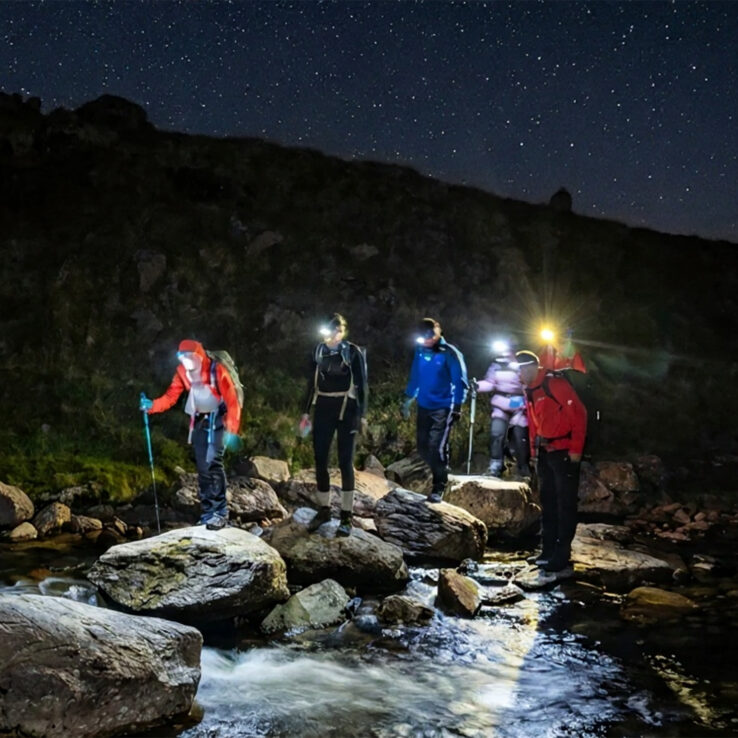
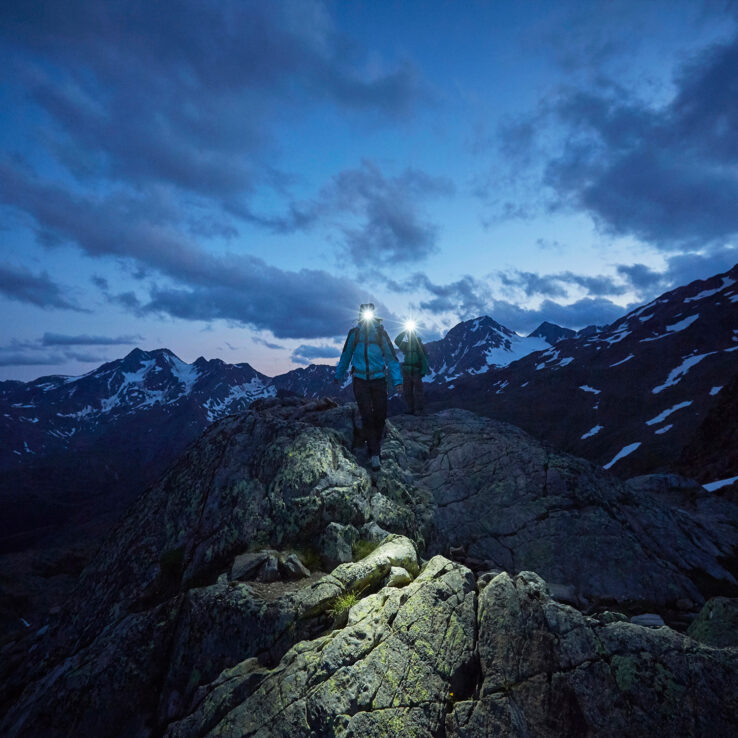
When you’re four hours into a night hike on Carrauntoohil, your headtorch beam barely piercing the Kerry darkness, and your legs are screaming for rest—that’s when authentic leadership emerges. That’s when the quiet colleague who rarely speaks up in meetings becomes the voice of encouragement that keeps everyone moving. That’s when the competitive sales manager learns that individual glory means nothing if the team doesn’t make it together.
“Collective strength isn’t just about pulling together when things are easy,” I tell every group at our pre-challenge briefing at Slieve Donard carpark. “It’s about what happens when you’re exhausted, when the mountain feels impossible, and when the only thing keeping you going is the person hiking beside you.”
The Anatomy of a Team-Forging Challenge
Hour 1-4: Slieve Donard and the Psychology of Fresh Starts
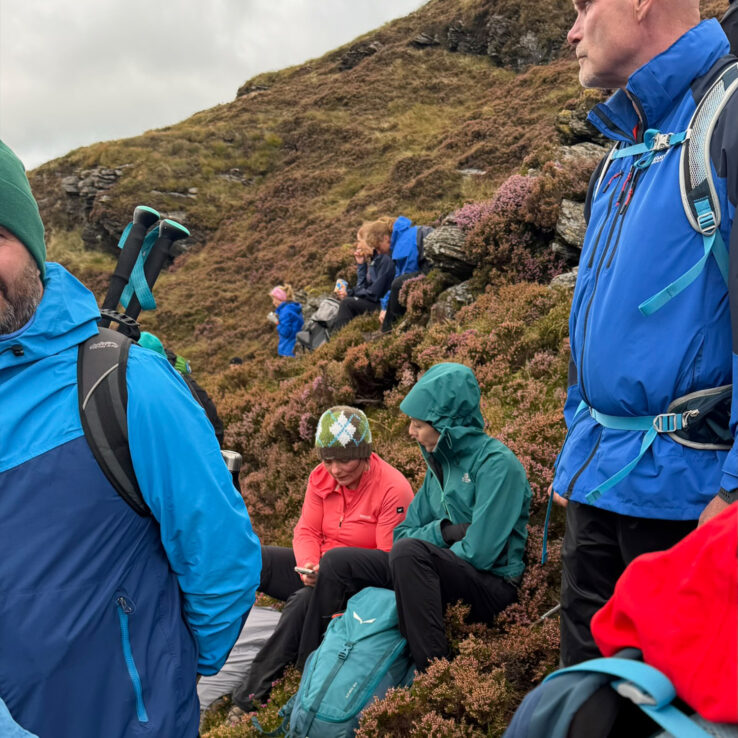
At 8:00 AM, your team begins the ascent of Slieve Donard in Northern Ireland’s Mourne Mountains. Energy is high. Spirits are elevated. The four-hour round trip feels achievable, even enjoyable. This is your team’s warm-up, but it’s also where we establish the rhythm that will carry through the entire challenge.
This is where I watch team dynamics begin to reveal themselves. Who sets the pace? Who checks on others? Who’s already burning through their energy reserves too quickly? As a mountain leader with exceptional navigational skills and wilderness first response training, I’m observing everything—not just the mountain conditions, but the human ones.
The Team Lesson: Success in mountains—and business—isn’t about explosive starts. It’s about sustainable pace, regular communication, and understanding that the team moves at the speed of its slowest member. Not because we have to, but because we choose to.
Hour 5-9: Lugnaquilla and the Reality Check
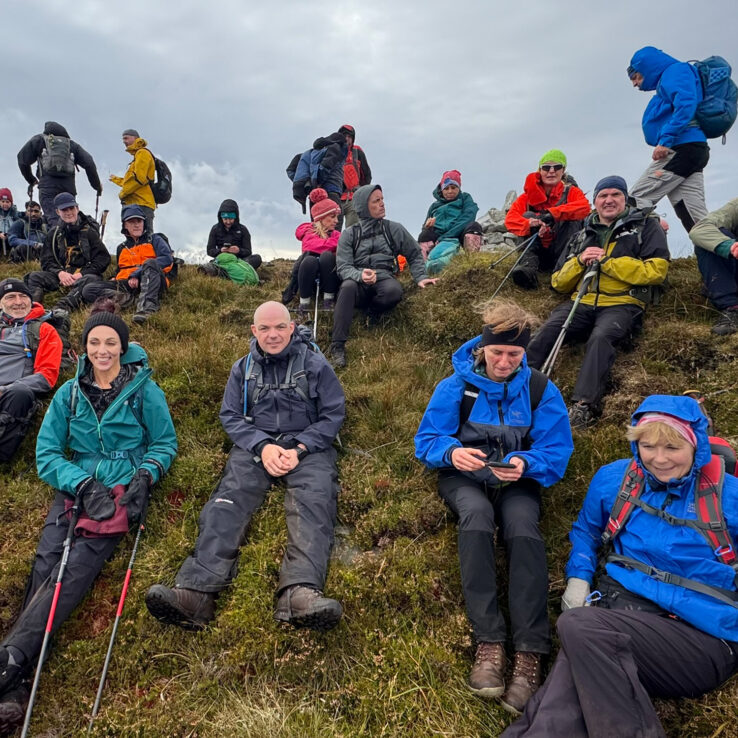
After loading gear into the bus trunk and a three-hour drive covering 199 kilometers, your team faces Lugnaquilla. This is where fatigue starts whispering its doubts. The five-hour round trip feels longer than it should. Bodies that felt strong on Slieve Donard now carry the weight of accumulated exertion.
This is the crucible moment for team dynamics. Do people retreat into individual suffering, or do they vocalize their struggles and ask for support? In my experience guiding groups through the world’s highest peaks, this is where true team culture gets tested.
I’ve seen corporate teams transform during this ascent. The manager who usually delegates everything finds themselves carrying extra water for a struggling teammate. The newest hire who was quiet during the first peak becomes the morale officer, sharing energy gels and cracking jokes that cut through the discomfort.
The Team Lesson: Mental strength isn’t about being invincible. It’s about vulnerability, honest communication, and the willingness to both give and receive support. Teams that talk through their struggles always outperform teams that suffer in silence.
Hour 10-16: Carrauntoohil by Night and the Trust Factor
After a five-hour bus journey, your team arrives at Ireland’s highest peak—at night. This six-hour round trip is where the National 4 Peaks Challenge earns its reputation. Ascending Carrauntoohil in darkness, with only your headtorch and the presence of your teammates, strips away every pretense.
You can’t fake engagement here. You can’t check your phone and pretend to be present. You can’t hide behind PowerPoint slides or email chains. It’s just you, the mountain, and the people you’re roped to—metaphorically and sometimes literally.
This is where I’ve witnessed the most profound team transformations. The darkness creates an equalizer. Job titles dissolve. Office hierarchies fade. What matters is who’s watching your footing on loose scree, who’s sharing their spare gloves when the Kerry wind cuts through, who’s remembering to remind everyone to hydrate and refuel.
“By failing to prepare, you are preparing to fail,” I remind teams constantly. But preparation isn’t just physical training and gear checklists. It’s preparing your team to operate as a cohesive unit when external conditions test every assumption about your collective capability.
The Team Lesson: Trust isn’t built in boardrooms. It’s forged in moments when failure has real consequences and success requires genuine interdependence. When you’ve navigated a mountain in darkness together, Monday morning challenges feel suddenly manageable.
Hour 17-24: Mweelrea and the Power of Shared Triumph
The final push. After another five-hour drive to County Mayo, your team—exhausted, depleted, running on collective will—faces the 4.5-hour round trip up Mweelrea. Some teams reach this point and wonder if they can continue. Every team that pushes through discovers something extraordinary about their capacity.
This is where I see teams transcend their individual limitations. Someone who was struggling on Carrauntoohil finds renewed energy by focusing on supporting others. The group develops an unspoken communication, reading each other’s needs before they’re verbalized. The team becomes something greater than the sum of its tired, determined parts.
When you return to that bus for the final five-hour journey back to Slieve Donard carpark, arriving around noon on Monday, something fundamental has shifted. You’ve proven—not theoretically, but tangibly—that your team can accomplish something extraordinary together.
The Team Lesson: Shared adversity creates shared identity. The teams that summit all four peaks don’t just earn medals—they earn a story, a reference point they’ll return to whenever future challenges feel insurmountable.
The Science Behind Mountain Team Building
As a qualified UIMLA International Mountain Leader with over 25 years of experience, I’ve watched the research on team performance catch up to what mountaineers have always known intuitively. High-stakes environments with clear objectives, immediate feedback, and genuine interdependence create optimal conditions for team development.
The National 4 Peaks Challenge incorporates several evidence-based team-building principles:
Shared Goals with High Stakes: Every team member must summit all four peaks. Individual success is meaningless without collective success.
Forced Communication: Navigation decisions, pace management, safety checks—everything requires clear, continuous communication.
Role Fluidity: Different people lead at different moments. The person struggling on peak two might be the strongest on peak four. Teams learn to leverage shifting strengths.
Immediate Consequences: Poor teamwork results in immediate feedback—slower progress, decreased morale, increased risk. Good teamwork yields immediate rewards.
Physical Challenge as Metaphor: The mountains provide a tangible, visceral representation of workplace challenges. Teams develop a shared language around perseverance, support, and achievement.
What Makes Jason Black’s Approach Different
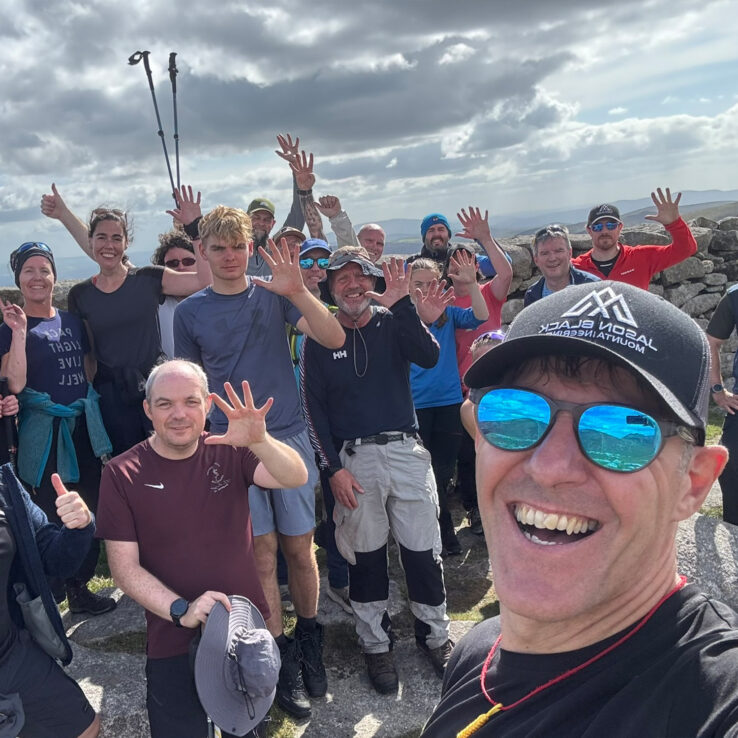
You could attempt the 4 Peaks independently. But you’d miss the 25+ years of mountaineering wisdom that informs every aspect of this challenge. You’d miss the professional mountain leadership, the exceptional safety standards, the wilderness first response training that ensures your team can push limits without crossing into danger.
More importantly, you’d miss the structured experience of facing this challenge under the guidance of someone who’s operated in the world’s most extreme environments. I’ve summited Everest and K2. I’ve led expeditions where success required perfect team coordination under life-threatening conditions. I bring that expertise—and that perspective—to every group navigating Ireland’s peaks.
My approach is light-hearted but uncompromising. We’ll laugh together during the bus journeys. We’ll share stories that make the kilometers pass faster. But when we’re on the mountain, we operate with the same safety protocols, communication standards, and teamwork principles that keep people alive in the death zone.
The Preparation: Building the Foundation Before the Mountain
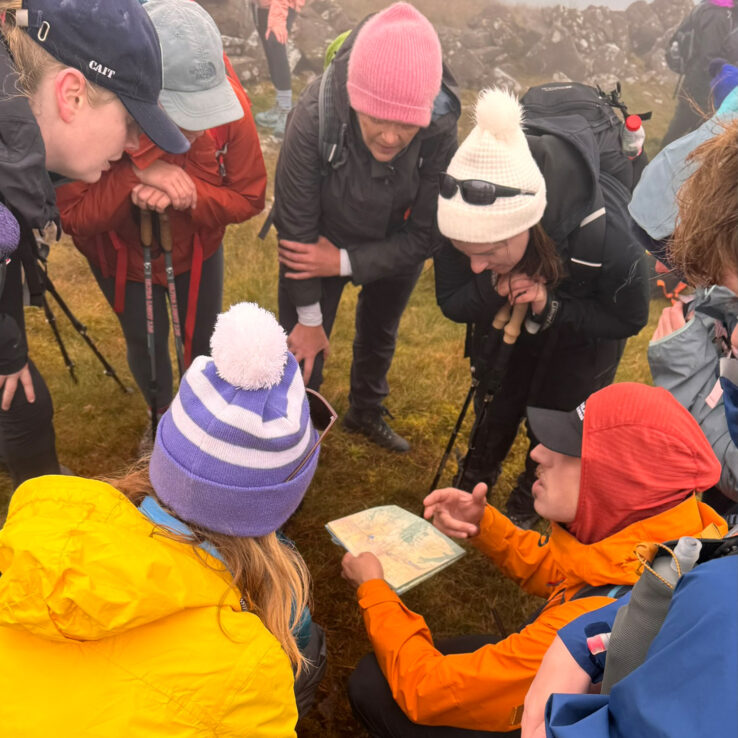
The National 4 Peaks Challenge requires serious physical and mental preparation. Teams that succeed don’t just show up—they train together, prepare together, and build their collective capacity over a minimum of 12 weeks.
The training program includes:
- Zone 2 cardio for endurance (30-45 minute runs)
- Strength training to protect joints during long descents
- High-Intensity Interval Training (HIIT) for respiratory and cardiac development
- Hill repeats to simulate mountain ascents
- Weekend mountain treks to build stamina
But here’s what most team-building programs miss: the preparation is part of the team building. When your team commits to a 12-week training program together—when you’re running hill repeats on Tuesday evenings and hiking mountains on weekend mornings—you’re already building the trust and communication you’ll need on challenge day.
I recommend incorporating team training sessions. Not just individual preparation, but collective workouts where you learn each other’s strengths, limitations, and communication styles. The team that trains together succeeds together.
Beyond the Medal: What Your Team Takes Home
Yes, you’ll earn the National 4 Peaks Medal upon completion. Yes, you’ll have incredible photos from summit moments and night hikes. Yes, you’ll have bragging rights and a genuine sense of achievement.
But the real value—what actually transforms team performance back at your workplace—is subtler and more profound:
A Shared Reference Point: When projects get difficult, your team will reference the challenge. “Remember Carrauntoohil at 2 AM?” becomes shorthand for “We’ve done harder things together.”
Proven Trust: You’ve seen each other at your most vulnerable and most resilient. That knowledge changes how you interact professionally.
Communication Patterns: The clear, supportive communication required on mountains becomes habit. Teams maintain these patterns back in the office.
Perspective: After summiting four peaks in 24 hours, most workplace challenges feel manageable. Your team’s sense of what’s possible expands permanently.
Leadership Emergence: The challenge reveals hidden leaders—people whose strengths don’t show in traditional settings but emerge under pressure.
Who This Challenge Is For
The Ireland National 4 Peaks Challenge is perfect for:
- Corporate teams seeking to forge stronger bonds and improve collaboration
- Leadership development programs wanting to test and develop emerging leaders
- Companies undergoing change that need to rebuild trust and cohesion
- High-performing teams looking to push their limits together
- Organizations that value experiential learning over classroom theory
This isn’t a luxury retreat with spa time and wine tastings. This is real challenge, real discomfort, and real growth. Teams that thrive here are those willing to embrace difficulty as the path to transformation.
Final Reflections from the Mountain
I’ve guided hundreds of people up the world’s highest peaks. I’ve witnessed extraordinary acts of courage, determination, and collective strength. And I’ve learned that the mountains we climb externally often mirror the mountains we face internally—and within our teams.
The National 4 Peaks Challenge works because it’s authentic. There’s no simulation, no roleplay, no artificial scenarios. The challenge is real. The exhaustion is real. The need for teamwork is real. And because of that authenticity, the growth is real.
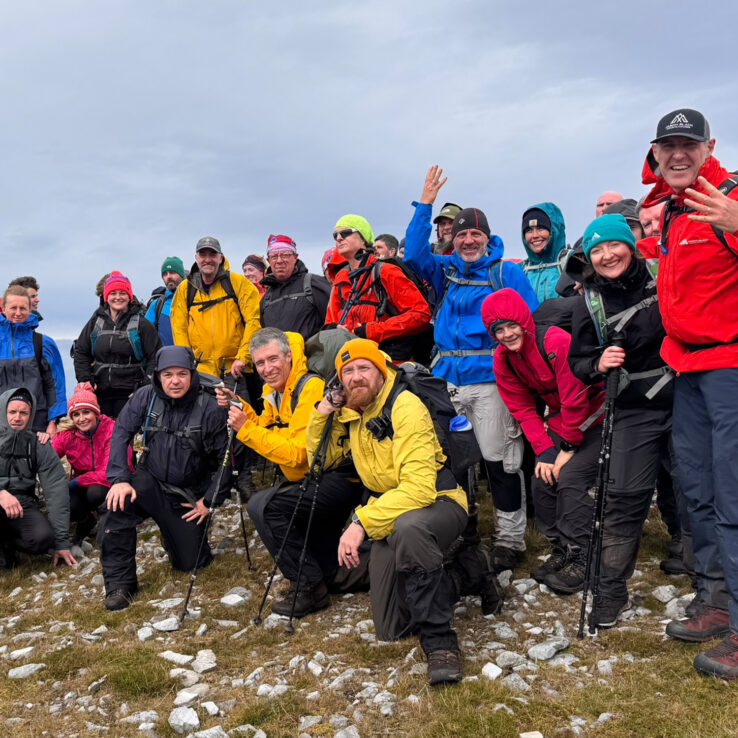
When your team stands together at the summit of Mweelrea—the fourth peak, the final push, the moment of shared triumph—you won’t just celebrate reaching the top. You’ll celebrate discovering what you’re capable of together.
That discovery changes everything.
The mountains are waiting. Your team’s transformation begins at Slieve Donard carpark at 7:30 AM. The question isn’t whether your team can complete the challenge—it’s whether you’re ready to discover what becomes possible when you truly commit to collective strength.
“Everything is possible when you believe in your team and your team believes in you.”
See you on the mountain.— Jason Black
International Expedition Leader | Professional Mountain Guide
Everest & K2 Summiteer | National 4 Peaks Challenge Director
The Investment in Your Team’s Future
At €299 per person, the National 4 Peaks Challenge delivers exceptional value:
- Professional mountain leadership from one of the world’s leading high-altitude mountaineers
- Luxury transport with a professional driver for all inter-peak transfers
- Qualified mountain leaders throughout the challenge
- Qualified wilderness first aiders for safety
- Complete event coordination and logistics
- National 4 Peaks Medal upon completion
- Access granted by landowners and mountain conservation committees
- Fully insured national event
More importantly, you’re investing in your team’s long-term effectiveness. The improved communication, trust, and resilience developed during this challenge deliver returns long after the mountain boots are stored away.