The morning mist rolls across Carrauntoohil’s ridgeline as our team prepares for another National 4 Peaks Challenge. But before anyone takes a single step onto these sacred slopes, there’s a conversation that matters more than pace, more than fitness, more than reaching the summit itself: How will we treat this mountain?
After 25 years guiding expeditions from Ireland’s humble hills to the death zones of Everest and K2, I’ve learned that true leadership isn’t about conquering peaks—it’s about protecting them. It’s about understanding that every footprint matters, every decision counts, and every leader has a responsibility that extends far beyond their team to the land itself.
This is why Jason Black Mountaineering has made an uncompromising commitment to ethical mountain leadership and Leave No Trace principles. It’s not just policy—it’s our pledge.
The Weight of Responsibility: Why Ethical Leadership Matters
Stand at the base of Slieve Donard at 7:30 AM on a challenge morning, and you’ll see something remarkable: a group of corporate professionals, sustainability officers, and outdoor enthusiasts gathered not just for adventure, but for a masterclass in values-aligned leadership.
These aren’t just hikers. They’re representatives of organizations that understand something fundamental: how we treat our mountains reflects how we treat our business, our communities, and our planet.
The statistics are sobering. Ireland’s upland areas face increasing pressure from growing outdoor participation. Erosion, litter, disturbance to wildlife, and conflicts with landowners threaten the very access we cherish. Without ethical stewardship, the mountains that have shaped generations of Irish adventurers could be closed to future climbers.
But here’s what gives me hope: when leaders lead by example, change follows.
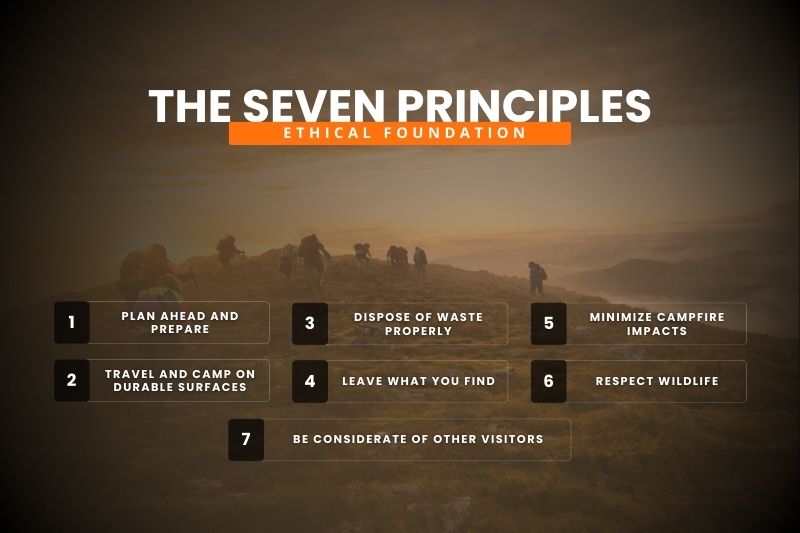
The Seven Principles: Our Ethical Foundation
As an accredited Leave No Trace trainer, I’ve integrated these seven principles into every aspect of our operations. They’re not suggestions—they’re commitments:
1. Plan Ahead and Prepare
Ethical leadership begins long before the trail. Our 12-week training programme isn’t just about building stamina for the 850-meter ascent of Slieve Donard or the challenging night climb on Carrauntoohil. It’s about preparing participants to make responsible decisions under fatigue and pressure.
We require proper gear not just for safety, but to minimize environmental impact. Worn-in hiking boots reduce trail damage. Adequate food preparation eliminates roadside waste stops. Our detailed kit lists ensure every participant has the resources to be self-sufficient without leaving a trace.
2. Travel and Camp on Durable Surfaces
During the National 4 Peaks Challenge, we guide teams along established routes on all four mountains—Slieve Donard, Lugnaquilla, Carrauntoohil, and Mweelrea. These aren’t arbitrary paths. They’re carefully selected trails that concentrate impact on durable surfaces, protecting sensitive vegetation and preventing erosion.
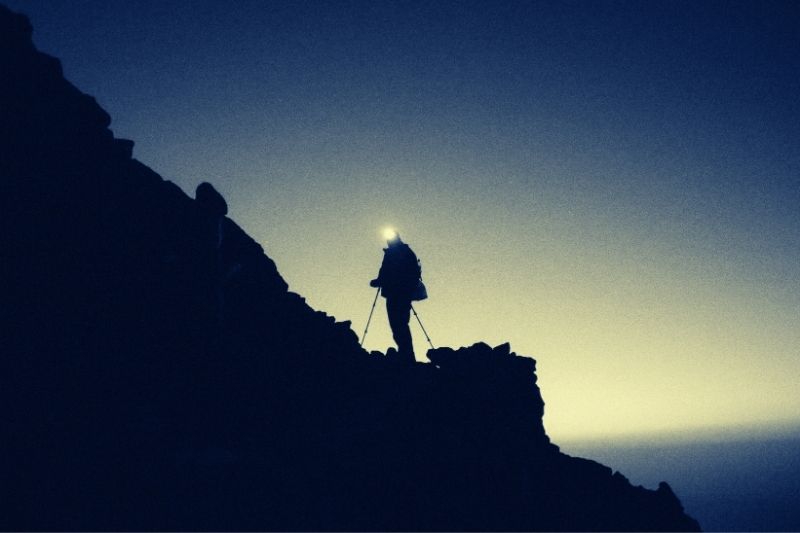
When we climb through the night, headtorches stay on the path. When we rest, we use designated areas. When we descend Lugnaquilla’s 925 meters after a 5-hour round trip, tired legs don’t excuse careless footwork that widens trails or damages fragile alpine plants.
3. Dispose of Waste Properly
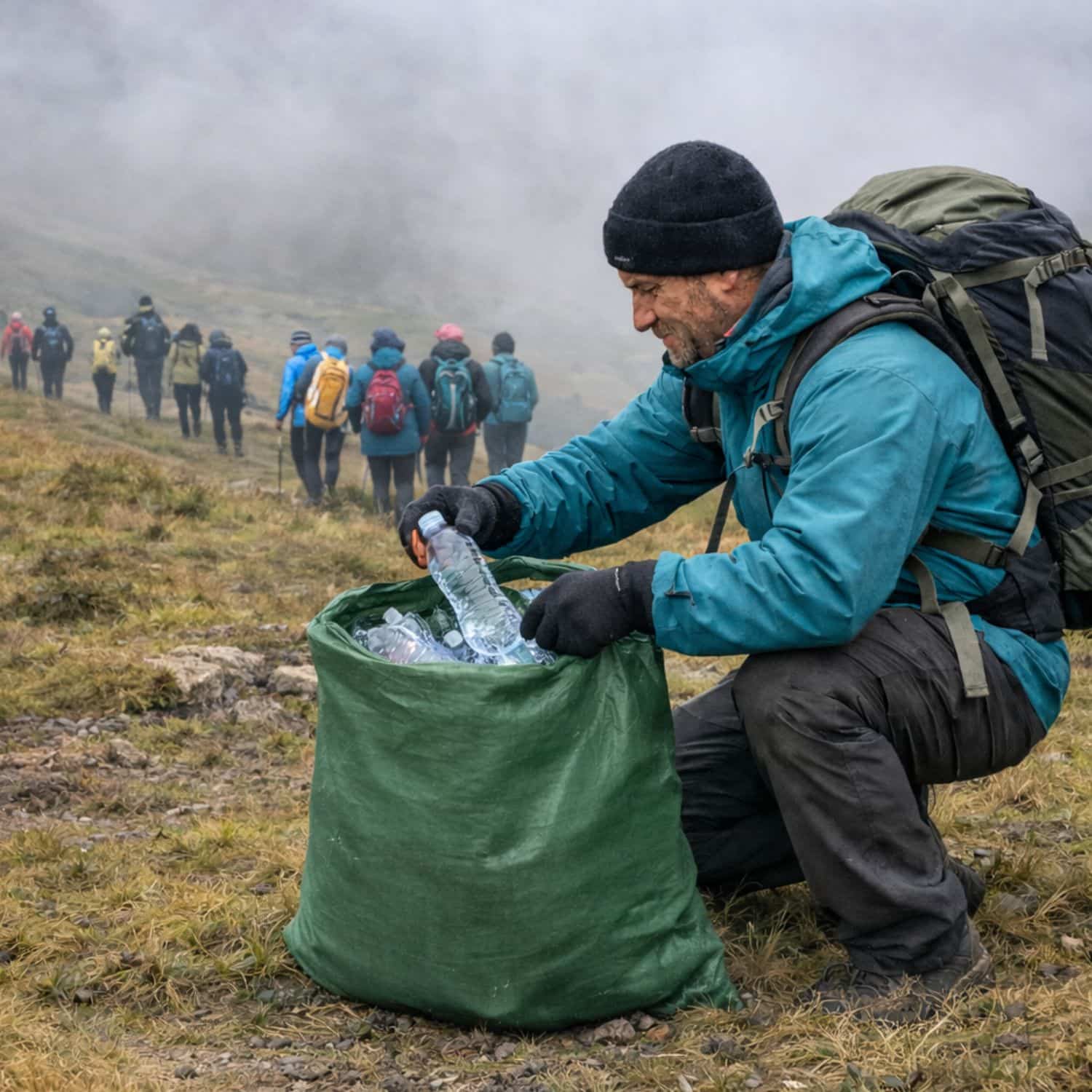
“Pack it in, pack it out” isn’t a slogan—it’s a standard. Every wrapper from every energy bar. Every used blister pack. Every piece of gear that might fall from a pack during the swift descent from Mweelrea’s 814-meter summit.
Our bus storage system is designed for environmental responsibility. Sealed food containers prevent spillage. Black bags contain wet gear without littering. Personal hygiene relies on biodegradable wipes. After 19.5 hours and four peaks, not a single piece of litter remains on Irish soil.
4. Leave What You Find
The ancient stones on Carrauntoohil’s summit have witnessed centuries of Irish history. The rare alpine flora on Lugnaquilla’s plateau exists nowhere else. These aren’t souvenirs—they’re heritage.
We teach corporate teams that true leadership means preserving what we find for those who follow. No cairns beyond navigation markers. No rock-stacking for photos. No disturbing archaeological features. The mountains remain unchanged by our passage.
5. Minimize Campfire Impacts
While the National 4 Peaks Challenge doesn’t involve camping, the principle applies to all heat and light sources. Our night climbs use headtorches efficiently—adequate illumination without light pollution that disturbs wildlife. Rest stops avoid sensitive areas where even brief occupation could impact ground-nesting birds or fragile ecosystems.
6. Respect Wildlife
Ireland’s uplands host golden eagles, red deer, and countless species that depend on undisturbed habitat. Our 4:30 AM start times and swift-but-steady pace minimize disturbance during sensitive dawn and dusk periods. We maintain appropriate distances from wildlife, never feed animals, and adjust routes when necessary to protect nesting or breeding areas.
7. Be Considerate of Other Visitors
Respect extends beyond the natural environment to the human one. Our zero-tolerance policy on harassment, disruption, and disrespect isn’t just about team dynamics—it’s about honoring every person’s mountain experience.
We coordinate with other groups to prevent overcrowding. We control noise levels, especially during night climbs when sound carries across valleys. We acknowledge other hikers, share trail information, and model the courtesy that builds a positive outdoor community.
Beyond Principles: Building Relationships with Landowners
Here’s something many mountain enthusiasts don’t consider: access isn’t a right—it’s a privilege granted by landowners who could easily close their gates.
At Jason Black Mountaineering, we’ve invested decades in building relationships with landowners and mountain conservation committees across Ireland. These partnerships are built on trust, demonstrated through consistent ethical behavior:
- Pre-arranged access for all guided trips and challenges
- Direct communication with landowners about routes and timing
- Damage prevention protocols that protect fencing, gates, and private property
- Incident reporting systems that address any issues immediately
- Financial contribution to conservation efforts and trail maintenance
When our luxury bus arrives at the Slieve Donard carpark at 7:30 AM, landowners know we’re there with permission, with insurance, and with respect. This isn’t just good practice—it’s ethical leadership.
The Corporate Connection: ESG in Action
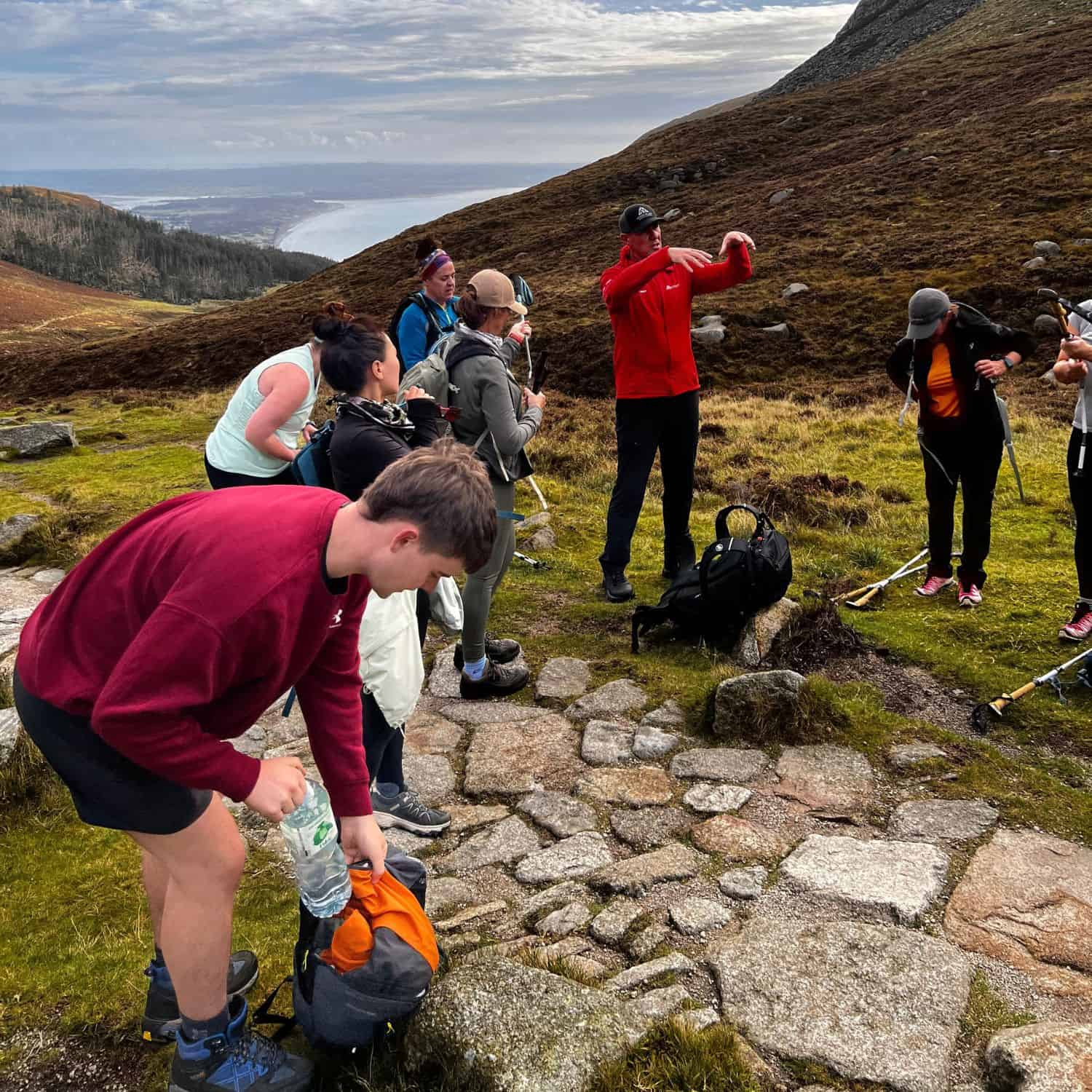
Sustainability officers and corporate clients choose Jason Black Mountaineering because our values align with theirs. In an era where Environmental, Social, and Governance (ESG) criteria define organizational success, our challenges offer something rare: authentic demonstration of ethical principles under genuine pressure.
Consider the parallels:
- Environmental stewardship on mountains mirrors corporate environmental responsibility
- Social respect within diverse hiking groups reflects inclusive workplace culture
- Governance through clear rules and expectations parallels ethical business operations
- Transparency in our standards matches organizational accountability
When your team completes the National 4 Peaks Challenge—19.5 hours, four counties, minimal sleep—they don’t just earn a medal. They demonstrate that values can be maintained under extreme conditions. They prove that success doesn’t require compromise on ethics.
The Ripple Effect: Small Actions, Large Impact
During Week 6 of our training programme, participants combine hill repeats with long mountain walks. It’s during these training days that habits form. The habit of carrying out every energy gel packet. The habit of staying on established trails despite fatigue. The habit of treating every mountain encounter with respect.
These habits compound. One climber influences their hiking club. One company influences their industry. One generation of ethical mountaineers influences the next.
After 25 years of expeditions worldwide, I can confirm: the world’s most remote mountains face the same challenges as Ireland’s accessible peaks. Everest’s death zone is littered with oxygen bottles. K2’s camps show the scars of expeditions that prioritized summit over stewardship.
But it doesn’t have to be this way. Every ethical decision made on Mweelrea’s slopes contributes to a global culture shift in mountain recreation.
Leadership Standards: What Sets Us Apart
When you join a Jason Black Mountaineering expedition, you’re backed by:
- UIMLA International Mountain Leader certification
- Wilderness First Responder qualified guides
- 25+ years mountaineering experience from Irish peaks to 8,000-meter summits
- World-class navigation skills and exceptional safety record
- Ethical Leave No Trace trainer accreditation
- Fully insured national events with comprehensive coverage
- Small group approach for reduced environmental impact and stronger team dynamics
This isn’t marketing language. These are measurable standards that create measurable results: exceptional safety records, satisfied landowner relationships, and mountains that remain pristine for future generations.
The Challenge Before Us: An Invitation to Lead
Climate change is altering Ireland’s uplands. Increased rainfall intensifies erosion. Temperature shifts affect alpine ecosystems. Growing outdoor participation concentrates impact on sensitive areas.
The next decade will determine whether Ireland’s mountains remain accessible or become restricted zones requiring permits and quotas like many international parks.
The solution isn’t less mountain recreation—it’s better mountain recreation.
This is where ethical leadership matters most. Every corporate team that completes our National 4 Peaks Challenge with perfect Leave No Trace practices influences policy makers, inspires other recreational users, and demonstrates that growth and conservation aren’t opposites—they’re partners.
When sustainability officers return to their organizations after standing on Carrauntoohil’s 1,038-meter summit at midnight, having honored every ethical principle through exhaustion and challenge, they carry proof: integrity isn’t situational.
A Personal Reflection: Why This Matters
My love for Irish mountains started as a young boy through Cubs and Scouts. These humble peaks—Slieve Donard, Lugnaquilla, Carrauntoohil, Mweelrea—were my training ground for Everest, K2, and beyond.
But they were never just preparation. They were purpose.
Every international summit I’ve reached exists because Irish mountains taught me discipline, respect, and humility. Every life-or-death decision made in the death zone traces back to lessons learned on rainy days in the Mournes.
I built Jason Black Mountaineering not just to guide expeditions, but to give back to the mountains that gave me everything. The National 4 Peaks Challenge exists to celebrate Irish mountains, inspire belief that everything is possible, and empower others to lead ethically.
This is personal. This is legacy. This is how we climb with conscience.
Your Next Step: Join the Movement
Ethical mountain leadership isn’t theoretical—it’s practical. It’s the decision to pack out your orange peel even when you’re exhausted. It’s choosing established trails over shortcuts. It’s respecting closure signs even when the summit beckons.
It’s leading by example, even when no one’s watching.
Especially when no one’s watching.
The mountains are calling. They’re asking not just for visitors, but for stewards. Not just for climbers, but for conscience-driven leaders who understand that every peak we stand on is a trust we hold for those who follow.
Will you answer that call?