The Mountain Does Not Negotiate
There is a moment on every high-altitude trek when your body begins to tell you something is wrong. The headache that you dismissed as dehydration does not fade. Your appetite vanishes. Sleep becomes fractured and shallow. Your legs feel heavier than they should. And somewhere between 2,500 and 4,000 metres, a quiet alarm begins to sound in the back of your mind.
That alarm is Acute Mountain Sickness. And on a mountain like Toubkal, ignoring it is not an option.
I have spent over 30 years leading expeditions at altitude. I have guided teams up Everest, across the frozen ridges of Aconcagua, and through the scree fields of the Atlas Mountains. I have seen strong climbers brought to their knees by AMS. I have made the call to turn people around at 3,975 metres, just 200 metres below the summit of Toubkal, because their bodies were showing signs that continuing would put them at serious risk. And I have never once regretted making that call.
Altitude sickness is not a sign of weakness. It is a physiological response to reduced oxygen. And the only way to manage it safely is to understand it, watch for it, and act on it early. That is what this guide is for. To give you the knowledge you need. And to explain exactly how Black Mountaineering’s safety protocols keep you safe when your body starts to struggle.
What Is Acute Mountain Sickness?
Acute Mountain Sickness, commonly known as AMS, is a condition that occurs when you ascend to high altitude too quickly for your body to adapt to the reduced oxygen levels. Above 2,500 metres, the air contains significantly less oxygen per breath. Your body responds by breathing faster, producing more red blood cells, and adjusting fluid balance. This process is called acclimatization. And it takes time.
If you climb too fast, your body cannot keep up. Fluid begins to accumulate in your tissues, including your brain and lungs. That is when AMS develops. In its mild form, it is uncomfortable but manageable. In its severe form, it can progress to High Altitude Pulmonary Edema (HAPE) or High Altitude Cerebral Edema (HACE), both of which are life threatening.
Mount Toubkal reaches 4,167 metres. That is high enough for AMS to be a real risk. And while the climb is graded as non-technical, altitude does not care about your technical skills. It cares about how well your body adapts to thin air.
Recognizing the Symptoms of AMS
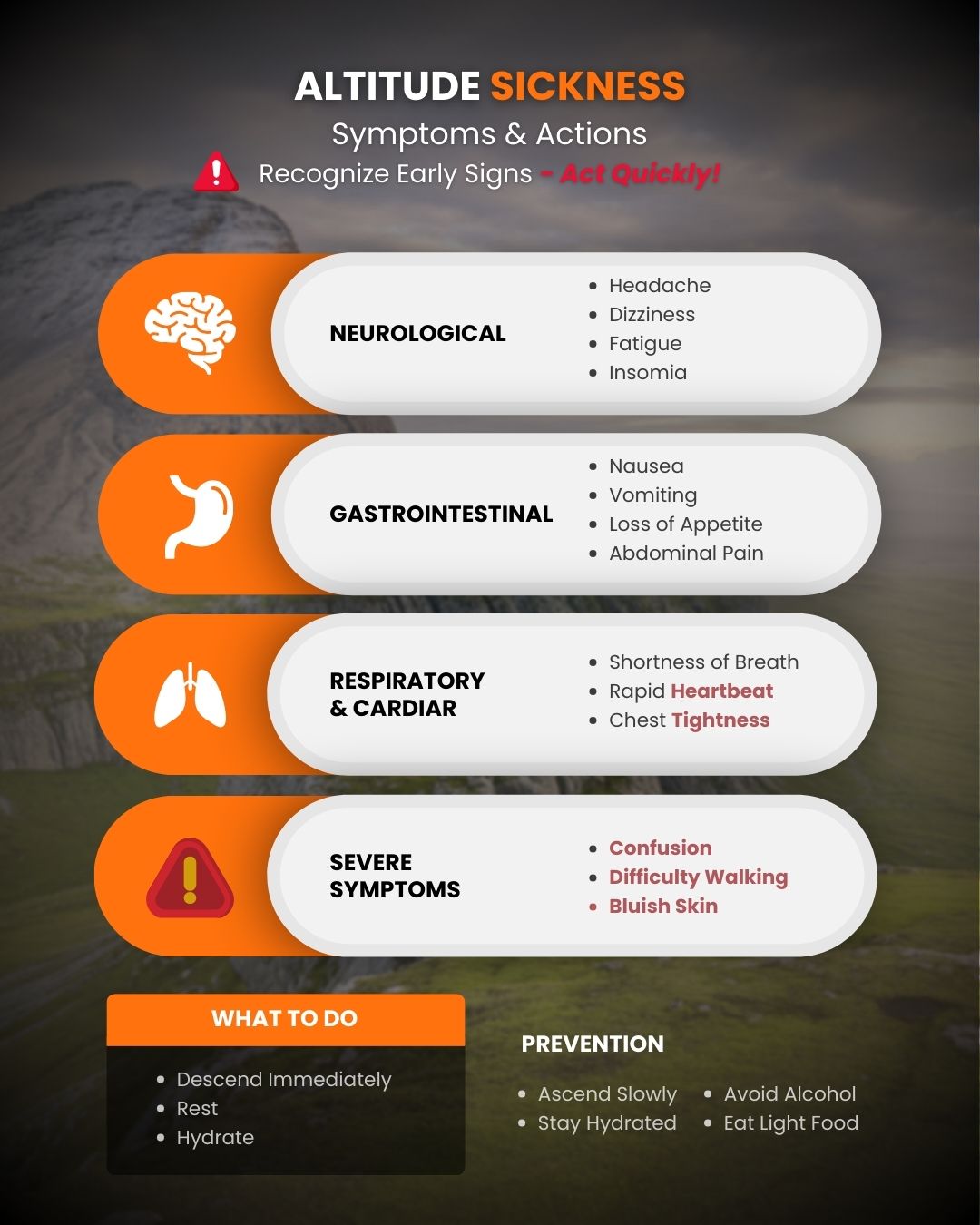
The symptoms of Acute Mountain Sickness generally fall into three categories: mild, moderate, and severe. Knowing the difference can save your life.
Mild Symptoms (Common Between 2,500m and 3,800m)
- Mild headache that responds to paracetamol or ibuprofen
- Reduced appetite or mild nausea
- Disrupted sleep patterns or vivid dreams
- Slight shortness of breath during exertion
- Blocked nose, dry cough, or periodic breathing during sleep
- General fatigue or low energy
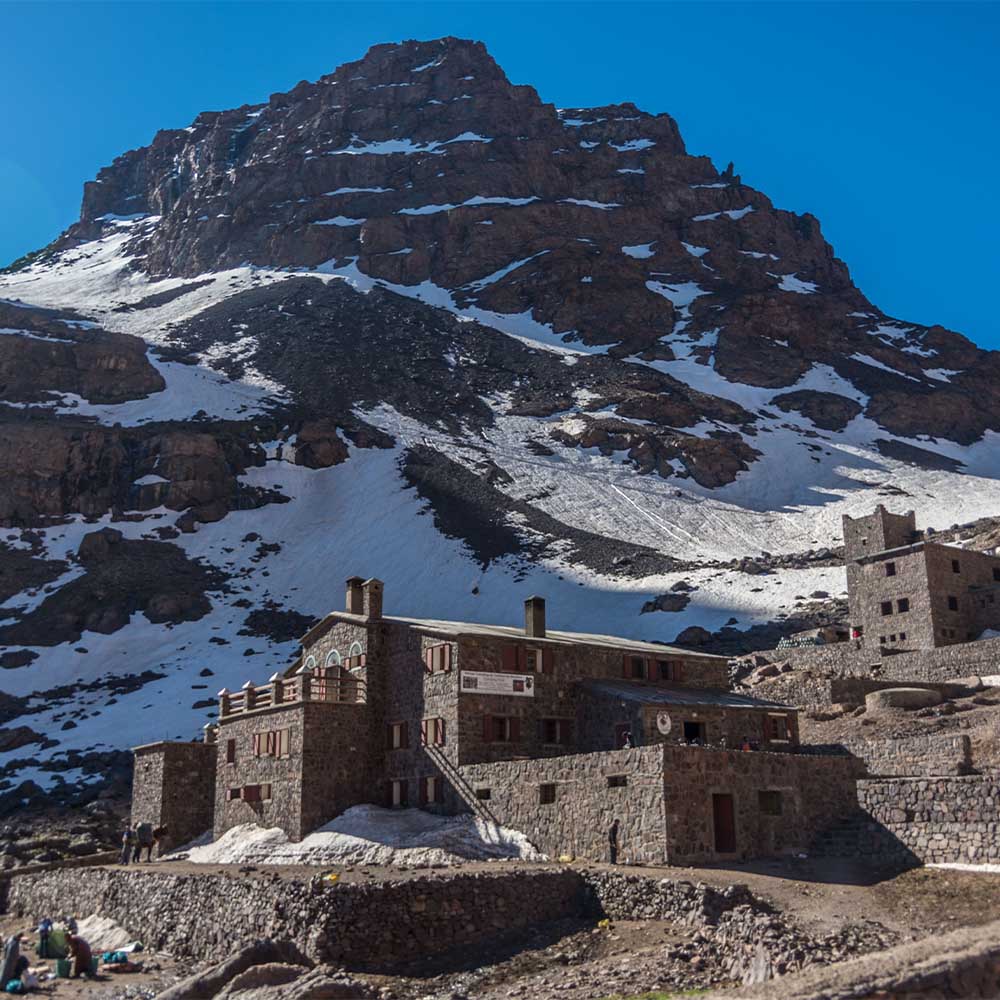
These symptoms are common. Most trekkers experience at least one or two of them. They are your body’s way of signaling that acclimatization is happening. On the Black Mountaineering Toubkal expedition, your guide monitors these symptoms closely from the moment you leave Imlil at 1,740 metres and begin the ascent to the Toubkal Refuge at 3,206 metres.
Moderate Symptoms (Requires Immediate Attention)
- Persistent headache that does not improve with rest or medication
- Nausea or vomiting
- Severe fatigue that makes basic tasks difficult
- Dizziness or lightheadedness
- Noticeable shortness of breath even at rest
- Loss of coordination or difficulty with balance
If you experience any of these symptoms, you must inform your guide immediately. Moderate AMS does not always progress to severe AMS. But it can. And the window for safe action is narrow.
Severe Symptoms (Medical Emergency: Immediate Descent Required)
- Severe, unrelenting headache
- Confusion, disorientation, or difficulty thinking clearly
- Difficulty walking or standing without assistance (ataxia)
- Coughing up pink or frothy sputum (sign of HAPE)
- Extreme shortness of breath, even when resting
- Altered consciousness or inability to stay awake
Severe AMS is a medical emergency. At this stage, the only treatment is immediate descent. Supplemental oxygen and medication may help temporarily, but they do not replace the need to lose altitude. On every Black Mountaineering expedition, the protocol is clear: if severe symptoms present, we descend. No exceptions.
How to prevents AMS at Mt. Toubkal
The Acclimatization Strategy:
The single most effective way to prevent AMS is proper acclimatization. This means ascending slowly enough to give your body time to adapt to the reduced oxygen at altitude. On the Mount Toubkal expedition, our itinerary is specifically designed around this principle.
Day 1: Marrakesh Arrival (466m)
You arrive in Marrakesh at just over 400 metres elevation. Your body is operating at full oxygen capacity. This is your baseline.
Day 2: Imlil to Toubkal Refuge (1,740m to 3,206m)
This is the first significant altitude gain: 1,460 metres over approximately 6 to 7 hours of trekking. That is a substantial ascent. But it is manageable because we pace it properly. We do not rush. We hydrate. We stop for rest breaks. And that night, you sleep at 3,206 metres, giving your body a full night to begin the acclimatization process at high altitude.
Day 3: Summit Day (3,206m to 4,167m and back to Aremd at 1,900m)
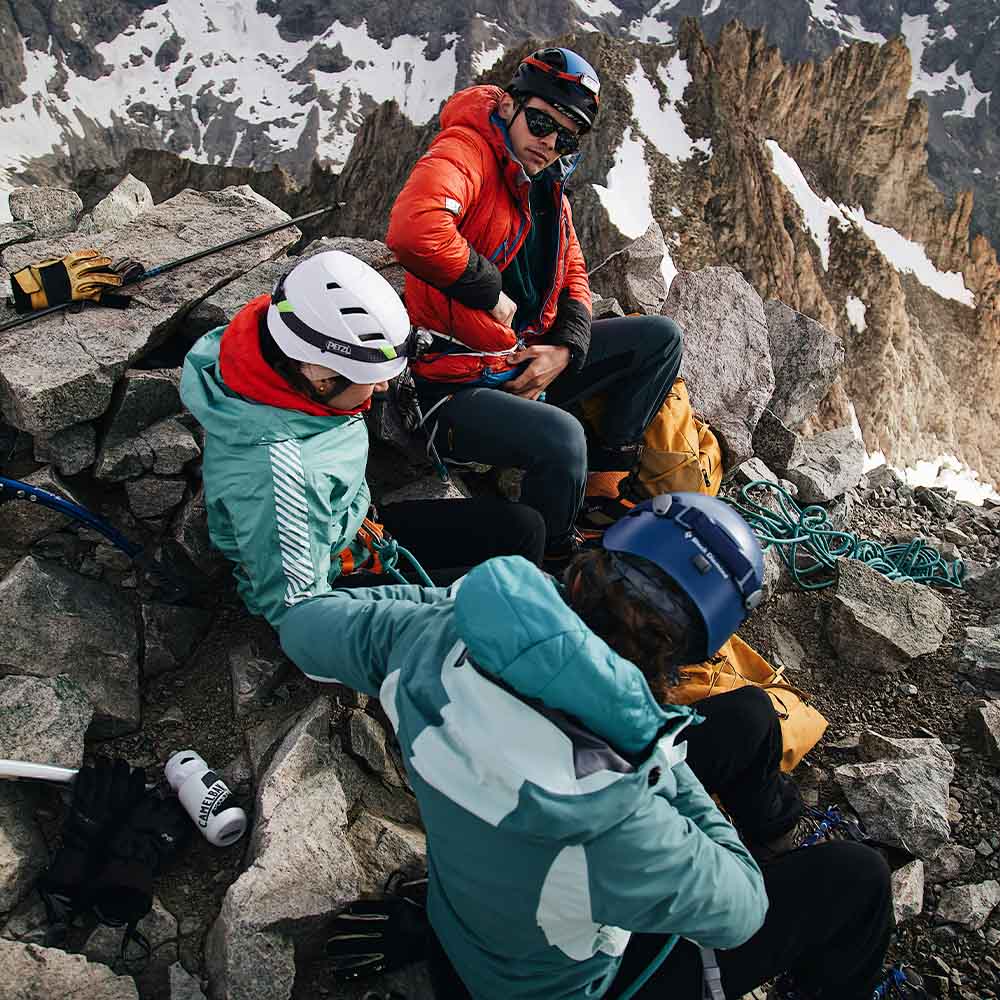
Summit day involves an early start and a climb of 960 metres to the summit at 4,167 metres. This is where AMS risk is highest. But here is the critical safety factor: after summiting, we descend all the way back down to Aremd at 1,900 metres. We do not sleep high. We climb high and sleep low. This is a proven acclimatization strategy that reduces AMS risk significantly.
The principle is simple: your body acclimatizes faster when you spend your nights at lower altitudes, even if you push higher during the day.
Day 4: Recovery and Return to Marrakesh
A short, easy walk back to Imlil followed by the drive to Marrakesh. By this point, your body has successfully adapted to altitude and descended safely. The risk of AMS is effectively zero.
The Black Mountaineering Safety Protocols
Understanding AMS is one thing. Having the leadership and systems in place to manage it is another. Here is exactly how Black Mountaineering keeps you safe on Toubkal.
1. First Aid Trained Leaders on Every Expedition
Every Black Mountaineering guide is trained in First Aid and altitude sickness management. This is not optional. It is a baseline requirement. Your guide knows how to recognize the early signs of AMS, how to assess symptom severity, and when to make the call to descend.
2. Small Group Sizes (Maximum 10 People)
We cap our groups at 10 people. This is not arbitrary. A smaller group allows your guide to monitor each individual closely. Changes in gait, energy levels, speech patterns, and coordination can all signal the onset of AMS. In a group of 30, those signs get missed. In a group of 10, they do not.
3. Mandatory Pre-Departure Medical Consultation
All participants are required to consult with their doctor prior to departure. This includes a discussion about the use of Diamox (acetazolamide) for acclimatization support. Diamox is a medication that helps your body adapt to altitude more quickly by increasing the amount of bicarbonate excreted in your urine, which in turn increases your breathing rate and improves oxygenation. It is not mandatory, but for some people, it significantly reduces AMS risk.
Your doctor will assess whether Diamox is appropriate for you based on your medical history and any pre-existing conditions. This consultation also gives you the opportunity to discuss any medications you are taking that might affect your ability to acclimatize, such as sleeping pills or certain blood pressure medications.
4. Strict Descent Protocols
If your guide determines that you are showing symptoms of moderate or severe AMS, the protocol is non-negotiable: we descend. There is no debate. There is no negotiation. There is no waiting to see if you feel better in an hour. Altitude sickness does not improve at altitude. It only improves with descent.
This is the hardest call to make on any expedition. I have turned climbers around 200 metres from the summit because their symptoms indicated that continuing was unsafe. And every single one of those decisions was the right one.
5. Mandatory Travel Insurance with Evacuation Cover
All participants must carry travel insurance that covers trekking to 4,200 metres in Morocco, including medical evacuation by helicopter if required. This is mandatory. In the event of severe AMS, evacuation to a lower altitude or to a medical facility may be necessary. Without proper insurance, the cost of that evacuation falls on you. We recommend True Traveler for comprehensive coverage.
6. Continuous Monitoring and Open Communication
From the moment you leave Imlil, your guide is monitoring the group. Pace, hydration, energy levels, appetite, sleep quality, and any early symptoms of AMS. But this is not a one-way street. You must also communicate openly with your guide. If you feel off, say so. If your headache is not improving, say so. If you are struggling to keep up, say so. Early intervention is everything.
What to Do If You Experience AMS Symptoms
If you begin to experience symptoms of AMS during the Toubkal trek, here is what you should do:
Step 1: Stop and Rest
Do not push through. Sit down. Hydrate. Eat something if you can. Give your body a chance to stabilize.
Step 2: Inform Your Guide Immediately
Your guide needs to know. Do not downplay your symptoms. Do not try to tough it out. Altitude sickness is not a test of your toughness. It is a medical condition.
Step 3: Take Medication if Appropriate
Paracetamol or ibuprofen can help with a mild headache. If you have been prescribed Diamox, continue taking it as directed. Anti-nausea medication can help if you are feeling sick.
Step 4: Assess Whether Symptoms Improve
If your symptoms improve with rest and medication, you may be able to continue at a slower pace. If they do not improve, or if they worsen, descent is required.
Step 5: Descend if Necessary
If your guide makes the call to descend, trust that decision. Descent is the only guaranteed treatment for AMS. And it works. Within hours of losing altitude, symptoms typically improve dramatically.
The Role of Diamox in AMS Prevention
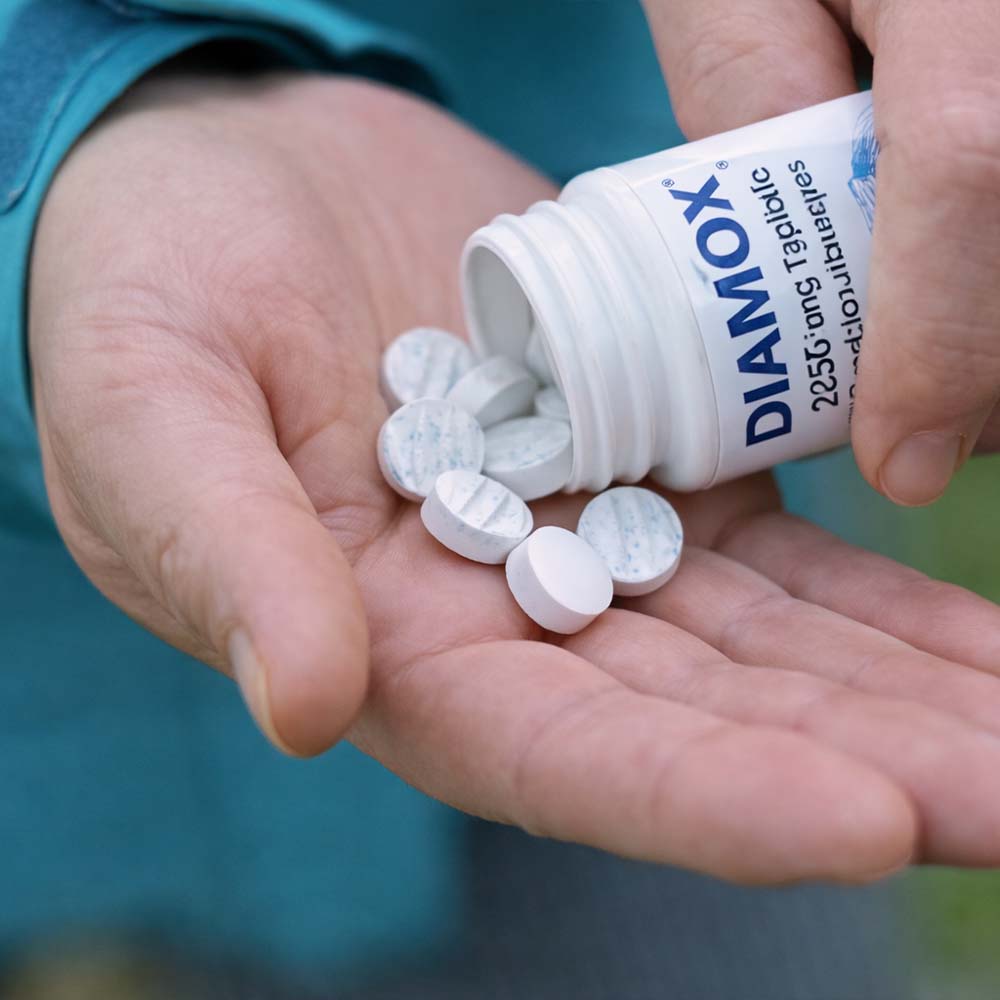
Diamox (acetazolamide) is a medication that many high-altitude trekkers use to reduce the risk of AMS. It works by acidifying the blood, which stimulates breathing and improves oxygenation. This helps your body acclimatize faster.
Diamox is not a guarantee against AMS. You can still develop symptoms even if you are taking it. But studies have shown that it reduces the incidence and severity of AMS, particularly when ascending above 2,500 metres.
Should You Take Diamox for Toubkal?
That is a decision you need to make with your doctor. Diamox is generally well tolerated, but it does have side effects, including increased urination, tingling in the fingers and toes, and altered taste (particularly with carbonated drinks). Some people also experience mild nausea.
If you have a history of sulfa allergies, Diamox is not appropriate for you. Your doctor will assess your medical history and help you determine whether Diamox is a good option.
How to Use Diamox Safely
If you and your doctor decide that Diamox is right for you, the typical dosage is 125mg to 250mg taken twice daily, starting the day before you begin your ascent and continuing until you return to lower altitude. Some people start taking it a few days before departure to assess tolerance and side effects.
Do not take Diamox without consulting your doctor first. And do not rely on it as a substitute for proper acclimatization. Diamox is a tool. It is not a replacement for a sensible ascent profile and close monitoring.
Hydration, Nutrition, and Sleep: The Foundation of Acclimatization
Beyond the formal protocols, there are three basic factors that make a huge difference in how well your body acclimatizes to altitude: hydration, nutrition, and sleep.
Hydration
At altitude, your body loses water faster through increased respiration and urination. Dehydration makes AMS symptoms worse. You should be drinking at least 3 to 4 litres of water per day on the trek. Your urine should be pale yellow. If it is dark, you are not drinking enough.
Hydration tablets can help replace electrolytes lost through sweat and increased breathing. Bring them.
Nutrition
Your appetite will likely decrease at altitude. That is normal. But you still need to eat. Your body is working harder than usual just to function, and it needs fuel. Eat regularly, even if you do not feel like it. Carbohydrates are your friend at altitude. Energy bars, nuts, dried fruit, and trail mix are all good options.
On the Black Mountaineering Toubkal expedition, all meals on the mountain are included. Breakfast, lunch, and dinner are provided at the Toubkal Refuge and in the Berber village of Aremd. But for summit day, bring your own personal snacks. Four energy bars minimum. You will need them.
Sleep
Sleep at altitude is often disrupted. Periodic breathing (where your breathing becomes irregular during sleep) is common. Vivid dreams are normal. You may wake up multiple times during the night. This is all part of acclimatization.
Earplugs can help if you are sharing accommodation with other trekkers. A sleeping bag liner adds warmth if you are sensitive to cold. And accepting that you will not sleep perfectly at 3,206 metres is part of managing your expectations.
Why First-Time High-Altitude Trekkers Need Expert Guidance
If this is your first time trekking above 2,500 metres, you do not yet know how your body will respond to altitude. Some people acclimatize easily. Others struggle even with a perfect ascent profile. You will not know until you are on the mountain.
That is why expert guidance matters. An experienced guide has seen hundreds of people go through this process. They know what normal acclimatization looks like. And they know what the early warning signs of trouble look like. You do not have that experience. They do.
On a Black Mountaineering expedition, you are not just paying for someone to show you the trail. You are paying for 30 years of altitude experience, for First Aid training, for close monitoring, and for the judgment to make the right call when it matters most.
The Hardest Decision: When to Turn Around
Turning around before the summit is one of the hardest decisions you will ever make on a mountain. You have trained for months. You have flown halfway around the world. You are so close. And your guide is telling you that you need to go down.
I understand that feeling. I have been on both sides of that conversation. And I will tell you what I tell everyone: the mountain will still be there tomorrow. Your health will not be if you ignore the signs.
Summit fever is real. It clouds judgment. It makes people push when they should stop. And on a mountain like Toubkal, where the summit is visible from the saddle and feels tantalizingly close, the temptation to keep going can be overwhelming.
But here is the truth: summits are optional. Descent is mandatory. If your guide makes the call to turn around, trust it. That decision is never made lightly. It is made because the signs are there. And those signs do not lie.
Conclusion: Altitude Demands Respect
Acute Mountain Sickness is not something you can outwork, outsmart, or ignore. It is a physiological response to reduced oxygen. It can happen to anyone. And the only reliable way to manage it is to climb slowly, watch for symptoms, and descend if necessary.
On the Mount Toubkal expedition, Black Mountaineering’s acclimatization strategy, First Aid-trained leaders, small group sizes, and strict descent protocols create a safety net that has kept climbers safe for over three decades. But that safety net only works if you do your part: train properly, consult your doctor, communicate openly with your guide, and trust the process.
Altitude demands respect. Give it that respect. And when you stand on the summit of Toubkal at 4,167 metres, looking south toward the Sahara, you will know that you earned it the right way. Safely.
Rise with the mountain.