Ernest Hemingway opened his 1936 short story with a description of Kilimanjaro as a snow-covered peak, the highest mountain in Africa, with its western summit called the House of God. For most of the twentieth century that image held. Snow. Ice. A frozen crown at the top of the continent.
That image is changing.
The glaciers on Kilimanjaro are retreating at a rate that scientists have documented for decades and can no longer describe as gradual. What exists at the summit today is a fraction of what stood there a century ago. And the fraction is continuing to shrink.
This is not a warning about a distant future. This is a description of the mountain right now, in 2026, on the morning you are reading this.
If Kilimanjaro has been sitting on your list of things you will get to eventually, this is the post that asks you to reconsider the word eventually.
The Ice That Was There: 1912 to Today
In 1912, when the first systematic measurements of Kilimanjaro’s glaciers were recorded, the summit massif was covered by approximately 12 square kilometres of ice. The ice fields were continuous, ancient, and appeared as permanent a feature of the landscape as the mountain itself.
By 2000 that coverage had reduced to roughly 2.5 square kilometres. By the early 2020s the figure had fallen further still. The most widely cited scientific assessments estimate that roughly 85 percent of the ice documented in 1912 is now gone.
That is not a rounding error. That is not a measurement discrepancy. That is 85 percent of an ice cap that took thousands of years to form, gone within a single human century.
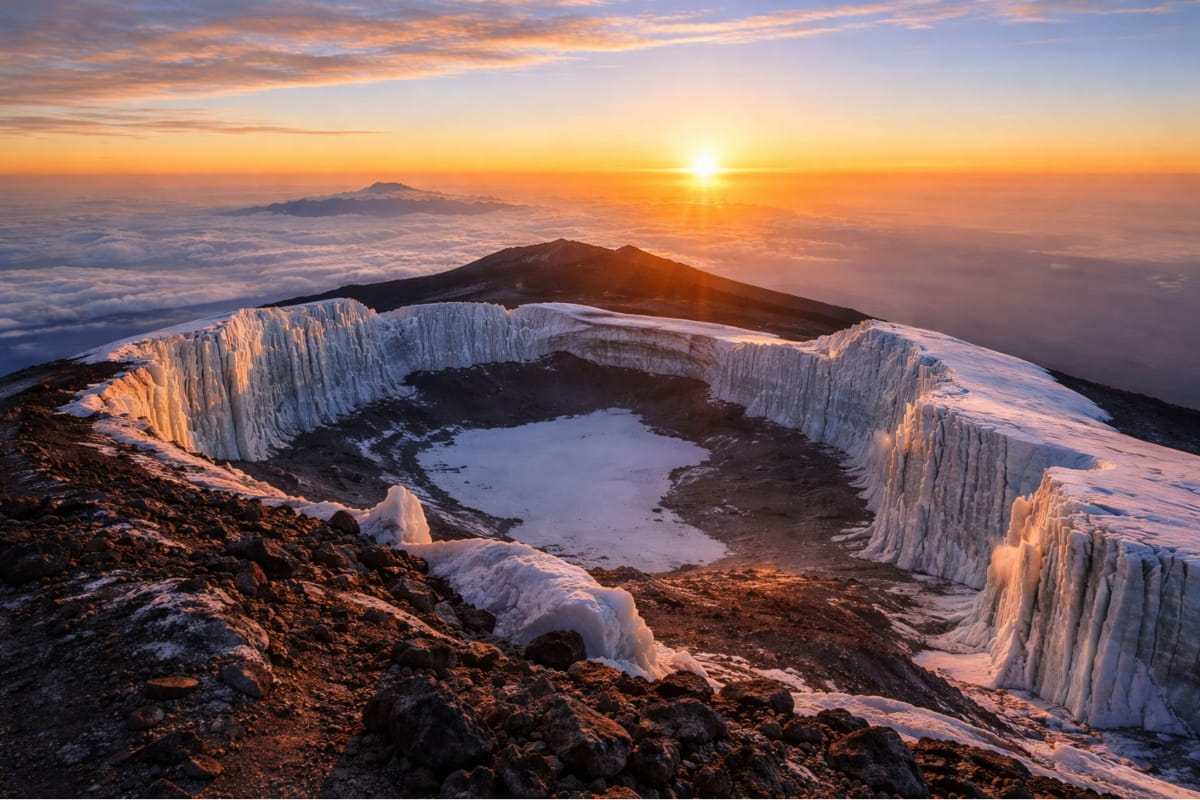
The glaciers that remain are found primarily around the summit crater and at Stella Point on the crater rim. They are still there. They are still visible. They are still extraordinary. But they are retreating year on year and the studies tracking that retreat are consistent in their conclusions.
The Kilimanjaro ice cap is disappearing. The question that remains is how much of it you will be able to see.
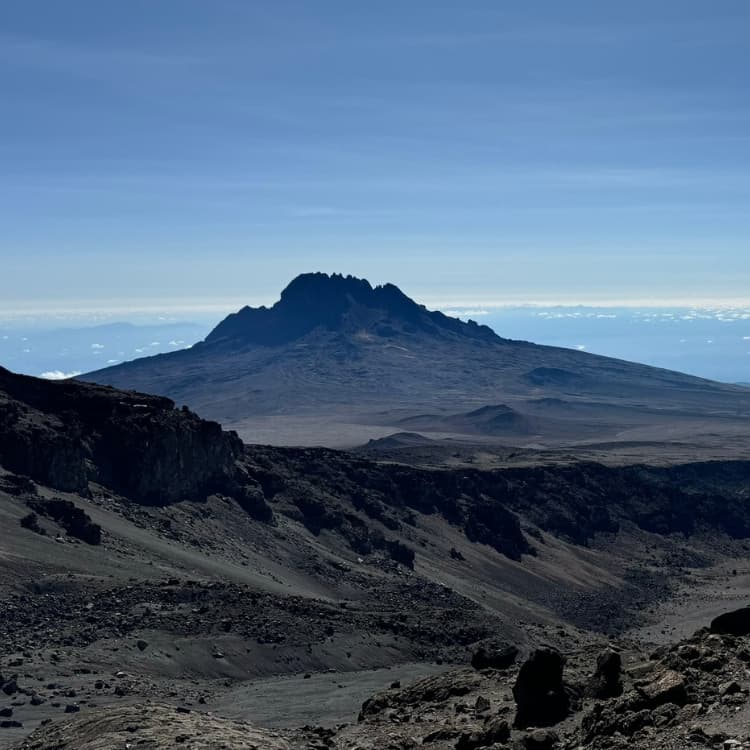
What Standing at Stella Point at Dawn Actually Feels Like
On the Machame Route, you reach Stella Point at 5,745 metres typically in the pre-dawn hours of summit day. You have been walking since midnight, mostly in silence, mostly in darkness, with the light of your headlamp carving a small circle in the frozen scree ahead of you.
And then the glacier walls appear.
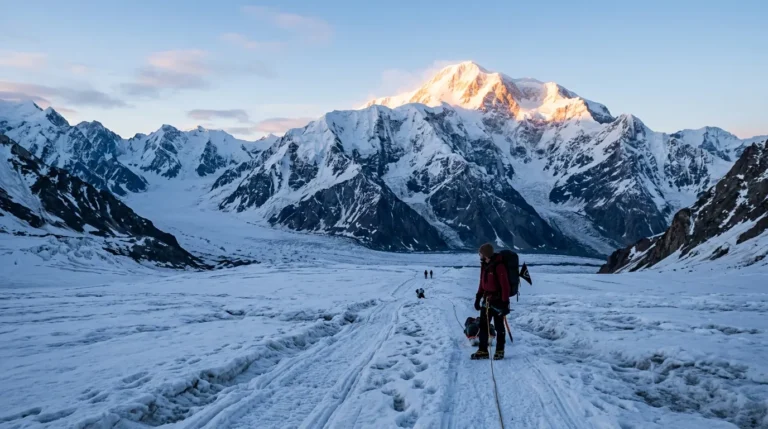
In the first grey light before sunrise, they are simply shapes. Enormous, silent, towering walls of ice rising above the crater rim. By the time the sun clears the horizon over Kenya and the light turns from grey to deep blue to the first orange of an African dawn, those walls begin to glow in a way that stops you mid step.
Not because you have been told they are scientifically significant. Not because you have read the statistics. Because they are genuinely, physically, visually extraordinary in a way that no photograph has ever fully captured.
The ice at Stella Point is ancient in a way that the rest of the mountain, impressive as it is, does not replicate. You are standing next to something that has existed for thousands of years and is now, in the time of the people currently alive, coming to an end.
That combination of beauty and impermanence is something every person who has stood there remembers more than almost anything else from the summit.
Go while it is still there to feel.
What the Science Says
The scientific consensus on the retreat of Kilimanjaro’s glaciers is not contested. Multiple independent research institutions have tracked the ice loss over decades using aerial photography, satellite data, and direct field measurements, and their findings are consistent.
The primary driver of ice loss on Kilimanjaro is complex and debated among climate scientists. Reduced snowfall, increased sublimation driven by solar radiation, and broader regional climate shifts all contribute. What is not debated is the outcome. The ice is going.
Studies published across the past two decades have consistently projected that the remaining glacier coverage on Kilimanjaro could disappear entirely within 20 to 30 years under current conditions. Some projections are more conservative. Some are more urgent. None of them suggest the ice is stable.
The mountain you see in photographs from the 1980s and 1990s is already gone. The mountain in photographs from ten years ago is already different from the mountain that exists today. The mountain that exists today will be different again in ten more years.
This is the honest context for anyone who has been putting off the climb.
What You Will See on the Machame Route in 2026
The Machame Route is widely regarded as the most scenic and strategically sound of the standard Kilimanjaro routes. It takes seven days on the mountain, covers approximately 60 kilometres, and passes through five completely distinct ecosystems on the ascent.
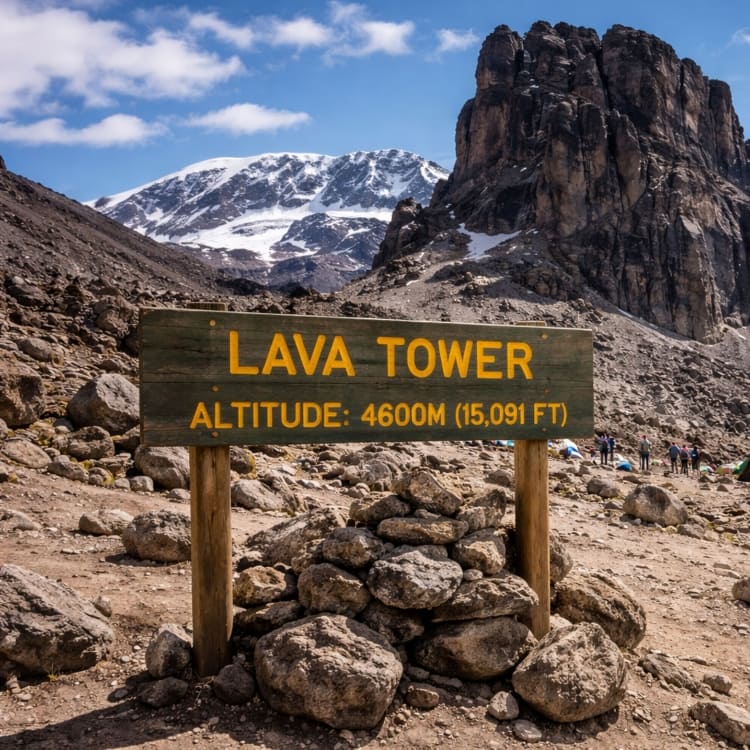
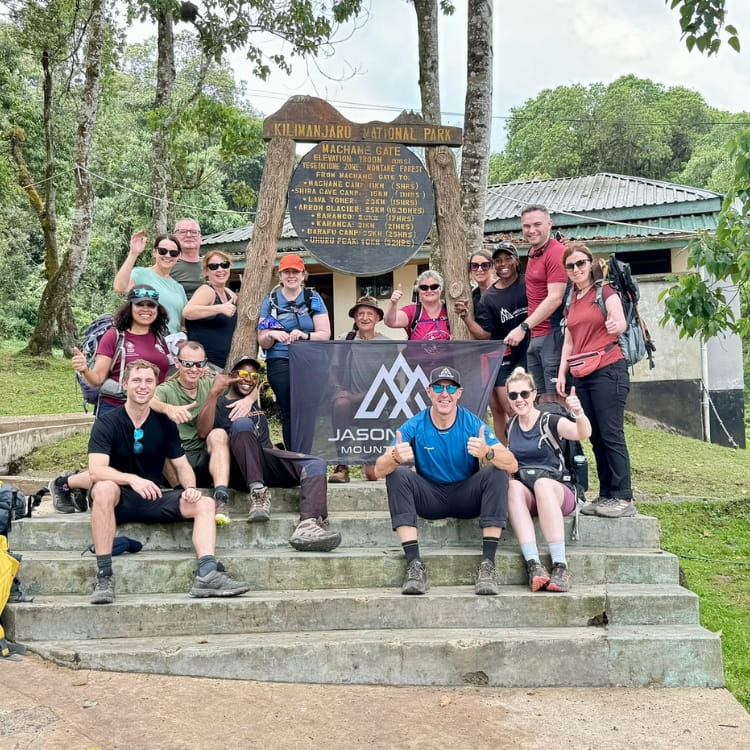
Day 1 begins at Machame Gate at 1,814 metres in dense tropical rainforest. By Day 2 you are on the vast Shira Plateau at 3,833 metres, an ancient collapsed volcanic caldera with panoramic views of the summit massif above. Day 3 takes you through alpine desert to the Lava Tower at 4,600 metres for a critical acclimatisation push before dropping to Barranco Camp at 3,960 metres to sleep. Day 4 includes the famous Barranco Wall scramble before reaching Karanga Camp. Day 5 moves to Kosovo Camp at 4,870 metres, the Black Mountaineering summit launch point. And on Day 6, at midnight, the summit push begins.
The glaciers become visible as you approach the upper mountain. From Kosovo Camp you can see the ice fields above in the dark. At Stella Point you stand beside them. From Uhuru Peak at 5,895 metres you stand above them, looking back down at what remains of one of the most famous natural features in Africa.
In 2026, those glaciers are still there. They are still breathtaking. They are still worth every step of the seven days it takes to reach them.
But they are smaller than they were last year. And they will be smaller again next year.
The Machame Route in 2026 is the best available version of this expedition that will exist. That is not marketing. That is simply true.
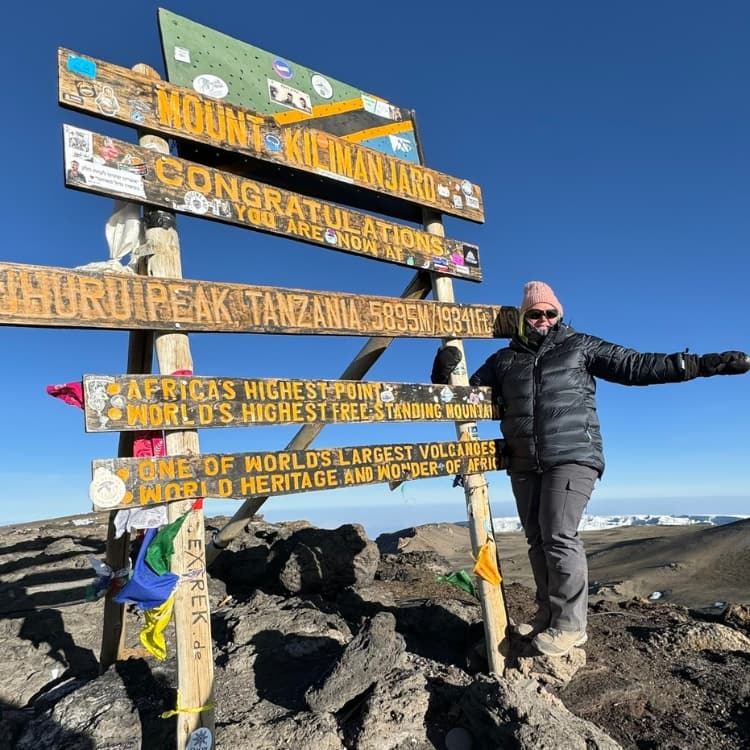
The Black Mountaineering Kilimanjaro Expedition
The Black Mountaineering Kilimanjaro Expedition is a fully guided ten-day expedition on the Machame Route, led by Jason Black. Jason holds the world record for the fastest double summit of Kilimanjaro in a single day and has stood on this peak in conditions most operators would not attempt. The expedition is built around small teams, expert leadership, and a safety standard that treats every altitude band as a decision point rather than a formality.
What the expedition includes:
Four 2026 dates remain open: July, August, September, and October. Each window is limited to a small group.
The ten days are structured as follows. Day 1 is arrival at Kilimanjaro International Airport and transfer to the hotel in Moshi. Day 2 is the Chemka Hot Springs immersion and private camp under the stars. Day 3 includes a Maasai village visit before the climb begins at Machame Gate. Days 3 through 9 follow the full Machame Route from the rainforest gate at 1,814 metres to Uhuru Peak at 5,895 metres and the descent to Mweka Gate at 1,638 metres. Day 10 is Jason’s personal curated cultural experience covering local coffee fields, a waterfall swim, a village school visit, and a rooftop dinner. Day 11 is departure or optional safari extension.
What is included in the cost:
Four nights hotel accommodation on a shared basis, with breakfast and board included for two nights pre-climb and two nights post-climb. All meals on the mountain across the full ascent and descent. All group climbing gear. Full porter service. All mountain guides and local support staff. All park fees, permits, and tour fees. All in-country transport. Oxygen bottles and masks, a portable mountain shelter, and a stretcher on every trip. Jason’s personal Day 10 experience.
Cost and booking:
€3,499 per person. A €399 deposit secures your place. The balance is due closer to departure. Full payment and cancellation terms are available at the expedition booking page.
What is not included:
International flights to and from Kilimanjaro International Airport. The Tanzanian visa, which is $50 USD for most passports and payable on arrival. Vaccinations and anti-malarial tablets. Personal spending in Moshi. Tips for the mountain team, which are handled collectively at a rate of $200 per person and distributed at the end of the expedition.
Travel insurance is mandatory and must cover non-technical trekking to 6,000 metres in Tanzania, including helicopter evacuation. Black Mountaineering recommends True Traveller for this cover.
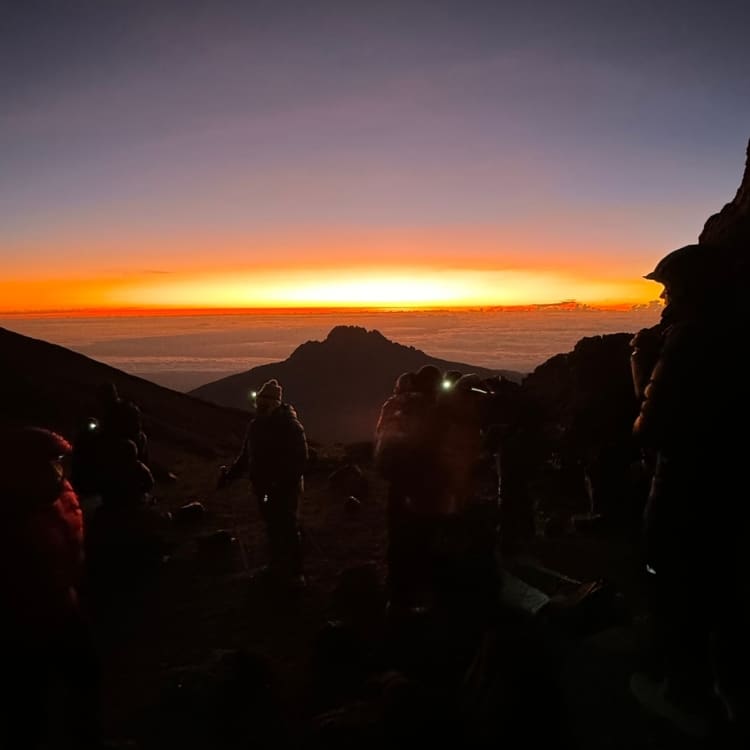
The Glaciers Will Not Wait. Neither Should You.
The snows of Kilimanjaro that Hemingway made famous in 1936 are not gone yet. The glaciers that remain at Stella Point and the crater rim are still there to be seen, still glowing in the first African light of a summit dawn, still one of the genuinely irreplaceable natural experiences available to a person willing to put in the work to reach them.
But the work has a deadline now that it did not have a generation ago.
If this mountain has been on your list, 2026 is not a year to delay. It is a year to go.
The retreat of the Kilimanjaro glaciers is not reversible on any human timescale. What exists today is what you have to work with. What exists in ten or twenty years is genuinely uncertain.
Go while the ice is still there. Go while the sunrise still catches those glacier walls and turns them orange at 5,745 metres. Go while the snows of Kilimanjaro still exist to stand beside.
The mountain is ready. The question is whether you are.