Expert Acclimatization. Medical Support. Unmatched Experience.
There are dozens of operators who will take you up Mount Toubkal. Most will hand you a itinerary, point you toward the trailhead, and hope for the best. What we do at Jason Black Mountaineering is something different. And the numbers prove it.
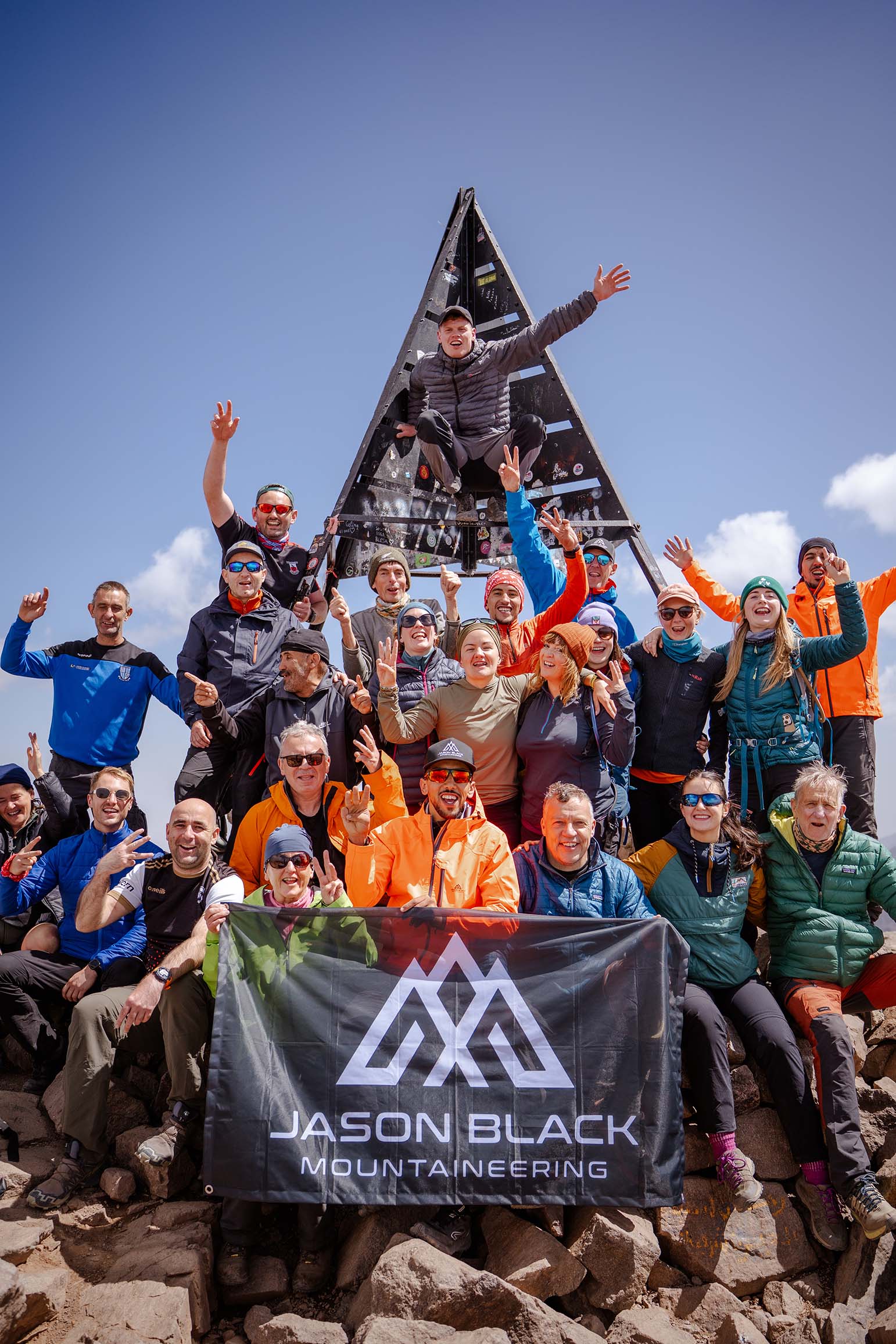
Our summit success rate on Toubkal stands at 100%.
That doesn’t happen by accident. It happens because of how we plan, how we lead, and who we put in front of you from the moment you land in Marrakesh.
North Africa’s Highest Peak
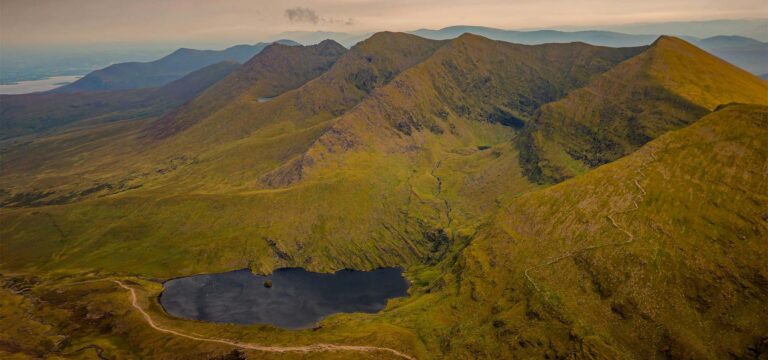
Mount Toubkal rises to 4,167 metres in the heart of Morocco’s High Atlas Mountains. It is North Africa’s highest point, and it earns that distinction with every metre you climb. The terrain is honest. Boulder fields and scree on the upper mountain. Deep valley crossings. Long days on foot through ground that has no interest in your schedule.
This is not a casual hill walk. Six to eight hours of trekking per day across five days demands preparation, focus, and sound leadership. The summit push via the south cirque covers 17 kilometres with close to 1,000 metres of ascent and over 2,200 metres of descent. The altitude bites. The legs feel it. Your lungs remind you, politely at first and then less so, that you are operating above 3,500 metres.
That physical reality is exactly why choosing the right operator matters.
Why Small Groups Change Everything
We cap our Toubkal expeditions at ten people. That is a deliberate choice, not a logistical limitation.
When you keep groups small, the guide-to-client ratio stays tight. Problems get caught early. Pace adjustments happen in real time. No one falls behind unnoticed. No one gets swept along faster than their body is ready for.
This is not a mass-market tour. You are not one face in a crowd of twenty-five strangers moving through a checklist. You are a member of a team, and every person on that team matters. The experience is personal. The accountability is real. And when the going gets hard above 3,600 metres on summit day, that tight group dynamic becomes one of the most important assets you have.
Acclimatization Done Properly
Acute Mountain Sickness is the most common reason climbers fail on high-altitude objectives. It is not a sign of weakness. It is physiology. And it is manageable when you treat acclimatization with the respect it deserves.
Our Toubkal route is structured to let your body adapt. We begin at Marrakesh at 466 metres, move to Imlil at 1,740 metres, climb through Aremd at 1,900 metres, and sleep at the Toubkal Refuge at 3,206 metres before the summit push. Each stage is deliberate. We do not rush. We climb at the pace the mountain allows, not the pace a tight commercial schedule demands.
We also ensure you know the warning signs of AMS before you ever set foot on the trail. Sleeplessness, headache, loss of appetite, shortness of breath — these are not things to push through. They are signals to communicate. Every team member knows to report symptoms immediately, and our leaders are trained in first aid and altitude management.
If descent is the right call, we make it without hesitation. Your safety is not negotiable.
Leadership That Has Stood on the World’s Hardest Peaks
Jason Black has summited Everest, Ama Dablam, and every one of the Seven Summits. That is not a marketing line. It is the foundation of every decision made on expedition.
When Jason stands with you at the Tizi n’Toubkal saddle at 3,975 metres, with the Sahara visible in the distance on a clear day and the scree dropping away beneath your feet, he is drawing on thirty years of expedition experience. He knows what proper preparation looks like. He knows what a team in trouble looks like. He knows the difference between discomfort that is part of climbing and danger that demands action.
That knowledge shapes how we build our teams, how we train our guides, and how we lead every day on the mountain.
The Route: Marrakesh to the Summit and Back
Day 1 — Arrival in Marrakesh
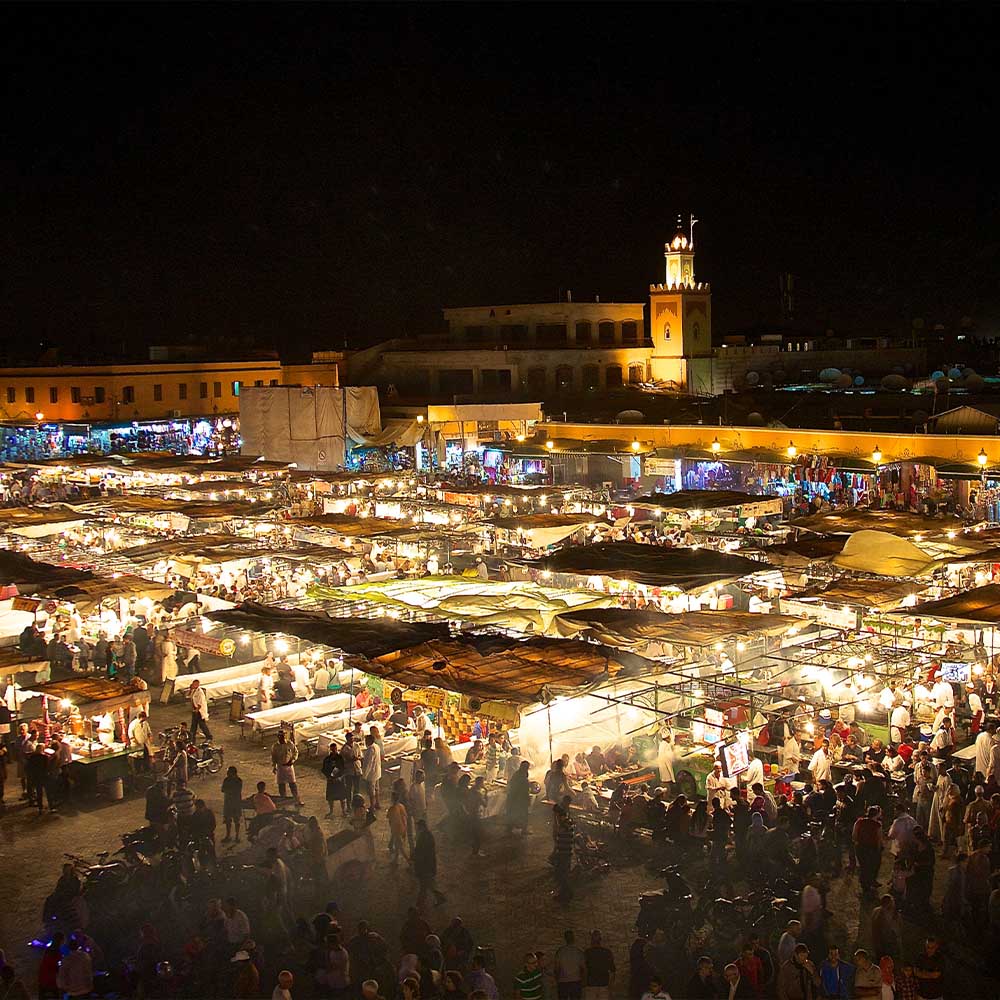
We meet you at Marrakesh Menara Airport and bring you to our Riad in the Medina. The evening begins with a welcome meeting, team dinner, and a first look at the days ahead. Explore the souks, sip mint tea at Jemaa el-Fna, or rest. Tomorrow the real work starts.
Day 2 — Imlil to the Toubkal Refuge
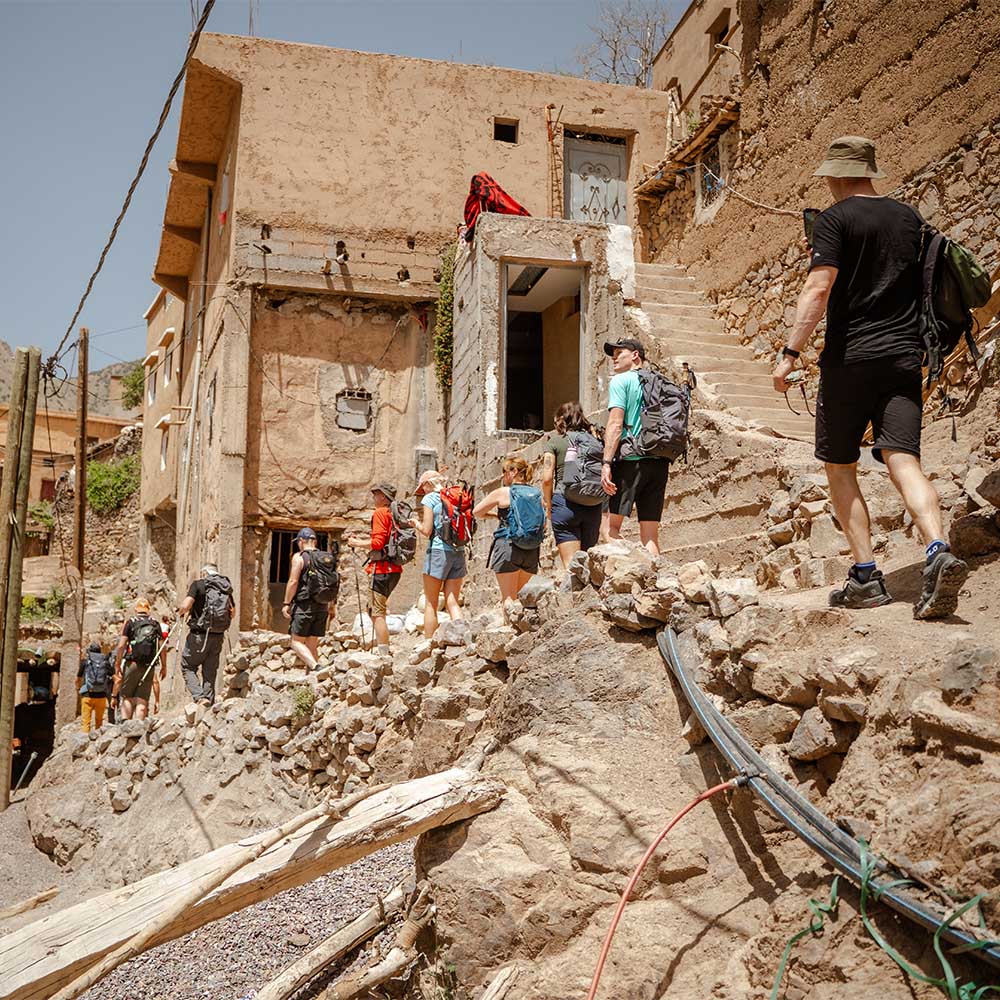
We drive south from the city into the Toubkal Massif, leave the vehicle at Imlil, and begin trekking along the Mizane Valley. The route passes through the Berber village of Aremd and the pastoral shrine of Sidi Chamrouche beside a waterfall before climbing steeply to our refuge accommodation at 3,206 metres. Eleven kilometres. Six to seven hours. The Atlas Mountains reveal themselves fully today.
Day 3 — Summit Day
Early start. We move up the south cirque through scree and boulders to the Tizi n’Toubkal saddle at 3,975 metres, then to the summit at 4,167 metres. On a clear day, the panorama takes in the Marrakesh plain, the full breadth of the High Atlas range, and reaches south toward the Sahara. We descend to Aremd for the night. Seventeen kilometres. Ten to eleven hours. Bring your personal snacks for the push.
Day 4 — Return to Marrakesh
A short descent back to Imlil, then the drive north to the Red City. Time to visit the Koutoubia Mosque, get lost in the souks, and find something worth carrying home. The evening brings a celebration dinner — real Moroccan flavours, dancing, and the quiet satisfaction of a summit earned.
Day 5 — Departure
We get you to the airport. Simple. Done properly.
The Culture Is Part of the Climb
Toubkal does not exist in isolation. The High Atlas Mountains are home to the Berber people, whose villages have shaped these valleys for generations. Aremd, the largest village in the Mizane Valley, is a patchwork of farms, gites, and mule tracks where corn, potatoes, and walnuts still grow on terraced land. The shrine of Sidi Chamrouche draws pilgrims and travellers alike.
We stay in traditional mountain accommodation. We eat home-cooked Berber meals. We share space with the people who call these mountains home. That immersion is not an add-on. It is built into every day of the expedition.
Marrakesh bookends the whole experience, and it earns its place. The hum of the souks, the call to prayer echoing across the old city, the organised chaos of Jemaa el-Fna — it all sits in honest contrast to the silence of the high Atlas.
What It Costs. What It Covers.
The expedition is priced from €599 per person. That includes:
Guided summit trek to Toubkal, Marrakesh Riad hotel and breakfast, mountain accommodation on a bed and board basis, qualified Jason Black Mountaineering mountain guides, a welcome meeting and team dinner, cultural visits including the shrine of Sidi Chamrouche, waterfall swims, the Jemaa el-Fna arts and crafts experience, all meals on the mountain, and all transfers between destinations.
Optional additions include a single room supplement from €80 per night, a sunrise hot air balloon over Marrakesh at €175 per person, and a traditional Hammam experience at €35 per person.
Travel insurance covering hillwalking up to 4,200 metres in Morocco, including medical and trip interruption cover, is mandatory. We recommend True Traveler.
The Training Plan: How to Show Up Ready
This climb does not require prior mountaineering experience. It does require honest physical preparation. We provide a full 12-week training plan that builds aerobic capacity, leg strength, and the specific endurance needed for multi-hour days on steep terrain.
The programme includes Zone 2 aerobic running, structured hill repeats, strength training, and long weekend treks. It progresses over twelve weeks from a foundation of 30-minute runs and 6 x 100-metre hill repeats through to 45-minute runs, flat speed work, and 12-interval HIIT sessions. Every session includes a 15-minute warm-up and 15 to 20 minutes of cool-down.
Show up trained. The mountain will notice.
Key Gear Checklist
Pack light. Pack smart.
Bags: an 80-90 litre waterproof duffle (carried by mules) and a 25-30 litre daypack kept under 5-6 kg.
Clothing: layering is everything. Bring a 600-fill insulated jacket, waterproof shell jacket and trousers, fleece, hiking trousers, and a minimum of two trekking shirts.
Footwear: broken-in hiking boots are non-negotiable. Bring trail runners for recovery and crocs or sandals for the refuge.
Headwear: sun hat with neck cover, woollen hat, quality sunglasses, and a head torch.
Summit day essentials: four energy bars minimum, two one-litre water bottles, and hydration tablets.
Medical kit: paracetamol, ibuprofen, a course of antibiotics, antiseptic wipes, blister packs, and insect repellent. Discuss Diamox with your doctor before departure if you have concerns about acclimatization.
Why This Matters Beyond the Summit
There is something that happens above 3,000 metres that is difficult to articulate before you experience it. The noise of ordinary life falls away. The body is occupied with a clear, honest task. The people around you are focused on the same thing.
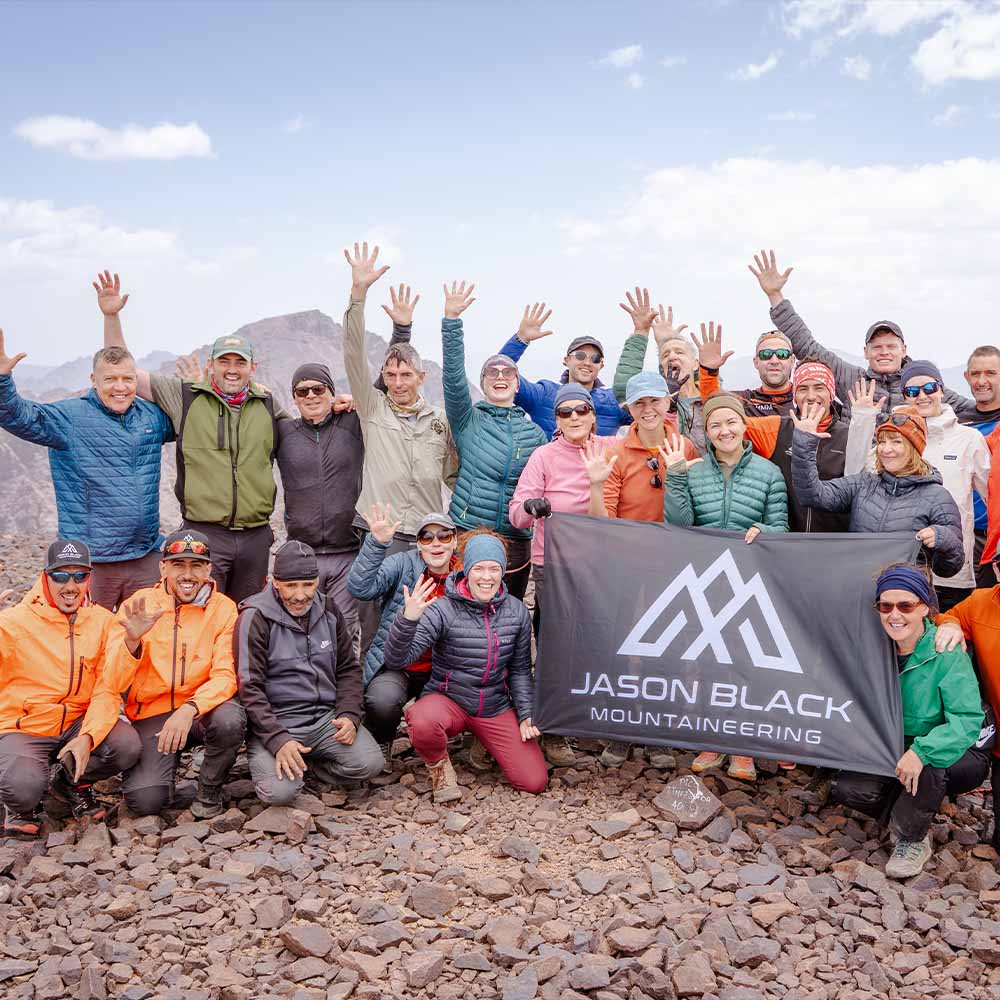
The summit of Toubkal does not change you in the way a motivational poster might promise. What it does is give you a clear and honest measure of yourself: your preparation, your resilience, your capacity to keep moving when the air is thin and the scree is sliding under your boots. That measure stays with you.
We build these expeditions to earn that summit, not guarantee it cheaply. The 100% success rate reflects preparation, not luck.
Rise with the mountain.