The March Rush and the Reality Beyond
The Reeks in March feel like pure adrenaline.
Cold air bites at exposed skin. Your boots are laced tight, waterproofs crisp and new. The nervous energy at Cronins Yard is electric. Everyone talks fast, checks their gear twice, fidgets with pack straps. This is it. The start of something big.
Then you climb. And the MacGillycuddy Reeks remind you what mountains do best: they make you work for every meter gained. But there’s joy in that work. Fresh legs. Fresh mindset. You summit, snap the photo, feel the rush. One down. Six to go.
You head home buzzing. September feels close. Seven months? That’s nothing.
Then April arrives. Then May. Then the calendar pages turn faster than your training schedule keeps up, and somewhere around late June, a quiet voice starts asking: what have I signed up for?
This is the July Wall. And it’s real.
Understanding the Psychological Route Map
The Ireland 7 Summits Challenge isn’t just a physical test. It’s a seven-month relationship with your own limits, your excuses, and your capacity to keep showing up when the newness wears off.
Most people prepare their kit. Fewer prepare their minds.
The challenge runs from March 21st through September 5th. That’s 168 days. Twenty-four weeks. Enough time for life to throw curveballs, for injuries to whisper doubts, for motivation to evaporate like mist off Lough Achree.
But here’s what experience has taught me after years leading people across Ireland’s high places: motivation is a terrible strategy. Systems are what get you to Donegal.
Let me break down what actually happens across those seven months, and more importantly, how to navigate each stage without burning out before you reach the Seven Sisters.
Stage One: The Foundation (March to April)
The Reeks (March 21) and the Mournes (April 18)
These first two summits are your foundation. Not just physically, but psychologically.
The MacGillycuddy Reeks introduce you to what “mountain time” actually means. The 8.5-hour duration isn’t about speed. It’s about acclimatization to a different pace. Your legs learn to work on terrain that doesn’t care about your gym PR or your parkrun time. Granite and sandstone don’t negotiate.
Then the Mournes arrive four weeks later. County Down’s compact granite peaks rising from Carlingford Lough. Seven hours moving through terrain that’s older than you can properly comprehend.
This is where your routine starts forming. Drive time. Gear prep the night before. The ritual of lacing boots in the car park. The rhythm of walking poles on stone.
What to Focus On:
Build your systems now. Not motivation. Systems.
Pack your bag the same way every time. Waterproofs in the top compartment. First aid kit in the same pocket. Snacks accessible without stopping. Water bottles where you can grab them mid-stride.
Document your pre-hike routine. What you eat the night before. When you leave home. What gear checks you do. Make it boring. Make it repeatable. Because in July when your motivation has gone quiet, your systems will still be there.
The body adapts faster than the mind. Let these first two climbs teach your legs what’s expected, but more importantly, let them teach your brain that you can do hard things even when they’re not exciting anymore.
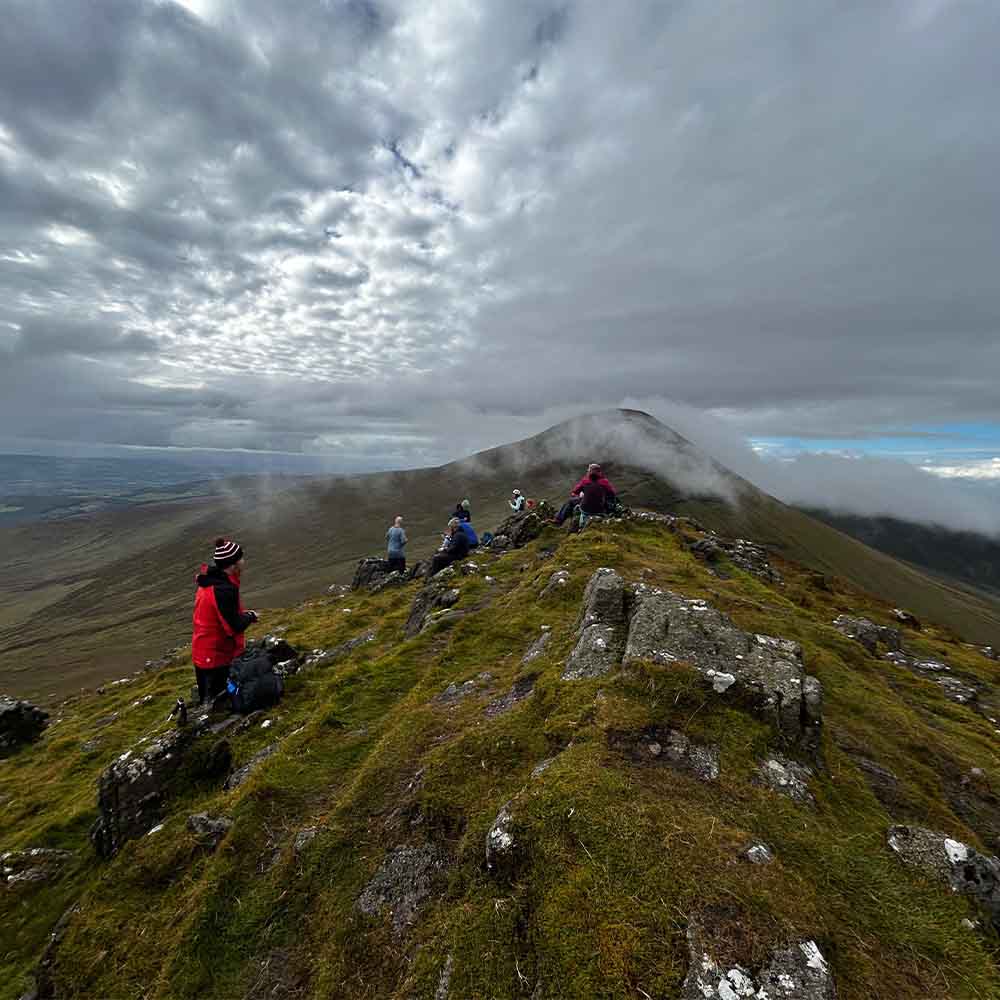
Stage Two: The Momentum (May to June)
Twelve Bens (May 16) and Ox Mountains Nephin (June 6)
May brings Connemara. The Twelve Bens sprawl across the landscape like a geology lesson written in quartzite. Benbaun stands at the center. You’ll move for 6.5 hours through terrain that demands respect.
Three weeks later, you’re in the expansive wilderness where Counties Sligo and Mayo meet. The Ox Mountains and Wild Nephin National Park. Eight hours. Ancient gneiss and schist. Atlantic blanket bogs. River systems cutting through valleys that make you feel properly small.
This is your momentum phase.
Four summits done. Three remaining. You’re past halfway by count, but September is still three months away.
Here’s where the rhythm matters more than the excitement.
What to Watch For:
This is when people start making excuses. Work gets busy. A minor knee twinge becomes a reason to skip training. The weather forecast looks grim. There’s always next month.
Don’t negotiate with yourself.
Training between summits isn’t optional. It’s the difference between finishing strong and limping to Errigal with shot knees and a broken spirit.
Two sessions per week minimum. One long walk with your actual pack and actual boots. One strength session focused on single-leg stability and core endurance. Nothing fancy. Just consistent.
Your body needs progressive loading. Your mind needs proof that you’re serious about this.
Recovery Rituals:
Build these in now before you need them desperately.
After each summit, take one full rest day. Not “active recovery.” Actual rest. Sleep late. Eat well. Let the muscle fibers repair.
Then book a sports massage within the week. Not a spa treatment. A proper deep tissue session that finds the knots you didn’t know were forming.
Stretch daily. Foam roll the IT bands and calves. Bore yourself with consistency.
These aren’t luxuries. They’re insurance policies against the July Wall.
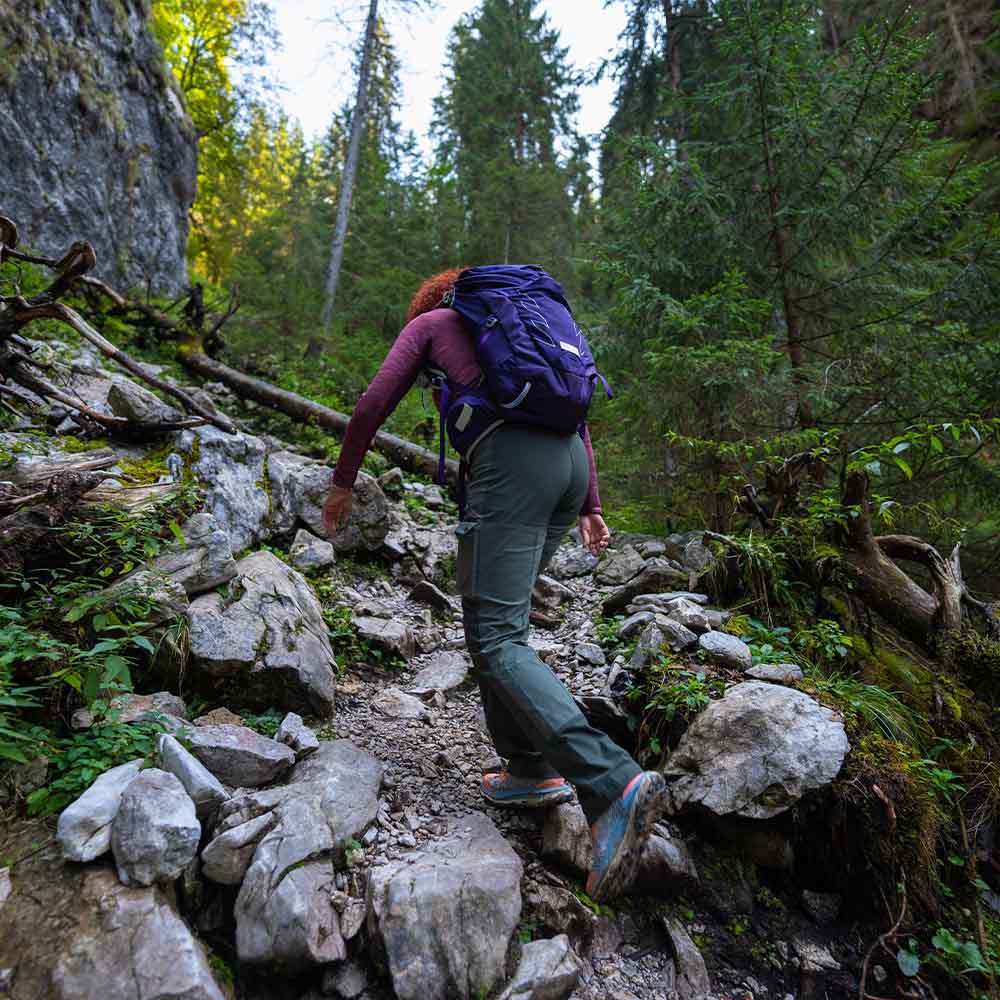
Stage Three: The Crucible (July to August)
Galtee Mountains (July 18) and Comeraghs (August 15)
Welcome to the hardest month that nobody warns you about.
July arrives with heat. Irish summer heat, which means unpredictable and often brutal when you’re carrying 20 liters on your back up sandstone ridges.
The Galtee Mountains sit in Munster. Galtymore at the center. One of Ireland’s highest peaks. Eight hours of work. The Glen of Aherlow far below.
You’ve been training for four months now. The excitement of March is a distant memory. September is still six weeks away. You’re tired. Properly tired. Not “I need a rest day” tired. “I need a rest month” tired.
This is the July Wall.
What’s Actually Happening:
Your body is adapting, but adaptation is stressful. Four months of progressive loading adds up. Small fatigues become chronic if you’re not careful.
Your mind is bored. The training sessions that felt purposeful in April now feel like obligations. The weather is warmer but your motivation is colder.
This is normal. Expected. Manageable.
The Burnout Barometer:
Check yourself honestly against these markers:
- Sleep quality declining
- Resting heart rate elevated by more than 5 beats per minute
- Appetite changes (either increased hunger or loss of appetite)
- Irritability with training partners or family
- Minor aches becoming persistent
- Training sessions feeling harder at the same intensity
- Thoughts of quitting appearing more frequently
If you’re showing three or more of these, you need intervention, not inspiration.
How to Navigate the Wall:
First, acknowledge it. The July Wall isn’t weakness. It’s physiology meeting psychology in a car park somewhere in Munster and having an honest conversation.
Second, adjust volume, not commitment. Cut training sessions by 20%. Same frequency, shorter duration. Maintain the habit, reduce the load.
Third, bring in variety. If you’ve been walking the same local hills every week, drive somewhere different. New terrain tricks the brain into paying attention again.
Fourth, get support. Tell your training partners you’re struggling. Let your family know this month is harder. Ask for practical help, not pep talks.
Then comes August. The Comeraghs in County Waterford. Coumshingaun Lough carved by glaciers into terrain that reminds you why you started this in the first place. Ten hours. The longest day of the series.
If you can get through August, you’ve earned September.

Stage Four: The Legacy (September)
Seven Sisters Donegal (September 5)
The final summit. Errigal standing at 751 meters. The highest point of the Derryveagh Mountains.
You’ll sign on at 7:00am. Wild Atlantic Camp will still be dark. Your pack will feel familiar now. The ritual of gear checks automatic. You’ve done this six times already.
Ten hours ahead of you. The longest distances of the entire series. 15k, 18k, or 21k depending on your pace group.
But something shifts when you know it’s the last one.
The tiredness doesn’t disappear. Your legs still ache from months of accumulated work. But the weight of “seven months of training ahead” is gone. Replaced by “one more climb.”
The Final Push:
September motivation is different from March motivation.
March is enthusiasm. September is evidence.
You’ve proven to yourself that you can start something hard. That you can show up when it’s boring. That you can push through the July Wall. That you can maintain systems when motivation goes quiet.
The Seven Sisters won’t care about any of that. They’ll demand the same respect as the Reeks did in March.
But you’re different now. Not because you’re fitter (though you probably are). Because you’ve learned that finishing isn’t about feeling inspired every day. It’s about showing up especially on the days you don’t feel inspired.
The view from Errigal across Glenveagh National Park will taste different because of what it cost to get there.
That’s the legacy you’re building. Not a completion certificate. Evidence of what you’re capable of when you refuse to negotiate with yourself.
The Micro-Peak Framework: Treating Each Summit as Its Own Season
Here’s the shift that changes everything: stop thinking of this as one seven-month challenge.
Think of it as seven individual challenges that happen to build on each other.
March/April: Building Grit
The Reeks and Mournes are about establishing baseline competence. Can you move safely in technical terrain? Do you understand your gear? Can you pace yourself over 7-8 hours?
Success here looks like: no injuries, systems established, confidence building.
May/June: Finding Your Rhythm
The Twelve Bens and Ox Mountains Nephin are about proving your systems work. Can you recover between summits? Is your training sustainable? Are you adapting or accumulating fatigue?
Success here looks like: consistent training completion, recovery protocols working, enjoying the process.
July/August: Fighting Burnout and Heat
The Galtees and Comeraghs are about mental resilience. Can you push when it’s hard? Can you adjust when needed? Can you keep showing up when the novelty is gone?
Success here looks like: managing the Wall without quitting, adjusting intelligently, maintaining commitment.
September: The Final Push
The Seven Sisters are about finishing what you started. Can you deliver when tired? Can you honor the work you’ve already done? Can you prove to yourself that you meant it?
Success here looks like: standing on Errigal, having given your best to all seven.
Practical Strategies: The Recovery Rituals That Actually Matter
Theory is fine. Systems are better. Here’s what works:
Between Summit Recovery (24-48 Hours Post-Climb):
Day 1: Complete rest. Sleep as much as your body wants. Eat protein-rich meals. Hydrate aggressively. Do nothing else.
Day 2: Light movement only. 20-minute easy walk, no pack, flat terrain. Gentle stretching. Maybe a swim if you have access to cool water.
Weekly Training Structure (Non-Summit Weeks):
Monday: Rest or very light mobility work Tuesday: Long walk, 2-3 hours, moderate terrain, with pack Wednesday: Strength session focusing on single-leg work and core Thursday: Rest or easy movement Friday: Hills session, 60-90 minutes, progressive intensity Saturday: Long walk or moderate hike, 3-4 hours Sunday: Rest
Gear Reset Protocol:
After each summit, completely empty your pack. Clean everything. Check for wear. Replace anything questionable. Repack methodically.
Wash your boots properly. Check the tread. Treat the leather. They’re carrying you across Ireland; show them respect.
Inspect all waterproofs for wear points. Test zippers. Re-proof if needed.
This isn’t obsessive. It’s insurance. Gear failure on the Comeraghs in August will wreck your day in ways that no amount of motivation can fix.
Mental Recovery Spots:
Build in quarterly reset moments. After the Mournes (end of April), take a full week of reduced training. Walk for pleasure, not structure.
After Ox Mountains Nephin (mid-June), give yourself three days completely off. Not “active recovery.” Off. Read books. Sleep late. Remember why you wanted this in the first place.
After the Comeraghs (mid-August), take another full week easy. You’re two weeks from Errigal. Banking rest now means you’ll arrive at Donegal ready to finish strong, not just survive.
Signs You’re on Track vs. Signs You Need to Adjust
On Track Looks Like:
Training sessions feel challenging but achievable. Recovery is happening within 48 hours of hard efforts. Sleep quality is good. Appetite is normal. You’re looking forward to the next summit, even if you’re also nervous about it. Minor aches resolve with rest. You’re hitting your planned training more than 80% of the time.
Adjust Now Looks Like:
Every training session feels like a grind. Recovery is taking 3-4 days. Sleep is disrupted. You’re either ravenous or not hungry. The next summit feels like an obligation, not an opportunity. Aches are becoming pains. You’re completing less than 60% of planned training.
If you’re in the second category, stop. Assess honestly. Usually, you need one of three things:
More rest. Cut volume by 30% for two weeks. Same frequency, shorter sessions.
Different stimulus. Change your training terrain. Join a different group. Add variety.
Medical check. Persistent pain, persistent fatigue, or sudden performance drops might need professional eyes.
Pride doesn’t get you to Donegal. Smart adjustment does.
The Real Talk Section: When You Want to Quit
Let’s be honest about something nobody mentions in the promotional materials.
Somewhere between July and August, you will think about quitting.
Not because you can’t do it. Because you’re tired and it’s optional and nobody will care if you stop except you.
The mountains won’t judge you. Your family will probably be relieved. Your friends will say “at least you tried.”
So why continue?
Not because of sunk cost. Not because you paid €349. Not because you told people you were doing this.
Continue because of what finishing proves: that you can sustain commitment when it’s hard.
That’s a rare skill. Most things in life allow you to quit when they get boring or difficult. Jobs, relationships, hobbies—there’s usually an exit ramp when it stops being fun.
The Ireland 7 Summits Challenge doesn’t care if you’re having fun in July. It just exists. Seven peaks. Seven months. Show up or don’t.
And showing up, especially when you don’t want to, builds something in you that translates to everything else you’ll ever do.
The view from Errigal is beautiful. But the real reward is knowing you saw this through when quitting was easier.
That knowledge doesn’t expire. It becomes evidence you can draw on forever.
What September Actually Means
The completion of the Ireland 7 Summits Challenge isn’t an ending. It’s calibration.
You’ll know what seven months of sustained effort toward a single goal actually requires. Not what you imagine it requires. What it actually costs in terms of time, recovery, adaptation, and mental resilience.
That knowledge recalibrates your sense of what’s possible.
The next challenge, whatever it is, gets measured against this baseline. And most things you’ll face will be shorter, less physically demanding, or more immediately rewarding than seven Irish mountain ranges across seven months.
Which means you’ll approach them differently. With more confidence. Less drama. Better systems.
The Ireland 7 Summits medal is nice. The photos from Errigal are nice.
But the real prize is the recalibrated version of yourself that exists on September 6th. Someone who now knows, through direct experience, that they can commit to something hard and see it through.
Everything else you do benefits from that knowledge.
Your Move: What to Do Right Now
If you’re reading this before March, start building your systems now. Pack your bag repeatedly until it’s automatic. Test your waterproofs in actual rain. Walk in your boots until the hot spots show themselves while you still have time to address them.
If you’re between March and June, audit your recovery protocols. Are you actually resting? Or are you confusing activity with recovery? Build in the quarterly reset weeks now before you need them desperately.
If you’re in the July to August crucible, acknowledge where you are. Cut volume if needed. Find variety. Get support. Adjust intelligently. September is close enough now that you can see it from here.
If you’re post-challenge, reflect honestly on what worked and what didn’t. That knowledge is valuable. Bank it for the next hard thing.
And if you’re considering whether to sign up at all, understand this: it will be harder than you imagine in March. The July Wall is real. Your motivation will disappear for weeks at a time.
But you’ll also discover you’re capable of more than you think. That systems beat motivation. That showing up when you don’t want to builds something that inspiration speeches never will.
Seven summits. Seven months. One question: will you see it through?
The mountains are already there. They’re not going anywhere. The only variable is you.
Rise with the mountain.
Secure Your 2026 Challenge Place