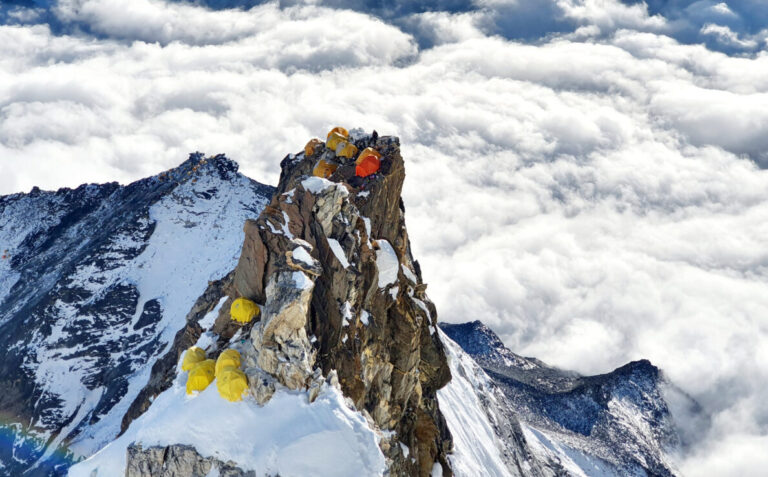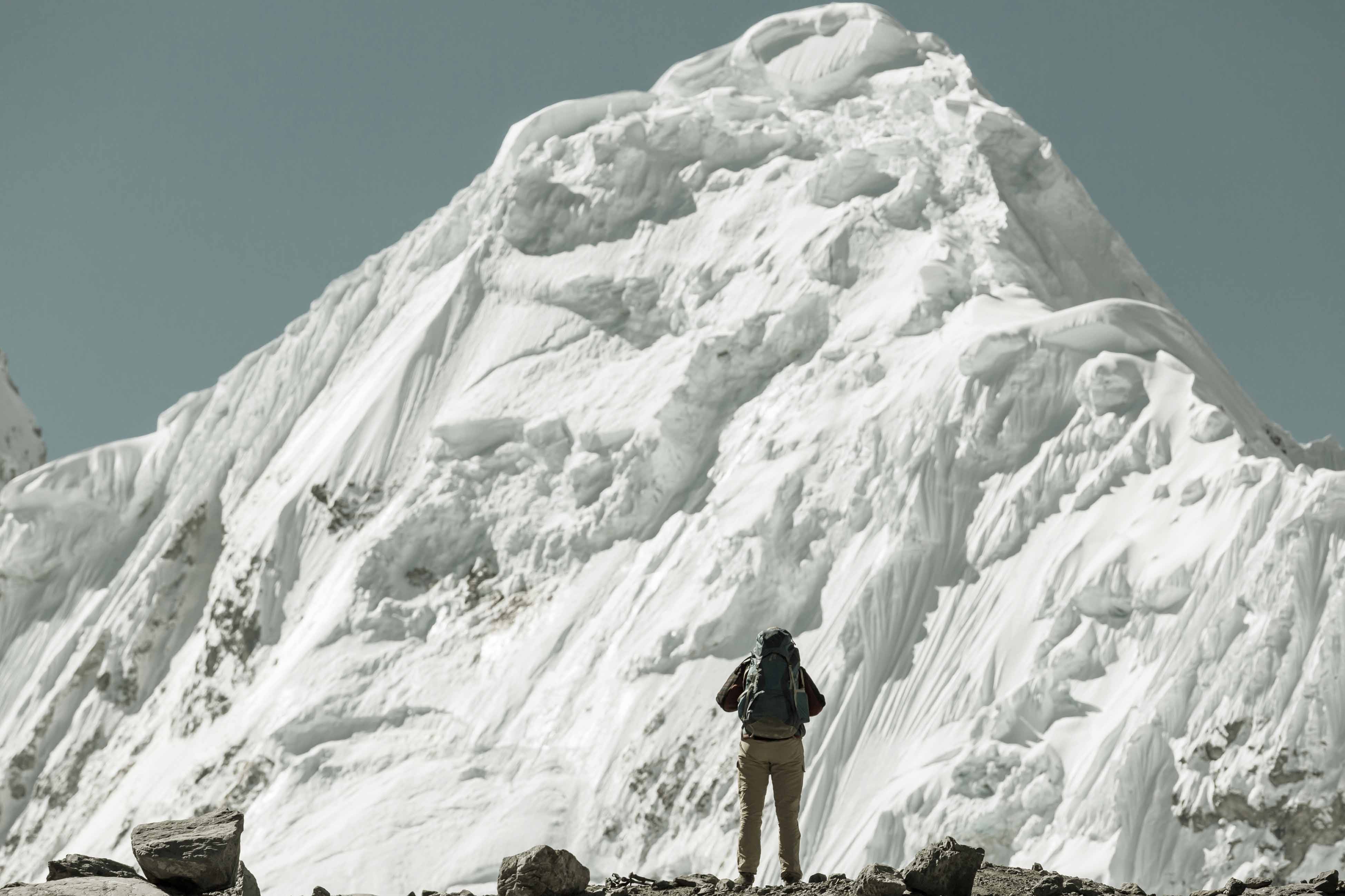
The wind screams at 100 kilometers per hour. The temperature sits at minus 40 degrees Celsius. Your oxygen-starved brain operates at 30% capacity. And in the next sixty seconds, you must make a decision that will determine whether your entire team lives or dies.
This is K2. This is the Savage Mountain. This is where leadership isn’t theory—it’s survival.
Now imagine channeling that decision-making clarity, that crisis-tested judgment, that world-class navigational expertise into your boardroom, your quarterly strategy session, your next high-stakes negotiation.
Welcome to “The Guide Effect”—an exclusive leadership development experience where one of the world’s most accomplished high-altitude mountaineers translates extreme environment decision-making into transformative corporate leadership insights.
The Bottleneck Principle: Decision-Making Under Ultimate Pressure
K2’s notorious Bottleneck is a 100-meter ice couloir at 8,200 meters, directly beneath massive hanging seracs that can collapse without warning. It’s the most dangerous section of the most dangerous mountain on Earth. One in four climbers who attempt K2 don’t return home.
I’ve navigated this gauntlet. I’ve made life-or-death decisions with a brain starved of oxygen, in conditions that would shut down most decision-making processes entirely.
Here’s what the death zone teaches corporate leaders: When you strip away comfort, time, and certainty, what remains is the essence of leadership.
The Framework: VUCA Before It Had a Name
The military coined VUCA (Volatility, Uncertainty, Complexity, Ambiguity) to describe modern operational environments. But mountaineers have lived in permanent VUCA for centuries:
- Volatility: Weather systems that shift from calm to deadly in minutes
- Uncertainty: Snow conditions that can’t be predicted with certainty
- Complexity: Multi-variable route decisions involving altitude, weather, team capacity, and time windows
- Ambiguity: Incomplete information requiring judgment calls with irreversible consequences
On K2, I refined a decision-making framework that translates directly to executive leadership:
1. Establish Non-Negotiable Parameters
Before we even reach base camp, we define turn-around times, weather thresholds, and team health minimums. These aren’t guidelines—they’re boundaries that prevent ego from overriding wisdom.
Corporate Translation: Define your organization’s non-negotiable values and risk thresholds before the pressure hits. When the quarterly numbers tempt you toward ethical compromise, your pre-established parameters hold firm.
2. Prioritize Information Quality Over Quantity
At altitude, you can’t analyze endless data streams. You need three critical inputs: weather forecast, team condition, route status. Everything else is noise.
Corporate Translation: Senior executives drown in information. The Guide Effect teaches you to identify the 3-5 critical data points that actually drive decisions, then tune out the rest. Like distinguishing between harmful and harmless clouds at 8,000 meters, you learn what matters and what’s distraction.
3. Accept Irreversibility
Some decisions can’t be undone. Once you commit to a summit push in a narrow weather window, retreat becomes exponentially more dangerous. You live with your choice.
Corporate Translation: High-stakes strategic pivots, mergers, or market entries aren’t theoretical exercises. The Guide Effect cultivates the emotional and analytical capacity to make irreversible decisions with confidence—and own the outcomes.
4. Team Capability Determines Strategy
The strongest climber isn’t always the one who summits. The climber who accurately assesses their limits, communicates honestly, and adapts strategy accordingly—they survive.
Corporate Translation: Your strategy is only as good as your team’s capacity to execute. Elite leaders assess capability ruthlessly but compassionately, then build strategies their teams can actually deliver.
World-Class Navigation: Finding the Route When There Is No Path
Ask any mountaineer what separates elite guides from competent ones, and they’ll tell you: navigation.
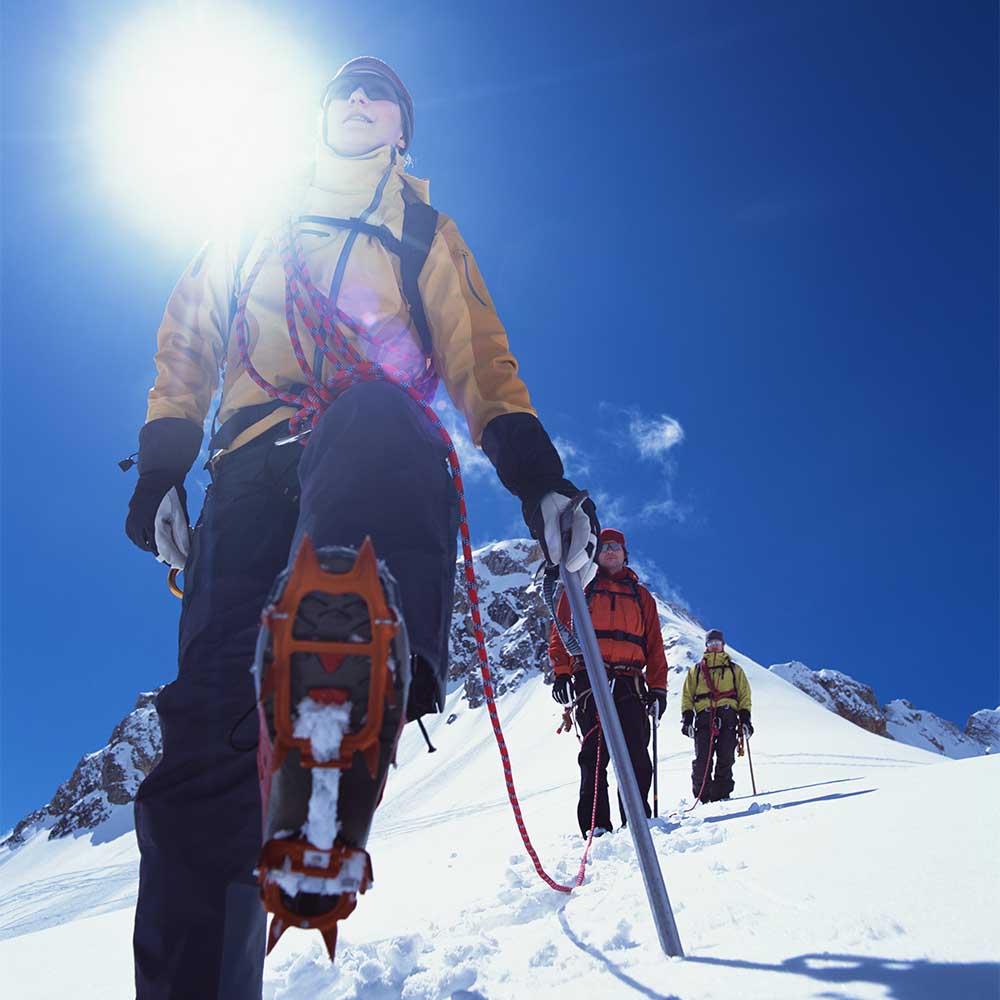
On Everest, K2, and a dozen other 8,000-meter peaks, I’ve navigated in conditions where visibility drops to three meters, where every landmark disappears in whiteout, where GPS fails and instinct becomes science.
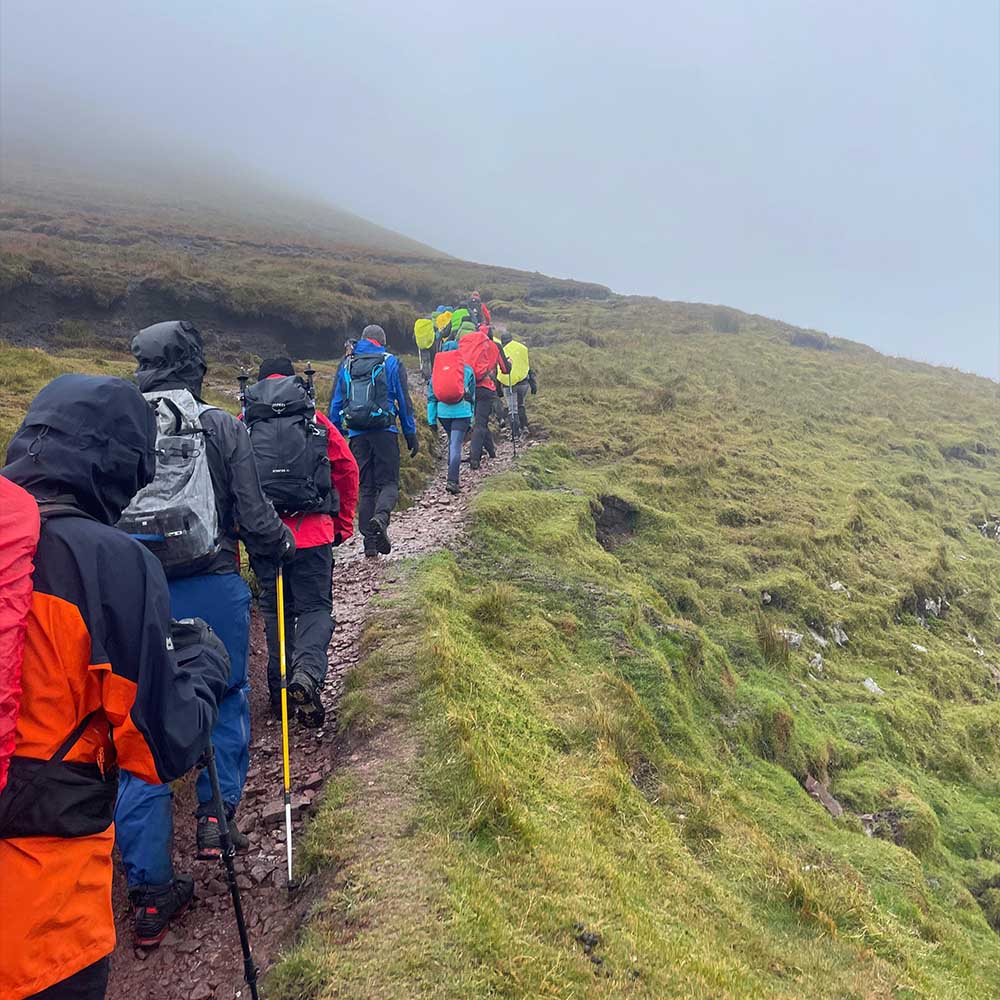
The Irish mountains were my training ground for this mastery. Slieve Donard in fog. Carrauntoohil in darkness. Lugnaquilla in driving rain. These “humble” peaks taught me that navigation isn’t about knowing the route—it’s about reading the mountain when the route disappears.
The Corporate Parallel: Strategic Navigation in Fog
Senior executives operate in perpetual fog:
- Market conditions shift without warning
- Competitive landscapes transform overnight
- Regulatory environments change the rules mid-game
- Technology disrupts established business models
Traditional strategic planning assumes visibility. Elite navigation assumes fog.
The Guide Effect Leadership Workshop teaches corporate leaders how to navigate using the same frameworks I use at altitude:
Terrain Association: Learning to read subtle indicators when major landmarks disappear. In business, this means identifying leading indicators when lagging indicators no longer provide direction.
Back-Bearing Navigation: Knowing where you came from to understand where you’re going. Corporate leaders learn to use organizational history and capability assessment to validate strategic direction.
Micro-Terrain Reading: Making decisions based on immediate conditions rather than outdated plans. The mountain doesn’t care about your itinerary—and neither does the market.
Team-Based Navigation: Distributing navigational awareness across the team rather than centralizing it in leadership. When I guide, every team member learns to read the mountain. When the unexpected happens, we don’t have a single point of failure.
The Safety Standard: Why Exceptional Beats Excellent
After 25 years of expeditions across the world’s most dangerous peaks, Jason Black Mountaineering maintains an exceptional safety record. Not “good.” Not “excellent.” Exceptional.
This distinction matters.
Excellent safety means comprehensive protocols. Exceptional safety means those protocols are stress-tested in extremis and refined through decades of real-world crisis management.
Our National 4 Peaks Challenge operates under the same safety standards I use on 8,000-meter peaks:
- UIMLA International Mountain Leader certification (the highest standard in mountain guiding)
- Wilderness First Responder qualification across all guides (advanced medical training for remote environments)
- World-class navigation skills refined in the world’s most extreme conditions
- Exceptional safety record built over 25+ years and hundreds of expeditions
- Small group approach ensuring optimal guide-to-client ratios
- Qualified mountain leaders employed based on qualifications, experience, and references
The Leadership Translation: Excellence vs. Exceptionality
Corporate culture often celebrates “excellence” without defining what separates it from mere competence. The mountains provide brutal clarity:
Excellent: Following established protocols under normal conditions
Exceptional: Adapting protocols when conditions exceed parameters while maintaining core safety principles
Excellent: Managing predictable risks effectively
Exceptional: Anticipating cascade failures and preventing them before they materialize
Excellent: Leading confidently when you have information
Exceptional: Leading decisively when information is incomplete, contradictory, or absent
Senior executives face exceptional challenges. They deserve exceptional guidance.
The Support Team Standard: Leadership Is a System, Not a Solo Summit
Here’s what most corporate leadership development gets wrong: they focus on the individual leader.
On K2, individual brilliance gets you killed.
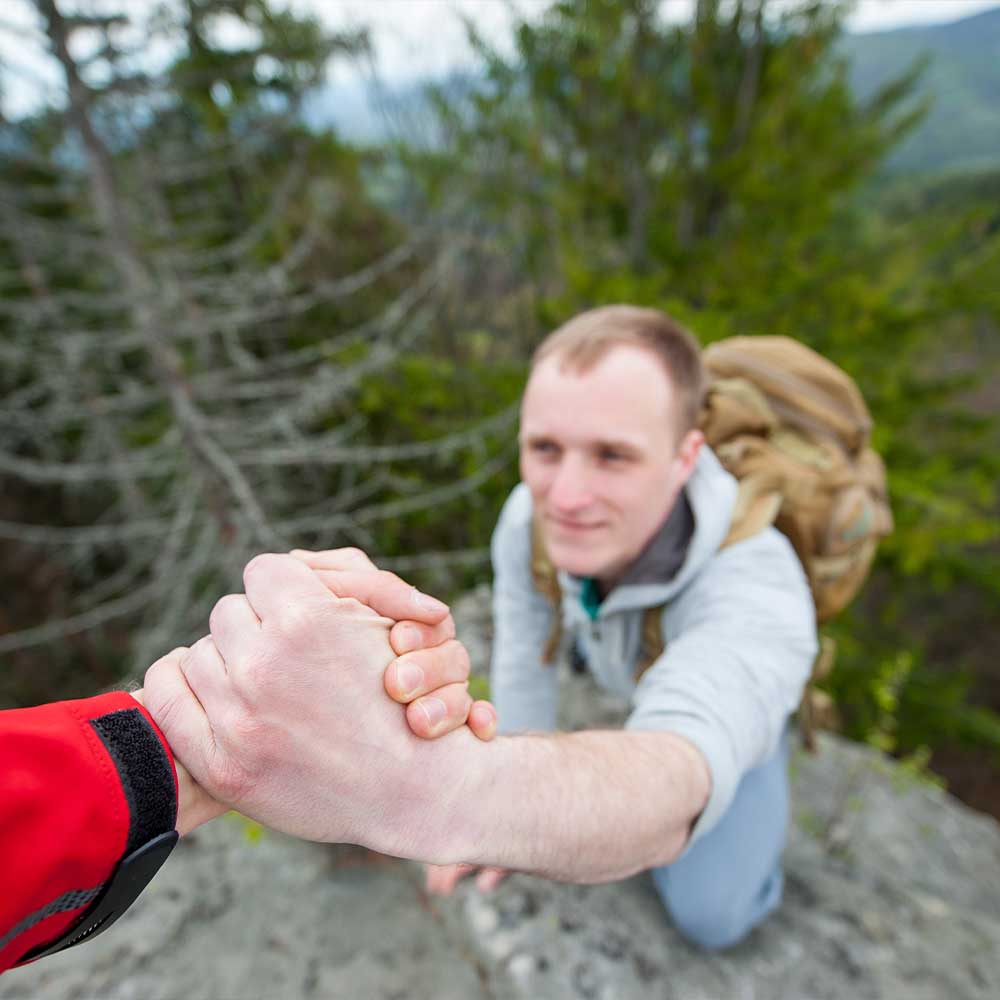
Elite mountaineering is systems thinking made visible. My summit success on the world’s most dangerous peaks isn’t solo achievement—it’s team excellence operating as an integrated system:
- Base camp coordinators managing logistics and communications
- Route-fixing teams establishing safe passage for summit pushes
- Weather analysts providing decision-grade forecasts
- Support climbers carrying emergency oxygen and supplies
- Medical personnel ready for crisis response
Every person operates at the highest standard. Every person understands their role in the larger system. Every person knows that failure anywhere means failure everywhere.
The National 4 Peaks Challenge replicates this systems approach:
- Professional mountain specialists guiding each section
- Qualified wilderness first aiders embedded in every group
- Luxury transport and professional drivers ensuring safe, efficient transitions
- Support staff selected based on qualifications, experience, and references
- Comprehensive safety briefings before every stage
The Corporate Application: Building High-Performance Systems
Senior executives spend immense resources developing individual leadership capability. The Guide Effect teaches you to build leadership systems:
Distributed Expertise: Like a mountaineering team where different members hold specialist knowledge, corporate teams need distributed strategic capability, not heroic individual leaders.
Role Clarity Under Stress: When the crisis hits, everyone knows their function. No confusion. No territory disputes. Just execution.
Interdependent Accountability: On the mountain, my success depends on the rope team’s success. In organizations, leaders who build genuine interdependence create resilience that survives individual failures.
Standards Over Hierarchy: The mountain doesn’t care about your title. Physics doesn’t negotiate. Organizations that embed non-negotiable standards across all levels build cultures that sustain excellence when leadership changes.
The Training Ground: Ireland’s Mountains as Leadership Laboratory
Before I stood on Everest’s summit, I stood on Slieve Donard. Before I survived K2, I learned navigation in the Wicklow Mountains. Before I led international expeditions, I mastered team dynamics on Carrauntoohil.
Ireland’s mountains are deceptively challenging. They lack extreme altitude, but they provide everything else:
- Rapidly changing weather that tests adaptability and decision-making
- Technical terrain requiring navigation precision and risk assessment
- Physical demands that reveal character under fatigue
- Team dynamics that expose leadership strengths and development areas
The National 4 Peaks Challenge compresses these lessons into 19.5 intense hours:
Slieve Donard (850m) – 4 hours: Morning energy meets reality. Teams learn their actual pace vs. their assumed pace. Early leadership patterns emerge.
Lugnaquilla (925m) – 5 hours: Fatigue begins. Decision-making quality degrades. Leaders learn to maintain standards when energy drops.
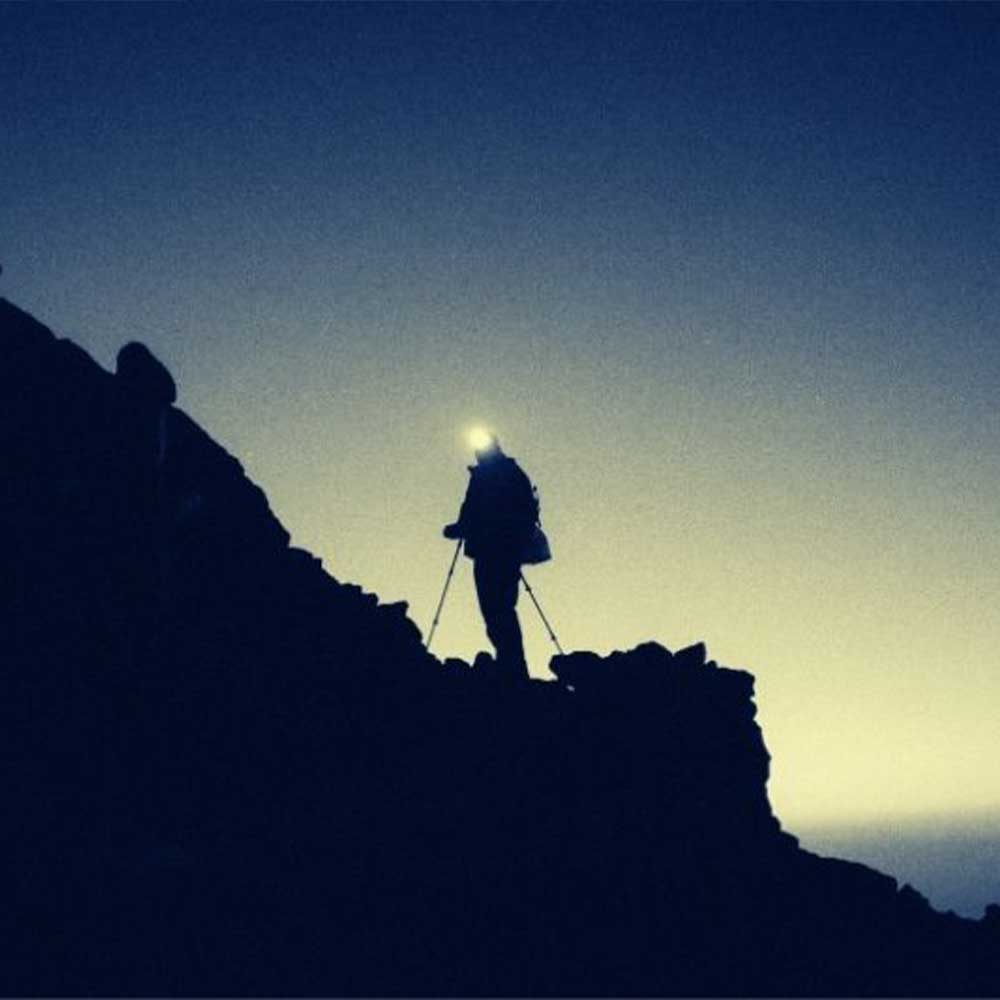
Carrauntoohil (1,038m) – 6 hours (night climb): Darkness, exhaustion, and Ireland’s highest peak. This is where theory meets reality. This is where leadership either holds or fractures.
Mweelrea (814m) – 4.5 hours: Sleep-deprived, physically depleted, mentally exhausted. The final test of whether values hold when everything else is gone.
The Executive Value Proposition: Leadership Development That Actually Transfers
Most leadership programs teach theory in comfortable environments, then expect transfer to high-stress reality. The transfer rarely happens.
The Guide Effect inverts this model: We create real stress, real consequence, real team dynamics, then extract the lessons while they’re visceral and undeniable.
When your team completes Carrauntoohil at 2 AM after 14 hours of continuous effort, the lessons aren’t abstract:
- Who maintained composure when exhaustion hit?
- Who communicated clearly when conditions degraded?
- Who supported struggling team members without compromising the mission?
- Who made sound decisions with incomplete information?
- Who adapted strategy when reality didn’t match the plan?
These aren’t simulation insights. These are real capabilities demonstrated under genuine pressure, guided by someone who has made similar decisions at 8,000 meters.
The Exclusive Access: Learning from One of a Generation’s Most Groundbreaking Mountaineers
The world has produced thousands of business consultants. It has produced hundreds of leadership coaches. It has produced dozens of keynote speakers who talk about resilience and decision-making.
The world has produced only a handful of mountaineers who have successfully summited both Everest and K2—two of the most dangerous peaks on Earth—and returned to translate those experiences into actionable leadership frameworks.
Jason Black is one of them.
His credentials aren’t theoretical:
- 25+ years mountaineering experience across the world’s most extreme environments
- Multiple 8,000-meter peak summits including Everest and K2
- UIMLA International Mountain Leader (the highest guiding standard)
- Wilderness First Responder qualified
- Exceptional safety record across hundreds of expeditions
- Professional mountain specialist recognized globally
His teaching isn’t academic:
Every leadership insight is grounded in decisions made at altitude, under pressure, with lives at stake. Every framework has been stress-tested in conditions where failure isn’t embarrassment—it’s death.
His personality makes the difference:
Light-hearted and fun-filled, Jason’s approach removes ego from the equation. This isn’t about projecting toughness—it’s about developing genuine capability. His unfaltering determination, hard work, and commitment from an early age to find purpose, remove obstacles, and find solutions translates into leadership development that’s both demanding and supportive.
The Challenge: Are You Ready for Guidance That Demands Everything?
Most leadership development asks: “What do you want to learn?”
The Guide Effect asks: “What are you willing to become?”
The National 4 Peaks Challenge isn’t comfortable. It isn’t easy. It isn’t designed for executives who want theory without transformation.
It’s designed for senior leaders and high-potential employees who recognize that:
- Competitive advantage comes from capabilities competitors can’t easily replicate
- Real leadership develops under real pressure, not in seminar rooms
- World-class guidance creates world-class results
- Exceptional outcomes require exceptional standards
The challenge requires:
✓ 12 weeks of structured physical preparation (training plan provided)
✓ Complete commitment to team success over individual comfort
✓ Willingness to be guided by expertise that exceeds your own
✓ Mental readiness to operate effectively under sleep deprivation and fatigue
✓ Openness to feedback when leadership patterns need adjustment
In return, you receive:
✓ Direct mentorship from a world-class mountaineer with Everest and K2 experience
✓ Real-world leadership testing in conditions that reveal authentic capability
✓ Frameworks proven at altitude and translated for corporate application
✓ Team development that creates lasting organizational capability
✓ National 4 Peaks Summiteer status and medal upon completion
✓ Network access to other elite leaders who’ve completed the challenge
The Reflection: What Mountains Teach Leaders
I’ve stood on summits where the air holds half the oxygen of sea level. I’ve navigated in whiteouts where three-meter visibility is generous. I’ve made decisions knowing that error means death—for me, or worse, for those I’m responsible for.
The mountains have taught me this: Leadership isn’t about being the strongest, the smartest, or the most charismatic. Leadership is about making sound decisions under pressure, maintaining standards when standards seem impossible, and bringing your team through challenges they didn’t think they could survive.
These lessons don’t belong only to mountaineers.
Every senior executive faces their own bottleneck decisions. Every high-potential employee navigates through strategic fog. Every leader confronts the question: Will my judgment hold when everything else is falling apart?
The Guide Effect doesn’t give you easy answers. The mountains never do.
But it gives you something better: the frameworks, the experience, and the proven capability to lead through genuine complexity with confidence that’s earned, not assumed.
Your boardroom may never reach 8,000 meters. But the decisions you make there carry their own weight, their own consequence, their own demand for exceptional judgment.
The question isn’t whether you’re ready to climb mountains.
The question is whether you’re ready to be guided by someone who has survived them—and learned to translate survival into strategy.