The Mountain That Rewrites the Rules
Most people who book a Kilimanjaro expedition think they understand what they are signing up for. They have seen the photographs. They know the number. 5,895 metres. The Roof of Africa. The highest freestanding mountain on the planet.
What they do not understand, not really, is what that number means when they are standing inside it.
I have led teams up this mountain multiple times. I hold the world record for the fastest double ascent of Kilimanjaro in a single day. And every time I return to the Machame Gate and watch a new team pull on their packs in the humid heat of the rainforest, I feel the same thing: respect. Kilimanjaro does not care about your fitness app stats or your weekend hiking record. It operates on its own terms. The question is whether you are ready to meet it there.
This is what the mountain actually teaches you, from the forest floor to the frozen crater rim.
The Progression: What Kilimanjaro Does to You, Day by Day
Day 1 to 2: The Rainforest Deception
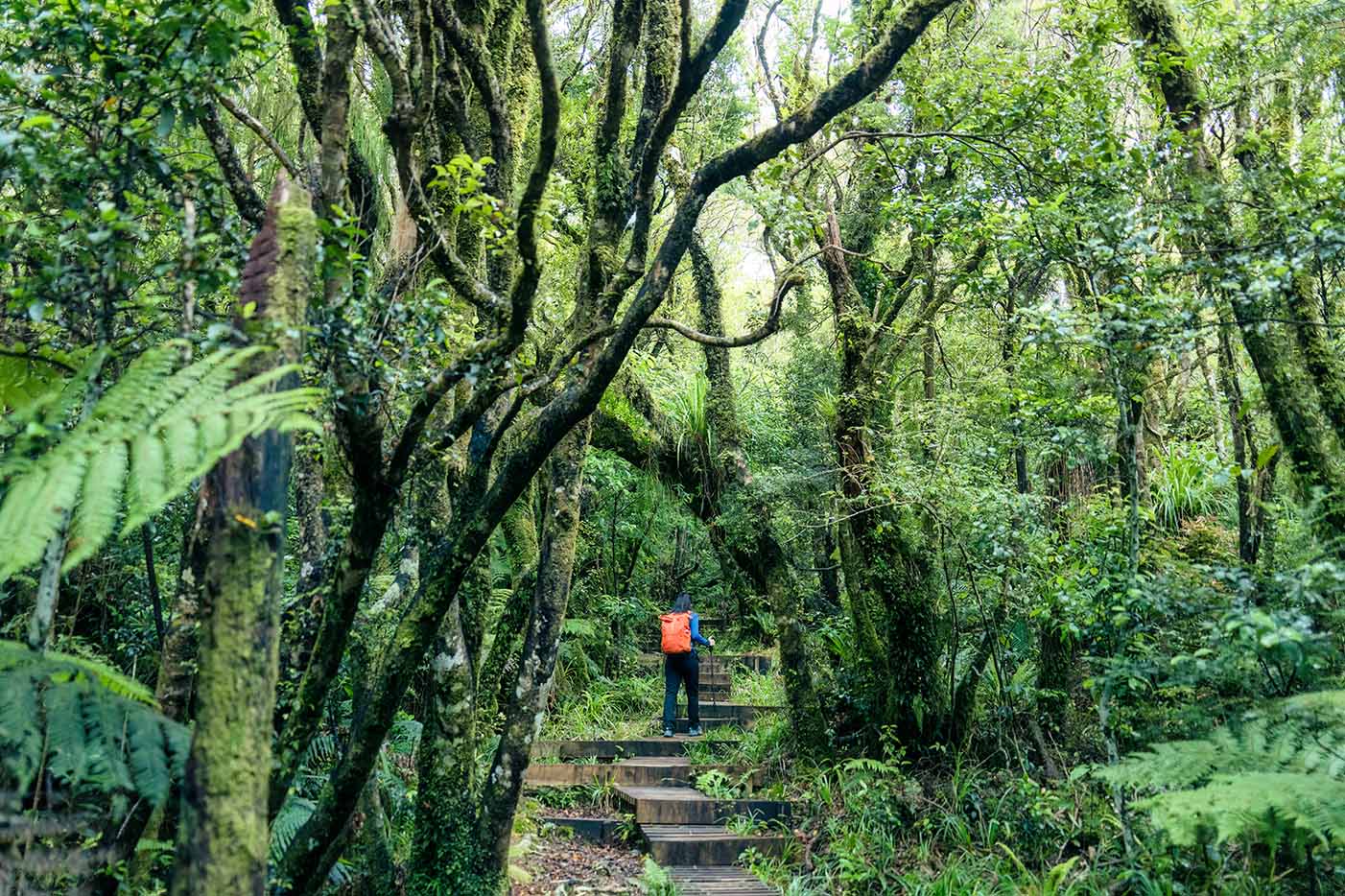
The Machame Route begins at 1,814 metres at Machame Gate. The air is thick and warm. Tree roots cross the path. Everything is green, alive, and loud with birdsong. You feel strong. You feel capable. The weight of your pack settles comfortably and you find your rhythm.
This is the part of Kilimanjaro that catches people off guard — not because it is hard, but because it is easy. Your body is well oxygenated. Your legs are fresh. The temptation is to push the pace, to bank some time, to prove something.
Resist that temptation completely. The pace you set in the forest is not the pace that gets you to the summit. Pole pole. Slowly, slowly. It is the first lesson the mountain teaches and the most important one.
Day 3 to 4: Shira Plateau and the First Thinning
By the time you cross onto the Shira Plateau at 3,833 metres, the landscape has transformed completely. The trees are gone. The world opens into a vast, exposed plain of rock and low scrub. The Kibo massif fills the sky ahead of you.
This is where many climbers feel the first suggestion of altitude. A mild headache. A slightly reduced appetite. Sleep that feels less restful than it should. These are normal signals. Your body is beginning to negotiate with the elevation. You breathe deeper. You drink more water. You do not rush.
Day 5: The Lava Tower Day — The Most Important Day on the Mountain
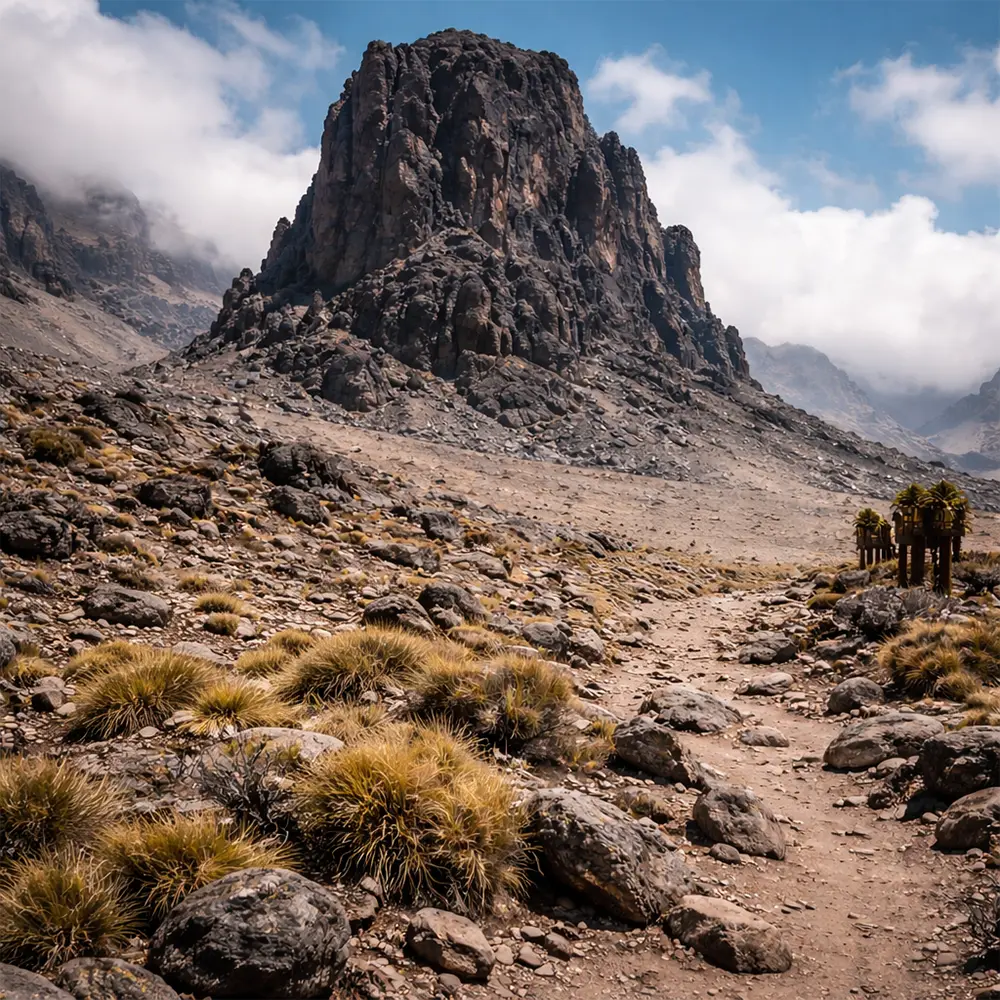
The day that separates the Machame Route from shorter, faster options on Kilimanjaro is Day 5. You climb from Shira Camp to the Lava Tower at 4,600 metres, then descend to Barranco Camp at 3,960 metres to sleep.
Climb high. Sleep low. This is the foundation of proper acclimatisation on any high altitude objective.
At Lava Tower, the altitude is real. The sky has a quality to it — a brightness and a thinness that you do not get at sea level. Your breathing is audible. Your movements feel measured. But you are adapting. The body is stimulating red blood cell production. The altitude is being earned, not forced.
I have watched people transform on this day. They arrive at Lava Tower uncertain of themselves and descend to Barranco Camp with something they did not have at the bottom: evidence. Evidence that they can handle this environment.
Day 6: The Barranco Wall
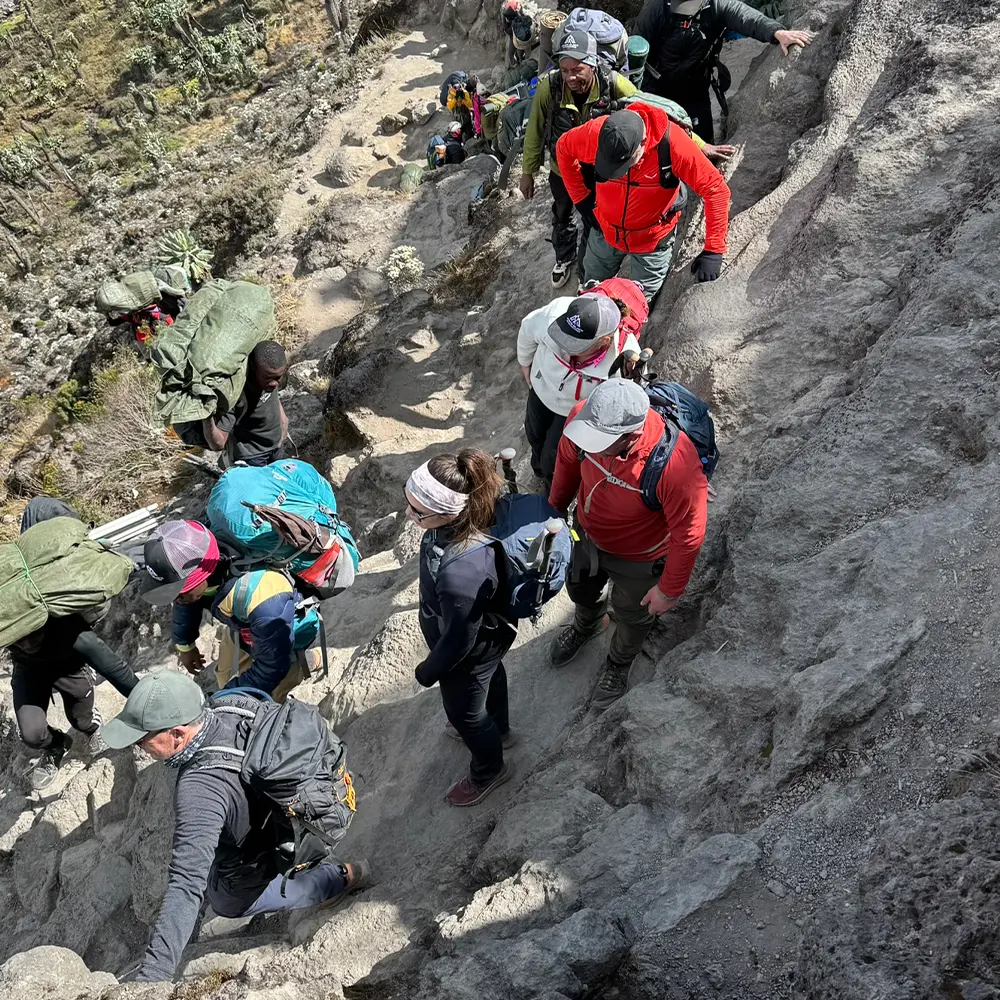
The Barranco Wall is the most dramatic section of the Machame Route. A near vertical scramble on solid rock, exposed in places, that rises above the camp in the early morning light. It looks intimidating from below. That is part of its value.
By the time you top out on the wall and look back at the valley below, something has shifted. The team is tighter. The conversation is different. The mountain has started to reveal what it asked for from the beginning: commitment, steadiness, and trust in each other and in the process.
Day 7: Kosovo Camp — The Strategic Advantage
Most commercial operators push their teams to Barafu Camp. We stop at Kosovo Camp at 4,870 metres — a quieter, less congested position that gives us a strategic edge on summit night.
We start ahead of the main groups. We move in the dark with headlamps cutting through the cold, picking our line through the scree and snow before the mountain fills with traffic. The recovery on descent is faster because we have not over-cooked ourselves at a lower elevation the night before.
Small details like this are the difference between a miserable summit push and a managed one.
Day 8: Summit Night — What the Mountain Finally Asks
You wake at midnight. The temperature at Kosovo Camp is well below freezing. You layer everything you have. The stars above Tanzania are extraordinary — a sky so clear and so dense with light that you stand still for a moment before moving.
The summit push from Kosovo Camp to Uhuru Peak covers 17 kilometres and takes 12 to 15 hours in total including the descent to Mweka Camp. It is relentless. Not technical, but relentless. The scree gives way underfoot. The cold settles into your fingers and your face. At 5,500 metres, every step requires a conscious decision.
This is where Kilimanjaro shows its real face. Not the postcard version. The actual mountain: the wind, the cold, the altitude pressing on your chest, and the question it has been building toward since the Machame Gate.
How much do you want this?
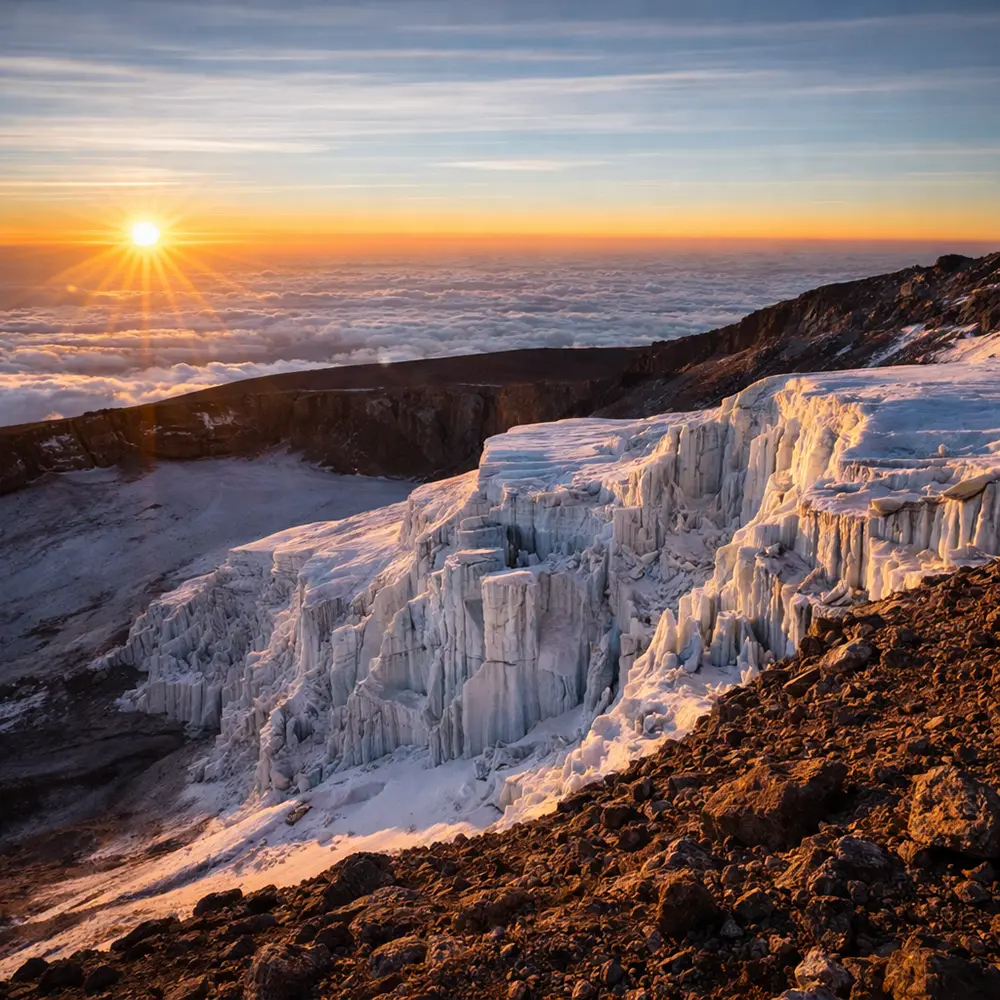
When you reach Stella Point at 5,745 metres, you can see the crater rim. The final 150 metres to Uhuru Peak are walked on a path that curves along the edge of something ancient and enormous. The glacier remnants hang beside you — blue, cracked, and slowly retreating.
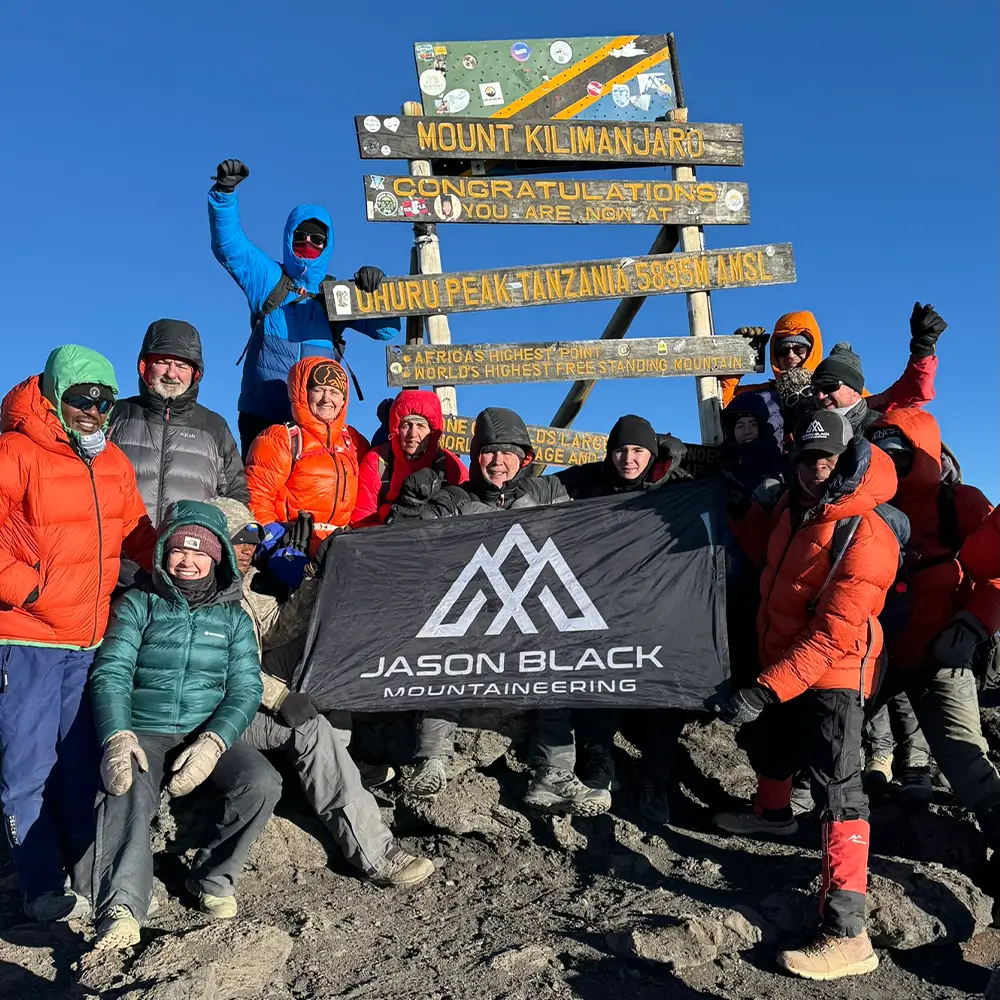
The summit sign at Uhuru Peak is one of the most photographed objects in African mountaineering. When you stand in front of it, you will understand why people cry there. It is not sentimentality. It is the full weight of what the previous eight days asked of you, arriving at once.
Understanding Altitude: What Is Actually Happening to Your Body
Acute Mountain Sickness (AMS) is the governing factor on Kilimanjaro. Above 2,500 metres, reduced oxygen pressure means your body has to work harder to deliver oxygen to your organs and muscles. The symptoms build in stages.
Warning signs we monitor on every expedition:
- Persistent headache that does not respond to hydration
- Loss of appetite or nausea
- Shortness of breath at rest
- Periodic breathing during sleep
- Disorientation or unusual fatigue
We carry oxygen bottles, masks, a portable stretcher, and a mountain shelter on every trip. Our leaders are trained in First Aid and high altitude assessment. If continuing is unsafe, descent happens immediately. There is no summit worth a life.
Diamox (250 mg) is listed in our expedition medical kit as a 10-day course. We recommend all climbers consult their doctor before departure to discuss whether it is appropriate for them.
Why Preparation Is the Only Variable You Control
Kilimanjaro is not a technical climb. You do not need ropes, ice axes, or prior mountaineering experience. But the final summit push is an 8-hour effort at extreme altitude, and the body you bring to that push is the one you built in the months before departure.
The fitter you are, the more you will enjoy this expedition. That is not marketing language. It is a direct statement from someone who has watched the full spectrum of physical readiness arrive at Machame Gate.
The 12-Week Training Framework
Our recommended preparation cycle runs 12 weeks and is built on four core activities:
- Zone 2 running (30 to 45 minutes): builds aerobic base and cardiovascular efficiency
- Hill repeats (6 to 10 repeats of 100 to 200 metres): builds climbing-specific leg strength
- HIIT sessions (45 to 60 minutes): elevates heart rate into Zone 4 intervals
- Weekend mountain treks (6 to 8 hours carrying an 8 kg pack on consecutive days): builds time on feet and endurance
Time on your feet is more important than pace. Stamina built over long days in the hills transfers directly to the sustained effort that Kilimanjaro demands. Gym sessions are supplementary. The mountain is the preparation.
Essential Gear: What the Mountain Requires
Gear is not about status or brand. It is about function at altitude and in cold.
Insulation
- 800+ gram goose down jacket with hood
- Insulated pants
- Lightweight puffer jacket for mid-layers
Base Layers
- Merino wool underwear (2 sets)
- Merino long sleeve base layer
- Merino long pants base layer
Shell Layers
- Hard shell jacket (windproof and waterproof)
- Hard shell pants
Sleep System
- Sleeping bag rated to -20°C
Mountain Equipment
- 35L trekking backpack (summit day carry)
- 120L duffel bag (porter carry)
- Headlamp 500 to 700 lumens (two recommended)
- Trekking poles (optional but valuable on descent)
Medical Kit Essentials
- Diamox 250 mg (10-day course, prescribed by your doctor)
- Ibuprofen and Paracetamol
- Imodium and Laxatives
- Electrolytes
- Compeed blister packs
- Mosquito repellent
Beyond the Summit: What Kilimanjaro Actually Gives You
The mountain is only part of the expedition. The Machame Route takes you through five distinct ecosystems: rainforest, heath and moorland, alpine desert, and the glaciated summit zone. Tanzania itself adds a layer that no other Seven Summits destination can match.
Before the climb begins, you visit a Maasai community, understand their traditions, and spend time in a village that has existed alongside this mountain for generations. After the descent, the expedition closes with a curated Day 10 that takes the team through coffee field visits, hidden waterfall swims, and a rooftop dinner celebration with local food and music under the African night sky.
The summit is earned on Day 8. What surrounds it is what the 11-day structure was built to provide.
The Mountain Asks. You Answer.
Every person who has stood on Uhuru Peak came through the same progression. Rainforest. Plateau. Lava Tower. The Wall. Kosovo Camp. Summit night. Descent.
The journey is the same. What changes is what you discover about yourself along the way.
Kilimanjaro will push you. It will thin the air around you and ask you to keep moving. It will take something from you in the form of comfort, certainty, and ease and give you something back that no amount of comfort could have produced.
Preparation matters. Training matters. The right team, the right leader, the right pace on the right route. All of it matters.
But so does the decision to go.
Rise with the mountain.