

— Expeditions
Kyrgyzstan 7 Summits
Shore to Summit
Strenuous
7 Days
7 Summits
Price
€2199
Per Person
Overview
Cross the 3,920 m Ala-Kul Pass on a three-day trek, soak in the hot springs of Altyn-Arashan, travel the shores of Lake Issyk-Kul, and finish on top of 4,527 m Uchitel Peak above Bishkek. The route passes red sandstone cliffs, canyons and yurt camps, and includes a visit with the eagle hunters of Bokonbaevo. Big days in the mountains are rewarded with hot springs and dinners in a yurt.
Summits
- Ala-Kul Pass, 3,920 m
- Ala-Kul Lake, 3,532 m
- Uchitel Peak, 4,527 m
- Altyn-Arashan hot springs
- Jeti-Oguz red rocks and Skazka Canyon
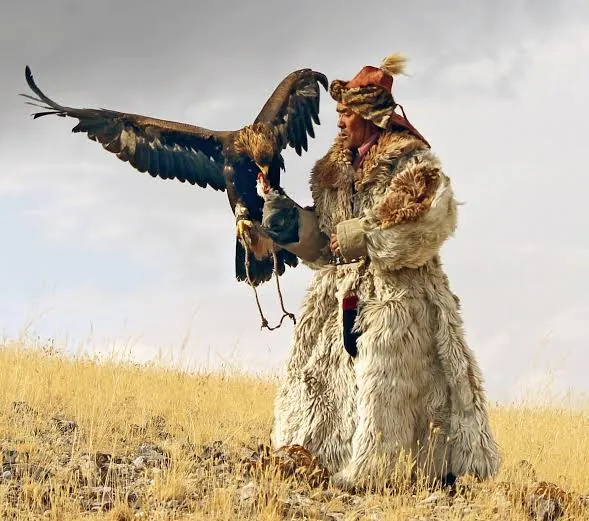
- Eagle hunting show in Bokonbaevo
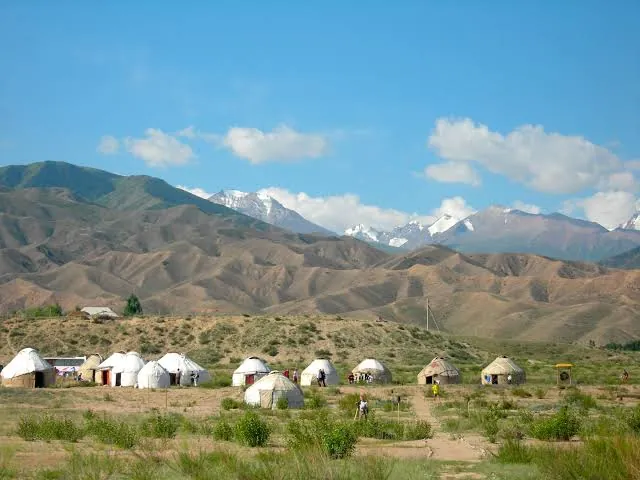
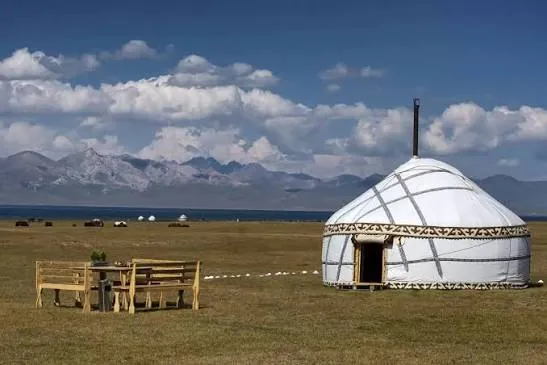
- Nights in yurt camps
Location
Kyrgyzstan
Duration
7 Days
Route
Issyk-Kul
Grade
Strenuous
Altitude
7 Summits
Activity
6-10 hrs
itinerary

DAY 1 – BISHKEK → KARAKOL
Our Kyrgyzstan Seven Summits adventure begins as we depart Bishkek and travel east through the dramatic Boom Gorge, following the northern shoreline of Lake Issyk-Kul, one of the largest high-altitude lakes in the world.
Surrounded by the towering Tian Shan Mountains, our journey offers the first glimpse of Kyrgyzstan’s spectacular alpine landscapes as we make our way towards Karakol, the gateway to our Seven Summits expedition.
On arrival, we check into our hotel, settle in and prepare for the mountain adventure ahead.
Accommodation: Hotel in Karakol
Activity: Scenic road transfer
Overnight: Karakol
DAY 2 – KARAKOL GORGE → SIROTA BASE CAMP
Our mountain adventure begins as we board traditional UAZ Bukhanka 4×4 vehicles and journey deep into the spectacular Karakol Gorge, surrounded by the towering peaks of the Tian Shan Mountains.
From the gorge, we begin our first trek, following mountain trails through beautiful spruce forests, alongside rushing rivers and into increasingly dramatic alpine terrain. As we gain altitude, the forest gradually opens to reveal spectacular views of the surrounding mountains.
After a steady ascent, we arrive at Sirota Base Camp, where we settle into our traditional yurt accommodation and enjoy our first evening in the mountains.
Distance: 13 km
Elevation Gain: 1,000 m
Trekking Duration: 5–6 hours
Accommodation: Yurt Camp – Sirota
Activity: 4×4 mountain transfer and trekking
DAY 3
Climb past waterfalls to turquoise Ala-Kul (3,532 m), then cross the Ala-Kul Pass (3,920 m) and descend to Altyn-Arashan (16 km, +1,000 m, -1,350 m, 8-10 h). Guesthouse beside the hot springs.
DAY 4
Walk down the Altyn-Arashan gorge to Lesnoe (15 km, -750 m, 3-4 h). Drive to Karakol, then on to Jeti-Oguz and Kok-Jaiyk for a walk to Maiden’s Tears waterfall. Yurt camp.
DAY 5
Drive along the south shore to the Barskoon gorge, Skazka Canyon and the Shatyly panorama above Bokonbaevo. Guesthouse.
DAY 6
Meet the eagle hunters, then drive back to Bishkek via the Boom Gorge. Own hotel in Bishkek.
DAY 7
Night start for Ala-Archa National Park and Uchitel Peak via the Ratsek hut (24 km, +2,400 m, -2,400 m, 12-14 h). Farewell dinner in Bishkek. End of tour.
Included
Included
- Black mountaineering elite guides
- All transport during expedition
- Accommodation as per itinerary (hotel, yurt camps, guesthouses)
- Meals as per itinerary
- Hot springs and eagle hunting show
- Park and entrance fees
- Drinking water
Not included
- Breakfast on Day 1
- Travel insurance (must cover trekking to 4,600 m and evacuation)
- International flights and visa
- Alcohol and personal expenses
Available Dates
What to Expect
- Day 3 crosses the 3,920 m Ala-Kul Pass, with 8 to 10 hours of trekking and a steep descent.
- The multi-day aspect makes recovery crucial. Fatigue builds over three trek days before the big climb.
- Expect a night start on Day 7 (around [2 AM]) for Uchitel Peak (4,527 m), then 12 to 14 hours on the move and a long descent.
- Nights near 3,000 m can be close to freezing, even in summer.
Mental Training
- Train in harsh conditions (rain, wind, cold).
- Hike back-to-back long days to simulate multi-day fatigue.
- Train in the early morning and in the dark with a head torch to prepare for the Uchitel night start.
- Practise long descents. Day 3 and Day 7 both finish with steep, tiring downhill.
Minimum Fitness Benchmarks for the Kyrgyzstan Ala-Kul and Uchitel Challenge
You should be able to:
- Hike 1,000 m+ of elevation gain with an [8 kg] pack (6 to 8 hrs).
- Hike 12 hours with around 2,000 m of climbing and a long descent.
- Climb stairs for 45 minutes with a [8 to 10 kg] pack.
- Handle 6 to 10 hour trekking days back-to-back.
- Run 10 km in 60 minutes (optional).
Who Should NOT Attempt the Challenge?
- If you have existing knee, back or foot injuries.
- If you cannot carry [8 kg] for 6 to 8 hours.
- If you cannot walk uphill at a moderate pace for 6 to 8 hours.
- If you lack the mental resilience for cold weather, early starts and exhaustion.
Final Thoughts
The Kyrgyzstan Ala-Kul and Uchitel Challenge is a rewarding trip. If you are fit, have solid endurance and strong legs, and bring a great smile and energy, you’ll be well prepared.
12-Week Kyrgyzstan Training Plan: Ala-Kul Trek and Uchitel Peak (Intermediate to Advanced)
Build the endurance, leg strength, descending ability and recovery habits needed to cross the Ala-Kul Pass (3,920 m) and climb Uchitel Peak (4,527 m).
Please consult your doctor before commencing any training programme.
What This Trip Asks of You
- Days 2 to 4: about 44 km of trekking over three days with a daypack. Day 2 is about 5-6 hours (+1,000 m). Day 3 is the hardest, 8-10 hours with +1,000 m up to the 3,920 m pass, then a steep descent of about 1,350 m. Day 4 is a 3-4 hour descent.
- Day 7: Uchitel Peak. A night start, then about 24 km and 2,400 m of climbing, 12-14 hours on the move, and the same height back down.
- Back-to-back effort: a big trek block first, then a very long summit day. Recovery and descending strength matter as much as fitness.
This plan trains the engine, legs and recovery habits behind all of that. Your guide confirms the final itinerary and kit list, as conditions can change it.
Weekly Schedule Overview
| Day | Activity |
|---|---|
| Monday | Strength or aerobic session |
| Tuesday | Strength or aerobic session |
| Wednesday | Rest |
| Thursday | Hill session, loaded climb or uphill intervals |
| Friday | Recovery walk, easy bike or rest |
| Saturday | Long hill or mountain day |
| Sunday | Easy walk, rest or back-to-back day 2 |
Measuring Your Effort
Use the talk test. Heart-rate figures can help, but terrain, fatigue, heat, cold and altitude all affect the number.
- Recovery (very easy): full conversation. Cool down and recover.
- Easy (comfortable): conversational pace. Builds your aerobic base.
- Steady (working): short sentences. Sustainable effort.
- Threshold (hard): only a few words at a time. Controlled discomfort.
Slow and steady wins here. Practise a pace you could hold for hours, because altitude punishes anything faster.
Phase 1: Foundation (Weeks 1-4)
Goal: build an aerobic base and gym strength.
Long hill day
- 2 to 3.5 hours
- 8-14 km
- 400-800 m vertical gain
- 4-6 kg pack
Midweek hills
- Hill walk of 75 minutes, 300-500 m, 4-6 kg
- Uphill intervals: 6 x 2 min, progressing to 5 x 3 min
Strength (2 sessions per week)
- Strength A: squat or leg press, Romanian deadlift, step-up, row, calf raise, loaded carry
- Strength B: split squat, hip hinge, step-down (slow lowering), pulldown, calf raise, carry
- 2-3 sets each, finishing with good form, not failure
Cardio
- 40-50 minute aerobic sessions on the bike, incline treadmill or flat walking
- Recovery walks of 30 minutes
Phase 2: Build (Weeks 5-7)
Goal: increase strength and vertical volume, and start training descents.
Long hill day
- 4 to 6 hours
- 14-20 km
- 800-1,300 m vertical gain
- 6-8 kg pack
Loaded hills
- 90 minutes to 1 hour 45 minutes
- 500-700 m vertical gain
- 6-8 kg pack
Intervals
- Uphill intervals: 6 x 3 min, progressing to 5 x 4 min
- Jog or hike recovery between efforts
Strength
- Continue Strength A/B with progressive resistance
- Add slow eccentric work: step-downs and downhill walking, 2 sets of 10 per leg
- Keep most aerobic work conversational
Trip skills
- Use trekking poles on every hill session, uphill and downhill
- Start wearing your trekking boots on long days so they are fully broken in
- Do one long day on steep descents (see Phase 3 for the target)
Phase 3: Specific (Weeks 8-10)
Goal: train multi-day load carriage and perform on tired legs.
Long mountain days
- 6 to 8 hours
- 18-24 km
- 1,300-1,800 m vertical gain
- 7-9 kg pack
Trek simulation weekend (Days 2 to 4)
Aim to train 3 days in a row if you can, or Saturday and Sunday plus a short Monday walk.
- Day 1: 5-6 hours, about 1,000 m up, 7-9 kg
- Day 2: 7-9 hours, about 1,000 m up and 1,300 m down, 7-9 kg (your pass day, so include a long, steep descent)
- Day 3: 3-4 hours of descent, about 750 m down, easy pace
Loaded climbs
- 90 minutes to 2 hours
- 500-800 m vertical gain
- 7-9 kg pack
Strength
- Shift to muscular endurance: weighted step-ups, walking lunges, step-downs, calf work and loaded carries
- Uphill intervals of 6 x 4 min, strong but controlled
Trip skills
- Practise a night start: set off in the dark with a head torch for at least one long day
- Practise layering and eating in cold, windy conditions
- Practise eating and drinking little and often for 10+ hours
Phase 4: Peak and Taper (Weeks 11-12)
Goal: simulate Uchitel, then arrive fresh.
Week 11: Peak day
- One Uchitel-style day: 10-12 hours, 20-24 km, 1,800-2,400 m of climbing, 6-8 kg
- Start early in the dark with a head torch
- Use a route with a long, sustained climb, and finish with a long descent
- Keep the rest of the week light: easy walks and mobility
Week 12: Taper
- Reduced volume so fitness is retained while fatigue falls
- One short hill day of 2-3 hours, then easy walks, mobility and a short shake-out
- Do not add missed sessions or extra hard work during the taper
Altitude on This Trip
No training plan can replicate altitude, and fitness does not protect you from altitude sickness. The trek to 3,920 m in the first days helps you acclimatise before Uchitel (4,527 m) on the last day. What helps most is:
- A slow, steady pace on the mountain
- Following your guide’s acclimatisation advice
- Drinking and eating well, and sleeping as much as you can
- Telling your guide early if you feel unwell (headache, nausea, dizziness)
- Speaking to your doctor before the trip about altitude and any medication
10 Steps to Prepare
- Start walking now. Build regular time on your feet and progress gradually.
- Make leg-based cardio a habit. Cycling, swimming and stair work support your walking base.
- Take the stairs. Strengthen glutes, quads and calves in everyday life.
- Train your descents. Controlled downhill walking and step-downs protect your knees on Days 3 and 7.
- Train on different terrain. Hills, scree and rough ground prepare feet and ankles.
- Train in bad weather. Mountain weather turns fast, so test layers, waterproofs and your ability to stay organised.
- Practise with walking poles. Develop a natural rhythm uphill and downhill.
- Train with your trip kit. Use your boots and progressively load your daypack.
- Fuel and hydrate. Practise eating and drinking little and often until it becomes automatic.
- Look after your feet. Test socks, lacing and blister prevention before the trip.
Key Training Tips
- Test everything in training. The pass is not the place to discover that your boots rub or your food strategy does not work.
- Do not leave equipment testing until the final weeks.
- Consistency is more valuable than one heroic session.
- Recovery matters. Prioritise sleep, mobility, nutrition and hydration.
- The goal is not to finish every session exhausted. It is to build a body that can work for hours, recover, and do it again the next day.
Are You Ready?
- Can you carry 7-9 kg for 8-10 hours with 1,000 m or more of climbing, then walk again the next day?
- Can you comfortably complete 12 hours on the move with about 2,000 m of climbing and a long descent?
- Can you start in the dark and keep your fuelling and pace under control?
- Have you trained in cold, windy and wet conditions with your full kit?
- Do you have a fuelling and footwear routine that works?
If you can tick every box, you are ready. Arrive prepared. Move with confidence. Finish proud.
Bags
80 litre Trekking Duffle Bag
60-65 litre Back-pack.
2 x 35 litre Lightweight dry bag
(Inside packpack to keep clothes dry)
Clothing
4 x Underwear
4 x Short Sleeve t-shirt
1 x Fleece.
1 x Hiking Shorts
1 x Hiking Trousers.
1 x Lite weight puff Jacket.
1 x Waterproof Shell Jacket
1 x Waterproof Shell Trousers.
Headwear
1 x Ball cap
1 x Woollen hat
1 x Sunglasses.
1 x Head torch & charging lead
Hands
1x Fleece gloves
Footwear
3 x Trekking socks.
1 x Hiking boots.
1 x Sliders / sandals.
Hut Sleeping
Bunk bed, mattress and pillow is provided.
There is no bedding or no towel provided
1 x Sleeping liner or summer sleeping bag
1 x Pillow case
– Hut Clothing
• 1 x Tracksuit / Shorts
• 1 x Sliders / sandals.
• Swimwear for hot pools
Eating/Drinking
4 x Energy Bars
4 x Haribos
1 x tube Hydration tabs
2 x 1-litre drink bottles
Electrical
Power is available in the Refuge
Power Bank (sos)
Phone
Country relevant plug
Charging cables
Other
Passport
Cash \ visa
Insurance details
Trekking poles
Ear plugs
Sunscreen and lip balm.
Toiletries, including toilet paper.
Small trekking Towel.
Small Lock for your Duffle Bag.
Antibacterial hand gel.
Personal Medicines
Paracetamol (Headache)
Ibuprofen (Joint pain)
Course of Antibiotics (ears throat Chest)
Domerid (Anti sickness)
Imodium (Diorea)
Dulcolax (Constipation)
Antiseptic Wipes
Adhesive Plasters
Blister Packs (Compeed)
Insect Repellent
Personal first aid kit
See more about our payment policy Here
On Booking your expedition our returns policy can be viewed here

Participants must have travel insurance that covers:
- Medical Expenses €10,000,000
- Baggage (optional) €3,000
- Trip Cancellation €9,000
- Personal Liability €2,000,000
- Trekking up to 4,500 metres
Bring your policy details in the event required.
We strongly recommend True Traveler.