

— Expeditions
Spain 7 Summits
In the Heart of the Sierra Nevada
Strenuous
7 Days
7 Summits
Price
€1799
Per Person
Overview
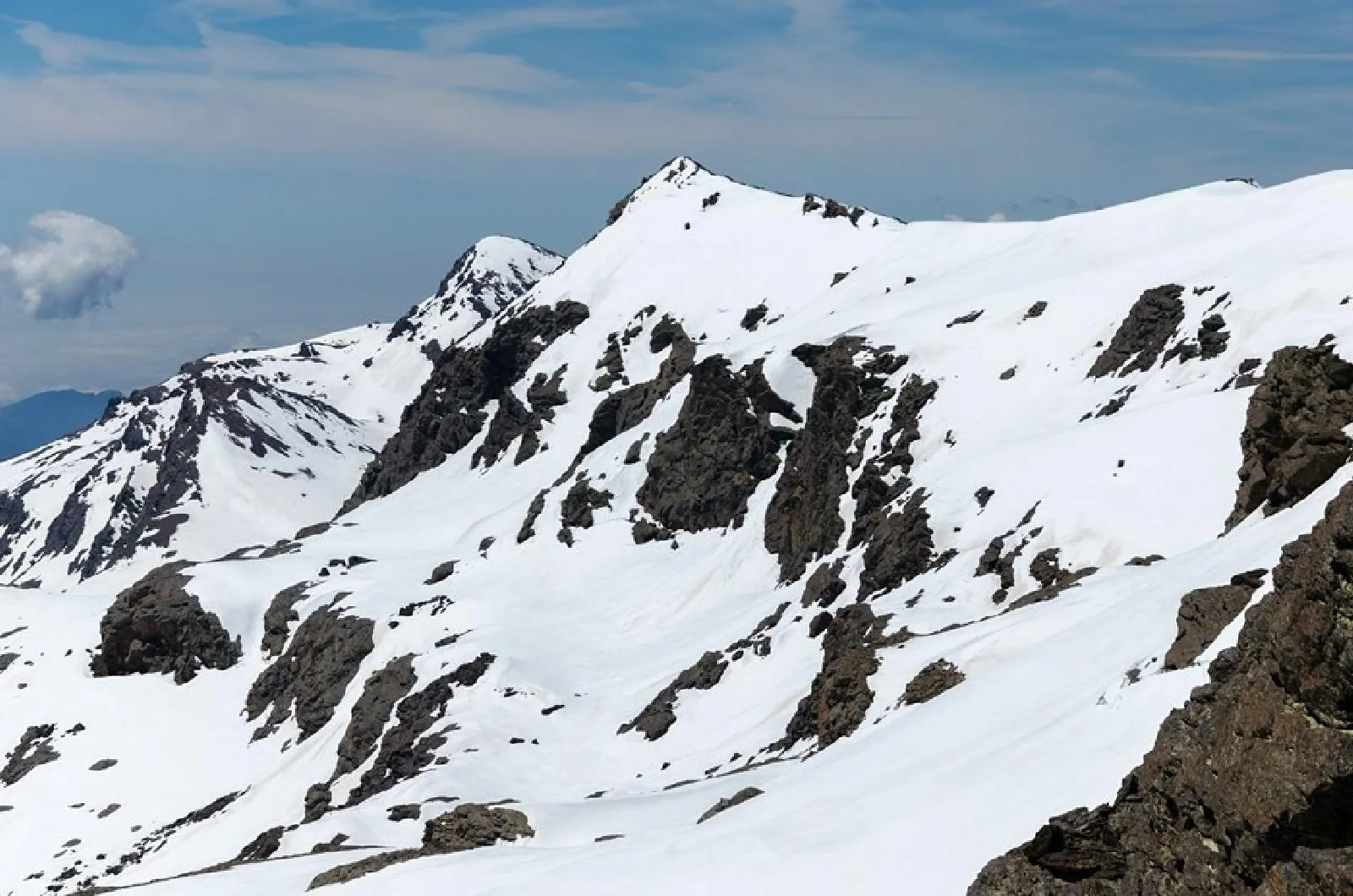
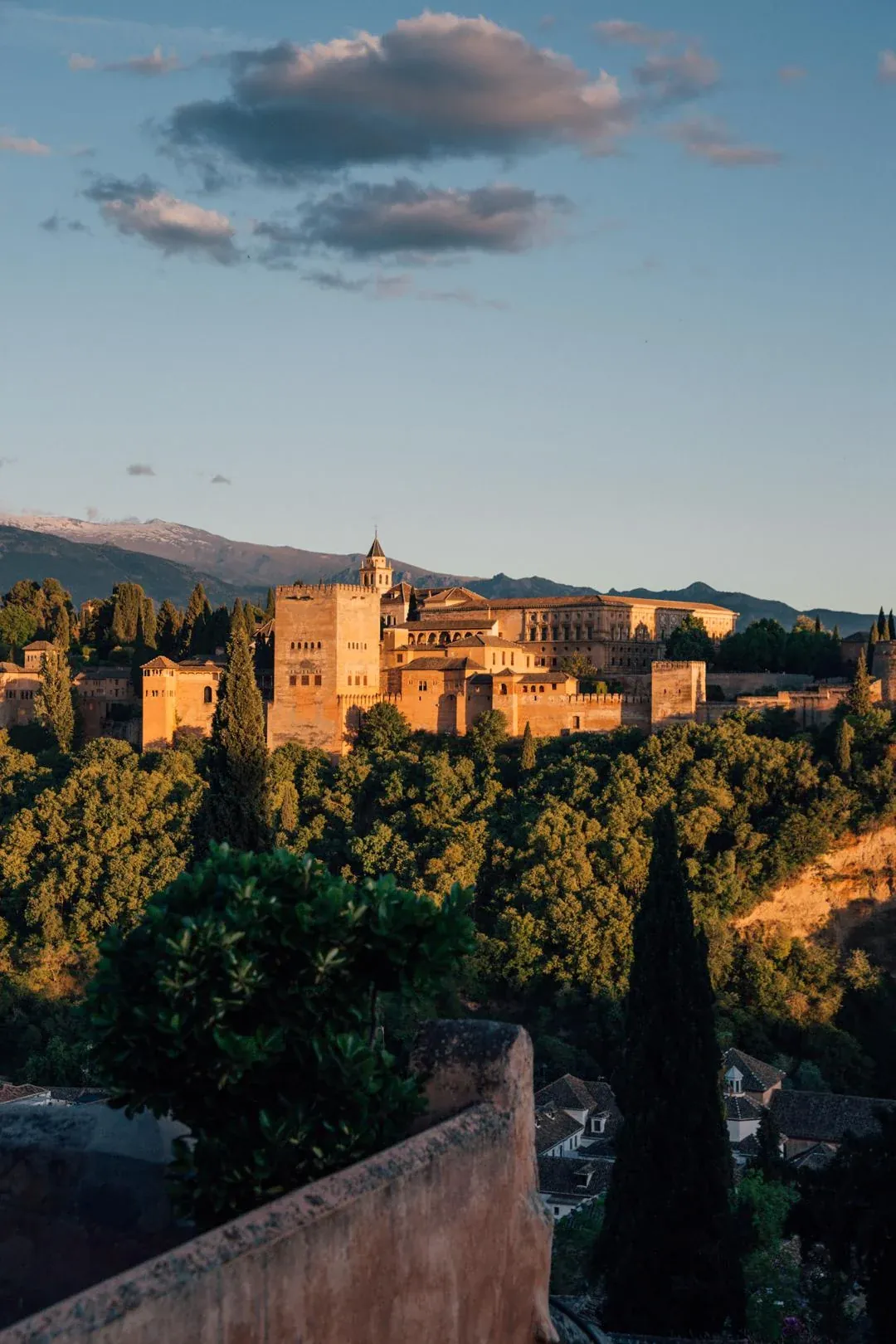
Spain 7 Summits is part of the Global Seven Summit Series. Spend seven days in Spain’s Sierra Nevada, climbing seven summits, all above 3,000 m, including Mulhacén (3,479 m), the highest mountain in mainland Spain. This is a self-sufficient expedition with two nights of wild camping beside the Siete Lagunas glacial lakes at around 3,000 m. You finish with a cultural day in Granada, with the Alhambra, traditional Andalusian food and a flamenco or tango show.
Summits
- Pico Veleta, 3,396 m
- Tajos de la Virgen, 3,226 m
- Mulhacén II, 3,362 m
- Mulhacén, 3,479 m
- Peñón del Globo, 3,263 m
- Puntal de Siete Lagunas, 3,269 m
- Alcazaba, 3,369 m
Highlights
- Self-sufficient expedition in the Sierra Nevada
- 2 nights wild camping at Siete Lagunas, approx. 3,000 m
- All seven summits above 3,000 m
- Climb Mulhacén (3,479 m), the highest peak in mainland Spain
- Cultural day in Granada with the Alhambra and a flamenco or tango show
- Traditional Andalusian food
Location
Spain
Duration
7 Days
Route
Sierra Nevada
Grade
Strenuous
Altitude
7 Summits
Activity
8 hrs
itinerary

DAY 1
Arrive at Málaga airport. Transfer to Granada/Sierra Nevada in 2 minibuses (self-drive). Stay at Hostel Los Puentes.
DAY 2
Drive 20 minutes to the Hoya de la Mora car park. Climb Pico Veleta (3,396 m) and Tajos de la Virgen (3,226 m). Drive to Lanjarón. Stay at Hotel Lanjarón.
DAY 3
Drive via Capileira to Hoya del Portillo, the expedition start point where the minibuses stay. Climb Mulhacén II (3,362 m) and Mulhacén (3,479 m), then descend to the Siete Lagunas camping area. Wild camp.
DAY 4
From Siete Lagunas, climb Peñón del Globo (3,263 m), Puntal de Siete Lagunas (3,269 m) and Alcazaba (3,369 m), then return to camp. Expedition kit can be left at camp. Wild camp.
DAY 5
Walk from Siete Lagunas to Hoya del Portillo, collect the minibuses and drive to Capileira. Stay at Hostel Capileira.
DAY 6
Drive to Granada (about 1 hr 30 min). Cultural day with free time for tapas, beer and wine, then a celebration dinner and a tango or flamenco show. Stay at a hotel in Granada.
DAY 7
Transfer to Málaga airport for departure.
Included
What’s Included
-
In country transport during the expedition
- Black Mountaineering 80ltr expedition bag
- All accommodation on shared bases
-
Single room option is not available on this trip.
- All meals supplied.
-
JBM Elite expert guiding
- All tenting supplied
-
Seven Summit Series Spain Medallion and presentation box
What’s Not Included
- International flights to and from Malaga International Airport
- Personal equipment inc sleeping bag & sleeping pad for tenting
- Any item not specifically listed under What’s Included
Available Dates
How Fit Do You Need to Be for Spain 7 Summits?
Spain 7 Summits is a strenuous, non-technical expedition. You climb seven summits above 3,000 m in the Sierra Nevada, topping out on Mulhacén (3,479 m), mainland Spain’s highest peak. The challenge is repeated long days with a loaded pack, not technical climbing. You will be on your feet for around 8 hours on summit days, and two nights of wild camping at Siete Lagunas (approx. 3,000 m) mean you carry your share of camping kit and food.
Physical Requirements
- Endurance and cardiovascular fitness
- Expect consecutive 8-hour mountain days on uneven ground, with sustained uphill sections.
- Days 3 and 4 are the biggest: Mulhacén II and Mulhacén, then three more summits (Peñón del Globo, Puntal de Siete Lagunas, Alcazaba) from camp.
Training:
- Hike 15 to 20 km with a loaded pack at least once a week.
- Run or cycle 3 to 4 times a week, 5 to 10 km or 45 to 60 minutes.
- Stair or incline walking, 45 minutes with a weighted pack.
- Strength and load carrying
- You carry personal gear plus your allocated share of camping kit and food on the walk into Siete Lagunas.
- Terrain includes boulders and scree towards Alcazaba, plus a short ridge section on Tajos de la Virgen.
Training:
- Squats, lunges and deadlifts for leg strength.
- Step-ups with a weighted pack.
- Planks and leg raises for core stability.
- Downhill walking practice, since the descents and scree are hard on knees.
- Altitude
- All seven summits are above 3,000 m, so altitude adds to the effort even though it is moderate by expedition standards.
- Camping at around 3,000 m is part of the experience.
Preparation:
- Train at altitude beforehand if you can.
- Hydrate well and pace yourself on the early days.
- Tell your guide immediately if you develop headache, nausea or unusual fatigue.
- Technical skills
- No technical climbing, crampons or ice axe needed.
- You should be comfortable on established trails, scree, boulders and a short exposed ridge.
- Mental toughness
- Seven days of back-to-back effort, with two nights in a wild camp, can be tiring.
- September brings daytime temperatures around 20°C, but nights at camp can drop to 5 to 10°C, and wind makes the summits colder.
Training:
- Do back-to-back long hikes on consecutive days.
- Train in poor weather and start early.
- Practise a full day with the exact pack and kit you plan to bring.
Minimum Fitness Benchmarks
You should be able to:
- Walk up to 8 hours a day on consecutive days.
- Handle sustained uphill sections with a loaded rucksack.
- Carry your personal kit plus your share of camping equipment and food.
- Move confidently over uneven ground, scree and boulders.
Who Should Not Attempt This Expedition
- Anyone without regular hillwalking experience.
- Anyone who cannot walk 6 to 8 hours a day on consecutive days.
- Anyone uncomfortable carrying a loaded pack or camping in basic conditions.
12-Week Training Plan for the Spain 7 Summits Challenge
This structured training plan is designed to prepare you for multi-day endurance trekking, high-altitude climbing, and challenging terrain. The focus is on cardiovascular fitness, strength, stamina, altitude adaptation, and mental resilience.
📌 Weekly Training Schedule Overview
|
Day |
Activity |
|
Monday |
Strength Training + Stair Climb with Pack |
|
Tuesday |
Cardio (Running/Cycling) + Core |
|
Wednesday |
Weighted Hike (12–18 km) |
|
Thursday |
Strength + Endurance (Step-ups, Scrambling Practice) |
|
Friday |
Rest or Light Recovery (Yoga, Stretching) |
|
Saturday |
Long Hike (15–25 km, 1,000–1,500m ascent) |
|
Sunday |
Technical Skills + Active Recovery (Swimming, Cycling) |
🏋️♂️ Phase 1 (Weeks 1–4): Building a Strong Base
Goal: Develop cardio endurance, leg strength, and hiking ability.
✅ Hiking & Trekking
- 10–12 km (6–8 miles) with a 5–10 kg pack.
- 600–800m elevation gain.
- 3–5 hours duration.
- Train slow and steady pacing (important for multi-day treks).
✅ Strength Training (2x per week)
- Squats – 3 sets of 12 reps.
- Lunges – 3 sets of 10 reps per leg.
- Step-ups (50 cm box) – 3 sets of 12 reps per leg with a weighted pack.
- Planks – 3 x 1 min (for core strength & balance).
- Pull-ups – 3 sets of 6 (for scrambling & upper body endurance).
✅ Cardio Training
- 45–60 min runs or cycling/swimming at a moderate pace.
- Stair climbing (30 min with a 5 kg pack).
- Rowing (for upper body endurance and lung capacity).
✅ Technical Skills & Terrain Familiarisation
- If possible, hike on rocky, uneven terrain.
- Practice scrambling movements (use hands on rocky terrain).
- Use trekking poles efficiently.
🏔 Phase 2 (Weeks 5–8): Strength, Altitude & Endurance Boost
Goal: Increase hiking difficulty, endurance, and pack weight.
✅ Hiking & Trekking
- 12–18 km (7–11 miles) with a 10–12 kg pack.
- 800–1,200m elevation gain.
- 6+ hours duration.
- Back-to-back hikes on weekends to simulate fatigue.
✅ Strength & Stability (2x per week)
- Step-ups (50 cm box) with a 12 kg pack – 3 sets of 15 reps per leg.
- Deadlifts – 3 sets of 8 reps (for lower back strength).
- Farmer’s Carry (15 kg per hand) – 3 sets of 30m (for grip & backpack strength).
- Planks & Hanging Leg Raises (for core & stability).
✅ Cardio & Endurance
- 60 min continuous run, cycling, or swimming.
- Interval running (5x 3 min fast, 3 min slow).
- Rowing or stair climbing for 40 min with 8 kg pack.
🏆 Phase 3 (Weeks 9–12): Peak Performance & Multi-Day Trek Simulation
Goal: Simulate multi-day trekking, maximise endurance, and test gear & nutrition strategies.
✅ Hiking (Most Important)
- 15–25 km (10–15 miles) with a 12–15 kg pack.
- 1,200–1,500m elevation gain.
- Back-to-back hikes (Saturday & Sunday) – 8+ hours each day.
- Summit a local peak if possible (to simulate fatigue & altitude).
✅ Final Strength & Endurance Training
- Stair Climbing (45–60 min with 12 kg pack).
- Bulgarian Split Squats – 3 sets of 12 per leg.
- Planks & Hanging Leg Raises – 3 sets of 1 min.
✅ Technical & Mental Training
- Scrambling on rocky terrain (if possible).
- Long hikes starting at 3 AM to simulate early summit starts.
- Train in extreme conditions (cold, wind, rain, altitude exposure).
✅ Recovery & Injury Prevention
- Cold showers & ice baths to prepare for extreme temperatures.
- Stretching & foam rolling to prevent muscle tightness.
📍Final 2 Weeks (Taper & Recovery)
🔹 Reduce heavy training (Taper).
🔹 Focus on mobility, stretching, and rest.
🔹 Test your full gear & pack during a light hike.
🔹 Hydration & nutrition strategy practice.
💡 Key Training Tips
✔ Train in your boots & backpack early (no last-minute surprises).
✔ Use trekking poles to protect knees on long descents.
✔ Practice slow, steady breathing at altitude.
✔ Train with varied terrain (loose rock, scree, snow if possible).
✔ Hydration & nutrition practice – Know what fuels you best.
✔ Recovery matters! – Foam roll, stretch, and prioritise sleep.
🚀 Are You Ready for the Spain 7 Summits Challenge?
✅ Can you hike 1,500m+ with a 12–15 kg pack?
✅ Can you handle 8–10 hour hikes back-to-back?
✅ Have you trained in cold, high-wind conditions?
✅ Are you comfortable with scrambling & rocky terrain?
Bags
80 litre Trekking Duffle Bag
60-65 litre Back-pack.
2 x 35 litre Lightweight dry bag
(Inside packpack to keep clothes dry)
Clothing
3 x Underwear
2 x Short Sleeve t-shirt
1 x Fleece.
1 x Hiking Shorts
1 x Hiking Trousers.
1 x Lite weight puff Jacket.
1 x Waterproof Shell Jacket
1 x Waterproof Shell Trousers.
Headwear
1 x Ball cap
1 x Woollen hat
1 x Sunglasses.
1 x Head torch & charging lead
Hands
1x Fleece gloves
Footwear
3 x Trekking socks.
1 x Hiking boots.
1 x Sliders / sandals.
Hut Sleeping
Bunk bed, mattress and pillow is provided.
There is no bedding or no towel provided
1 x Sleeping liner or summer sleeping bag
1 x Pillow case
– Hut Clothing
• 1 x Tracksuit / Shorts
• 1 x Sliders / sandals.
• Swimwear for hot pools
Eating/Drinking
4 x Energy Bars (backup)
1 x tube Hydration tabs
2 x 1-litre drink bottles
Electrical
Power is available in the Refuge
Power Bank (sos)
Phone
Country relevant plug
Charging cables
Other
Passport
Cash \ visa
Insurance details
Trekking poles
Ear plugs
Sunscreen and lip balm.
Toiletries, including toilet paper.
Small trekking Towel.
Small Lock for your Duffle Bag.
Antibacterial hand gel.
Personal Medicines
Paracetamol (Headache)
Ibuprofen (Joint pain)
Course of Antibiotics (ears throat Chest)
Domerid (Anti sickness)
Imodium (Diorea)
Dulcolax (Constipation)
Antiseptic Wipes
Adhesive Plasters
Blister Packs (Compeed)
Insect Repellent
Personal first aid kit
See more about our payment policy Here
On Booking your expedition our returns policy can be viewed here

Participants must have travel insurance that covers:
- Medical Expenses €10,000,000
- Baggage (optional) €3,000
- Trip Cancellation €9,000
- Personal Liability €2,000,000
- Trekking up to 3,500 metres
Bring your policy details in the event required.
We strongly recommend True Traveler.