There is a moment on every Kilimanjaro expedition that nobody talks about in the planning phase.
It happens somewhere above the clouds. Usually on Day 4 or 5, when the Shira Plateau has given way to the stark volcanic terrain of the alpine desert and the summit massif is filling the sky above you in a way that photographs have never prepared you for. The team goes quiet. Not because anyone is struggling. Because the scale of what you are doing has just become fully visible for the first time.
That is the moment Kilimanjaro stops being a plan and starts being a reality.
In 2026, Black Mountaineering is running four expert-led expeditions on the Machame Route to Uhuru Peak at 5,895 m. If the Roof of Africa has been on your list, this is the guide that takes you from considering it to understanding it to standing on it.
Why 2026 Is the Year to Climb Kilimanjaro
The window for this expedition is not infinite and the reasons to act in 2026 specifically are not marketing language.
The glaciers on Kilimanjaro are retreating. Roughly 85 percent of the ice that existed in 1912 is already gone. What remains at Stella Point and the crater rim is still extraordinary, still breathtaking in a way that stops people mid step after seven days of climbing toward it, but it is measurably less than it was a decade ago. The version of Kilimanjaro available in 2026 is the best version currently on offer. That will not be true indefinitely.
Beyond the environmental reality, the 2026 expedition dates are limited and they fill. March 2026 is already closed. Four windows remain across July, August, September, and October. Each is capped at a small group to maintain the guide to client ratio that makes Black Mountaineering’s summit success rate what it is.
If Kilimanjaro has been on your list, 2026 is the year to move from planning to preparation.
Why the Machame Route
There are several routes to the summit of Kilimanjaro. The Machame Route is the one Black Mountaineering uses and the reason is straightforward.
It gives you the best possible chance of reaching Uhuru Peak.
The Machame Route is seven days on the mountain. It is longer and more physically demanding than the shorter Marangu Route but it carries a significantly higher summit success rate because of how it manages acclimatisation across the full ascent.
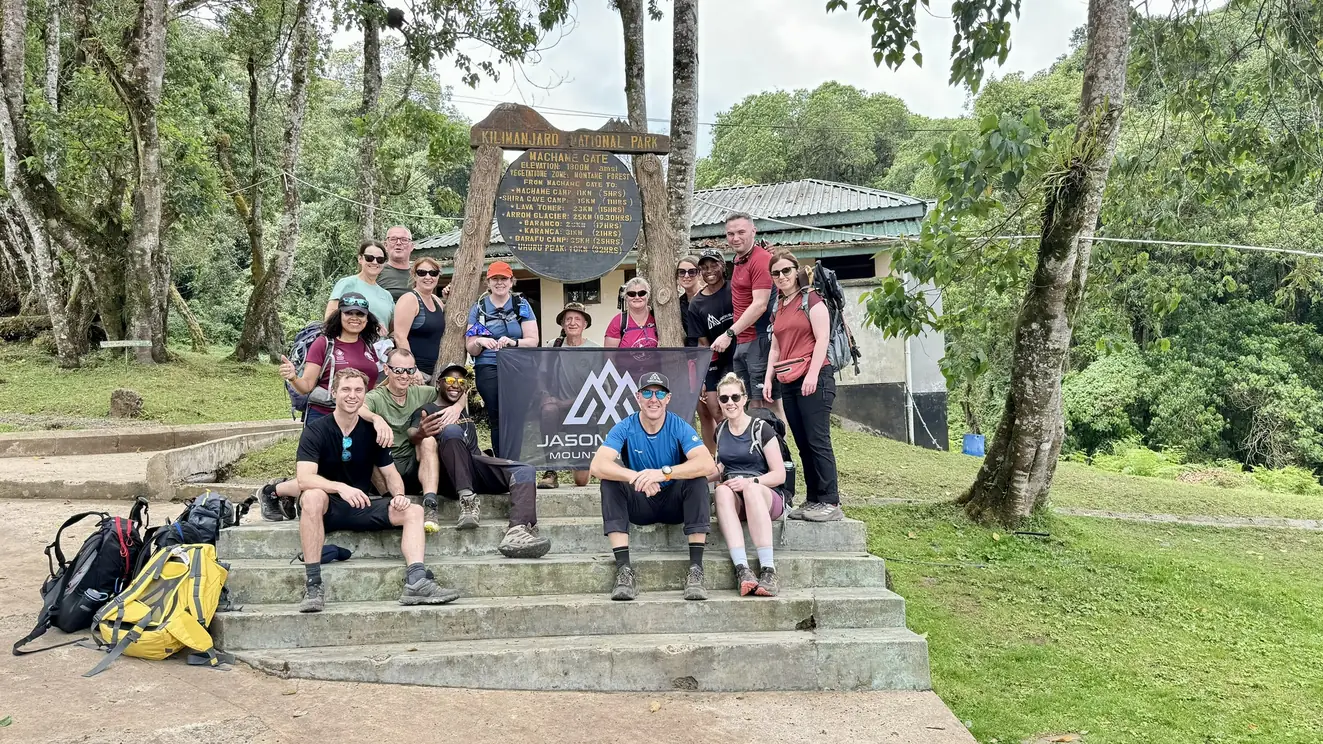
The route passes through five completely distinct ecosystems. Day 1 begins at Machame Gate at 1,814 m in dense tropical rainforest where the humidity is high and the canopy is close overhead. By Day 2 the forest opens onto the vast Shira Plateau at 3,833 m, an ancient volcanic caldera with panoramic views of the Kibo massif above. Day 3 moves through alpine desert to the Lava Tower at 4,600 m, the critical acclimatisation high point, before descending to Barranco Camp at 3,960 m to sleep. Day 4 includes the famous Barranco Wall scramble before Karanga Camp. Day 5 reaches Kosovo Camp at 4,870 m, the Black Mountaineering summit launch point. And on Day 6, at midnight, the summit push begins.
The route is not the easiest option on the mountain. It is the right option for people who want to stand at Uhuru Peak with a proper preparation foundation under them.
The Climb High Sleep Low Principle
The single most important concept for anyone planning a Kilimanjaro expedition to understand is this.
Your body adapts to altitude by being exposed to it and then being allowed to recover at a lower elevation. The stimulus happens high. The consolidation happens low. Sleep low.
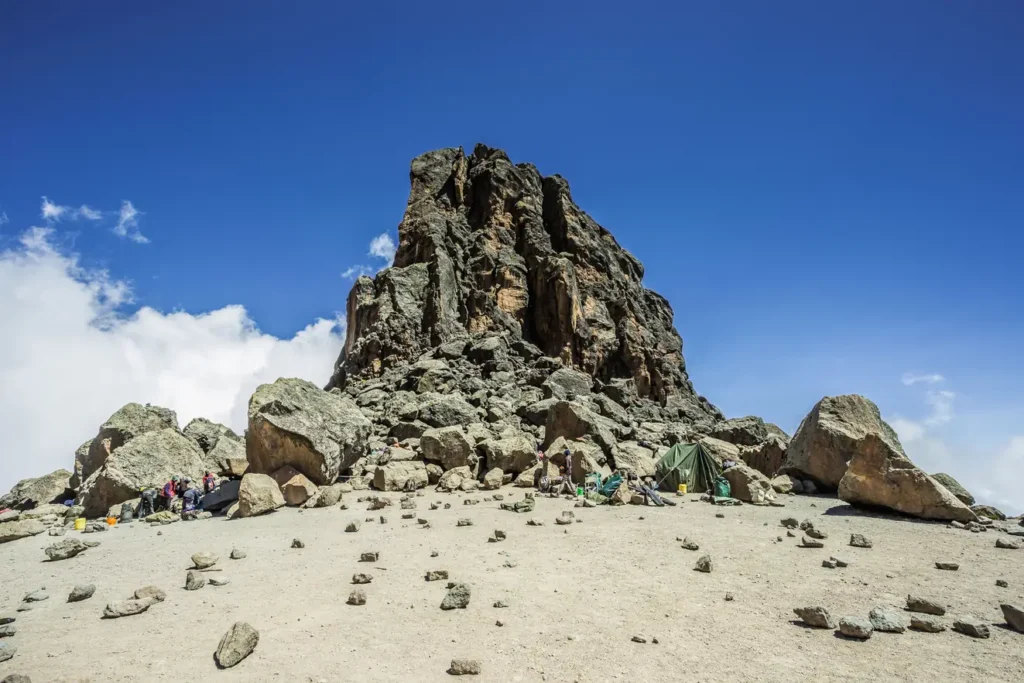
On Day 5 of the Machame Route, the team climbs to Lava Tower at 4,600 m for lunch and the acclimatisation stimulus. Then it descends approximately 640 m to Barranco Camp at 3,960 m to sleep. This is not inefficiency. This is physiology applied correctly.
The body at 4,600 m is producing red blood cells to compensate for reduced oxygen availability. The descent to sleep at 3,960 m gives those adaptations time to consolidate without the continued stress of high altitude overnight. By the time the team wakes at Barranco Camp, they are meaningfully better acclimatised than they would have been if they had slept at the same altitude they reached.
This single day does more for summit success on Kilimanjaro than any amount of fitness training. It is the reason the Machame Route summit success rate consistently exceeds that of shorter routes, and it is built deliberately into every Black Mountaineering expedition itinerary.
Altitude Sickness: The Real Challenge and How We Manage It
The question I am asked more than any other before a Kilimanjaro expedition is not about the terrain or the gear or the length of summit night.
It is this. What if I get altitude sickness and have to turn back?
The fear is not irrational. Acute Mountain Sickness is the primary medical reason people do not complete a Kilimanjaro summit. Symptoms include persistent headache, nausea, loss of appetite, fatigue, and disrupted sleep, all of which overlap in varying degrees with normal acclimatisation responses at altitude.
At Black Mountaineering, altitude management is not a passive process. It is the most active component of every expedition.
Every team member’s oxygen saturation and heart rate is monitored daily from Day 1 through to summit day. Our guides are Wilderness First Responder trained in high altitude medical assessment. Oxygen bottles and masks are carried on every expedition without exception. Kosovo Camp at 4,870 m is used as the summit launch point instead of the standard lower Barafu Camp, giving our teams a critical altitude advantage and a shorter summit night gain.
Before departure, every expedition member is advised to consult their GP about Diamox at least six weeks ahead of travel. The full medical preparation is detailed in the expedition information pack, which covers the ten-day Diamox course, additional medical kit requirements, and vaccination recommendations.
Altitude sickness is manageable when the strategy is correct. The Machame Route and the Black Mountaineering leadership system are built around managing it correctly.
The 10-Day Expedition Structure
The Black Mountaineering Kilimanjaro Expedition is not a seven-day trek with flights wrapped around it. It is a fully structured ten-day experience built around cultural immersion, acclimatisation, summit success, and post-climb recovery.
Day 1: Arrival Land at Kilimanjaro International Airport. Black Mountaineering representative meets all arrivals. One-hour scenic transfer to the hotel in Moshi. Team briefing and gear check. Twin-share hotel accommodation, breakfast and board included.
Day 2: Chemka Hot Springs Immersion in Tanzania before the mountain begins. Crystal-clear geothermal waters at Chemka Hot Springs surrounded by fig tree canopy. Private camping under the stars. The body and mind settle before the ascent.
Day 3: Maasai Village and Machame Gate Morning visit to a Maasai village. Traditional welcome ceremony, cultural education, and community interaction. Then drive to Machame Gate at 1,814 m for registration and the start of the climb. Rainforest ascent to Machame Camp at 3,022 m across approximately 11 km in five to seven hours.
Day 4: Machame Camp to Shira Camp Moorland and heathland terrain. The forest canopy falls away. The Shira Plateau opens ahead. Approximately 5 km in four to six hours. Shira Camp at 3,833 m. First unobstructed views of the summit massif.
Day 5: Shira Camp to Lava Tower to Barranco Camp The most critical acclimatisation day. Ascent to Lava Tower at 4,600 m for the climb high stimulus. Descent to Barranco Camp at 3,960 m to sleep. Approximately 10 km in seven to eight hours. Giant groundsels surround the valley camp. The Barranco Wall is visible above.
Day 6: Barranco Camp to Karanga Camp The Barranco Wall scramble. Hands and feet on solid rock, no ropes required. The most intimidating section from below and the most satisfying from above. Karanga Camp at 4,035 m. Approximately 6 km in four to five hours.
Day 7: Karanga Camp to Kosovo Camp The final preparation day. Kosovo Camp at 4,870 m. Approximately 4 km in five to six hours. Gear check. Layers confirmed. Oxygen checked. Summit briefing. Midnight departure. Rest now.
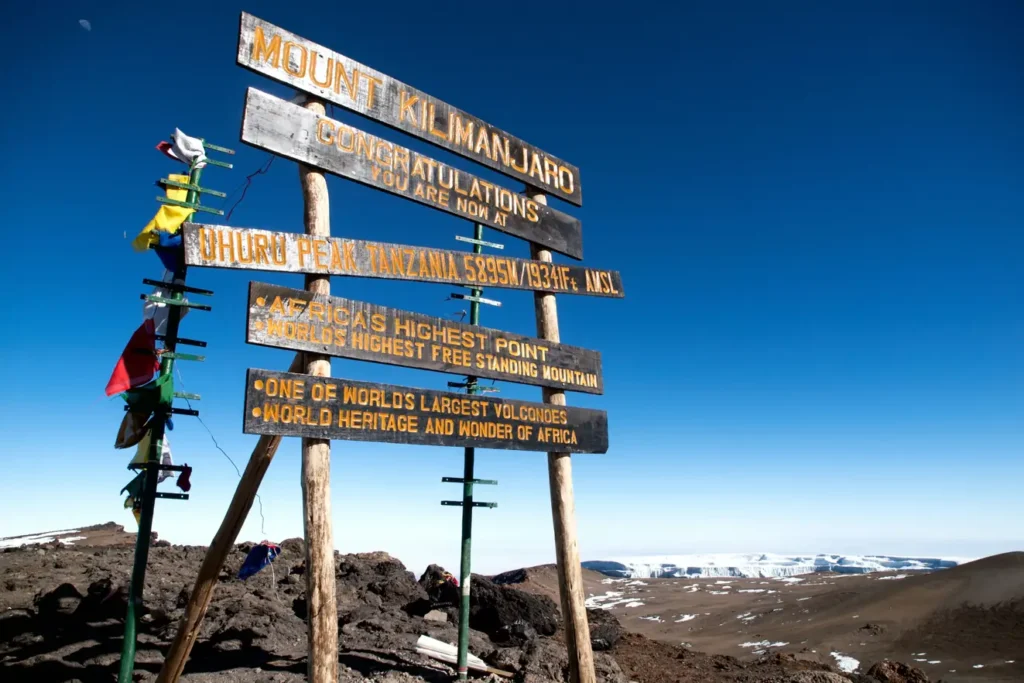
Day 8: Summit Day Midnight from Kosovo Camp. Frozen scree. Headlamps. The breathing. Tanzania far below. Stella Point at 5,745 m as the African dawn breaks. Uhuru Peak at 5,895 m. The Roof of Africa. Then the long descent to Mweka Camp at 3,075 m. Approximately 17 km across twelve to fifteen hours.
Day 9: Mweka Camp to Mweka Gate The final descent through rainforest. Summit certificates collected at Mweka Gate. Porter and guide tips distributed. Transfer to Moshi hotel. Two nights post-climb accommodation.
Day 10: Jason’s Personal Magical Day A curated cultural experience designed by Jason himself. Local coffee fields, banana beer tasting, waterfall swimming, a cultural museum, and a rooftop dinner celebration with traditional music. The mountain is behind you. Tanzania has one more day to offer.
Day 11: Departure Transfer to Kilimanjaro International Airport. Optional safari extension available.
Who Is This Expedition For
The Black Mountaineering Kilimanjaro Expedition is designed for three specific types of person and it is built to deliver for all three.
The Bucket-Lister You have a list. Kilimanjaro has been on it for years. You want a genuine challenge, not a tour. You want it done properly, with expert leadership, real cultural immersion, and a summit you earned rather than purchased. The Black Mountaineering expedition is a done-for-you experience that still demands everything from you on summit night. That combination is what makes the summit meaningful.
The Milestone Climber A significant birthday. A personal milestone. A year that deserves a moment you will carry for the rest of your life. The summit of Kilimanjaro at 5,895 m under a clear African sky with a team around you that went through it together is a milestone marker that no dinner or travel will replicate.
The Safety-Conscious Adventurer You have heard the stories about budget operators, inexperienced guides, and climbers turned back or evacuated because the preparation was wrong and the leadership was insufficient. You are right to want something different. Jason Black’s world record experience, the Wilderness First Responder trained guide team, the oxygen on every climb, and the daily altitude monitoring are not marketing features. They are the foundation of every decision made on every day of this expedition.
What Jason Black Brings to This Mountain
Jason Black holds the world record for the fastest double summit of Kilimanjaro in a single day. He has summited Everest. He has summited K2, the mountain that claims more lives per attempt than any other on Earth. He is Ireland’s National Outdoor Athlete of the Year.
He has stood on Kilimanjaro in conditions most operators would not attempt. He has made the call to descend when the summit was close because the right call is always the right call regardless of what it costs. And he has guided teams to Uhuru Peak in conditions that test every element of the preparation system his company runs.
The experience he brings to the Kilimanjaro expedition is not a credential on a website. It is the accumulated judgment of decades at altitude applied to every decision from the hotel briefing in Moshi to the summit sign at 5,895 m.
The Complete Kilimanjaro Preparation Framework
Training: 12 Weeks Minimum
The Black Mountaineering twelve-week training plan is specific to the Machame Route. It covers cardiovascular endurance, lower body strength, load-carrying capacity with a weighted pack, and back to back long hiking days in the final training block. The plan is available in the expedition information pack.
Minimum fitness benchmarks before departure: comfortable completing fifteen to twenty kilometre hikes with a loaded pack across consecutive days. Cardiovascular base sufficient for sustained daily ascent of six hundred to twelve hundred metres.
Gear: The Non-Negotiables
Sleeping bag rated to minus twenty degrees Celsius. Merino wool base layers. Mid layer fleece. Lightweight puffer. Eight hundred gram down jacket with hood. Hardshell jacket and pants. Fully broken-in hiking boots worn across a minimum of ten training hikes before departure. Two headlamps at minimum five hundred lumens with spare batteries. Personal medical kit including Diamox course prescribed by GP.
Full packing list available for download via the expedition information pack.
Medical Preparation
GP consultation minimum six weeks before departure. Diamox 250 mg course discussed and prescribed if appropriate. Travel health clinic visit for vaccinations and antimalarial medication. Travel insurance mandatory covering non-technical trekking to six thousand metres including helicopter evacuation.
Expedition Cost and Booking
€3,499 per person. €399 deposit secures your place with the balance due closer to departure.
2026 Dates: 01 to 10 July 2026 06 to 16 August 2026 10 to 20 September 2026 08 to 18 October 2026
Each date is limited to a small group. March 2026 is already closed.
What is included: Four nights hotel accommodation on a shared basis. All meals on the mountain. Porter service. All mountain guides and local staff. All park fees, permits, and tour fees. All in-country transport. Oxygen and masks, mountain shelter, and portable stretcher on every trip. Jason’s personal Day 10 cultural experience.
What is not included: International flights to Kilimanjaro International Airport. Tanzanian visa ($50 USD on arrival). Vaccinations and antimalarials. Personal spending in Moshi. Porter and guide tips ($200 per person distributed at expedition end).
The Roof of Africa Is Waiting
The summit of Kilimanjaro does not ask who you are when you arrive. It asks what you are made of across seven days of preparation on the Machame Route and one long night of everything that preparation built toward.
The people who stand at Uhuru Peak at 5,895 m are not the people who were most talented or most naturally athletic. They are the people who prepared honestly, trusted the process, and kept moving when the altitude made moving difficult.
That is the standard. It is achievable. And the window in 2026 is open now.