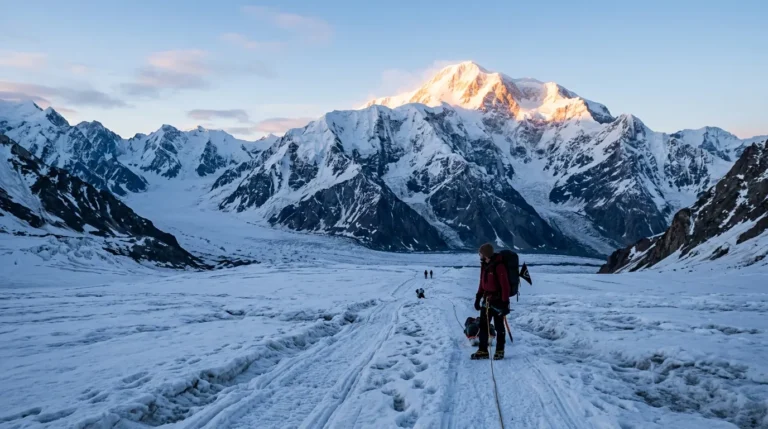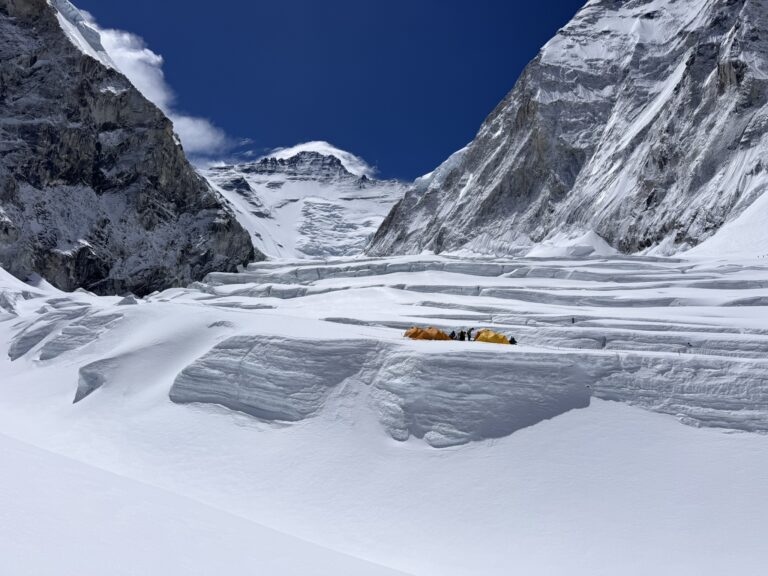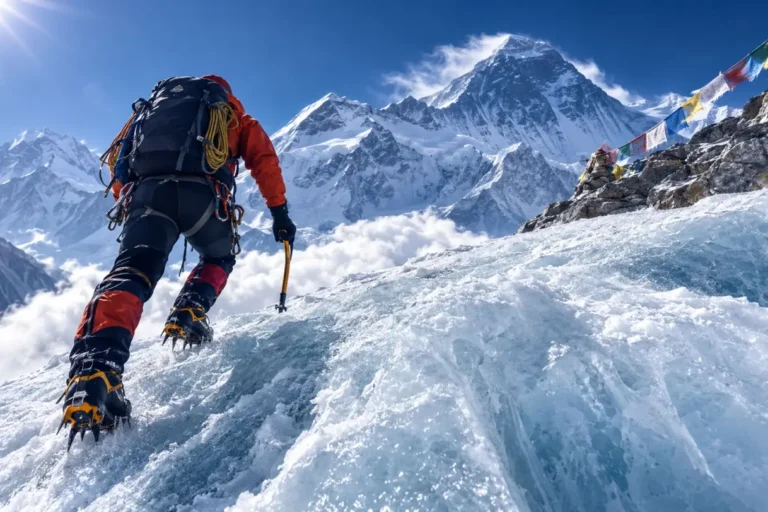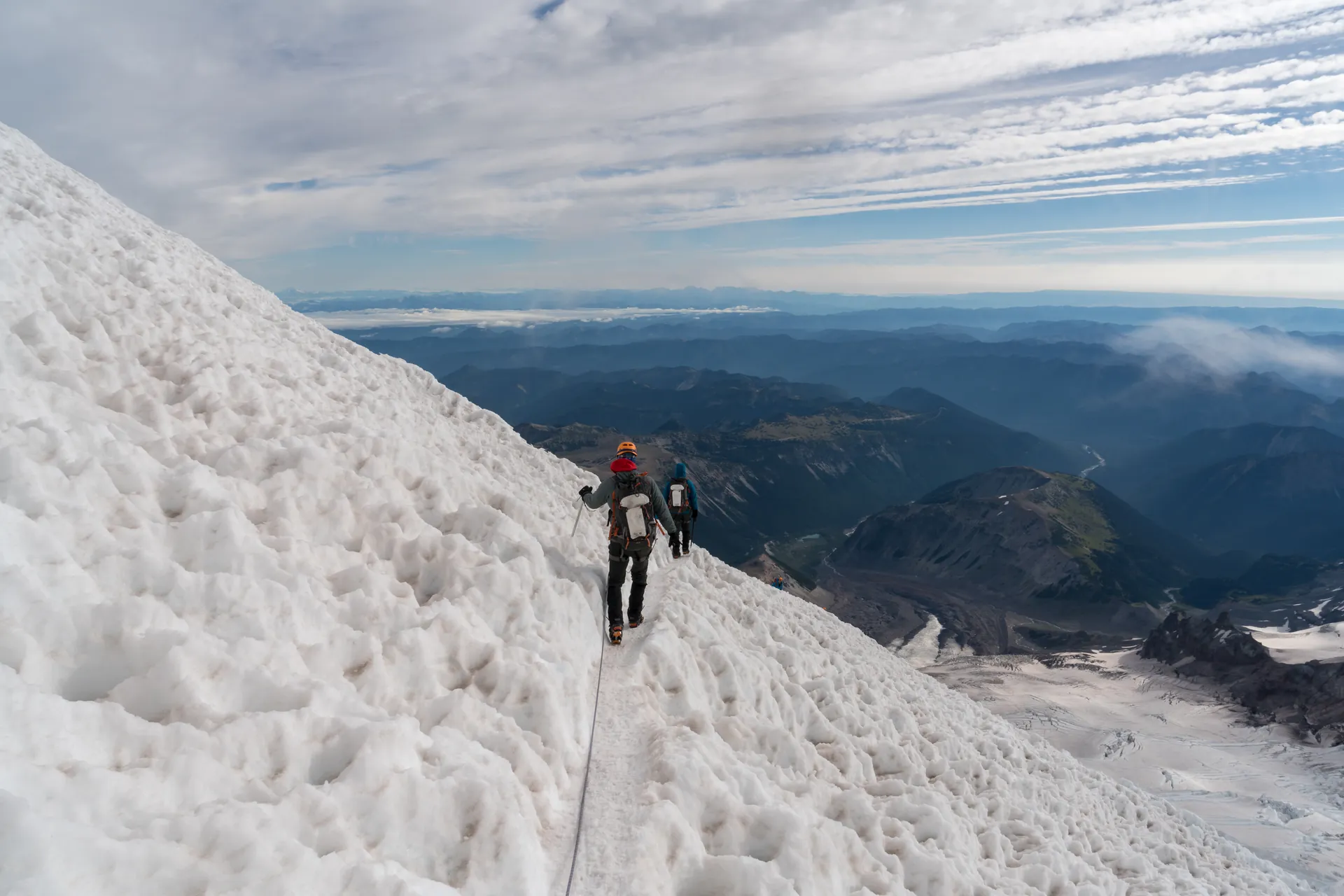
You have spent weeks getting here. You trekked through the ancient corridors of the Nar-Phu Valley, past Buddhist monasteries and Tibetan prayer walls that have stood longer than any modern expedition. You pushed through acclimatization rotations that tested your patience as much as your lungs. You watched Base Camp at 4,900 metres become familiar ground. And now you are here. Camp 2. The Southwest Ridge of Himlung Himal stretching above you toward 7,126 metres.
And something is wrong.
It might be the weight in your legs that wasn’t there two weeks ago. It might be the headache that Diamox isn’t fully touching. It might be the cold that has moved from uncomfortable to something more fundamental. Or it might simply be the honest voice inside you that is asking, for the first time with real force, whether you are ready to go higher.
This is Camp 2 on Himlung Himal. And this is where most expeditions end.
Not at Base Camp. Not on summit day. Here. At this exact point on the mountain. And the reasons are consistent, identifiable, and almost entirely rooted in what happened long before the climber ever left home.
What Makes Himlung Himal Different at This Altitude
Himlung Himal sits at 7,126 metres in Nepal’s remote Nar-Phu Valley, close to the Tibetan border within the Manaslu Conservation Area. It is graded Hard, classified as technically moderate but physically and mentally severe across its 29-day expedition structure.
The mountain is not extreme in a technical sense. There are no vertical ice walls requiring advanced mixed climbing. The route via the Southwest Ridge involves glacier travel, fixed rope sections, and exposed summit ridges. A competent, well-prepared mountaineer can move through this terrain confidently.
The word in that sentence is prepared.
Because above Camp 2, Himlung Himal does not test your technical ability in isolation. It tests the cumulative sum of everything you brought to the mountain. Your aerobic base. Your rope work under fatigue. Your sleep quality at altitude. Your mental reserves after three weeks in a remote valley. Your body’s genuine adaptation to hypoxic stress above 6,500 metres.
And it tests all of these things simultaneously, at a point in the expedition when you are already tired, already far from home, and already deep in a decision that cannot be easily reversed.
The Five Reasons Climbers Stop at Camp 2
1. Incomplete Acclimatization
The Himlung Himal expedition dedicates ten full days, Days 9 through 18, to acclimatization rotations between Base Camp at 4,900 metres and the lower high camps. This is not padding in the itinerary. It is the structural foundation on which the summit attempt is built.
The rotations follow the classic climb-high, sleep-low protocol. The body is pushed to a higher elevation, forced to begin adapting, then brought back down to recover at a lower altitude before going higher again. Done properly and repeatedly, this process triggers measurable physiological changes: increased red blood cell production, improved respiratory efficiency, and better cellular oxygen utilisation at extreme altitude.
The problem is that many climbers arrive having ticked the experience box at 5,000 to 6,000 metres without having genuinely adapted to sustained high-altitude stress. There is a significant physiological difference between reaching a 6,000-metre summit on a well-supported commercial expedition and spending multiple nights above 6,000 metres during an acclimatization cycle on a 7,000-metre objective.
Climbers who have not crossed that threshold before arriving at Himlung Himal will feel it at Camp 2. The body that performed adequately during rotations begins to show the signs of insufficient adaptation: disrupted breathing during sleep, loss of appetite, persistent headache, and the profound fatigue that altitude imposes on a system that is not yet equipped to manage it.
The mountain gives you no credit for effort if the adaptation isn’t there. It simply stops you.
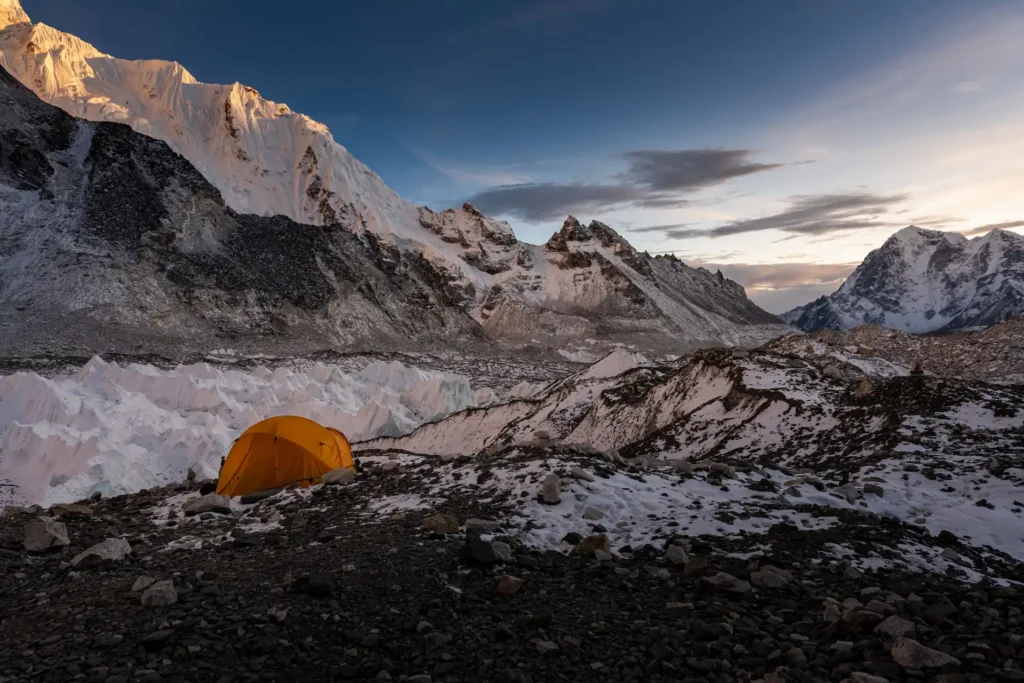
2. Physical Conditioning Gaps
The 12-week structured training program recommended for Himlung Himal builds across four consistent pillars: Zone 2 aerobic running that scales from 30 to 45 minutes across the program, weekly strength training, hill repeats that progress from 6 x 100 metres up to 10 x 200 metres, and sustained weekend mountain trekking throughout.
This structure is not arbitrary. It reflects the specific physiological demands of a 7,000-metre expedition with 5 to 10 hours of daily activity across 29 days.
Zone 2 running builds the aerobic engine that keeps you moving efficiently at altitude where oxygen availability is severely reduced. Hill repeats develop the leg power and cardiovascular capacity needed for sustained climbing on steep terrain under load. Strength training maintains the muscular endurance required to manage technical rope work and glacier travel over multiple hours without technique degrading under fatigue. Weekend mountain trekking trains the body to operate in mountain-specific conditions and replicates the sustained output that the expedition demands.
Climbers who arrive at Himlung Himal having done some of this, rather than all of it, consistently and progressively, reach a wall somewhere between Camp 1 and Camp 2 where the gap between their conditioning and the mountain’s demands becomes impossible to close. The body that could hold pace during the early approach days begins to lose ground above 5,500 metres.
At 7,000 metres, fitness is not a competitive advantage. It is the minimum entry requirement.
3. Mental Fatigue at Altitude
A 29-day high-altitude expedition in one of the most isolated valleys in the Himalaya is not a single hard day followed by recovery. It is a sustained psychological campaign across nearly a month in an environment that strips away every comfort and convenience that normally manages the baseline stress of daily life.
The Nar-Phu Valley is genuinely remote. Ancient trade routes and Buddhist monasteries define its landscape, and Tibetan culture remains wonderfully preserved precisely because mainstream trekking has barely touched it. This isolation is part of what makes Himlung Himal so compelling as an expedition objective. It is also part of what makes it mentally demanding in ways that are difficult to prepare for at home.
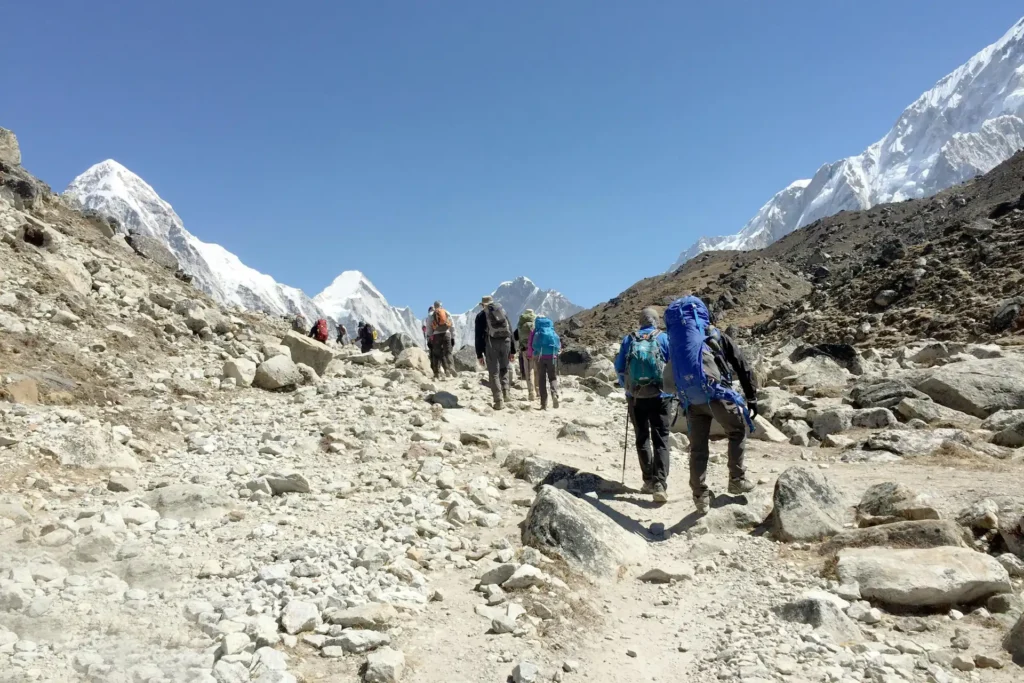
Sleep at altitude is consistently disrupted. The body’s breathing regulation during sleep is impaired by hypoxia, causing a cyclical pattern of shallow breathing, brief apnea, and sudden gasping that fragments rest even when the climber is exhausted. Over days and weeks, this sleep debt compounds. Decisions that felt clear at Base Camp become harder above 6,000 metres. Risk assessment that was sharp early in the expedition becomes slower and more uncertain as mental fatigue sets in.
Add to this the weight of the decision itself. Every climber reaching Camp 2 on Himlung Himal knows that above this point, the commitment deepens. The terrain becomes more technical. The exposure increases. The summit is close enough to see and far enough away to demand everything remaining in the tank. And the mental reserves required to make that push in good condition are built not on the mountain but in the months before departure.
Climbers who have not prepared the mental side of high-altitude performance, the capacity for calm decision-making under sustained physical and psychological stress, the ability to tolerate discomfort without panic and to assess risk accurately when tired, find that Camp 2 is where these gaps become impossible to conceal.
4. Technical Readiness on the Upper Mountain
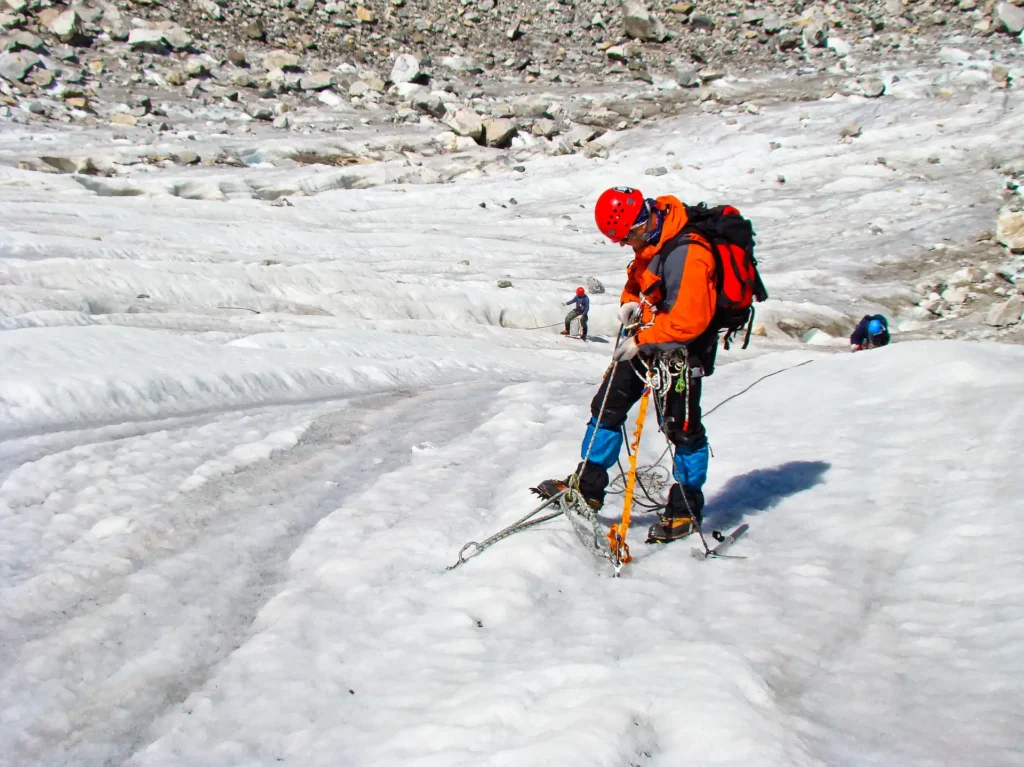
Above Camp 2, Himlung Himal’s terrain demands competent, confident technical execution. The Southwest Ridge involves fixed rope ascending on steeper and more exposed sections, glacier travel requiring precise crampon placement and ice axe management, and ridge exposure that leaves no margin for hesitation.
The key word is confident. Not perfect. Not expert level. Confident.
A climber who is genuinely comfortable on fixed ropes, whose crampons are placed deliberately and quietly, who moves on glaciated terrain with controlled efficiency, will progress through this section at a pace that keeps them within the summit window and manages their energy expenditure appropriately.
A climber whose rope work requires active concentration under fatigue, whose crampon technique degrades when tired, who moves tentatively on exposed ridgeline, will slow. And at altitude, slow has consequences. A slower pace means more time in the cold. More energy burned per vertical metre gained. More exposure to changing weather. A narrowing summit window. And an increasing gap between that climber and the rest of the team.
The requirement that all Himlung Himal climbers have solid rope work skills on both ascent and descent, combined with prior experience at 5,000 to 6,000 metres, is not a bureaucratic entry threshold. It is a genuine safety and success requirement rooted in what the mountain demands above Camp 2.
5. Weather, Timing, and the Summit Window
The summit push window on Himlung Himal spans Days 19 to 24. Six days across which the weather, the team’s condition, and the mountain’s mood must align sufficiently to allow a safe ascent to 7,126 metres and a controlled return to Base Camp.
Professional weather forecasting is provided throughout the expedition. Satellite phone and walkie-talkie communications keep Base Camp connected to the upper mountain. The experienced Sherpa rope-fixing team prepares the route in advance. Every logistical element of the summit window is managed with precision.
But climbers who arrive at the summit push having lost time during rotations, who are moving slower than the team requires, or whose bodies have not recovered adequately between acclimatization cycles, are already behind before the window opens. When a weather hold extends Camp 2 for an additional 24 or 48 hours, the reserves required to wait in cold, cramped conditions and then push again with genuine commitment are not generated on the mountain. They were either built in training or they were not.
The summit window does not wait. And Camp 2 is where the climbers who haven’t built those reserves discover it.
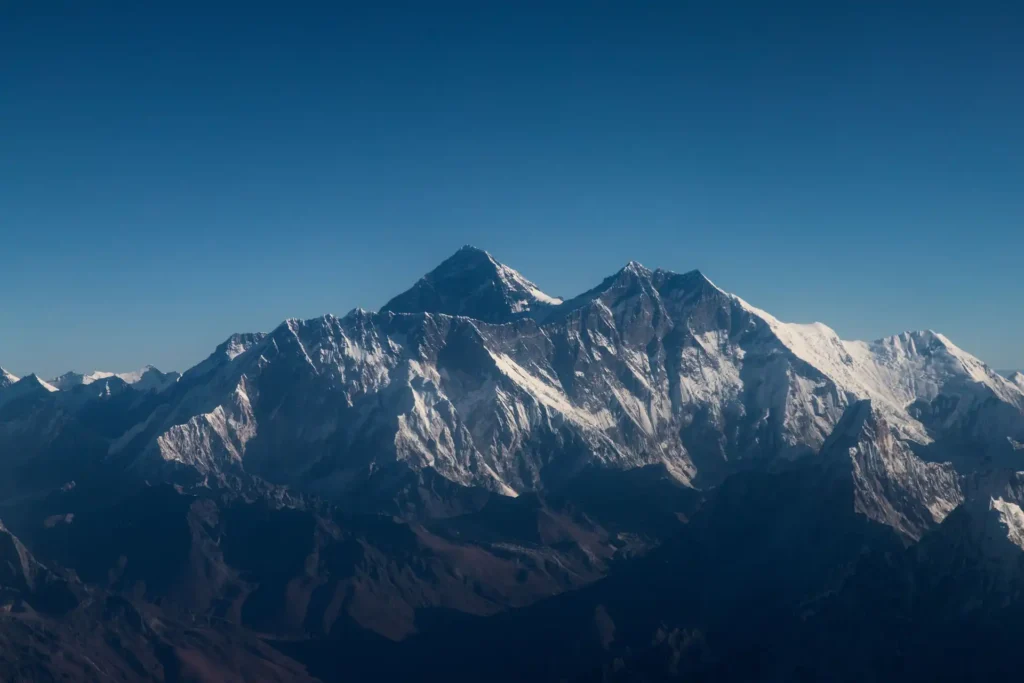
What the Climbers Who Summit Did Differently
The pattern among climbers who reach 7,126 metres on Himlung Himal is consistent and worth examining clearly.
They completed the 12-week training program in full, not approximately. They arrived with genuine prior experience above 5,000 metres including nights spent at altitude during acclimatization cycles, not just a summit reached and descended quickly. They could move on fixed ropes and glaciated terrain with quiet, efficient confidence rather than effortful concentration. They had worked on the mental side of sustained high-altitude performance and understood what weeks in a remote valley at extreme altitude actually demands of the mind. They had total trust in their team and their leader, because above Camp 2 the decisions being made around you matter as much as the ones you make yourself. And they chose the right expedition structure: small teams, intelligent acclimatization, 1:1 Sherpa support, and professional leadership with genuine Himalayan credentials.
Every one of these factors was in place before the expedition began.
The Mountain Is Honest
Himlung Himal does not stop climbers at Camp 2 to punish them. It stops them because it is honest. The mountain has no interest in your ambition, your gear budget, or your Instagram following. It reflects back with complete accuracy everything you brought to it.
The preparation is the climb. The summit at 7,126 metres is the result.
If you are standing at Camp 2 in good physical condition, with reserves in the tank and confidence in your technique, the mountain above you is demanding but navigable. The Southwest Ridge leads to one of the most remarkable summit panoramas in the Himalaya: Annapurna II, Manaslu, Gangapurna, and the Tibetan Plateau stretching beyond the border.
If you are standing at Camp 2 already running on empty, the mountain will tell you the truth about that too.
Listen to it. Prepare for it. Respect it.
And if the summit is your genuine goal, the work starts now, not at Base Camp.
Key Takeaways: What You Need Before Camp 2
Before committing to a 7,000-metre Himalayan expedition, measure yourself honestly against these foundations:
Prior altitude experience between 5,000m and 6,000m with nights spent at altitude during acclimatization rotations, not just a single summit day.
A completed and consistent 12-week structured training program covering Zone 2 aerobic base, hill repeats, strength training, and sustained mountain trekking.
Competent and confident rope work skills on both ascent and descent including fixed line technique, jumar use, and rappel/belay in mountain conditions.
Confident glacier travel with accurate crampon placement and ice axe management across varied glaciated terrain.
Genuine mental preparation for sustained high-altitude stress including disrupted sleep, isolation, and high-stakes decision-making under fatigue.
A realistic understanding of what a 29-day expedition in a remote Himalayan valley actually demands, not what you hope it will feel like, but what it actually requires.