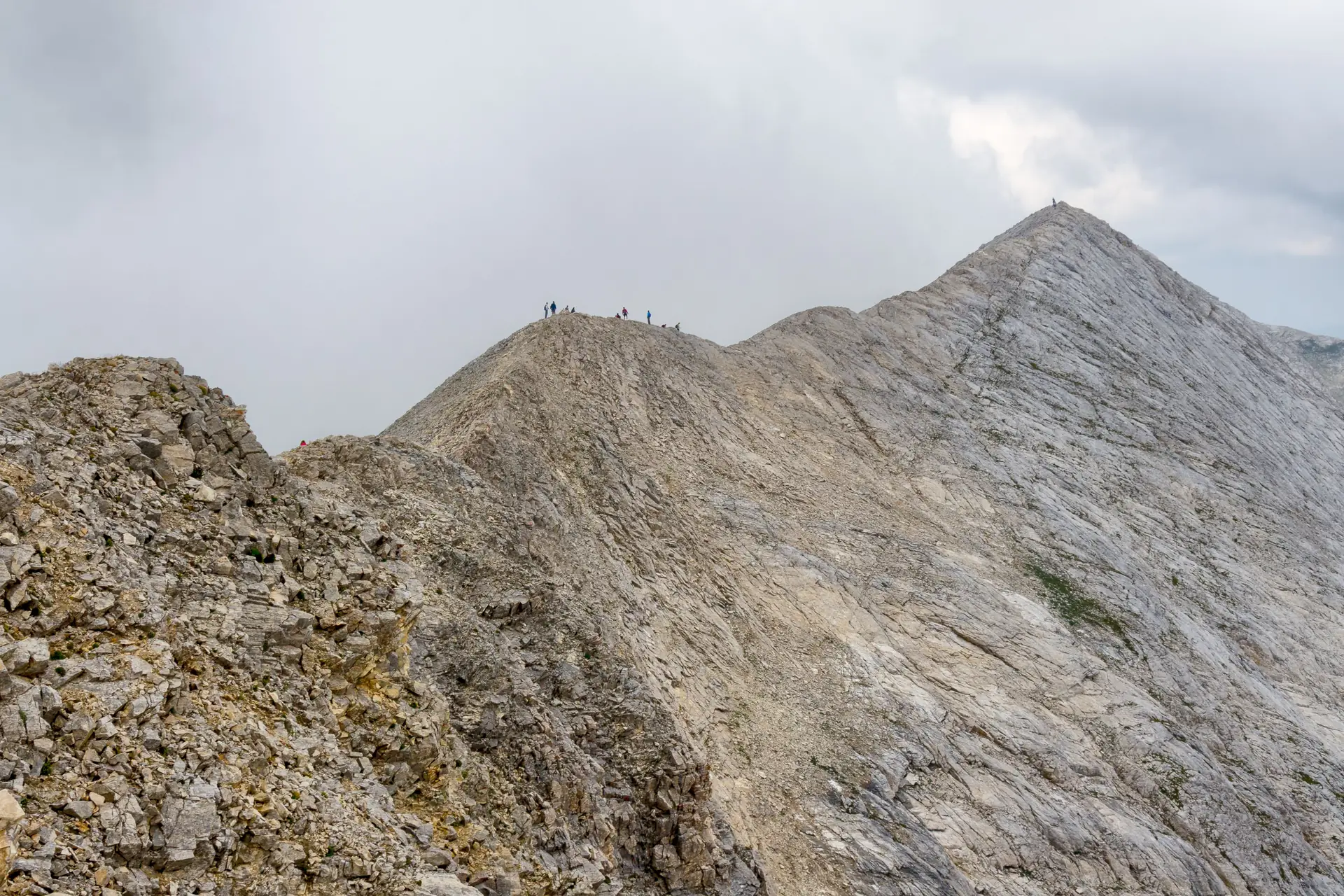
Some terrain announces itself before you reach it. You see it from the approach, a thin white line drawn across the sky, impossibly narrow, impossibly exposed, and you understand immediately that the mountain is asking something specific of you today.
Koncheto Ridge in Bulgaria’s Pirin National Park is that kind of terrain.
It is not the highest point on the Bulgaria 7 Summits traverse. It is not the longest day. But it is the day that defines the expedition. A marble knife-edge sitting at nearly 2,900 metres, fixed cables running its length, open mountain dropping away on both sides. And before you reach it, you have already climbed Vihren, the highest peak in the Pirin range at 2,914 metres.
This is an honest account of what Koncheto actually involves. The approach, the ridge itself, the descent, the conditions, and exactly what you need to bring in terms of fitness, gear, and mindset before you set foot on Bulgarian marble.
What Is the Koncheto Ridge?
The name Koncheto translates from Bulgarian as “the little horse,” a reference to the straddled, narrow character of the ridge itself. It sits inside Pirin National Park in southwestern Bulgaria, connecting the summit of Vihren at 2,914 metres with the twin peaks of Kutelo I and II at 2,908 and 2,907 metres.
The ridge is made entirely of white marble. This is not decorative language. The Pirin range is geologically unique in Europe, with marble forming the high terrain in a way that produces a surface unlike anything you find in the Alps or the Dolomites. It is smooth where it has been worn by boots and weather. It is crystalline and grippy where it has not. In dry September conditions it is demanding. In wet or icy conditions it becomes something else entirely.
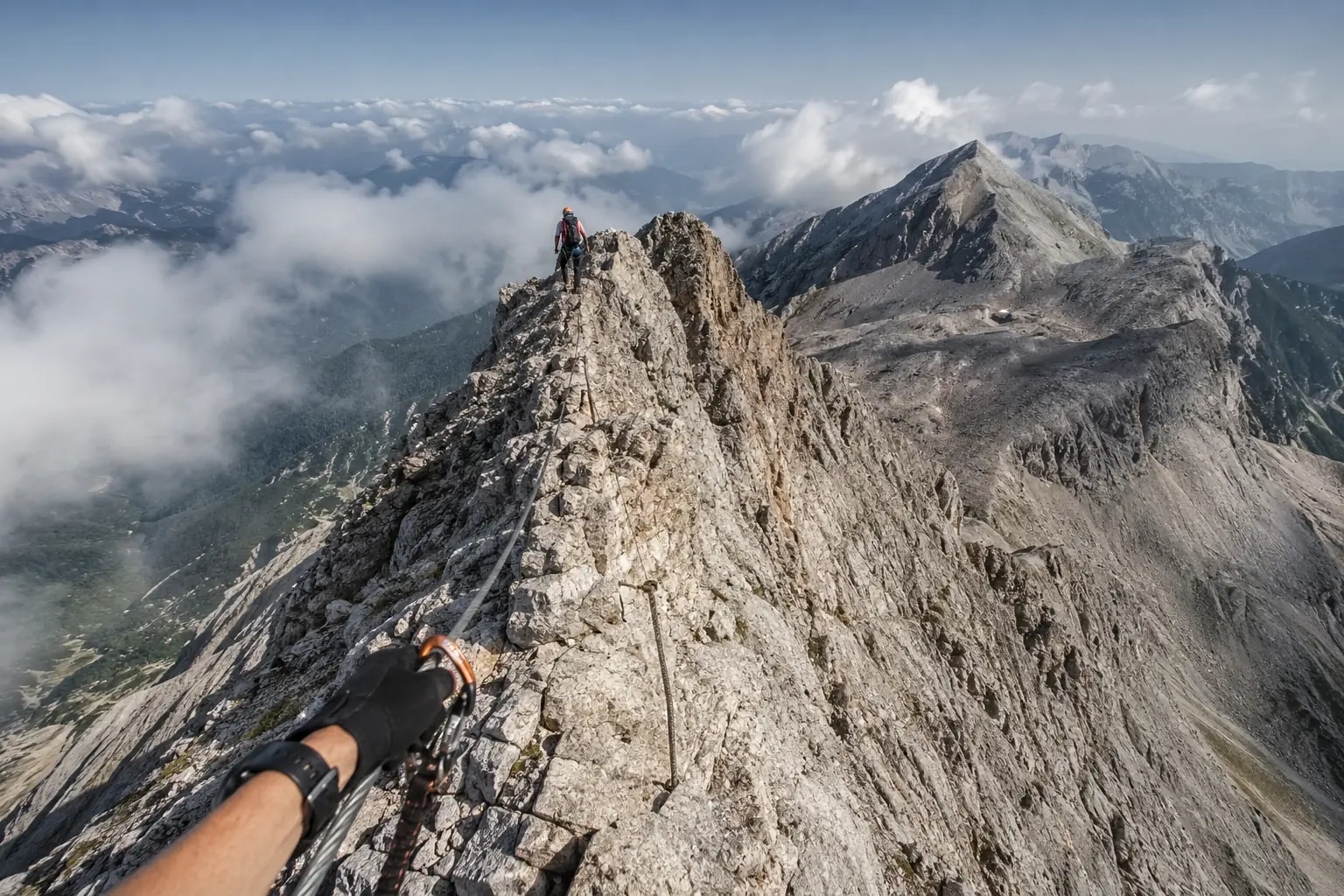
The fixed cables running along the most exposed sections are not optional. They are structural to how you move through this terrain. You hold them not out of fear but out of precision. This is the kind of ground that rewards deliberate movement and punishes rushing.
Day 3: The Hardest Day on the Traverse
Koncheto sits within Day 3 of the Bulgaria 7 Summits expedition, and Day 3 is the hardest day on the entire eight-day route.
The numbers tell part of the story. 1,300 metres of elevation gain. A hike time of nine and a half to ten and a half hours. A loop route that begins and ends with transfer to and from the Vihren hut. But numbers on a page do not capture what a ten-hour day in the Pirin range actually feels like in your legs, your lungs, and your head.
The day begins before the ridge. You earn Koncheto by climbing Vihren first.
The Ascent to Vihren
The path to Vihren is rocky, steep in sustained sections, and consistently demanding. Your boots need to be solid and broken in. Your cardiovascular base needs to be built before you land in Sofia. The mountain does not care that you flew in from Dublin. It responds to preparation, not intention.
From the summit of Vihren at 2,914 metres, you see Koncheto laid out ahead of you for the first time in full. The marble spine. The drop on both sides. The cables. And then you walk onto it.
On the Ridge: What Koncheto Actually Feels Like
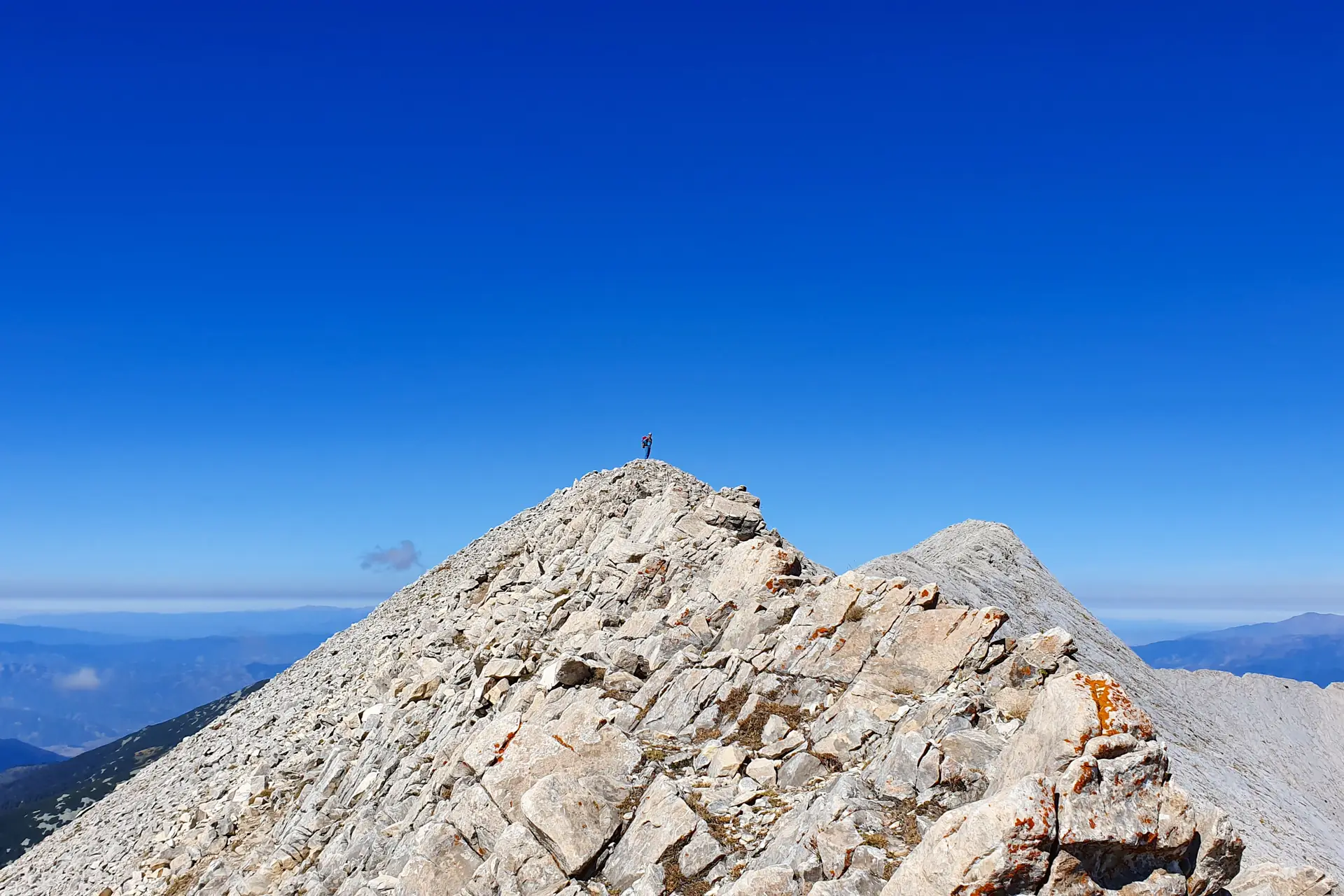
The first thing you notice is the texture beneath your boots. Marble has a particular quality that rock climbers and experienced hikers recognise immediately. It is not like limestone. It is not like granite. It has its own logic, and your footwork needs to adapt to it.
The exposure on Koncheto is real and immediate. On your left the ground falls away into the valley. On your right the same. The ridge is narrow enough that both drops are visible simultaneously. That awareness is not panic. It is focus. And focus is exactly what this terrain is designed to produce in you.
The fixed cables run along the sections where the ridge narrows most severely. You move through these sections one at a time, deliberate, controlled, weight properly distributed, eyes on the next placement before committing to the current one. This is the same movement discipline that applies on any serious mountain, applied here on Bulgarian marble at 2,900 metres.
The traverse across to Kutelo I and II takes the time it takes. There is no rushing. The pace is set entirely by the terrain.
Weather on the Ridge
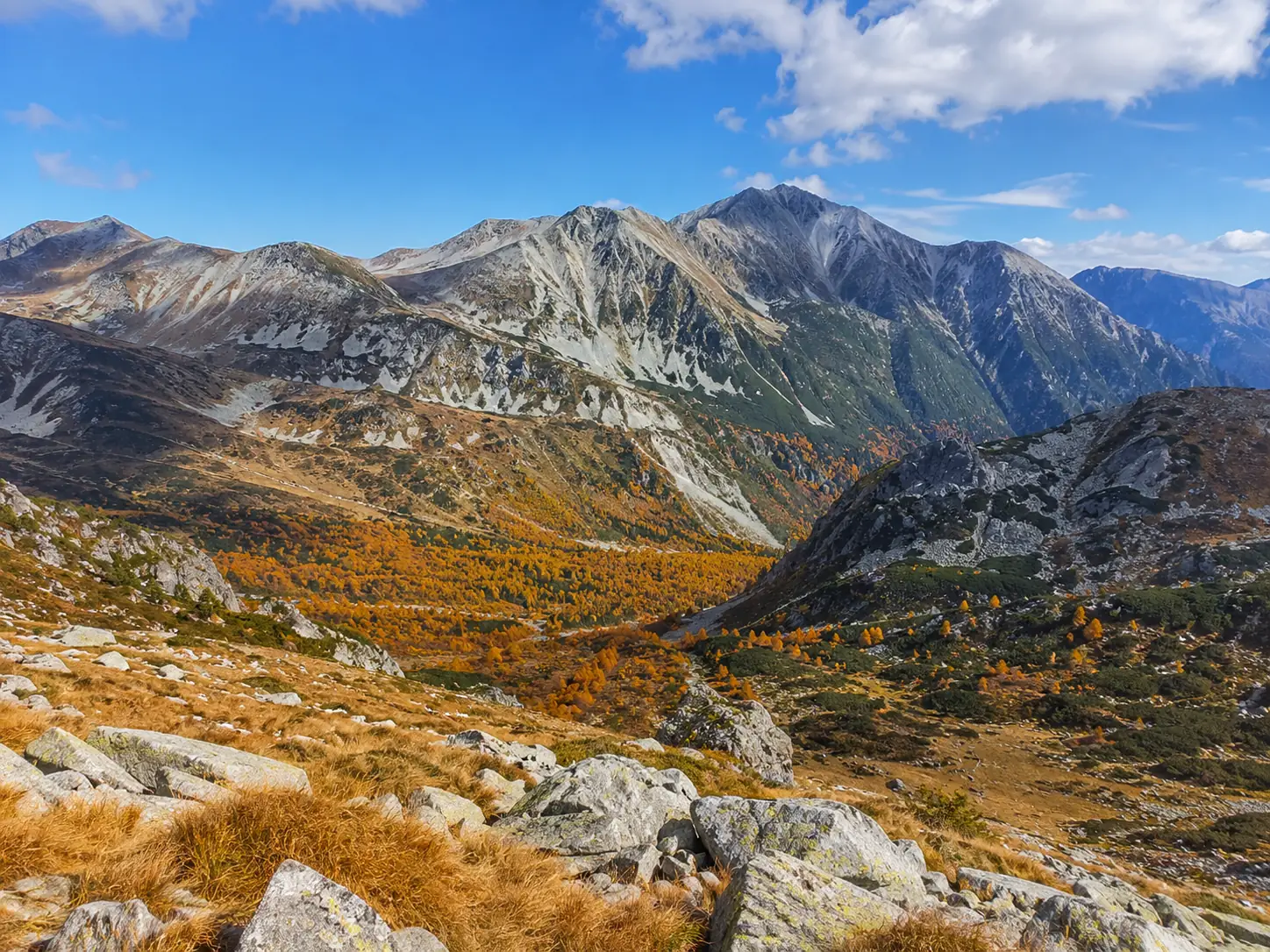
The Pirin range sits at the convergence of Mediterranean and continental weather systems. In September, the morning can be completely clear and the afternoon can produce cloud, wind, and temperature drops with very little warning.
Wind on an exposed ridge at 2,900 metres does not feel the same as wind in the valley. It has direction and force and it changes the feel of the terrain beneath you. A temperature that is comfortable on the approach becomes cold on the ridge with the right wind behind it.
Before any team moves onto Koncheto, weather is assessed carefully. This is not a ridge you commit to when conditions are marginal. Safety margins are defined before pressure arrives, not during it. A responsible guide knows the difference between a challenging day and an unsafe one. On this expedition, that judgement call is never left to the mountain.
The Descent: Where Fitness Earns Its Dividend
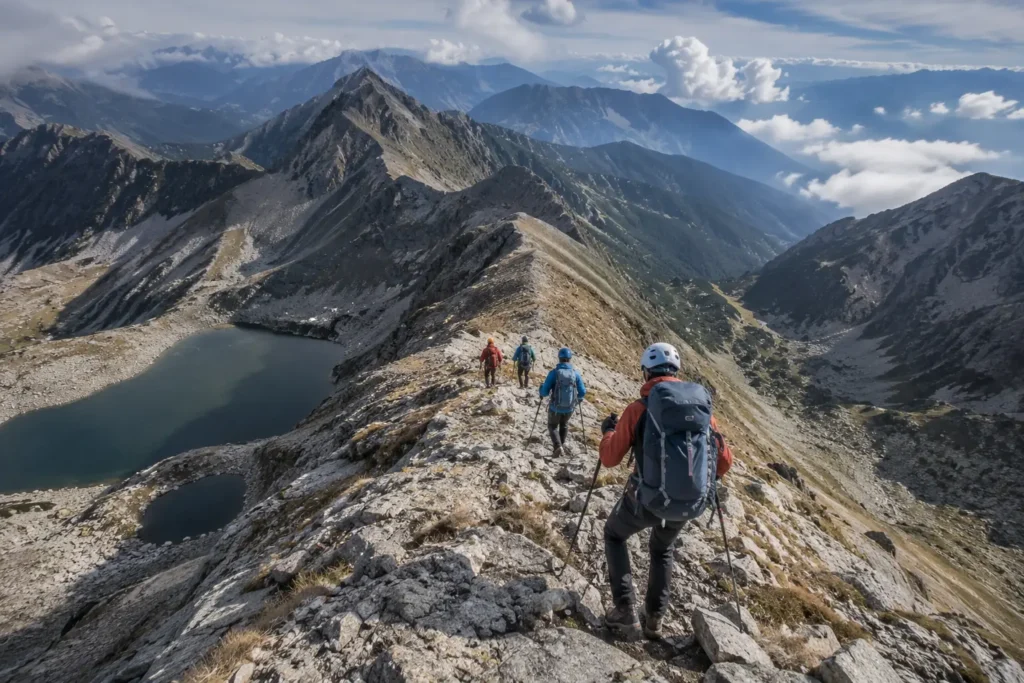
Once you move through Kutelo I and II the exposure eases and the descent back to Bansko begins. This is where the fitness work you did in the twelve weeks before the expedition pays you back.
The legs that climbed Vihren, crossed Koncheto, and tagged both Kutelo peaks still have hours left in the day. The concentration required on the ridge draws on reserves you did not know you were spending. Long descents on rocky terrain after a maximum effort day are where under-prepared hikers feel the gap between where they are and where they needed to be.
The hikers who did the work at home, back-to-back long days with a loaded pack, hill repeats, consistent cardiovascular training, those hikers finish Day 3 with something left. That something matters. Because Day 4 comes regardless.
Preparing Honestly for Koncheto
This section is not about discouraging you. It is about making sure you arrive ready.
The Bulgaria 7 Summits expedition requires no technical climbing experience. What it does require is genuine fitness, because the terrain and the daily demands of the traverse will expose any gap between your preparation and the mountain’s expectations.
The fitness requirements for Day 3 specifically:
Good cardiovascular fitness capable of sustaining six to ten hours of hiking per day on variable and demanding terrain across consecutive days with no full rest between them. Strong leg endurance for ascending and descending 1,000 to 1,500 metres on back-to-back days. Real experience with multi-day hill walking before departure, not just a few short day hikes in the months before you fly.
Mental resilience matters equally. The ability to manage fatigue, adapt to changing conditions without panic, and remain a functioning part of a small team under sustained physical pressure. That last quality does not come from the gym. It comes from time on the hill.
The recommended preparation for this expedition is a minimum of four significant hikes per month in the lead-up to departure, six to eight hours at a steady pace, on consecutive days, carrying an eight kilogram rucksack. The twelve-week structured training plan provided with the expedition covers Zone 2 cardiovascular work, hill repeats, HIIT sessions, and progressive strength training.
Do the work. The mountain will verify it.
Essential Gear for Koncheto Ridge
Footwear Robust hiking boots with solid ankle support and reliable grip on uneven rock. Well broken in before the expedition. No trail runners on Koncheto. The marble surface and the length of the day require a boot that is already part of your foot.
Layering System A moisture-wicking base layer, a warm mid-layer fleece or light synthetic, and a waterproof jacket with a hood that fits over a helmet. Waterproof trousers in your pack regardless of the morning forecast. The Pirin in September is not predictable.
Hands and Head Hat and buff accessible, not buried. Two pairs of gloves including one spare dry pair. The wind on an exposed marble ridge in September is not a summer wind.
Safety Essentials Headtorch with fresh batteries. Personal first aid and blister kit. Emergency bivvy bag and whistle. Fully charged phone in a waterproof pouch with a power bank. Two to three litres of water capacity. High energy snacks for a day that will run to ten hours.
Key Takeaways from the Ridge
Koncheto teaches things that are difficult to anticipate before you stand on it.
It teaches you that technical difficulty and genuine challenge are not the same category. It teaches you that exposure demands presence rather than panic. That a well-led small team on serious terrain is one of the most grounding experiences the mountains can produce.
It also shows you something about Bulgaria that most European hikers have not discovered yet. The Pirin range is as dramatic as anything on the continent. The marble ridges, the glacial cirques, the emptiness of the trails, all of it is here and almost entirely unknown outside the serious hiking community.
That will change. The crowds will find Bulgaria eventually. Right now, you can still stand on Koncheto with nothing but rock and sky and the people you came with.
That combination is increasingly rare. It deserves to be taken seriously.
Conclusion: The Day That Defines the Traverse
Every expedition has a day that you carry home without realising, until someone asks you about the trip months later and that day is the one you describe in detail.
On the Bulgaria 7 Summits, Day 3 is that day.
The white marble under your boots. The cable in your hand on the most exposed section. The summit of Vihren behind you and Kutelo ahead. The team moving as a unit through terrain that asked for everything and received it.
Koncheto is not about being fearless. Fear is a useful signal on a mountain. It tells you to pay attention. What Koncheto asks for is something different: preparation, presence, deliberate movement, and the willingness to trust a process that started twelve weeks before you ever saw the ridge.
That is what makes it worth every metre.
Rise with the mountain.