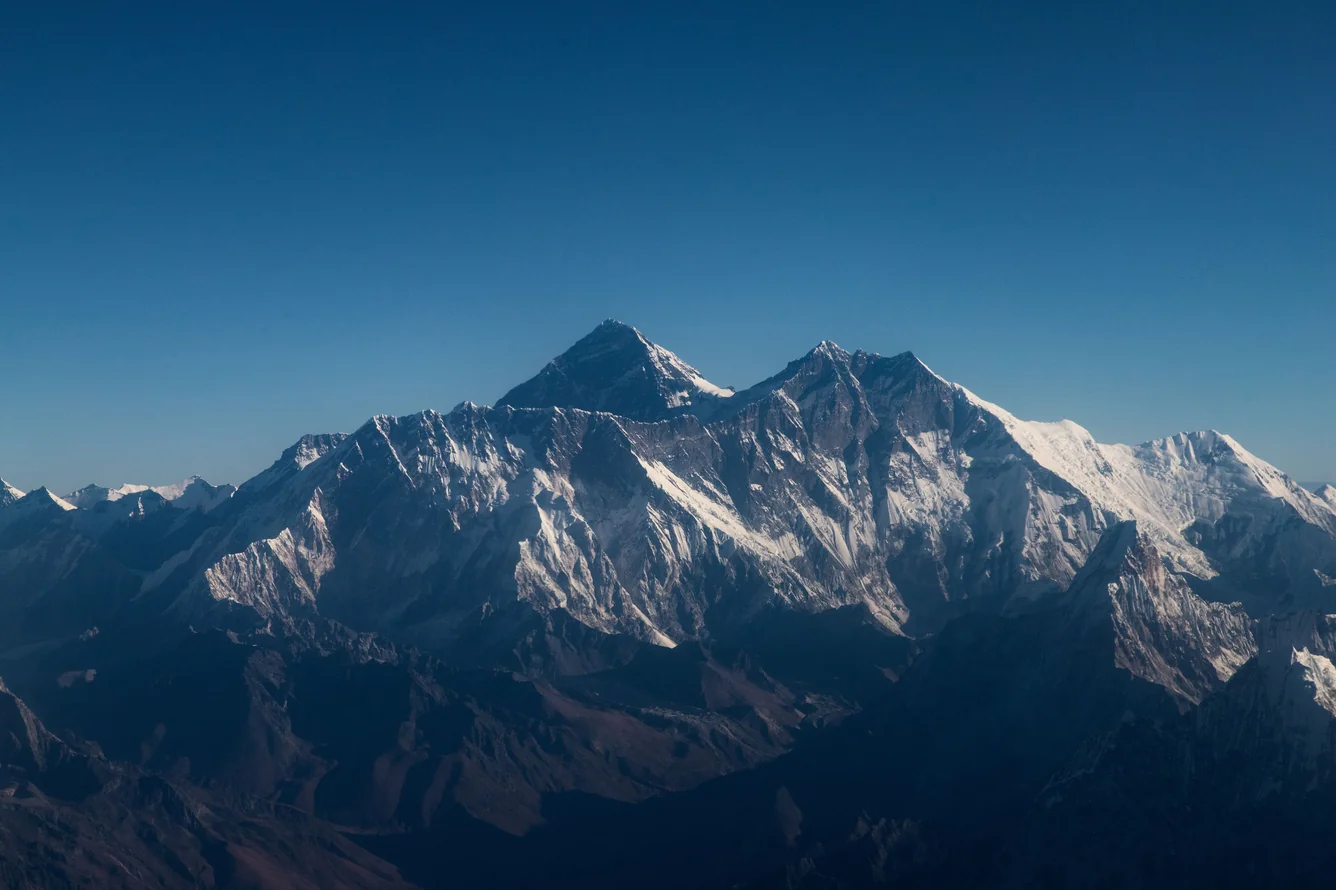
You know what it feels like to stand above 6,000 metres. The air is thin. The silence is complete. And somewhere above the cloud line, a thought arrives with uncomfortable clarity.
I want to go higher.
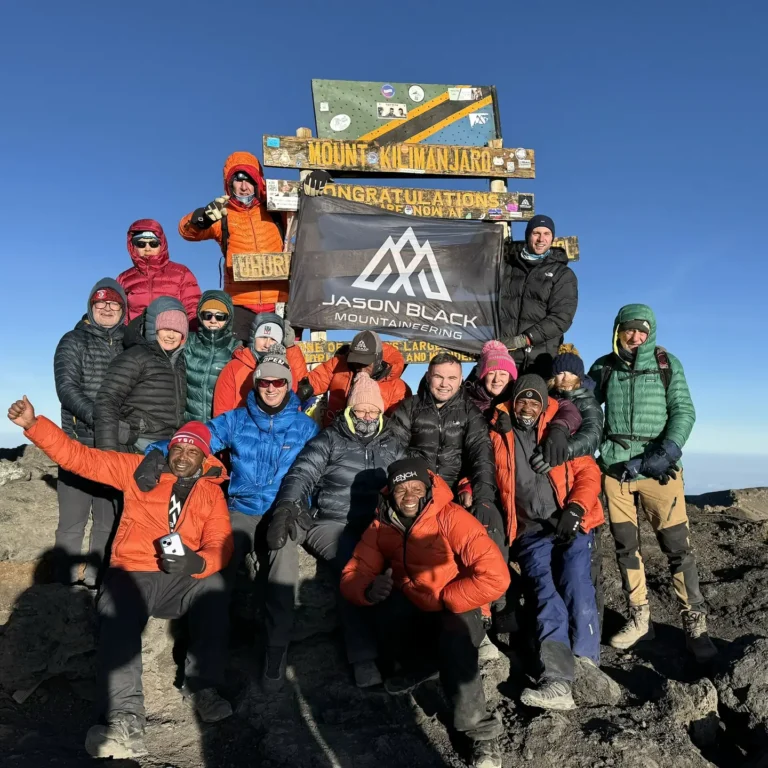
If you have summited Island Peak, Mera Peak, Kilimanjaro, or Aconcagua and felt that pull toward the bigger Himalayan objectives, you are standing at one of the most important crossroads in the progression of any serious mountaineer. The question is not whether you want to attempt an 8,000-metre peak. The question is whether you are building toward it correctly.
And that answer almost always leads to the same place.
Himlung Himal. 7,126 metres. Nepal’s remote Nar-Phu Valley.
Why 7,000 Metres is the Critical Threshold
The jump from 6,000 metres to 7,000 metres is not simply a numerical progression. It represents a fundamental shift in what the human body is managing at altitude.
Above 7,000 metres, the physiological stress of hypoxia intensifies in ways that no amount of 6,000-metre experience can fully replicate. Red blood cell production, respiratory efficiency during sleep, cognitive function under sustained oxygen deprivation, and the body’s ability to generate and preserve heat in extreme cold all operate under conditions that only genuine time above 7,000 metres can prepare you for.
The mountaineers who arrive at 8,000-metre peaks genuinely ready understand this. They did not make the leap from 6,000 metres directly. They spent meaningful time between 7,000 and 7,500 metres first. They learned what their body does at that altitude across multiple days and nights. They identified their technical limits and closed the gaps. They built the high-altitude experience base that the death zone demands as a minimum entry requirement.
Himlung Himal is where that experience gets built.
What Makes Himlung Himal the Right Mountain
The Location
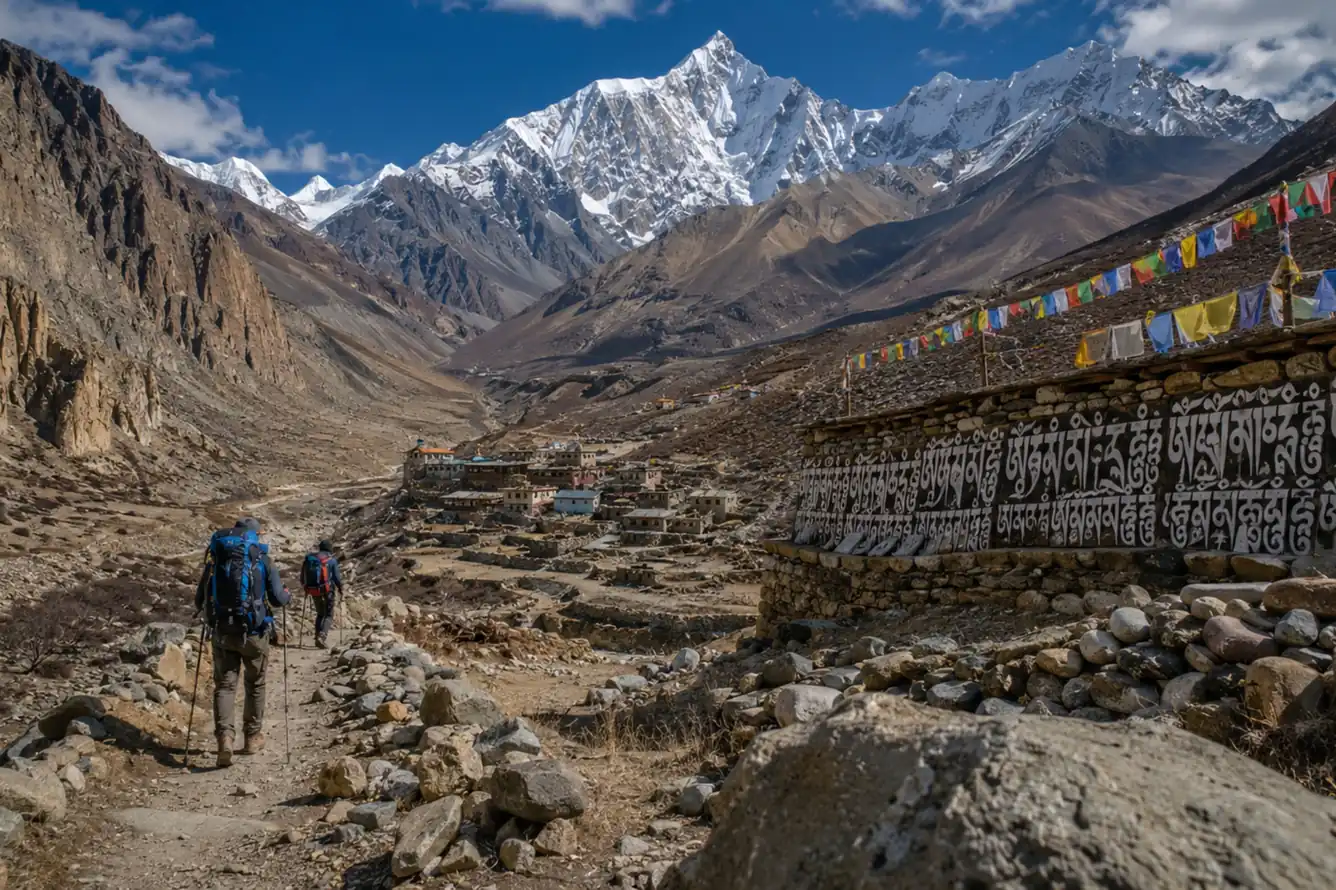
Standing at 7,126 metres in Nepal’s Nar-Phu Valley, close to the Tibetan border within the Manaslu Conservation Area, Himlung Himal sits in one of the most isolated and culturally intact corridors in the entire Himalaya. Ancient Tibetan trade routes define the approach. Buddhist monasteries preserved by centuries of remoteness line the valley. Tibetan villages rarely touched by mainstream trekking mark the way to Base Camp.
This is not a mountain surrounded by expedition infrastructure and tourist facilities. It is a genuine wilderness objective that demands respect, preparation, and commitment from the first day of the approach.
And that environment is part of what makes the experience it builds so complete.
The Route
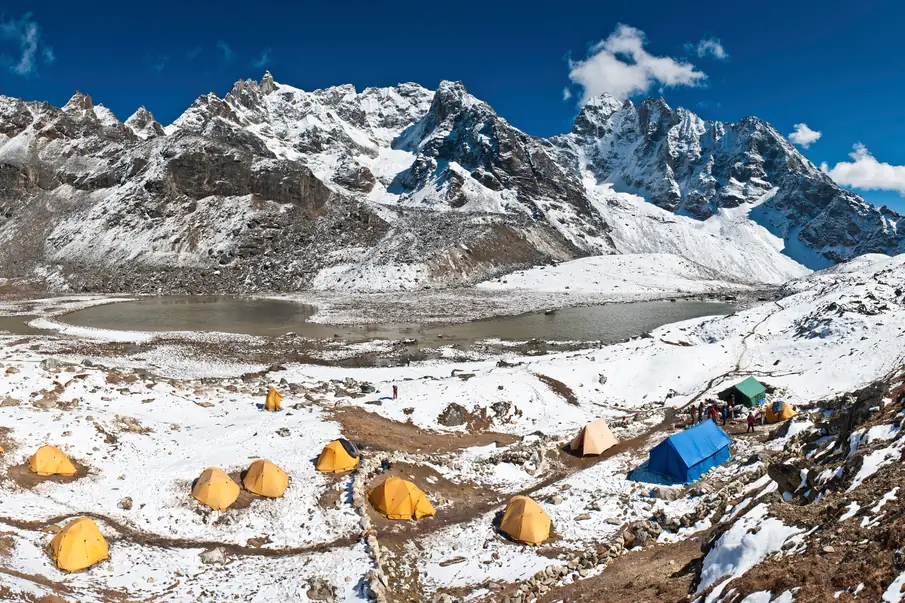
The expedition follows the Southwest Ridge via the hidden valleys of Nar and Phu. From Kathmandu, the journey moves through Besisahar, Koto at 2,600 metres, Meta at 3,560 metres, Kyang at 3,840 metres, and Phu Gaun at 3,900 metres before reaching Base Camp at 4,900 metres on Day 8.
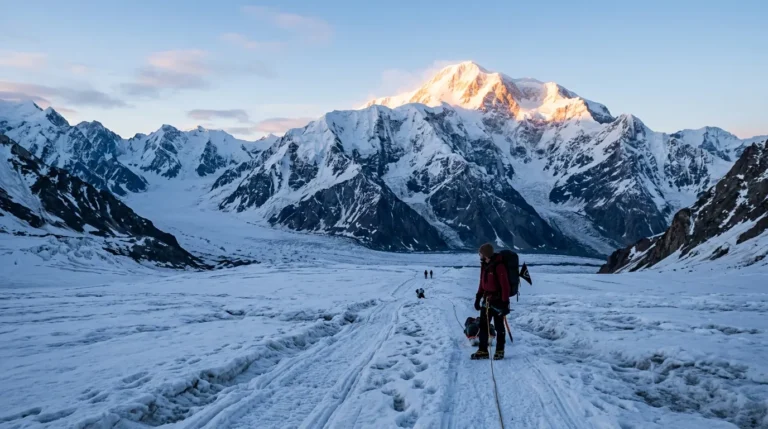
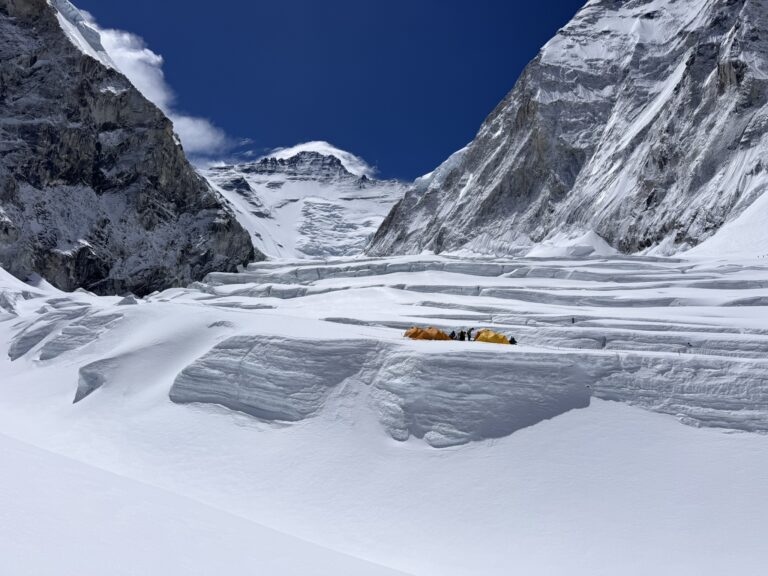
The terrain above Base Camp involves glacier travel, fixed rope ascending on steeper and more exposed sections, and an exposed summit ridge leading to 7,126 metres. The route is graded technically moderate. The physical and mental demands are severe.
This combination of manageable technical grade with genuine high-altitude physical and psychological challenge is precisely what makes Himlung Himal the ideal progression peak. You are not fighting extreme technical terrain at the limit of your skill set. You are building the physiological adaptation, the endurance base, and the high-altitude decision-making experience that the bigger mountains above it require.
The Structure
The 29-day expedition is built around intelligent acclimatization. Ten full days, from Day 9 through Day 18, are dedicated entirely to structured rotation cycles between Base Camp and the lower high camps. The classic climb-high, sleep-low protocol is followed with discipline throughout. The summit push window runs from Day 19 through Day 24, six days across which the team moves through Camp 1, Camp 2, and Camp 3 before the final push to the summit.
This structure is not arbitrary. It is the result of deep experience on Himalayan peaks and a clear understanding of what the body needs to perform safely and effectively above 7,000 metres. It is also what drives one of the highest summit success rates in the region.
The High-Altitude Classroom
I describe Himlung Himal as a high-altitude classroom because that is exactly what it is. Every element of the expedition teaches the climber something that cannot be learned at lower altitude.
Glacier Travel Under Fatigue
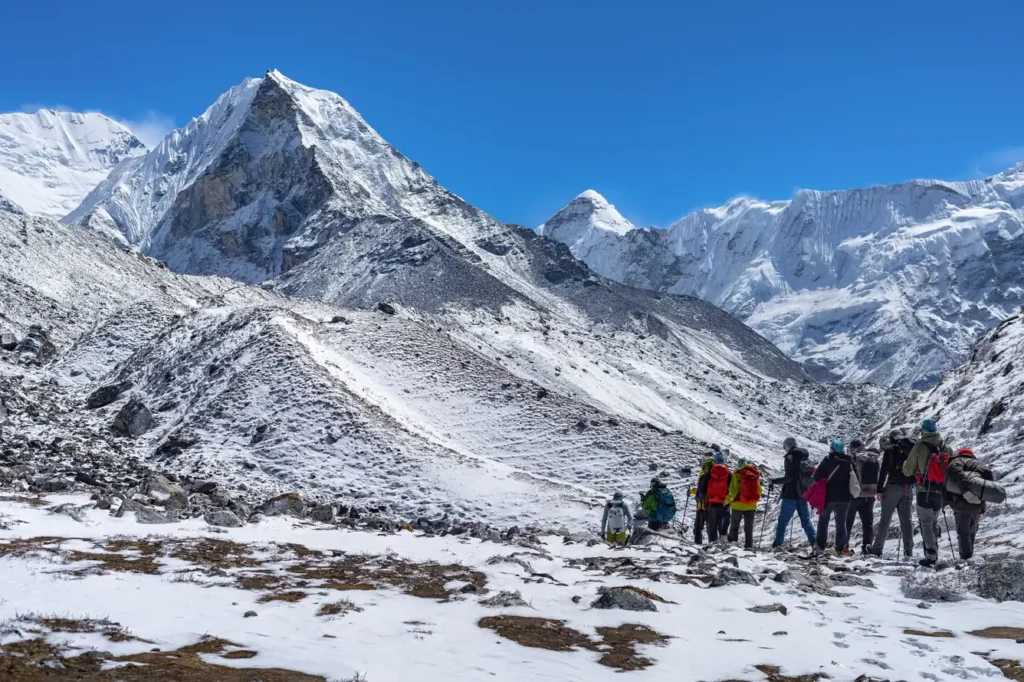
The approach to the upper mountain involves sustained glacier travel across terrain that demands precise crampon placement and confident ice axe management. On a fresh body at 5,000 metres, these skills feel manageable. After two weeks at altitude, with accumulated fatigue and disrupted sleep, maintaining that technical precision requires the kind of automatic competence that only genuine practice at elevation builds.
The climbers who move through this section quietly and efficiently on Himlung Himal are the ones who will hold their technique on the bigger peaks above it.
Fixed Rope Ascending at Real Altitude
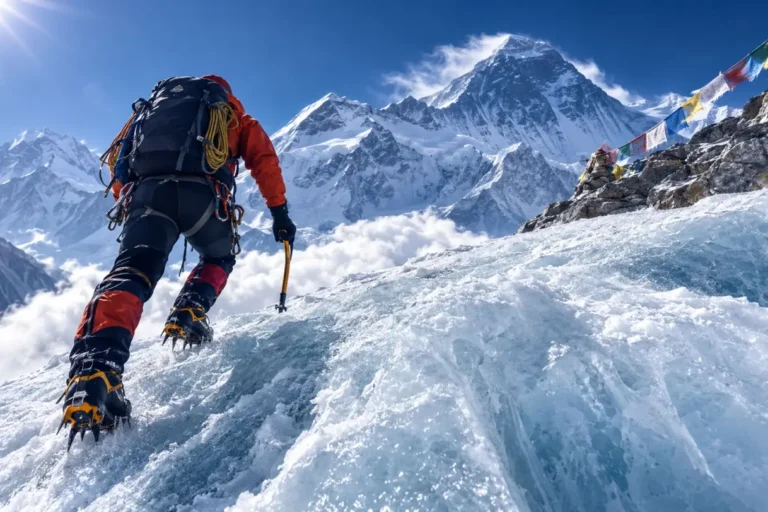
The fixed rope sections on Himlung Himal’s Southwest Ridge are not extreme in their gradient. But they are exposed, they are cold, and they are above 6,500 metres. The jumar technique that works in a training environment or on a lower peak looks very different when your oxygen-deprived muscles are tired, your fingers are cold inside expedition mitts, and the valley floor is thousands of metres below.
Building this competence on Himlung Himal means arriving at higher objectives with skills that are proven under genuine high-altitude stress rather than tested for the first time in a more consequential environment.
Acclimatization Response
Every climber responds to altitude differently. Some adapt quickly and feel strong through the rotation cycles. Others take longer, sleep more poorly, and need to manage their nutrition and hydration more carefully to maintain performance. Understanding your specific acclimatization pattern at 7,000 metres is information that is genuinely invaluable when you are planning a summit push on an 8,000-metre peak.
Himlung Himal gives you that information at an altitude where the consequences of discovering it are still manageable.
Mental Load at Sustained High Altitude
A 29-day expedition in Nepal’s most remote valleys is not a single hard day followed by recovery. It is a sustained psychological campaign. Disrupted sleep accumulates. The distance from everything familiar compounds. Decision-making under sustained fatigue at extreme altitude demands a mental resilience that only extended time in these conditions builds.
Climbers who have completed Himlung Himal arrive at higher objectives with this resilience already developed. They know what three weeks at altitude actually feels like. They know how their mind responds to sustained high-altitude stress. And they know they can manage it.
The Leadership and Support Structure
Every Himlung Himal expedition is led personally by Jason Black, summiteer of both K2 and Everest. This is not delegation to a local guide service. It is direct personal leadership from a climber with the highest-level Himalayan credentials and deep specific knowledge of this mountain.
The expedition is supported throughout by an elite Sherpa climbing team at a 1:1 ratio from Base Camp to summit. A dedicated rope-fixing team of experienced Sherpas pre-sets all ropes and routes on the upper mountain before members attempt them. Daily professional weather forecasting is provided throughout the expedition. Satellite phone and walkie-talkie communications keep all levels of the mountain connected.
This support structure delivers one of the highest summit success rates in the region. More importantly for climbers using Himlung Himal as a progression peak, it means the experience being built is happening within the safest possible framework.
What Himlung Himal Summit Day Looks Like
The summit push begins from Base Camp at 4,900 metres and progresses through three strategically positioned high camps on the Southwest Ridge. Summit day itself involves glacier travel leading to fixed rope sections on exposed ridges before the final push to 7,126 metres.
From the summit, the panorama is unlike anything accessible at lower altitude. Annapurna II, Manaslu, and Gangapurna stretch across the horizon. The vast Tibetan Plateau extends beyond the border to the north. This is the view that rewards the preparation. And standing here with the summit below your boots and the bigger peaks visible in the distance, the next step in your progression becomes not a question but a certainty.
Key Takeaways: What Himlung Himal Builds in You
The experience built across 29 days on Himlung Himal can be mapped to specific competencies that the bigger peaks require:
Genuine physiological adaptation above 7,000 metres, including red blood cell production, respiratory efficiency, and sleep quality at extreme altitude.
Automatic technical competence on glacier terrain and fixed ropes under sustained fatigue and full expedition load.
A clear personal understanding of your acclimatization pattern, physical limits, and mental response to sustained high-altitude stress.
High-altitude decision-making experience gained in a supported and controlled environment with expert leadership.
The confidence of having stood on a 7,000-metre summit and returned safely. That confidence is not arrogance. It is the settled certainty of someone who has tested themselves at genuine altitude and knows what they are capable of.
Practical Info
Peak: Himlung Himal, 7,126 metres / 23,379 feet
Route: Southwest Ridge via Nar-Phu Valley, Nepal
Duration: 29 days
Grade: Hard, technically moderate, physically demanding
Season: Autumn
Base Camp: 4,900 metres
High Camps: C1, C2, C3 on the Southwest Ridge
Daily Activity: 5 to 10 hours
Required Experience: Prior altitude experience at 5,000m to 6,000m, strong rope work and glacier travel skills
Price: €8,999 per person
Group Size: Small elite teams
Sherpa Support: 1:1 climbing Sherpa per member for the entire climb
Leadership: Jason Black, K2 and Everest summiteer
Requirements Checklist: Prior high-altitude experience at 5,000m to 6,000m, including nights spent at altitude. Strong physical and mountain fitness. Competent rope work on ascent and descent including fixed line technique and jumar use. Confident glacier travel with accurate crampon placement. Full medical clearance before booking. Travel insurance covering mountaineering above 5,000m, helicopter evacuation, and repatriation.
Recommended Training Duration: Minimum 12 weeks of structured progressive training before departure. Training should include Zone 2 aerobic running building from 30 to 45 minutes, weekly strength training, hill repeats scaling from 6 x 100m to 10 x 200m, flat speed work from Week 8 onwards, and sustained weekend mountain trekking throughout.
Equipment Essentials: Double skin mountaineering boots rated to 8,000m. Ice axe x2. Crampons. Climbing helmet. Ascender and jumar. Climbing harness. Locking carabiners x6. 800g goose down jacket with hood. Insulated pants. Summit day down suit. Sleeping bag rated to minus 30 degrees Celsius. Category 4 glacier glasses. 7,000m expedition mitts. Headlamp 500 to 700 lumens x2.
Conclusion: The Mountain That Prepares You for Everything Above It
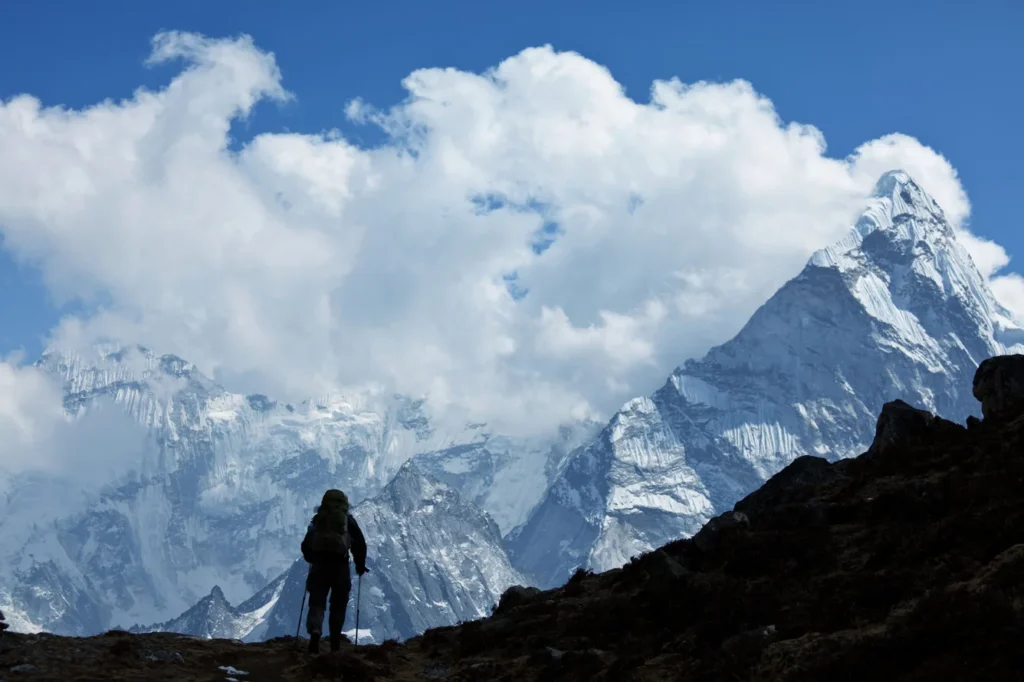
Himlung Himal is not the destination. It is the foundation.
The experience built across 29 days on the Southwest Ridge of Nepal’s Nar-Phu Valley is the experience that the biggest mountains in the world stand on. It teaches the body what 7,000 metres costs. It reveals the technical gaps that need closing before the consequences of finding them become too high. It builds the mental resilience that sustained high-altitude campaigning demands. And it delivers the settled confidence of a climber who has stood above 7,000 metres and knows what they are capable of.
The 8,000-metre peaks are above you. The path to them runs through here.
Six spots remain for Autumn 2026. The foundation starts now.