Introduction: This Is Not a Weekend Hike
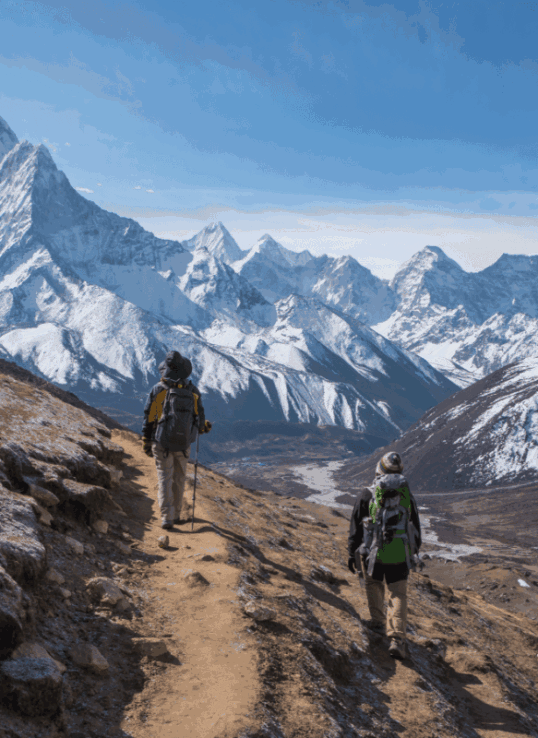
There is a moment somewhere above Sidi Chamrouche, at around 2,300 metres, when the valley below shrinks to a thin silver thread and the walls of the Atlas close in around you. The air is cooler now. The mule tracks have given way to loose scree and rock. Your legs are working. Your lungs are working harder. And somewhere above, cloaked in that particular shade of Moroccan blue, sits the summit of Jebel Toubkal at 4,167 metres — the highest point in all of North Africa.
This is not a peak you stroll up on impulse. It is a mountain that demands honesty. Honest preparation. Honest pacing. Honest respect for altitude and terrain. And it rewards that honesty with something rare: a summit you genuinely earned.
With Black Mountaineering, the Toubkal expedition is built around exactly that philosophy. Small, purpose-built teams. Proven acclimatisation systems. Conservative summit strategy. Expert leadership from a guide with decades of high-altitude experience on the world’s biggest mountains. If you are a serious trekker seeking your first real high-altitude summit, and you want to do it properly, this is the path.
Why Mount Toubkal Deserves Your Respect
Mount Toubkal is often described as accessible, and technically that is true. The climb requires no ropes, no ice axes, no specialist technical skill. But accessible does not mean easy, and anyone who tells you otherwise has either never climbed it or has climbed it without paying attention.
At 4,167 metres, Jebel Toubkal sits well above the threshold where Acute Mountain Sickness (AMS) becomes a genuine concern. The daily trekking runs 6 to 8 hours, including a summit day that covers 17 kilometres with close to 960 metres of ascent and over 2,200 metres of descent. The scree fields on the south cirque are relentless. The boulder fields demand focus at every step. On summit day, you will be moving in pre-dawn darkness, and the altitude will make everything feel heavier than it should.
None of this is said to discourage you. It is said because proper preparation is what separates the climbers who summit and the ones who do not. And proper preparation is precisely what the Black Mountaineering approach is built around.

The Jason Black Approach: Small Teams, Real Leadership
Black Mountaineering keeps group sizes at a maximum of ten. That is not a marketing choice. It is a safety and quality decision that changes the entire character of the expedition.
In a small group, every climber is seen. Your pace is monitored. Your energy levels are read. If you are pushing too hard at altitude, your guide knows. If the team needs to slow down to acclimatise more effectively, that call gets made before the mountain makes it for you. The guide-to-client ratio is simply better, the team dynamic is tighter, and the environment feels less like a commercial tour and more like an actual expedition.
Jason Black’s leadership standard means daily gear checks are a given, not an afterthought. Weather assessment is built into every morning before the team moves. And the summit strategy is conservative by design. The mountain will always be there. Getting every member of the team to the top and back down safely is the only meaningful success metric.
This is the mountaineering introduction done right.
The Route: Imlil to the Summit and Back
The 5-day itinerary is structured with purpose. Every day builds on the last. Every camp is chosen for its acclimatisation value and its position on the route. Here is how the journey unfolds.
Day 1: Marrakesh Arrival
The expedition begins in Marrakesh, the Red City. You arrive at Menara Airport and are transferred directly to your accommodation in the Medina. There are no obligations on Day 1 beyond the welcome meeting with Jason and the team at 6pm and a shared traditional dinner. Use the afternoon to wander the souks at Jemaa el-Fna, sip mint tea, let the energy of Morocco settle over you. The mountains begin tomorrow.
Day 2: Drive to Imlil and Trek to the Refuge
The drive south toward the Toubkal Massif is a visual introduction to the scale of the High Atlas. You pass through the Haouz Plain and the small town of Asni before the road begins to climb into the foothills. At Imlil, sitting at 1,740 metres, your boots meet the ground for the first time.
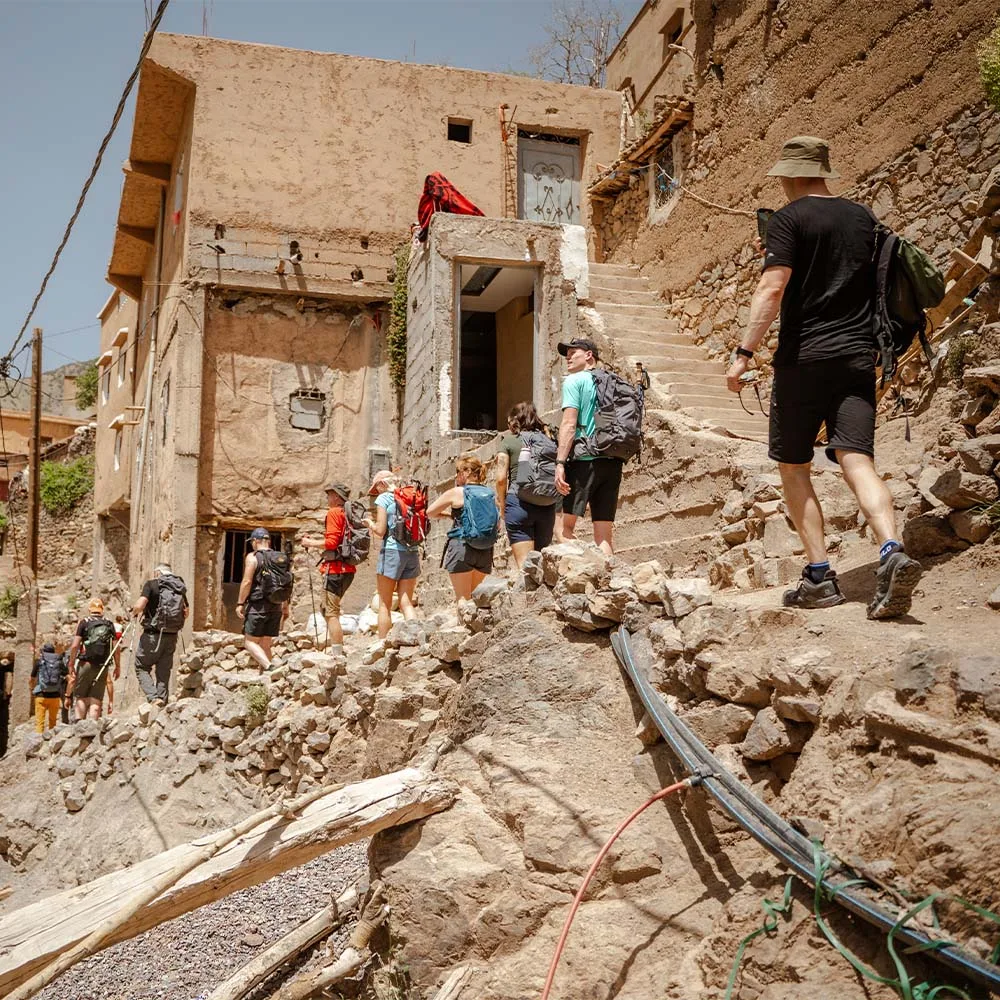
The trek from Imlil follows the Mizane Valley through the village of Aremd at 1,900 metres, a living patchwork of Berber farming life that has not changed much in centuries. Corn, potatoes, walnuts, mule tracks worn smooth by generations of use. You pass the pastoral shrine of Sidi Chamrouche at 2,300 metres, where the mountain begins to assert itself, and continue climbing steadily through increasingly rugged terrain to the Toubkal Refuge at 3,206 metres.
Today covers 11 kilometres with 1,460 metres of total ascent and takes approximately 6 to 7 hours. It is graded challenging and it earns that grade. But you arrive at the refuge with spectacular views down the valley and the satisfying tiredness of a day properly spent.
Day 3: Summit Day — Jebel Toubkal at 4,167m
You move early. On summit day, the alarm sounds in darkness and the team assembles in the cold and quiet before first light. This is the most demanding day of the expedition and the one that defines everything that came before it.
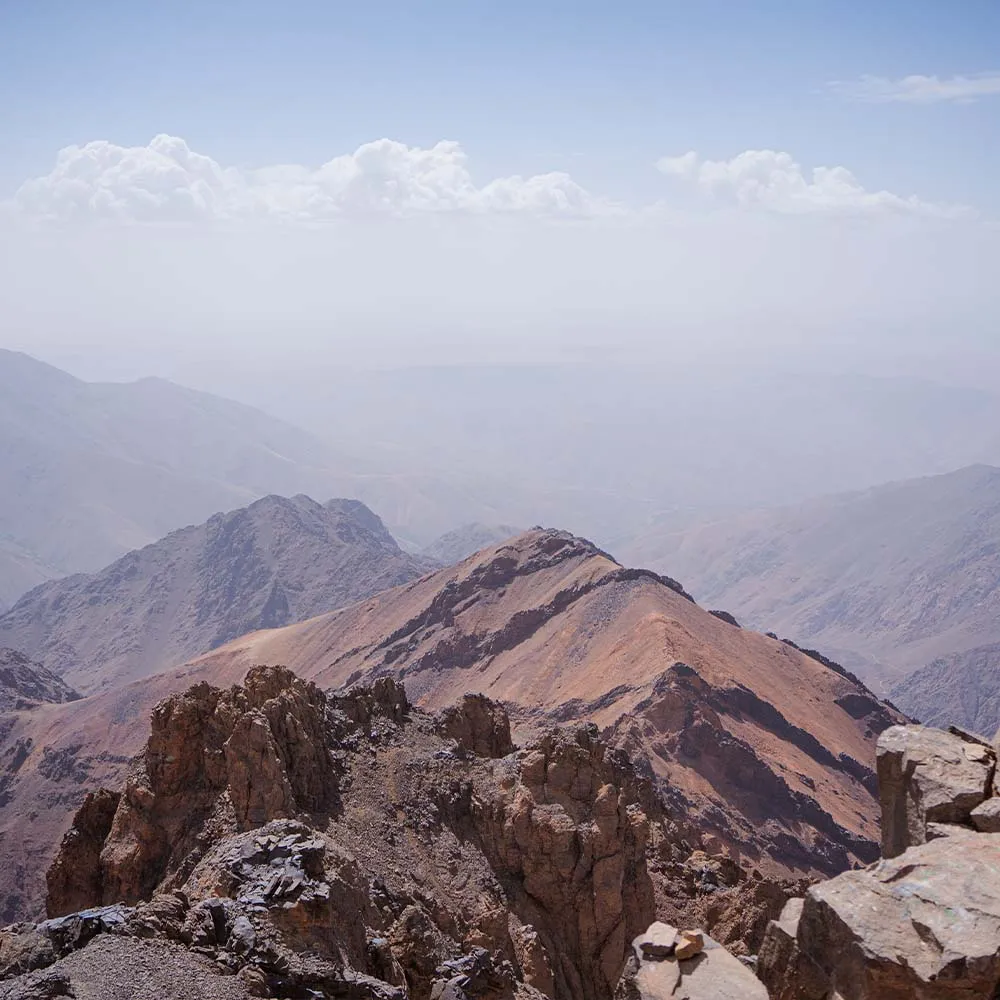
The route climbs the south cirque, a steep progression through scree fields and boulder carpets that tests both legs and lungs in equal measure. The Tizi n’Toubkal saddle at 3,975 metres is the psychological and physical crux, a narrow passage with the summit just above. On a clear day, the panorama from the top of Toubkal takes in the Marrakesh Plain, the full sweep of the High Atlas, and on exceptional days reaches south to the edge of the Sahara.
The descent retraces the south cirque and continues all the way down to Aremd at 1,900 metres, where you spend the night in a traditional Berber village house. Today covers 17 kilometres and 10 to 11 hours of movement. Bring personal snacks for the summit push. Your body will need them.
Day 4: Trek to Imlil and Return to Marrakesh
A short recovery morning walks you back to Imlil, 1.5 kilometres and a 210-metre descent that takes around 45 minutes. The drive back to Marrakesh takes 90 minutes, and the city is waiting for you — the Koutoubia Mosque, the spice-scented souks, the controlled chaos of Jemaa el-Fna. That evening, the expedition closes with a celebration dinner filled with Moroccan flavour and the particular joy that only comes after you have done something genuinely hard.
Day 5: Departure
Your guide transfers you to Menara Airport for your onward flight. You leave carrying something the mountain gave you. That quiet, earned pride that no shortcut produces.
Acclimatisation and Altitude: What You Need to Know
Trekking above 2,500 metres puts you in the zone where Acute Mountain Sickness becomes a real possibility. AMS does not discriminate by fitness level or experience. Symptoms to watch for include headache, nausea, loss of appetite, sleeplessness, and shortness of breath that goes beyond normal exertion.
The Black Mountaineering itinerary is designed with acclimatisation built in. The staged ascent from Imlil to the refuge on Day 2 allows your body to begin adjusting before the summit push. The overnight at 3,206 metres is a critical part of the process. You do not skip it. You do not rush through it.
If symptoms become severe, descent is the protocol. Always. No summit is worth your health, and Jason’s safety standards make this a non-negotiable position.
Before travelling, consult your doctor about Diamox as a potential acclimatisation aid. Carry a first aid kit with paracetamol, ibuprofen, antiseptic wipes, blister treatment, and any personal medications. Your travel insurance must cover hillwalking and scrambling at altitudes up to 4,200 metres in Morocco, including helicopter evacuation. This is not optional. It is mandatory.
Training for Toubkal: The 12-Week Plan
The Black Mountaineering training programme is built over 12 progressive weeks and addresses the specific physical demands of multi-day trekking at altitude.
The plan combines Zone 2 aerobic base runs (building from 30 to 45 minutes over the 12 weeks), strength training twice weekly, hill repeats that increase in volume and distance from 6 x 100 metres in Week 1 to 10 x 200 metres by Week 7, and Friday HIIT sessions alternating between Zone 4 intensity and Zone 2 recovery. Weekend trekking on actual terrain is built into every week of the programme.
The principle is progressive overload. You arrive at the mountain stronger than when you started planning. Every session includes a 15-minute warm-up and 15 to 20 minutes of cool-down without exception.
You do not need to be an athlete to climb Toubkal. You do need to have put in honest work before you arrive. The mountain will know the difference.
Gear Checklist: What to Pack
Your main kit travels in an 80 to 90 litre waterproof duffle bag carried by mules. Your daypack is 25 to 30 litres and carries everything you need for the day’s movement.
Clothing Layering is the system. The Atlas temperature range is significant — warm in the valleys, cold at the refuge, very cold on summit morning.
- 3x underwear
- 2x short-sleeve trekking shirts
- 1x long-sleeve trekking shirt
- 1x fleece
- 1x hiking shorts
- 1x hiking trousers
- 600-weight insulated puff jacket
- 1x waterproof shell jacket
- 1x waterproof shell trousers
- 1x fleece gloves or mitts
Footwear
- 3x trekking socks
- 1x hiking boots (broken in before arrival)
- 1x trail runners
- Refuge shoes (sandals or crocs)
Headwear and Protection
- Sun hat with neck cover
- Woollen hat
- Sunglasses
- Head torch
Summit Day Essentials
- 4x energy bars
- Hydration tabs
- 2x 1-litre water bottles
Miscellaneous
- 20-litre daypack
- Trekking poles
- Sunscreen and lip balm
- Trekking towel
- Antibacterial hand gel
- Power bank (plugs available at refuge but in high demand)
- Small lock for duffle bag
Personal Medicines
- Paracetamol
- Ibuprofen
- Course of antibiotics
- Antiseptic wipes
- Adhesive plasters
- Blister packs (Compeed)
- Insect repellent
- Personal first aid kit
One sleeping bag is optional. The lodges provide blankets.
The Cultural Dimension: Morocco Does Not Just Frame the Climb
What separates the Toubkal expedition from a purely athletic challenge is what surrounds it. Morocco is a full sensory environment that rewards attention.
In the Mizane Valley, you walk through Berber villages where families have farmed the same terraces for generations. You share mint tea in houses where the same hospitality has been offered to travellers for centuries. You visit the shrine of Sidi Chamrouche, a site of genuine pilgrimage and local significance. These are not backdrop moments. They are part of what the expedition is.
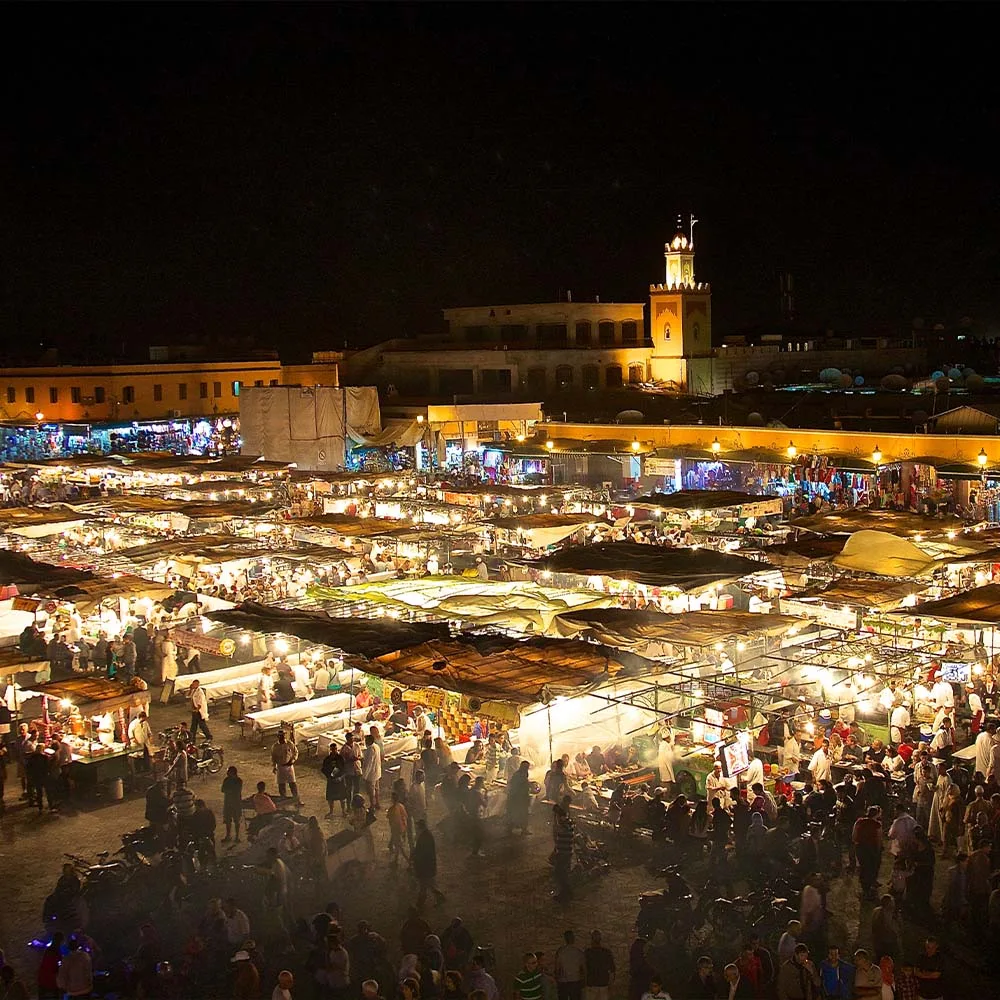
And after the summit, Marrakesh delivers its own reward. The medina, the souks, the Koutoubia Mosque, the Jemaa el-Fna at dusk filled with storytellers and street food and the amplified call to prayer. For those who want to extend the experience, the optional hot air balloon over Marrakesh at sunrise, the authentic hammam experience, and private cultural guides are all available.
This expedition combines the altitude with the attitude. Both matter.
Key Takeaways
Before you book, here is what this expedition asks of you and what it offers in return.
What is required: A reasonable level of fitness. No prior technical climbing experience is necessary, but 12 weeks of structured preparation is strongly recommended. You must be in good general health and carry mandatory travel insurance covering hillwalking up to 4,200 metres with medical and helicopter evacuation cover.
What is included: Guided ascent of Mount Toubkal to 4,167 metres, Marrakesh Riad accommodation with breakfast, all meals on the mountain (breakfast, lunch, dinner), qualified Black Mountaineering guides, visit to the shrine of Sidi Chamrouche, cultural Atlas Mountains experience, waterfall swims, Marrakesh Jemaa el-Fna cultural experience, and all transport between destinations.
What the expedition costs: €799 per person.
What you carry: Your responsibility. Your preparation. Your commitment to the team and to yourself.
Conclusion: The Summit Is Earned, Not Given
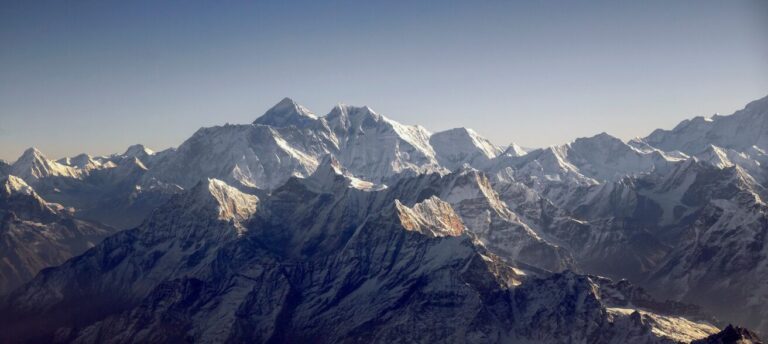
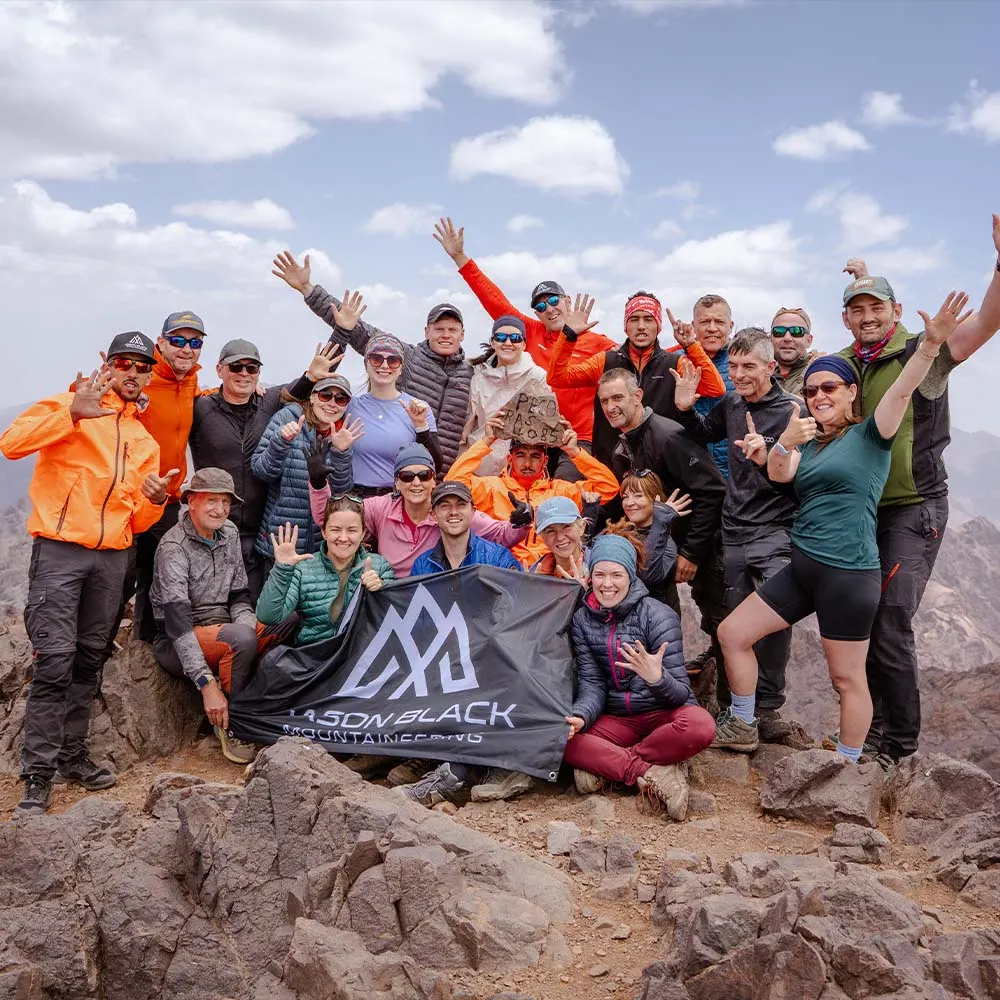
The south face of Jebel Toubkal in first light, when the scree turns orange and the High Atlas stretches away in every direction and the Sahara is a faint pale promise on the southern horizon — that is the view. That is what the training was for. That is what the early starts and the aching legs and the cold nights at the refuge were building toward.
Mount Toubkal at 4,167 metres is the highest point in North Africa, and it will give itself to you willingly if you come with respect, preparation, and a team that knows what it is doing.
Black Mountaineering has built its reputation on exactly that: small groups, world-class leadership, proven systems, and a safety standard that puts the climber first. This is not a quick win. It is a real mountain introduction, and it will change the way you think about what you are capable of.
You move deliberately. You earn it step by step.