I have guided hundreds of people up the Machame Route to Uhuru Peak at 5,895 m.
I have watched people arrive at Kilimanjaro International Airport with gear that was never going to survive summit night. I have seen climbers turn back at 5,000 m not because they were unfit or unprepared mentally, but because something in their pack had already let them down before they reached Kosovo Camp.
Wrong sleeping bag. Untested boots worn for the first time at 3,000 m. A headlamp that died in the dark on the switchbacks above the camp. A layering system that was not a system at all, just warm items thrown into a duffel in the week before departure.
These are not unusual mistakes. They are the same mistakes I see on almost every expedition, made by people who did their research, followed a packing list they found online, and still arrived underprepared for what the mountain actually demands.
The internet has no shortage of Kilimanjaro packing lists. Most of them are fine for a three-day trek in moderate conditions. None of them were written by someone who has stood at 5,895 m in minus 20 degrees, led a team through five ecosystems across seven days, or watched the specific moment a gear failure changes the outcome of a summit.
This one was.
Here are the seven packing mistakes that cost people their Kilimanjaro summit, and exactly what to do instead.
Why Packing for Kilimanjaro Is Different to Packing for a Trek
Before we get into the mistakes, one thing needs to be understood clearly.
Kilimanjaro is not a trek. It is an expedition.
The distinction matters because it changes how you think about every item in your pack.
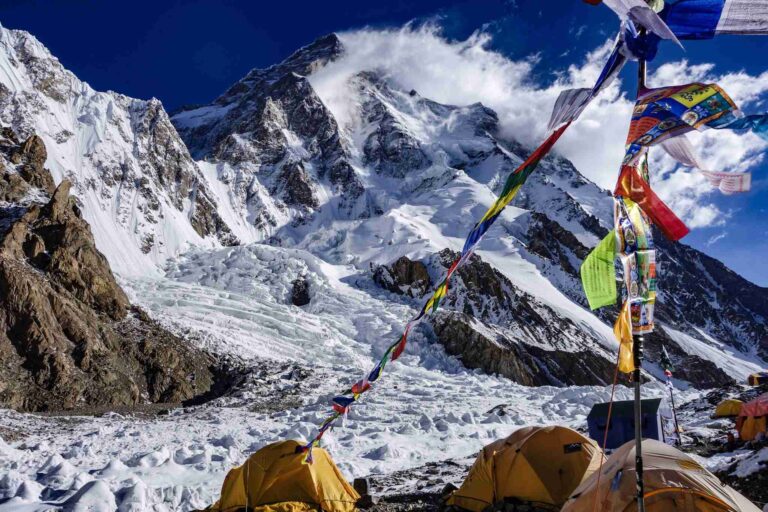
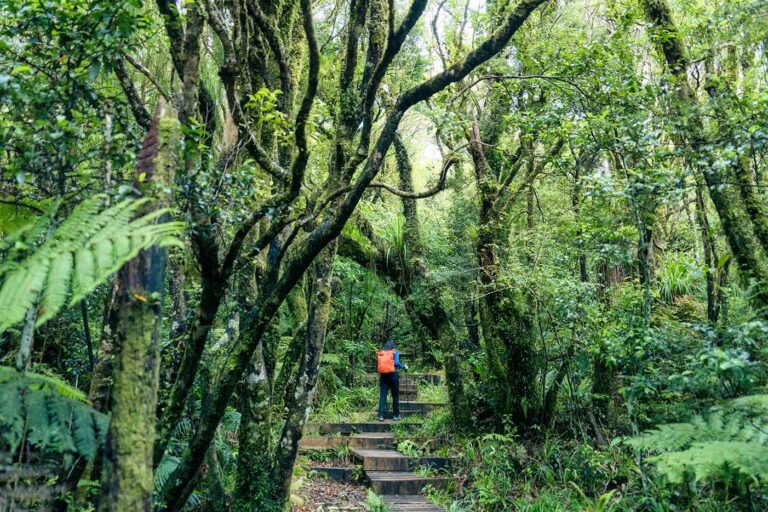
The Machame Route covers approximately 60 kilometres over seven days. In those seven days you move through five completely distinct ecosystems. Day 1 in the tropical rainforest at Machame Gate at 1,814 m is humid, warm, and shaded. Day 2 on the Shira Plateau at 3,833 m is open, dry, and windswept. Day 5 at Lava Tower at 4,600 m is alpine desert, cold by day and very cold at night. Summit night above Kosovo Camp at 4,870 m is arctic, with temperatures dropping well below minus 20 degrees Celsius when wind chill is included.
What you pack for one of those environments is frequently wrong for another.
A layering system that manages moisture in the rainforest must also insulate in the alpine desert and protect against arctic wind on summit night. A sleeping bag that feels warm in the lowlands must keep you functional at nearly 5,000 m. Boots that are comfortable on a day hike must carry you through 17 kilometres of frozen scree and descent terrain without destroying your feet.
Every item has to earn its place across all five ecosystems, not just one of them.
With that context, here are the mistakes.
Mistake 1: The Wrong Sleeping Bag Rating
What goes wrong
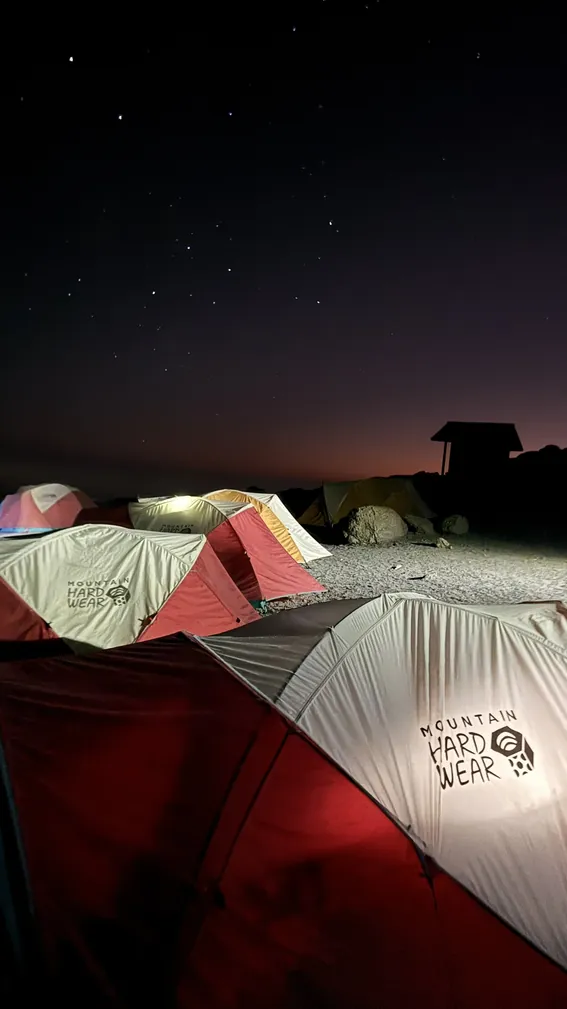
The most common sleeping bag mistake on Kilimanjaro is a bag rated to minus 5 or minus 10 degrees Celsius.
It sounds sufficient. For most camping conditions it is. For Kosovo Camp the night before summit day, it is not.
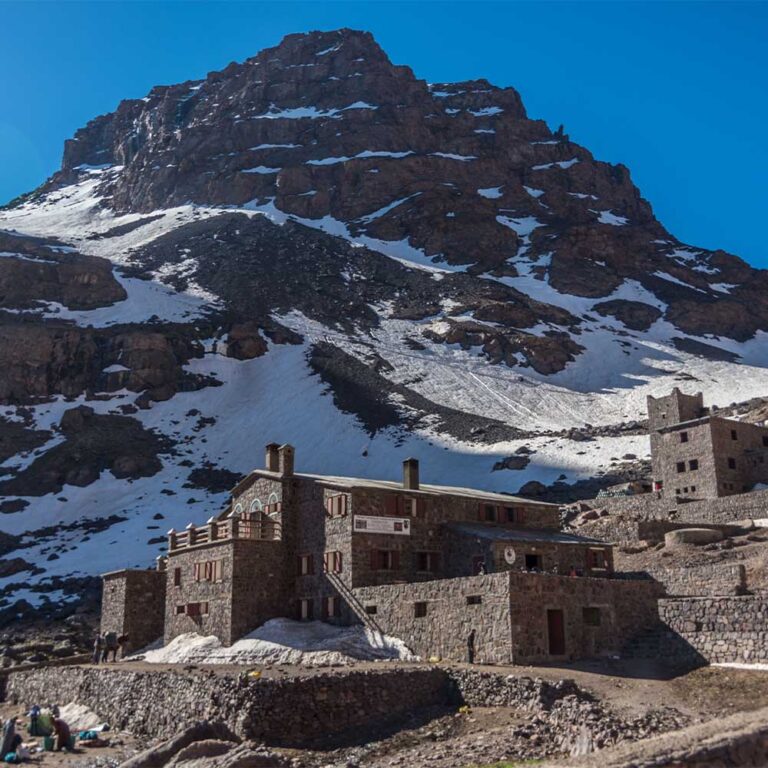
Kosovo Camp sits at 4,870 m. Temperatures at this elevation overnight, particularly in the shoulder seasons, regularly drop to minus 15 degrees Celsius or lower before wind chill is considered. A climber who cannot sleep properly the night before summit day begins the most physically demanding day of the expedition already depleted and cold.
Cold disrupts sleep in a way that altitude does not fully account for. The body working to maintain core temperature through an insufficiently insulated night is not resting. It is burning reserves that will be needed in six hours when the headlamp goes on and the summit push begins.
The fix
A sleeping bag rated to minus 20 degrees Celsius minimum. This is the Black Mountaineering standard for every Kilimanjaro expedition without exception.
Pair it with a merino wool base layer worn inside the bag on the coldest nights. The combination adds several degrees of effective warmth without adding significant pack weight.
Do not compromise on this item. A quality minus 20 degree sleeping bag is one of the highest return investments in your entire packing list.
Mistake 2: Boots Worn for the First Time on the Mountain
What goes wrong
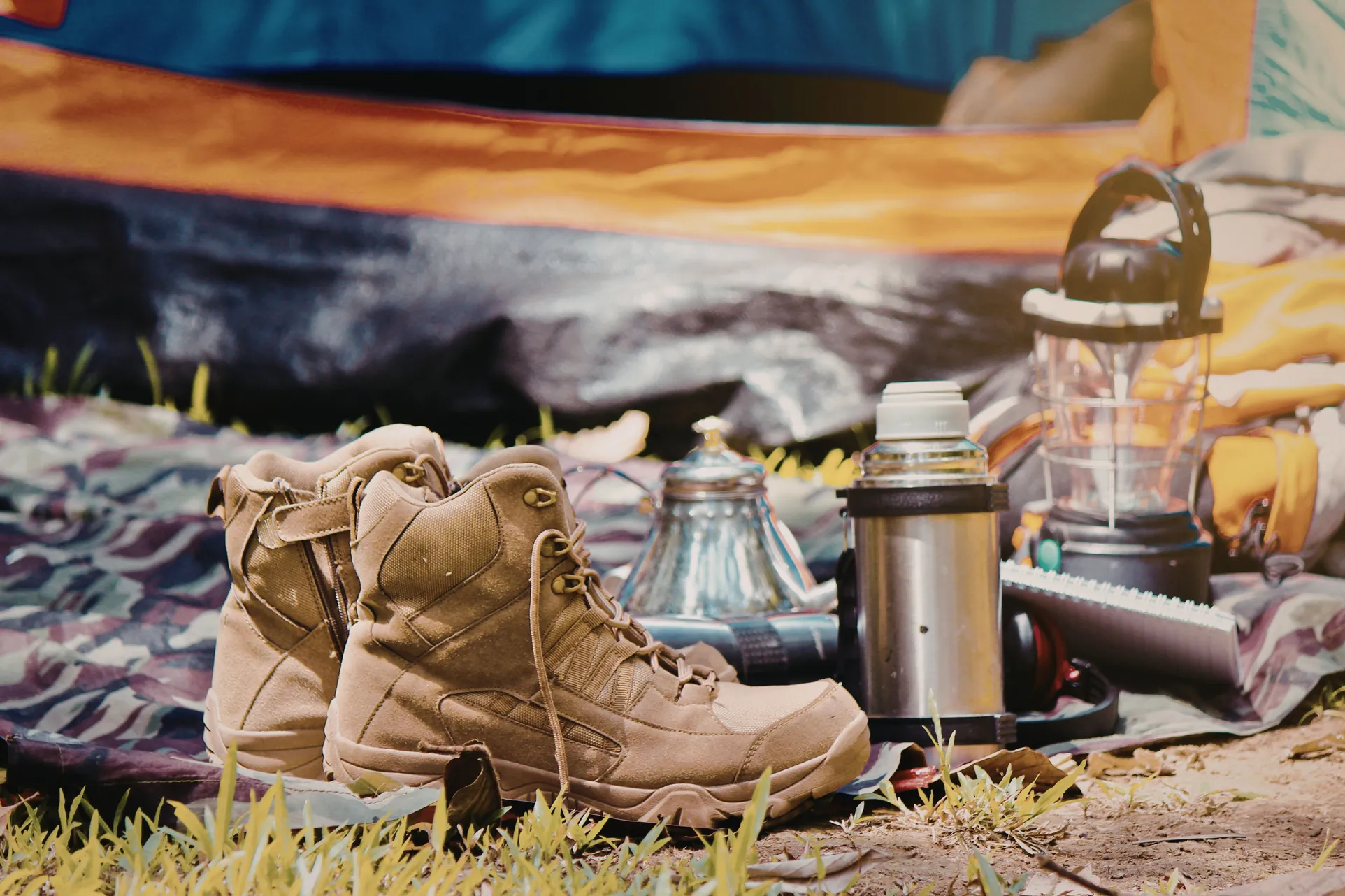
Good quality trekking boots purchased in the weeks before departure and worn to the gate at Machame with feet that have never spent a serious day inside them.
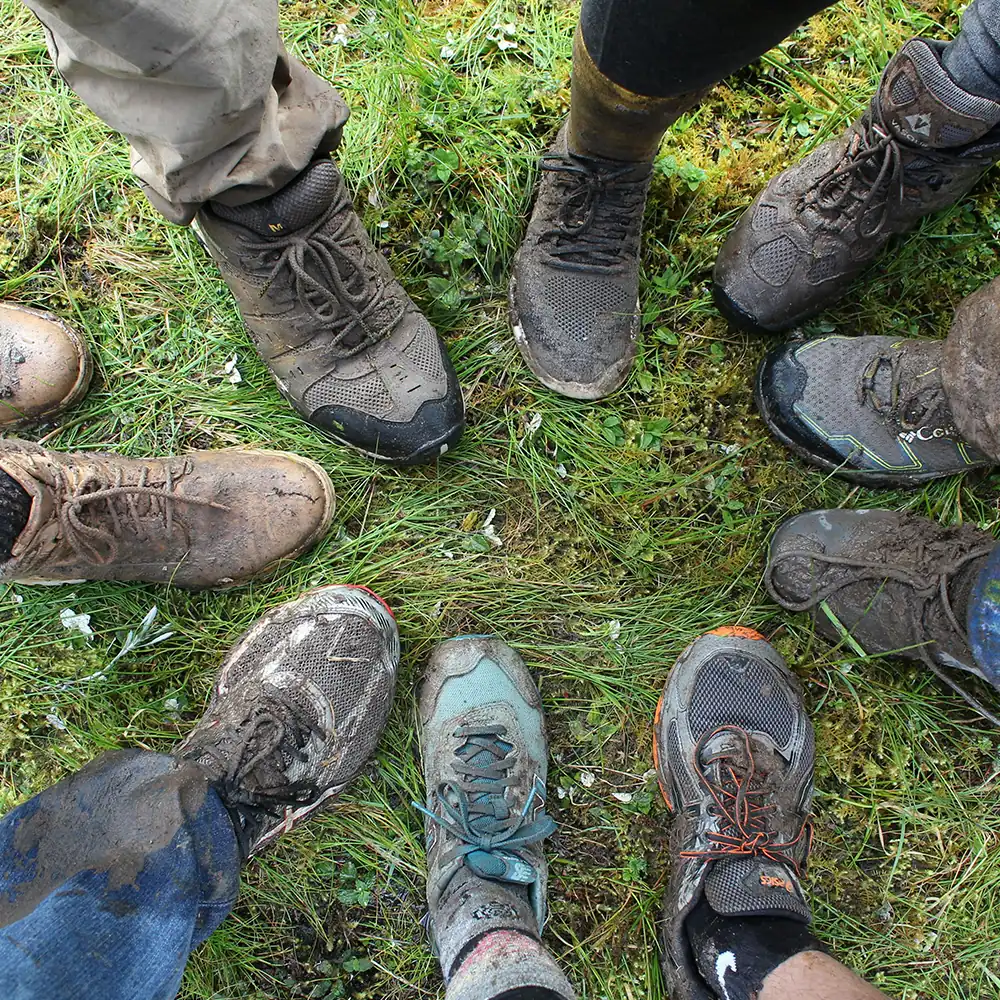
The result is predictable. By Day 2 there are hot spots. By Day 3 there are blisters. By Day 5 those blisters are a genuine medical issue that is affecting pace, confidence, and the ability to push through summit night.
A blister at 3,000 m is uncomfortable. At 5,000 m on frozen scree in the dark at 2 am it is a reason to turn back.
The fix
Boots need a minimum of 10 to 15 dedicated training hikes before you leave home. Not walks. Hikes. With a loaded pack. On uneven terrain. Including back to back long days in the final training block that replicate the consecutive day demands of the Machame Route.
If the boots are not fully broken in and your feet are not conditioned to them before you board the plane to Kilimanjaro International Airport, they are not ready for the mountain.
Buy your boots early. Break them in fully. There are no shortcuts on this one.
Mistake 3: Packing Too Heavy for Summit Night
What goes wrong
Climbers who pack their full expedition bag for the summit push rather than a stripped down summit pack.
At Kosovo Camp your main duffel stays with the porters. You carry a summit pack for the push to Uhuru Peak and the descent to Mweka Camp. That pack needs to be light enough to carry comfortably at altitude for up to 15 hours of continuous movement.
Every unnecessary gram in that pack costs energy at altitude that the body cannot easily replenish. Climbers who arrive at the summit push with an overloaded bag slow down earlier, fatigue faster, and make the final push to 5,895 m significantly harder than preparation intended.
The fix
Summit pack contents are specific and limited. Layers in the correct sequence. Two headlamps with spare batteries carried close to the body. Two litres of water minimum with electrolyte sachets. High calorie snacks and summit gels. Personal first aid essentials. Phone or camera. Personal documents and insurance details.
That is the list. Nothing else goes into that pack.
Everything else stays at Kosovo Camp with the porters and waits for your return.
Mistake 4: Warm Items Instead of a Layering System
What goes wrong
This is the mistake that looks like good preparation and isn’t.
A climber who packs a down jacket, thermal leggings, a fleece, and a waterproof has warm items. That is not the same as a layering system.
A layering system is a set of garments that work together to manage heat, moisture, and wind protection across a range of conditions in a specific sequence. Without understanding how the layers interact, a climber typically overdresses in the lower sections, sweats through their base layer, saturates their insulation with moisture, and arrives at altitude with wet gear that cannot keep them warm.
Wet insulation at 4,500 m in temperatures below zero is a heat loss problem that compounds with every additional hour on the mountain.
The fix
The layering system for Kilimanjaro works in four layers with a specific function for each.
Layer 1 is a merino wool base layer. Merino manages moisture actively, meaning it moves sweat away from the skin and continues to insulate even when damp. It does not hold odour across seven days the way synthetic fabrics do. This is non-negotiable at the base.
Layer 2 is a mid layer fleece. This is the primary insulation layer for the moorland, alpine desert, and high camp sections. It vents when you need it to and insulates when you stop moving.
Layer 3 is a lightweight down or synthetic puffer jacket. This goes on at camp stops, during rest breaks above 4,000 m, and as additional insulation beneath the shell on the coldest sections.
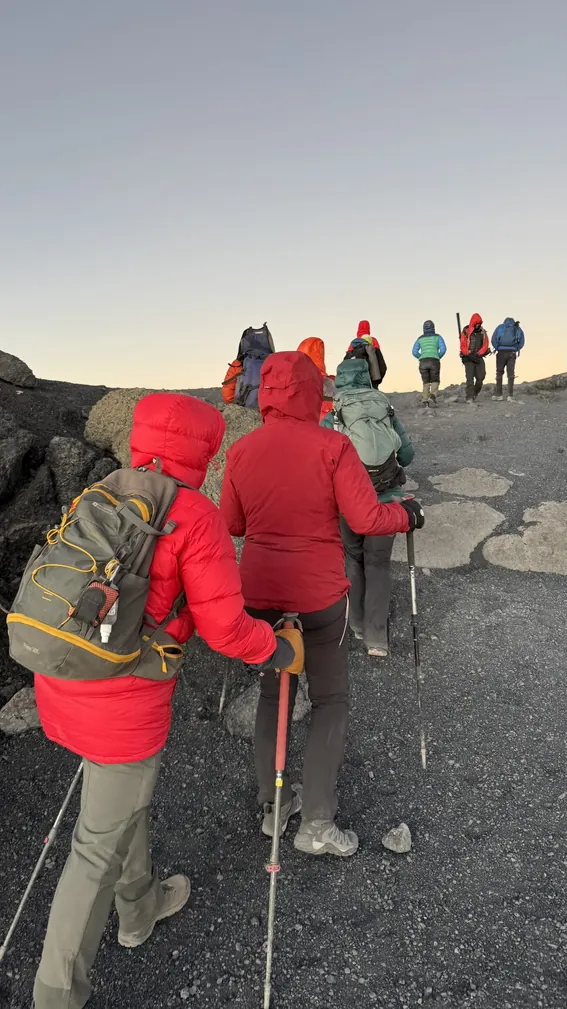
Layer 4 is an 800 gram down jacket with hood. This is the summit night layer. It goes on at Kosovo Camp before departure and stays on until you are below the cold zone on the descent.
The outer shell is a hardshell jacket and pants. Windproof and waterproof. This is the layer that protects everything underneath from the wind that is almost constant above 4,500 m.
Each layer has one job. Understanding that job before you leave home prevents the most common thermal management failures on Kilimanjaro.
Mistake 5: A Medical Kit That Does Not Match the Risk
What goes wrong
A standard travel first aid kit with plasters, antiseptic cream, and paracetamol.
Kilimanjaro is not a standard travel destination. It is a high altitude expedition with specific medical risks that require specific preparation, the most significant of which is Acute Mountain Sickness.
AMS is the primary medical reason people do not complete a Kilimanjaro summit. Symptoms include persistent headache, nausea, loss of appetite, dizziness, fatigue, and disturbed sleep. Many of these overlap with normal acclimatisation responses at altitude. The ability to distinguish between the two, and to have the appropriate medication available when the distinction matters, is a fundamental part of expedition preparation.
At Black Mountaineering we carry oxygen and masks, a portable mountain shelter, and a stretcher on every expedition. We monitor every team member daily for altitude sickness symptoms from Day 1.
But your personal medical kit is your responsibility and it should reflect the actual risk environment you are entering.
The fix
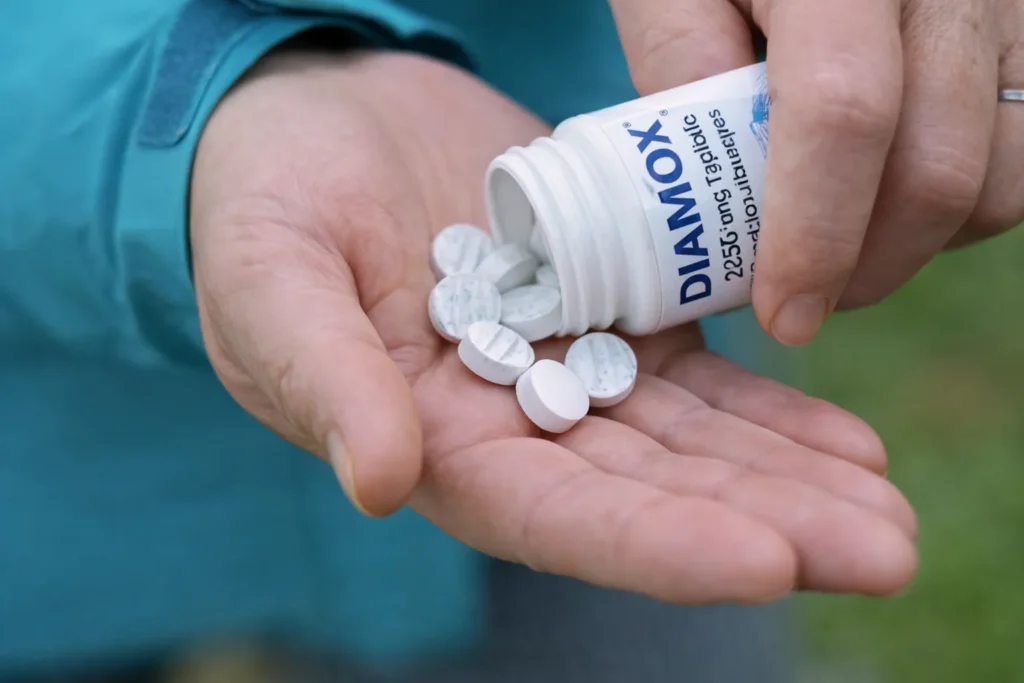
Diamox 250 mg for a ten-day course, prescribed after a GP consultation before departure. This is the most important item in the personal medical kit for altitude management and should be discussed with your doctor at least six weeks before the expedition.
The full personal medical kit should also include: ibuprofen for inflammation and altitude headache management, paracetamol, Compeed blister packs in multiple sizes, Imodium for gastrointestinal issues that are common at altitude, electrolyte sachets, an antibiotic as recommended by your travel health clinic, throat lozenges and throat spray, sunscreen SPF 50 and lip balm SPF 30 for the intense UV exposure above 3,000 m, insect repellent for the lower sections, and any personal prescription medications clearly labelled and accessible at the top of the pack.
Do not pack your medical kit at the bottom of a duffel bag. It needs to be immediately accessible without unpacking everything above it.
Mistake 6: One Headlamp With Standard Batteries
What goes wrong
A single headlamp, not tested before departure, with only the batteries already installed.
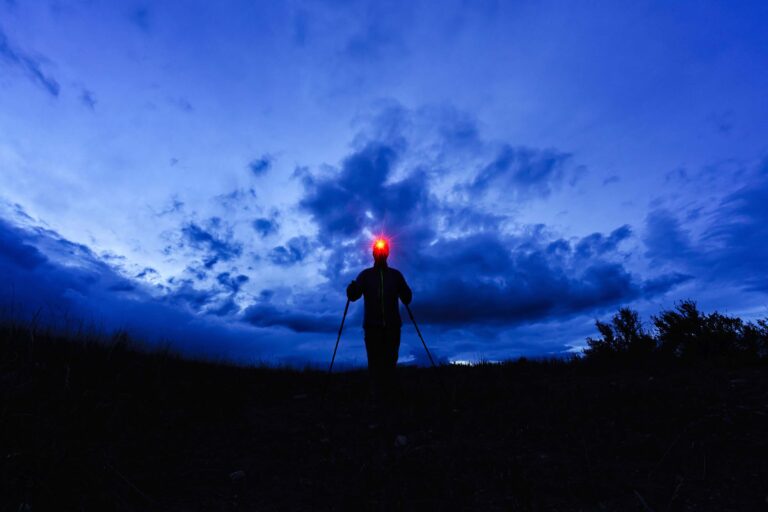
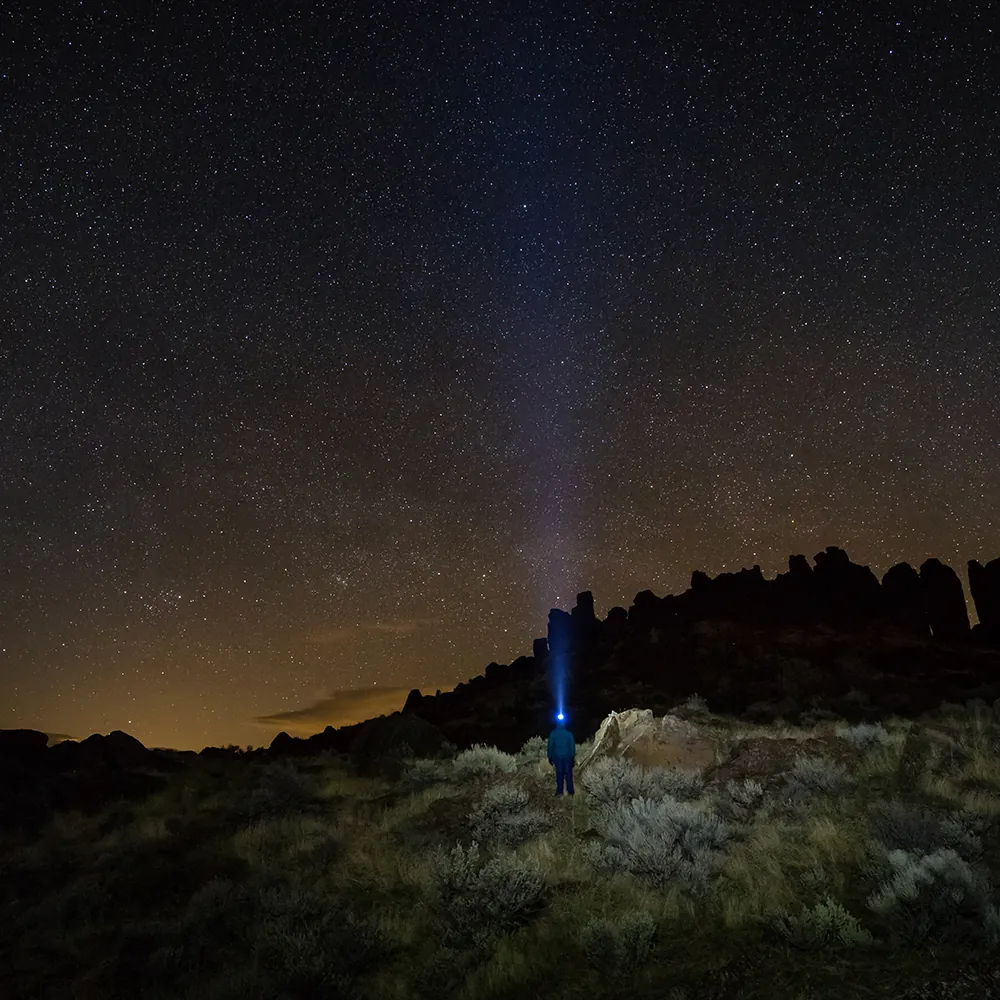
Summit night on Kilimanjaro begins at midnight and lasts up to seven hours. You are moving in complete darkness across frozen scree above 5,000 m. Cold temperatures drain batteries significantly faster than normal use conditions. A headlamp failure at 5,200 m on the switchbacks above Kosovo Camp is not an inconvenience. It is a safety issue that puts you and the team around you at risk.
The fix
Two headlamps. Minimum 500 lumens each. Spare batteries for both, carried in an inside jacket pocket close to the body where cold cannot drain them overnight before use.
Both headlamps should be tested on a training hike before departure. Not at home in the kitchen. On a night hike in conditions that test the beam and the battery life together.
Headlamps are not expensive. The redundancy they provide on summit night is essential.
Mistake 7: Arriving Without an Altitude Medication Plan
What goes wrong
Landing in Tanzania without having consulted a doctor about altitude medication, without knowing the symptoms of AMS in order of severity, and without a clear personal plan for what to do if those symptoms appear.
This is a preparation gap that cannot be fixed on the mountain.
The decision about whether to take Diamox, when to start the course, and what dosage is appropriate for your individual health profile is a medical conversation that must happen with a GP before departure. Altitude sickness does not announce itself conveniently. It arrives at 3,800 m when you are tired and already above sea level and your options for professional medical consultation are limited to the guides around you.
A climber without a plan is making a significant decision by default.
The fix
GP consultation at minimum six weeks before departure. Diamox 250 mg course discussed and prescribed if appropriate for your personal health history. Travel health clinic visit for vaccinations, antimalarial tablets, and a full altitude sickness briefing. Personal health history reviewed for any conditions or medications that may be affected by altitude.
Know your plan before you leave home. Know the symptoms. Know at what point you tell the guide. Know that telling the guide early is always the right decision because the guides carry oxygen and they have seen every presentation of altitude sickness across hundreds of expeditions.
Arrive in Tanzania prepared, not hoping you will not need a plan.
The Kilimanjaro Packing Essentials That Are Non-Negotiable
These are the items where there is no acceptable compromise.
Sleeping system: Minus 20 degree sleeping bag. Merino base layer for inside the bag on summit eve.
Footwear: Fully broken-in sturdy trekking boots. Worn on a minimum of 10 to 15 training hikes before departure. Liner socks plus wool or synthetic outer socks.
Layering system: Merino base layer top and bottom. Mid layer fleece. Lightweight puffer. 800 gram down jacket with hood. Hardshell jacket and pants.
Headwear and handwear: Warm hat. Balaclava. Liner gloves. Heavyweight shell gloves or expedition mitts.
Summit night essentials: Two headlamps minimum 500 lumens. Spare batteries in a warm inside pocket. Summit pack maximum 15 litres and minimum weight.
Medical kit: Diamox 250 mg after GP consultation. Ibuprofen. Paracetamol. Compeed. Imodium. Electrolytes. Throat lozenges. Sunscreen SPF 50. Antibiotic. Personal prescriptions.
Hydration: Two one-litre water bottles. Electrolyte sachets for every summit day drink. Hydration is critical from Day 1 and non-negotiable on summit night.
Pack system: 35 litre trekking daypack for daily carries. 120 litre duffel for the porter system. Everything labelled and accessible in the right order.
The Mountain Will Not Compensate for What You Left Behind
Every climber who has stood at Uhuru Peak at 5,895 m carried the right gear to get there.
Not perfect gear. Not the most expensive gear. The right gear, packed correctly, tested before departure, and understood in the context of a seven-day expedition through five ecosystems to the highest freestanding mountain on Earth.
The mistakes in this article are not dramatic. They are small decisions made in the weeks before departure that show up as consequences at altitude when there is nothing to do about them except manage what you have.
Prepare correctly and the mountain gives you everything. Prepare incorrectly and it gives you a very honest lesson in what the word preparation actually means.
The summit is earned on the mountain. The summit is made possible at home, in the weeks before you leave.
Start there.