Most people see a price and start asking questions about the Morocco 7 Summits. That’s the right instinct. Before you commit to seven days in the High Atlas, climbing seven of the highest peaks in North Africa, you deserve to know exactly what you’re signing up for. No vague inclusions. No surprises at base camp.
This is what €1,499 actually buys you.
Professional Guiding From Start to Finish
The guide is the first thing I want to talk about, because it’s the most important thing on any expedition.
Every day on the mountain is led by a qualified Black Mountaineering mountain guide. Not a local hire handed a route card the morning of departure. Not a volume tour operator moving 40 people up a well-worn trail. A trained, experienced guide who has been on these ridges before — someone who reads altitude, weather, terrain, and people with equal attention.
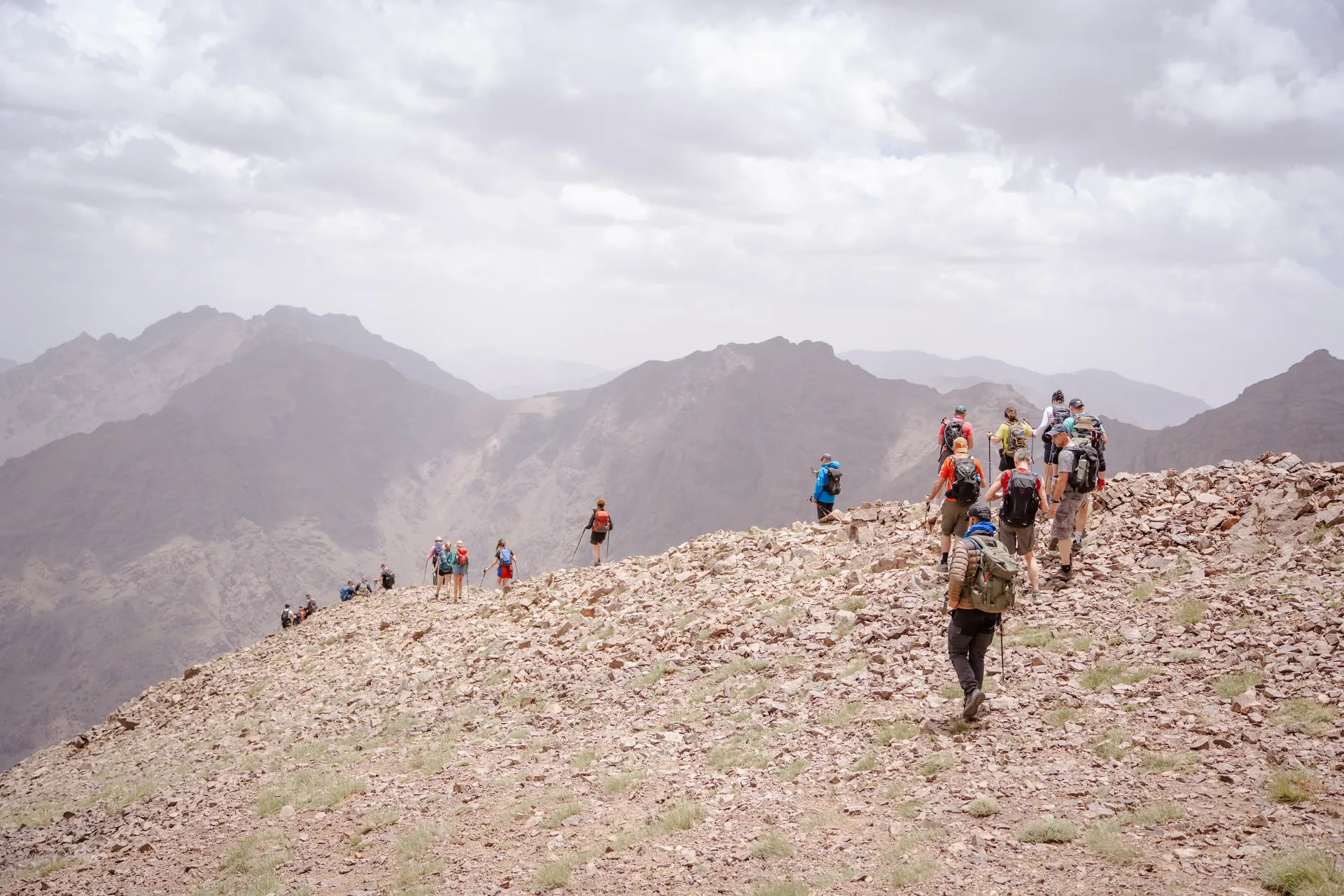
The group maximum is ten people. That number is deliberate. A small team means the guide-to-client ratio is real. Every individual on the team is seen, monitored, and looked after throughout the seven days. When the weather closes in on a high ridge or someone needs a slower pace on day five, the team adapts. A group of ten can do that. A group of forty cannot.
Embedded alongside the Black Mountaineering guide is a team of local Moroccan mountain guides. These are people who know the High Atlas the way you know your own street. They understand the terrain, the seasonal conditions, the behaviour of the snowpack, and the communities along the route. Their knowledge is not supplementary. It is part of what makes this expedition safe and well-run.
Transport: No Logistics Left to Figure Out
You land in Marrakech. You are met outside arrivals by a transfer representative holding a Black Mountaineering sign. You are transported to your accommodation. From that point forward, all movement between destinations across the seven days is arranged for you.
The 1.5 to 2 hour drive to Imlil at 1,800m — where the trek begins — is included. Transport between camps, villages, and destinations throughout the week is covered. On Day 8, your departure transfer back to Marrakech Airport is arranged.
You are in a country with unfamiliar roads, mountain approaches, and limited public transport links to the High Atlas. Having every transfer sorted before you arrive removes a significant layer of pre-expedition stress and allows you to focus entirely on preparation and performance.
Accommodation: Simple, Honest, and Right for the Mountain
Night one is in Marrakech, at a traditional Riad in the heart of the Medina. It is a proper welcome to Morocco — the sounds of the city, the architecture of the old quarter, a traditional evening meal with the team before the mountains begin.
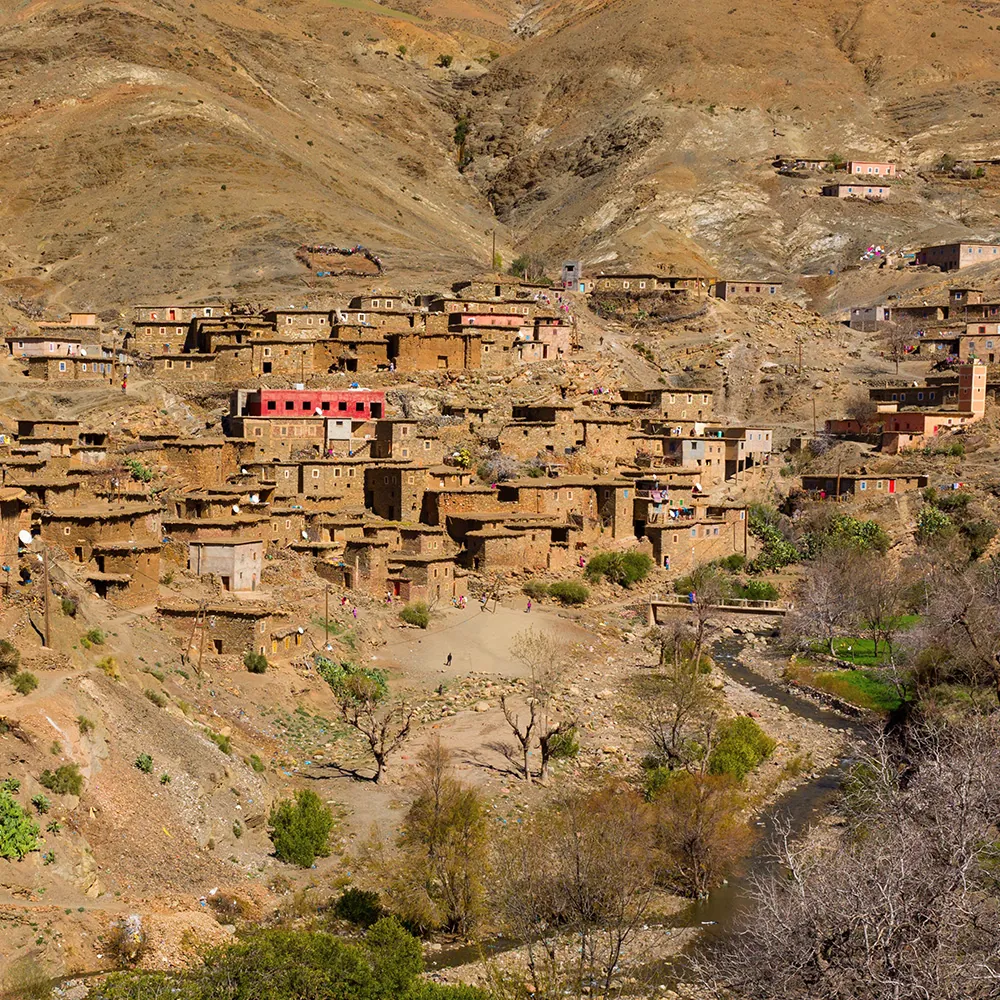
From night two onwards, you are on the mountain. Accommodation across the trek includes local Berber village stays, mountain refuges, and expedition base camp. It is shared, simple, clean, and atmospheric. Bunk platforms, blankets provided, dining rooms shared with other climbers. The lodges have limited heating and cold showers in places. You will be prepared for that before you go.
This is not a luxury lodge trek. It is an expedition. The accommodation reflects that honestly, and it is part of what makes the experience real.
Food: Expedition-Standard Fuelling
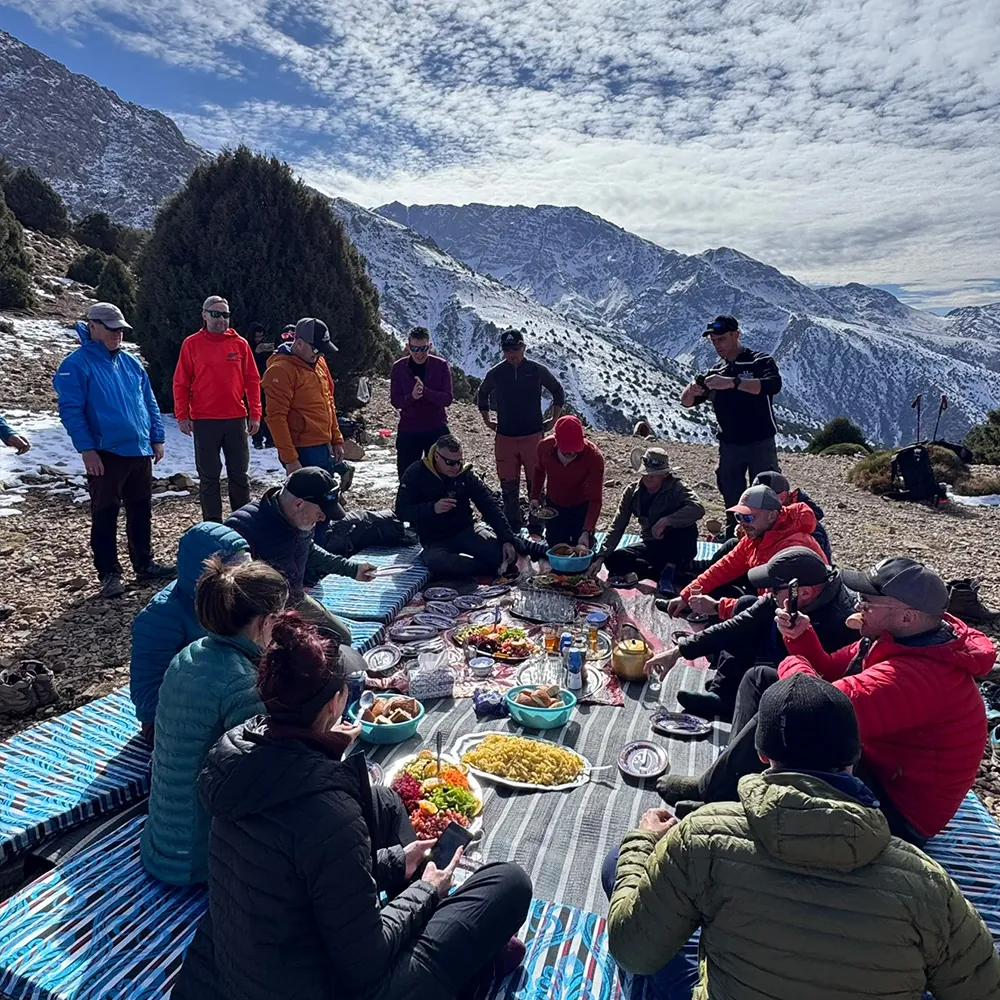
A private expedition cook team prepares every meal on the mountain. Breakfast, lunch, and dinner are included across all seven trekking days. Moroccan food is varied, flavourful, and substantial — tagine, couscous, bread, eggs, the kind of food that fuels a body working at altitude across consecutive hard days.
On summit nights, additional energy bars and hydration tabs are recommended from your personal kit. The cook team handles the rest.
Vegetarian options are available, though limited in rural sections of the route. Vegans and those on gluten-free diets are advised to bring supplementary food from Marrakech. If you have dietary requirements, declare them before departure and the team will work around them where possible.
Porter Support: Carry Less, Climb Better
Your main kit bag — up to 15kg — is collected from outside your lodgings door every morning and carried forward to the next camp by the porter team. Mules handle the lower sections of the route where terrain allows.
You carry a 20-litre day pack: water, rain gear, spare layers, snacks, camera, personal kit. That is it. The weight stays manageable across seven consecutive days of trekking, which matters enormously by Day 5 and Day 6 when your body is already operating under altitude load.
The Cultural Layer Nobody Talks About Enough
The Morocco 7 Summits Challenge is not a mountain conveyor belt. The route moves through Berber villages, across landscapes shaped by centuries of high-altitude pastoral life, and into communities that have lived in the shadow of Toubkal long before it became a trekking destination.
Included in the package is a Marrakech arts and crafts experience at Jeema el Fna, a traditional welcome meal with the team, and full cultural immersion throughout the journey. The local guides carry that knowledge every day on the trail. Listen to them.
What Is Not Included
Flights to and from Marrakech are not included. Travel insurance is not included and is mandatory — you must hold a policy covering hillwalking and scrambling to 4,200m in Morocco, including medical cover and trip interruption. We recommend True Traveller.
Personal spending, tips for the porter and cook team (€100 per person at the end of the trek), optional upgrades such as single room supplements, a 5-star Riad upgrade, or a sunrise hot air balloon over Marrakech — these are all available separately and listed clearly in the expedition information pack.
The Seven Summits
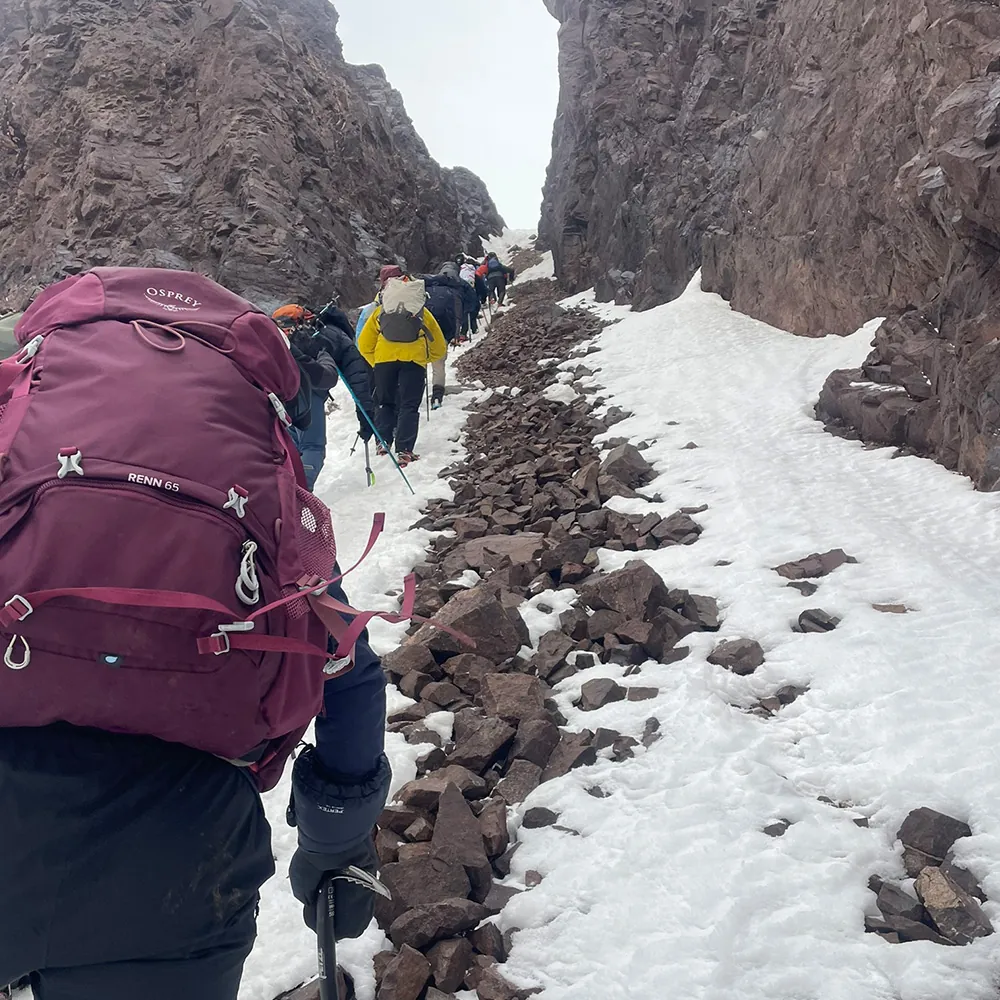
To be specific about what the challenge delivers in altitude and vertical:
- Mt Tassghimout — 2,640m — Day 2 — acclimatisation summit, +900m, approximately 5 hours
- Mt Aguelzim — 3,650m — Day 3 — +1,400m, approximately 7 hours
- Mt Imouzzer — 4,010m — Day 4 — technical ridgelines, +850m, approximately 8 hours
- Mt Akioud — 4,030m — Day 5 — scramble sections, +900m, approximately 8 hours
- Mt Timzguida — 4,089m — Day 6 — first of two summits on the hardest day
- Ras n’Ouanoukrim — 4,083m — Day 6 — linked traverse with Timzguida, 8 to 10 hours combined
- Mt Toubkal — 4,167m — Day 7 — highest peak in North Africa, early alpine start, +1,100m, 8 to 9 hours
Total ascent across the week exceeds 7,000 vertical metres. Daily activity runs between 5 and 10 hours on the mountain. This is a strenuous itinerary that demands prior hiking experience and a solid 12-week preparation block before departure.
Who This Is For
This challenge is designed for experienced hikers aged 28 to 55 who have outgrown day hikes and weekend trails and are ready for their first serious multi-day mountain expedition. You do not need technical climbing experience. You do need prior hiking experience, genuine physical fitness, mental resilience, and a team-first approach.
If you are thinking of self-organising a seven-summit trek in Morocco, consider what goes into coordinating guides, permits, transport, porters, cook teams, accommodation, and emergency protocols across eight days in a remote mountain environment. The €1,499 price point removes all of that from your plate and replaces it with a professionally designed expedition that has been run and refined across multiple seasons.
Key Takeaways
Prior hiking experience is mandatory. This is not suitable for beginners.
The 12-week training plan provided with booking is structured and specific. Follow it.
Pack a 20-litre day pack for the mountain and an 80 to 90-litre waterproof duffle for the porter carry.
Travel insurance to 4,200m is non-negotiable. Arrange it before departure.
Tip the cook and porter team at the end of the trek. €100 per person, distributed by the guide. It matters to the people who carried your bag and fed you on the mountain.
Arrive fit. Arrive prepared. Arrive ready to move at the pace the mountain sets, not the pace you imagined from home.
Conclusion
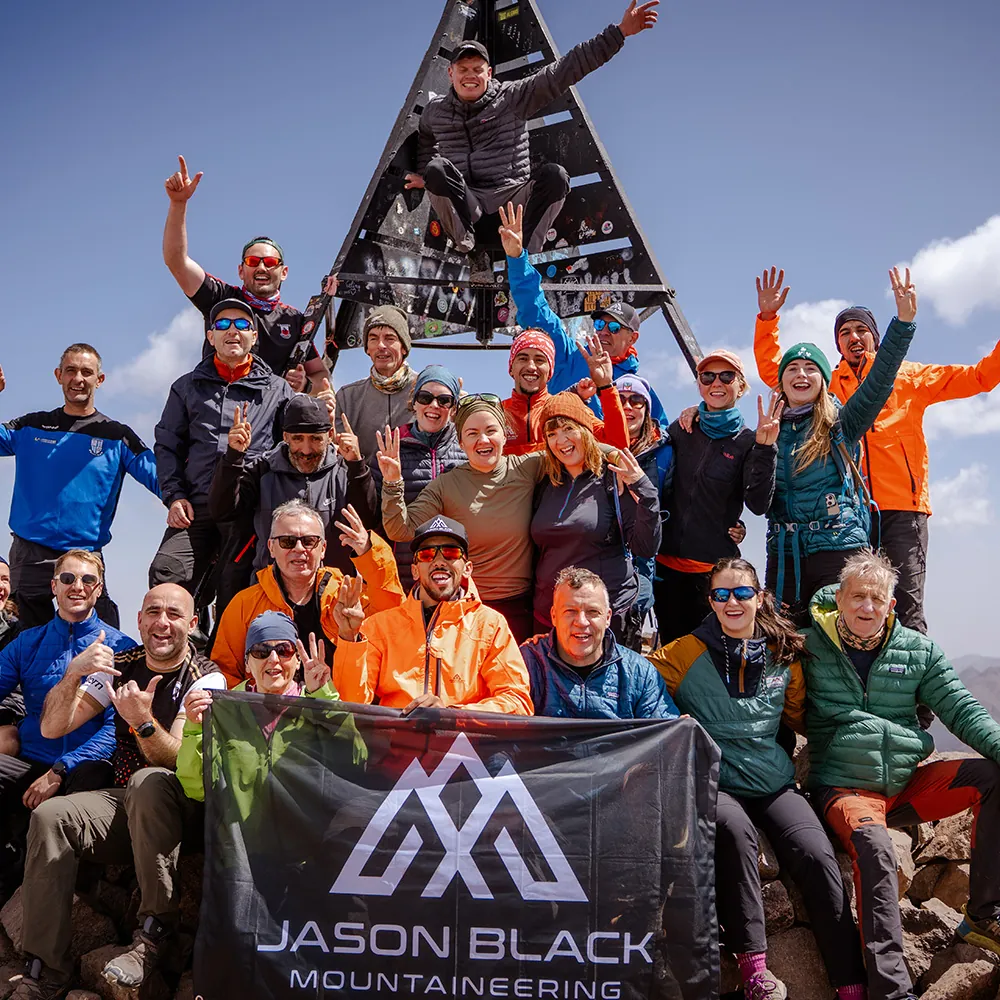
The Morocco 7 Summits Challenge is not the most expensive expedition on the market. It is not the cheapest either. It is the right price for what it delivers: a fully supported, professionally guided, culturally immersive seven-summit traverse of the High Atlas, led by a team that has been doing this for decades and knows the difference between a safe expedition and a dangerous one.
Morocco 7 Summits. Seven summits. Seven days. One small team. One mountain range that will ask more of you than you expect and give back more than you imagined.
Rise with the mountain.