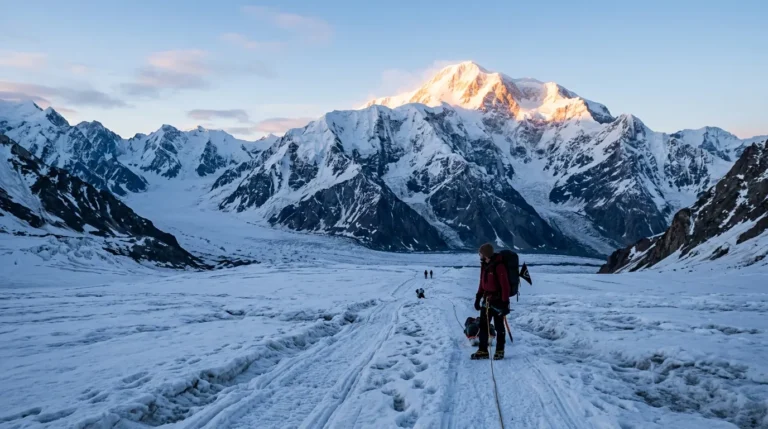
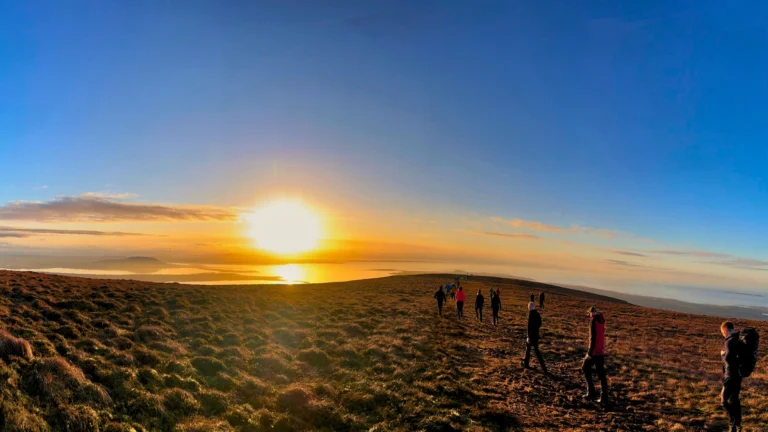
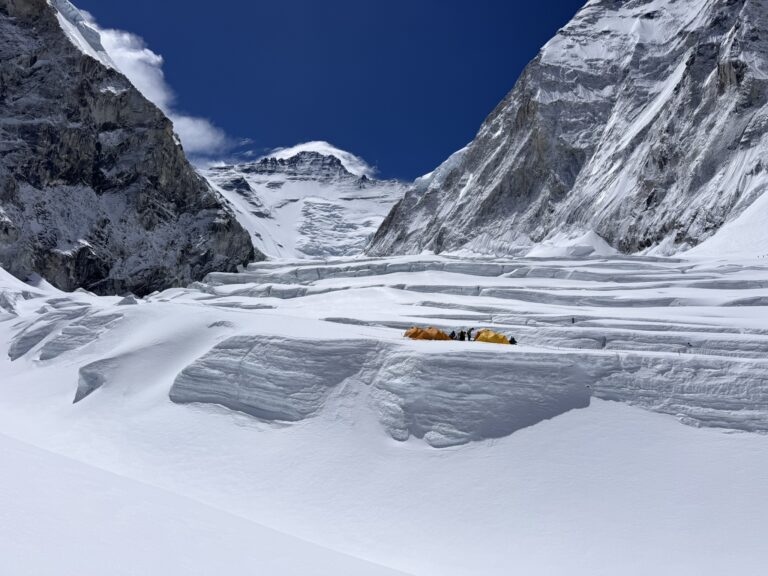
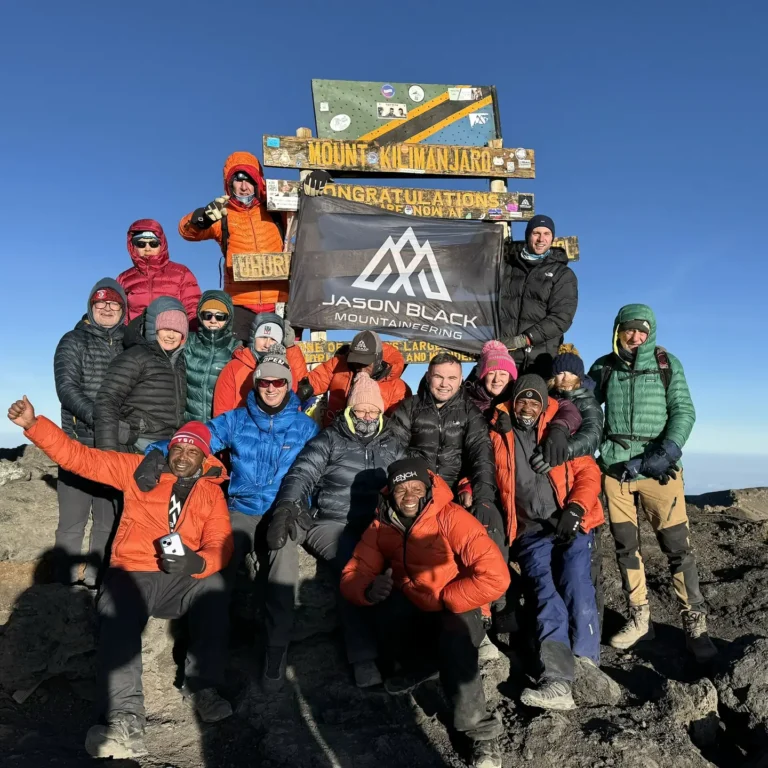
The question I hear most often from climbers who have their eyes on Himlung Himal is not about the route or the weather or the gear.
It is this: How do I actually prepare for something like this?
And it is the right question to be asking. Because Himlung Himal at 7,126 metres in Nepal’s remote Nar-Phu Valley is not a mountain you can wing. It is not a place where enthusiasm compensates for physical gaps or where strong motivation closes the distance between what your body can do and what the altitude demands of it.
This is a 29-day expedition graded Hard. Daily activity runs between 5 and 10 hours across terrain that includes glacier travel, fixed rope ascending, and exposed summit ridges. The summit push window spans six days above 4,900 metres with three high camps on the Southwest Ridge. The acclimatization structure builds across ten dedicated rotation days, but what that structure can build on is entirely determined by the foundation you arrive with.
That foundation is built in training. And this guide tells you exactly how to build it.
Why Himlung Himal Demands Serious Preparation
Before we get into the specifics of training, it is worth understanding precisely what the mountain is going to ask of you.
Himlung Himal is classified as technically moderate. The Southwest Ridge does not require extreme mixed climbing or vertical ice at the limit of your technical skill. But technically moderate at 7,000 metres is an entirely different proposition to technically moderate at sea level or even at 5,000 metres.
Above 7,000 metres your body is operating on significantly less oxygen than it is designed for. Every movement costs more. Every decision takes slightly longer. The cold is not uncomfortable but fundamental. Your sleep is disrupted by altitude-induced breathing changes that accumulate into a debt that compounds across weeks. Your nutrition and hydration management become active daily challenges rather than background habits.
And the duration of the commitment matters enormously. Twenty-nine days in one of the most remote valleys in the Himalaya is not a weekend sufferfest followed by recovery. It is a sustained campaign that will test your aerobic engine, your muscular endurance, your technical precision under fatigue, and your mental resilience in ways that most climbers have not encountered before.
The preparation you do in the twelve weeks before departure is not supplementary to the expedition. It is the expedition’s foundation. Everything that happens on the mountain builds on what you built before you left home.
The 12-Week Training Framework
The Black Mountaineering recommended training program for Himlung Himal runs across 12 weeks and is structured around four core pillars that directly address the physical demands of a 29-day 7,000-metre expedition.
Pillar 1: Zone 2 Aerobic Base
Zone 2 running is the foundation of your high-altitude performance. This is the steady-state aerobic work that builds the cardiovascular engine responsible for keeping you moving efficiently when the oxygen available to your body is significantly reduced.
Zone 2 effort sits at a conversational pace, roughly 60 to 70 percent of your maximum heart rate, where you can speak in full sentences without pausing for breath. It feels deceptively easy on the flat. On a mountain above 7,000 metres, the aerobic base built through weeks of Zone 2 work is what keeps your pace steady and your energy reserves managed across days of sustained output.
The program builds Zone 2 running from 30 minutes in Weeks 1 and 2 through to 45 minutes by Week 10, maintaining that level through to the final week. Monday is your Zone 2 day throughout the program. Do not skip it. Do not replace it with harder work. The aerobic base is built slowly and specifically and cannot be rushed.
Pillar 2: Hill Repeats and Speed Work
The hill repeat sessions on Wednesdays through Weeks 1 to 7 directly develop the leg power and cardiovascular capacity needed for sustained climbing on steep terrain under expedition load.
The program scales progressively. Weeks 1 and 2 begin with 6 x 100 metre hill repeats. By Week 7 you are completing 10 x 200 metre repeats. This progression is deliberate and important. The neuromuscular demand of uphill running under increasing volume replicates the sustained climbing pattern of the upper mountain in a way that flat running cannot.
From Week 8 onward, Wednesday sessions shift to flat speed work: 4 x 400 metres and 2 x 800 metres at controlled speed. This maintains the cardiovascular development of the hill repeat phase while shifting the stimulus to sustain adaptation through the final weeks before departure.
Every session requires a 15-minute warm-up before the first repeat and a 15 to 20-minute cool-down after the last. This is not optional. At the training volumes required for a 7,000-metre peak, recovery work is as important as the hard sessions.
Pillar 3: Strength Training
Strength training on Tuesdays runs consistently across all 12 weeks. The focus is muscular endurance, the capacity to maintain power output across sustained effort over multiple hours, rather than maximum strength.
For Himlung Himal preparation, prioritise the muscle groups that carry the highest load on the mountain. Lower body work including squats, lunges, step-ups, and single-leg exercises that replicate the unilateral demands of mountain terrain. Core stability that supports load management with a heavy pack and technical movement on exposed terrain. Upper body strength with emphasis on the pulling movements that are directly translated to jumar work on fixed ropes and ice axe use on the glacier.
Avoid training to failure in strength sessions during this phase. The goal is to build endurance capacity and structural resilience, not to maximise muscle hypertrophy. Keep the intensity high enough to drive adaptation and the volume controlled enough to support recovery between the aerobic sessions surrounding each strength day.

Pillar 4: Weekend Mountain Trekking
The Saturday and Sunday sessions in the 12-week program are listed simply as trekking on the mountains. Do not underestimate this element.
Weekend mountain trekking across the full 12 weeks builds mountain-specific movement patterns, foot and ankle strength and stability, pack-carrying capacity, and the psychological familiarity with sustained mountain output that no gym or road session can replicate. It also provides the accumulated time on your feet in proper mountain conditions that the expedition demands as a baseline.
Carry a loaded pack. Wear your expedition boots on the longer days toward the end of the program. Move in whatever weather arrives rather than choosing only the comfortable days. The mountain will not offer you weather choices.
Friday HIIT Sessions
Friday sessions combine Zone 2 and Zone 4 interval work across 30-minute run or bike sessions. These high-intensity interval training sessions develop the cardiovascular ceiling that supports your Zone 2 work and builds the capacity to recover quickly between bursts of high-effort climbing.
The program begins with 10 x 1-minute intervals at Zone 4 alternating with 1-minute Zone 2 recovery periods, building to 12 x intervals by Week 5 and extending Zone 4 effort to 90 seconds by Week 7. This progression mirrors the pattern of effort and partial recovery that summit day on Himlung Himal demands above Camp 3.
Building Altitude-Specific Preparation
Training at sea level or at low altitude builds the foundation. But preparing specifically for the physiological demands of 7,000 metres requires additional deliberate steps.
Prior High-Altitude Experience
The requirement for Himlung Himal is prior high-altitude experience between 5,000 and 6,000 metres. This is not a bureaucratic entry condition. It is a genuine safety and performance prerequisite.
If you have not yet spent nights at altitude above 5,000 metres during acclimatization cycles, that experience needs to be built before the Himlung Himal expedition rather than relied upon from a single summit day on a lower peak. How your body responds to altitude during sleep and sustained multi-day effort above 5,000 metres tells you critical information about your acclimatization pattern that cannot be discovered for the first time on a 7,000-metre objective.
Diamox and Medical Preparation
Discuss the use of Diamox for acclimatization with your doctor before booking the expedition. Diamox can support the body’s altitude adaptation process and is commonly used by climbers on Himalayan expeditions. Whether it is appropriate for you, what dosage is suitable, and whether any pre-existing medical conditions interact with its use are all questions for your medical professional, not for the mountain.
Get a full medical clearance before committing to the expedition. A 29-day hard-graded Himalayan expedition is suitable only for those in excellent physical health and fitness.
Nutrition and Hydration at Altitude
Your appetite will change at altitude. The teahouse menus on the Himlung Himal approach carry everything from traditional Nepalese dal bhat to more familiar options, and your nutrition during the approach days can be managed relatively straightforwardly. Above Base Camp, high-altitude food is provided at all camps.
Practice your nutrition strategy in training. Learn what your gut tolerates during sustained high-intensity effort. Summit gels, salty-sweet bars, nuts, and jerky are the core high-altitude fuel sources. Make sure you have used all of them before they are the only options available at 6,500 metres.
Hydration at altitude requires active management. Both alcohol and caffeine increase dehydration at high altitude. Limit both significantly during the expedition and avoid alcohol entirely during the pre-departure period in Kathmandu.
Technical Skills: What You Must Have Before You Arrive
Training the body is necessary but not sufficient. Himlung Himal also requires genuine technical competence that must be built before the expedition begins.
Rope Work
You must be competent and confident on fixed ropes on both ascent and descent. This means practised jumar technique, descending on a belay device, and clip-through protocol on fixed lines at sustained effort without the technique degrading under fatigue. If your rope work currently requires active concentration to execute correctly, it needs more practice time before you are on the Southwest Ridge of a 7,000-metre peak.
Glacier Travel
Crampons are tools for control, not aggression. Precise, deliberate crampon placement on glaciated terrain under full expedition load is a skill that requires genuine practice. If you have limited glacier travel experience, prioritise building this before the expedition. Winter terrain training, crampon courses, or prior glacier expeditions all contribute to the automatic competence the mountain requires.
Ice Axe Use
Confident ice axe use on steep terrain including self-arrest position and piolet traction is expected. This skill should be practiced to automatic level rather than remembered from a course attended years ago.
Mental Preparation: The Element Most Climbers Underestimate
Himlung Himal is a 29-day expedition in one of the most isolated environments in the Himalaya. The Nar-Phu Valley is a genuine wilderness with ancient Tibetan trade routes and Buddhist monasteries marking the approach corridor. It is profoundly beautiful and profoundly remote in equal measure.
The mental demands of sustained high-altitude campaigning are real and specific. Disrupted sleep accumulates into fatigue that affects decision-making and emotional regulation. The distance from everything familiar compounds across weeks. High-stakes decisions above 7,000 metres must be made accurately when the brain is operating under hypoxic stress.
The mental resilience required is not built through willpower on the mountain. It is built through consistent training across twelve weeks, through deliberately choosing the uncomfortable option in preparation sessions, through getting comfortable with sustained discomfort in a controlled environment before the stakes are higher.
Choose courage over comfort in training. Find strength in the struggle during the hard sessions. The mental habits built across twelve weeks of honest preparation are the ones that carry you through Camp 2 and above when everything is harder than it was at Base Camp.
Key Takeaways: Your Himlung Himal Training Checklist
Physical Foundation:
Complete the full 12-week structured program without significant interruption. Zone 2 running four days per week building from 30 to 45 minutes. Hill repeats on Wednesdays through Week 7 scaling from 6 x 100m to 10 x 200m. Speed work from Week 8 onward. Strength training on Tuesdays emphasising lower body, core, and pulling movements. Weekend mountain trekking with loaded pack across all 12 weeks. 15-minute warm-up and 15 to 20-minute cool-down on every session.
Technical Skills:
Confident and automatic fixed rope technique on ascent and descent. Competent glacier travel with precise crampon placement. Ice axe use including self-arrest to an automatic level. Prior altitude experience at 5,000m to 6,000m with nights spent at altitude.
Medical:
Full medical clearance before booking. Doctor consultation regarding Diamox for acclimatization. Travel insurance covering mountaineering above 5,000 metres, helicopter evacuation, and repatriation. Personal first aid kit carried throughout.
Mental:
Build the habit of choosing the uncomfortable option in training. Understand that Himalayan expedition conditions include sustained disrupted sleep, isolation, cold, and high-stakes decision-making under fatigue. The mental preparation is built in training, not discovered on the mountain.
Practical Info
Peak: Himlung Himal, 7,126 metres / 23,379 feet
Route: Southwest Ridge via Nar-Phu Valley, Nepal
Duration: 29 days
Grade: Hard, technically moderate, physically demanding
Season: Autumn
Base Camp: 4,900 metres
High Camps: C1, C2, C3 on the Southwest Ridge
Daily Activity: 5 to 10 hours
Required Experience: Prior altitude experience at 5,000m to 6,000m, strong rope work and glacier travel skills
Price: €8,999 per person
Sherpa Support: 1:1 climbing Sherpa per member throughout the entire climb
Leadership: Jason Black, K2 and Everest summiteer
Recommended Training Duration: 12 weeks minimum of structured progressive training
Requirements Checklist:
Prior high-altitude experience at 5,000m to 6,000m including nights spent at altitude. Very strong physical and mountain fitness. Competent rope work on ascent and descent including fixed line technique and jumar use. Confident glacier travel with accurate crampon placement and ice axe use. Full medical clearance before booking. Travel insurance covering mountaineering above 5,000m, helicopter evacuation, medical treatment, and repatriation.
Equipment Essentials:
Double skin mountaineering boots rated to 8,000m. Ice axe x2. Crampons. Climbing helmet. Ascender and jumar. Y-rig for ascender and carabiner. Climbing harness. Locking carabiners x6. Non-locking carabiners x2. Slings x2. Belay and rappel device x2. 800g goose down jacket with hood. Insulated pants. Summit day down suit. Sleeping bag rated to minus 30 degrees Celsius. Inflatable sleeping pad. Category 4 glacier glasses. Ski goggles. UV nose protector. 7,000m expedition mitts. Shell guide glove with insulated liner. Liner gloves. Headlamp 500 to 700 lumens x2. Expedition backpack 75L. Trekking backpack 30L. Large 120-litre duffel bag.
Conclusion: The Preparation Is the Climb
Himlung Himal will give you exactly what you bring to it.
Bring a body that has done the work across twelve honest weeks of training. Bring technical skills that are automatic rather than conscious under fatigue. Bring prior altitude experience that has taught you what your body does above 5,000 metres across days and nights. Bring a mind that has been trained to find strength in discomfort rather than retreat from it.
Do all of that and the Southwest Ridge at 7,126 metres becomes a demanding but achievable objective. The acclimatization rotations give the body time to adapt. The 1:1 Sherpa support means you are never alone in the technical sections. The personal leadership of a K2 and Everest summiteer means every decision above Base Camp is made by someone who has stood in far more consequential situations than this one and knows what the mountain is actually asking.
The preparation is the climb. Everything on the mountain is the result.
Start building the foundation now.