There is a sound an avalanche makes before you see it. A low crack, then a roar that fills the valley from every direction at once. I have heard it from a safe ridge and I have heard it too close for comfort. The difference between those two moments is not luck. It is preparation, discipline, and a handful of physical actions that your body needs to know before your mind has time to think.
Surviving a slide is not about heroics. It is about reacting correctly in the first few seconds, when the snow is still moving and you still have some control over your own body. This guide breaks down what those seconds demand of you, why every backcountry skier, mountaineer, and winter expedition leader needs to drill these actions until they are instinct, and how proper preparation shapes the outcome long before you ever step onto the slope.
The Nature of the Threat
Snow behaves differently once it starts moving. What looks solid underfoot can, in an instant, become a fluid mass traveling at speeds that outpace a sprinting human. A slab avalanche releases when a weak layer beneath the surface fails, and the block above it fractures and accelerates downhill, often within seconds of the first crack.
This is not a slow-motion event. Most avalanches reach terminal velocity within five seconds and can exceed eighty kilometers an hour on steep terrain. That leaves almost no time for deliberation. Every guideline in this article exists because the window for conscious decision-making closes almost immediately, and what remains is trained reaction.
Understanding this reality changes how you train. You are not preparing to think your way through an avalanche. You are preparing your body to act correctly while your mind is still catching up.
The First Second: Escape and Commit
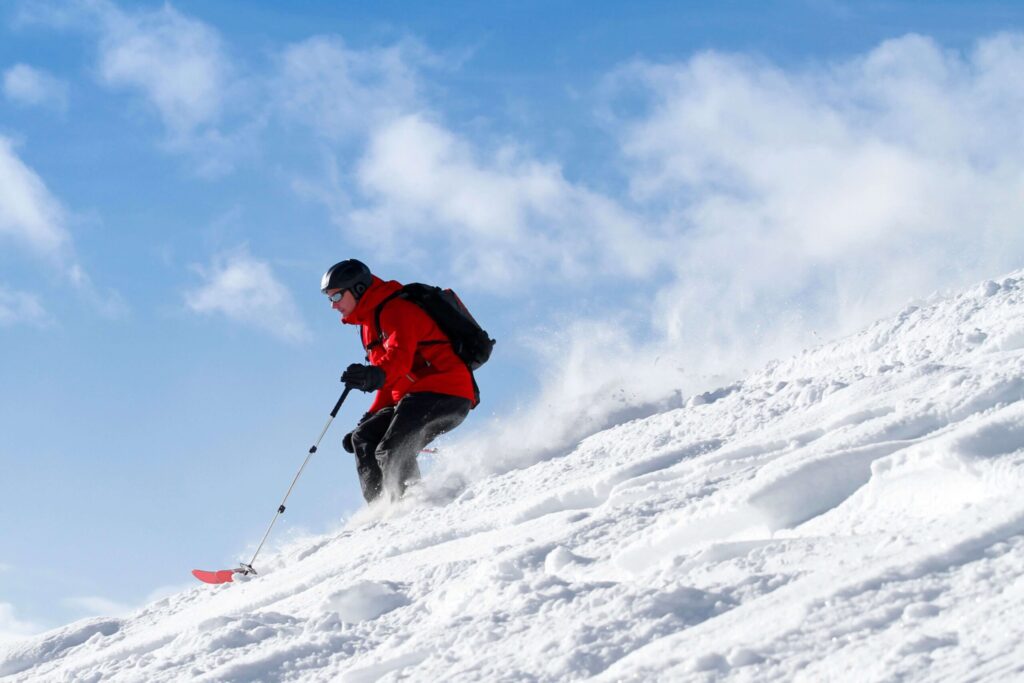
The moment a slab releases beneath you, your first job is to get off it. Look to the flank, the edge of the moving snow, and drive toward it with everything you have. Skis, a board, boots, it does not matter what you are wearing. What matters is that you move immediately and decisively toward the side of the slide path rather than trying to outrun it downhill.
Outrunning an avalanche is rarely possible. The slide accelerates faster than you can, and the debris field often widens as it descends, meaning the safe margin you saw a second ago may already be gone. Lateral escape gives you the shortest distance to safety and the best chance of staying out of the main flow entirely.
If you are carrying an inflatable avalanche airbag, this is the moment to pull the trigger. Not when you think you might need it. Not a second later. The bag needs air in it before the debris begins to consolidate around you, because once that snow settles, it sets with the density of wet concrete. An airbag deployed early works with the physics of the slide, using the principle of inverse segregation to help keep larger objects, you included, closer to the surface as the debris settles. Deploy late, and the airbag has already lost its advantage.
Fighting for the Surface
Once you are caught, the real work begins. This is where survival becomes physical labour. You need to swim.
Not a gentle stroke. Aggressive, high-intensity swimming motions, arms and legs working against a current of moving snow that behaves more like a slurry than solid ground. Roll onto your back if you can, feet pointed downhill, and fight to stay near the surface. The goal is simple even if the execution is brutal: the closer you are to daylight when the slide stops, the faster your rescue and the more air you carry into the debris with you.
I have spoken with survivors who describe this stretch as the longest and shortest moments of their lives. Long because every second is a fight. Short because it is over before the mind has time to fully process what is happening. That gap between instinct and thought is exactly why this technique has to be trained, not read about once and filed away.
There is also a psychological element here that gets overlooked. Panic burns oxygen and wastes movement. Climbers who train these actions repeatedly, even in dry land simulations, report a calmer internal state when the real event happens. Discipline under pressure is not a personality trait. It is a rehearsed response.
As the Snow Slows: Protect Your Airway
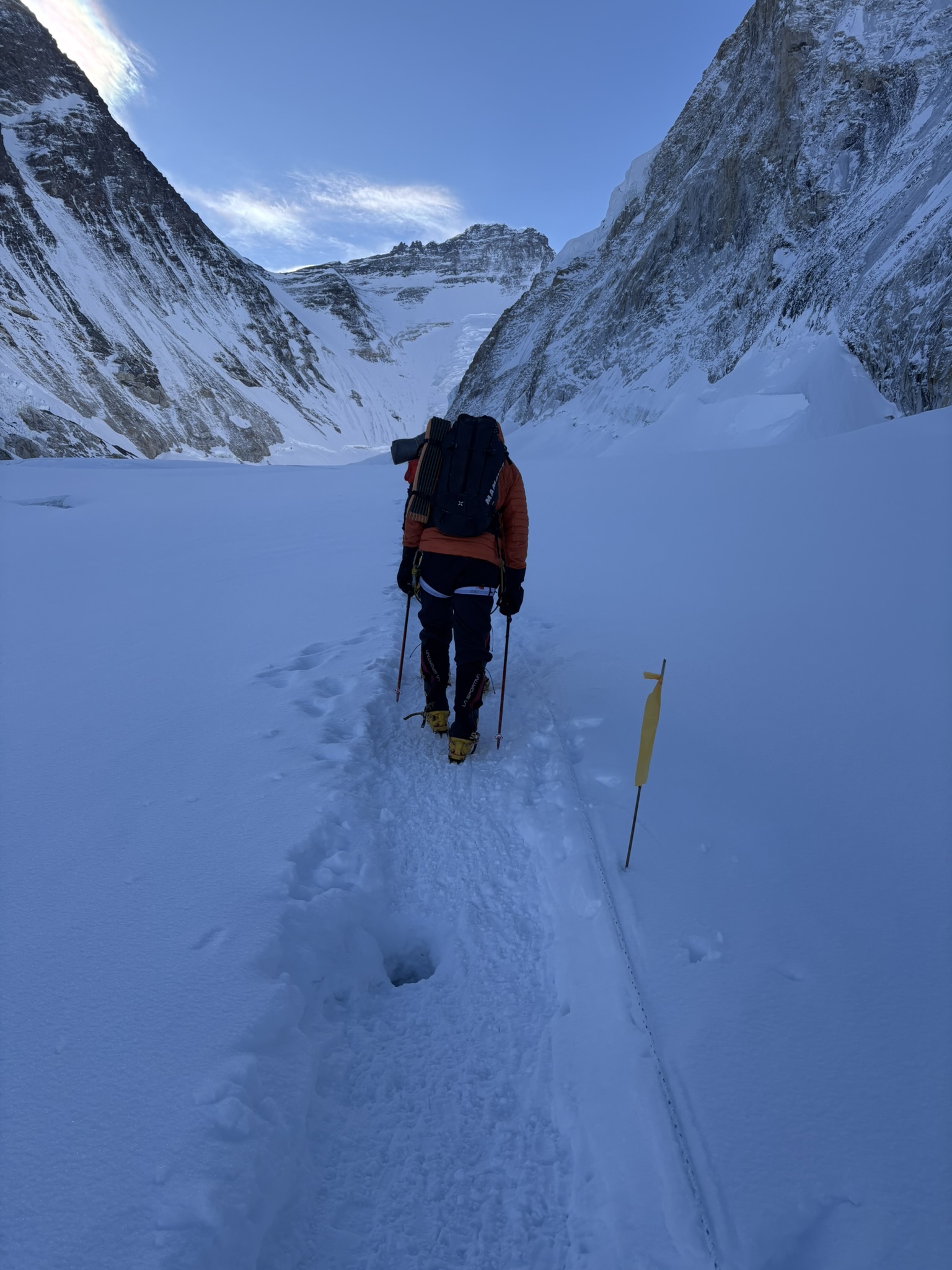
Avalanche debris does not stop gently. It decelerates, and as it does, the snow around you begins to tighten and lock into place. This is the window, often just a second or two, where your final action decides whether you get an air pocket or a face full of packed snow.
Cup your hands around your mouth and nose. Push out to create space, even a small one, before the snow sets. That pocket is your lifeline. It buys you time, sometimes precious minutes, for a companion rescue to reach you before the debris around your chest and lungs restricts your ability to breathe at all.
Try, if you can manage it in those final chaotic moments, to get a hand or an arm toward the surface. A limb breaking through the snow is one of the clearest signals a rescue team can find, and it can cut search time dramatically. Even a single ski pole or glove protruding from the debris has been the difference between a fast recovery and a prolonged search.
Once the snow has set, movement becomes almost impossible. This is why the actions before that moment carry so much weight. There is no second attempt at creating an air pocket once the debris has consolidated around you.
Why Companion Rescue Is the Real Safety Net
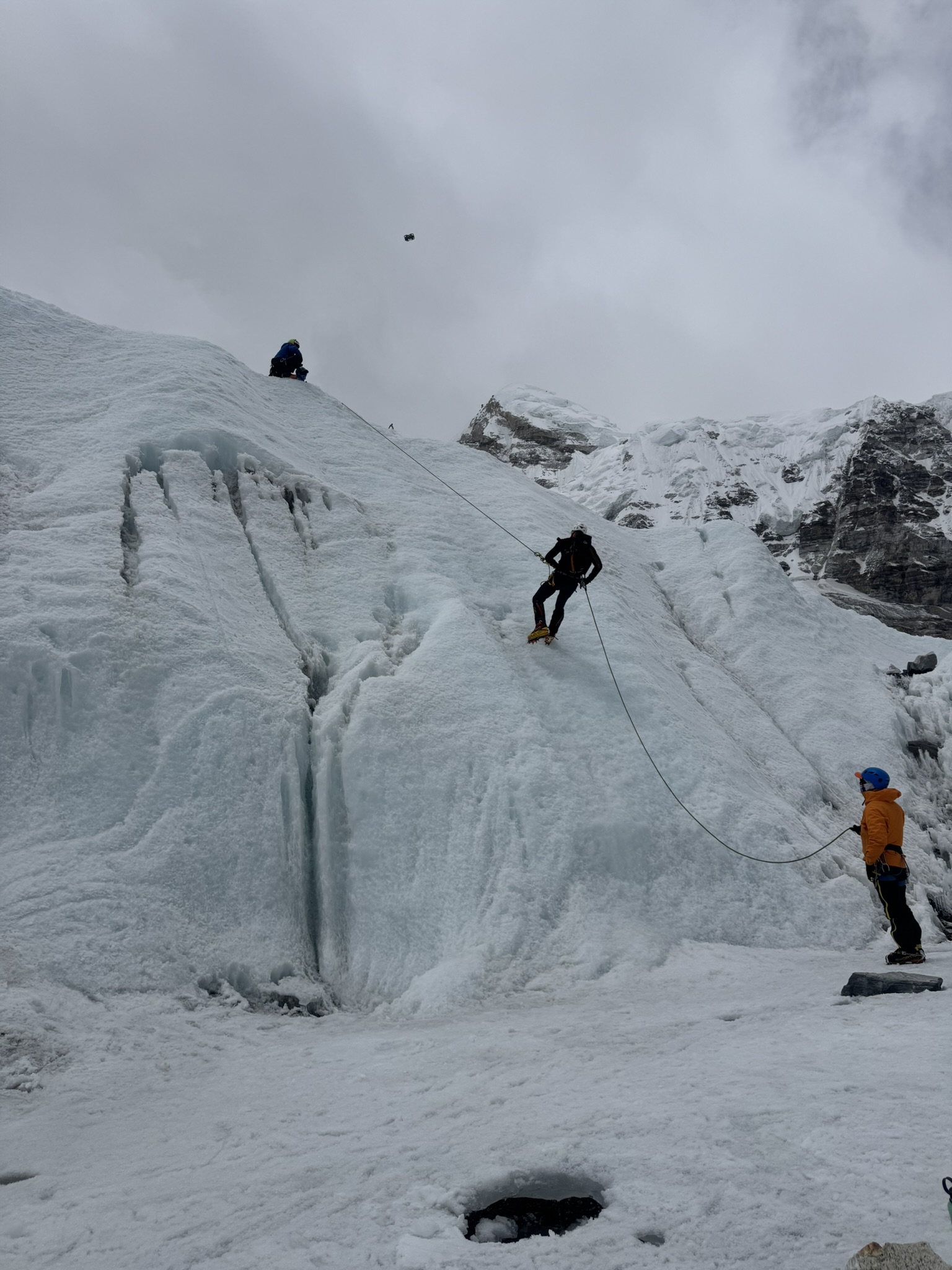
No individual technique replaces a trained team. Statistically, survival rates drop sharply after the first fifteen minutes buried, and organized rescue services rarely arrive that fast in the backcountry. This is why every person in your group needs to carry and know how to use a transceiver, probe, and shovel and why practicing companion rescue in controlled conditions is not optional. It is the difference between a frightening story and a tragedy.
A companion rescue works in stages. First, a visual and transceiver search to narrow the search area. Second, probing to pinpoint the exact location. Third, efficient shovelling that clears a path to the buried person’s airway as fast as possible, not simply digging straight down. Teams who have drilled this sequence consistently cut their recovery times by more than half compared to those improvising for the first time in a real emergency.
This is also where the value of a small, disciplined team becomes obvious. In a group of two or twenty, it is the people standing beside you who dig you out. Not a helicopter, not a stranger. The person you trained with. Small teams move faster, communicate more clearly, and carry less confusion into a high-stress moment than large, loosely coordinated groups.
Preparation Beyond the Slide
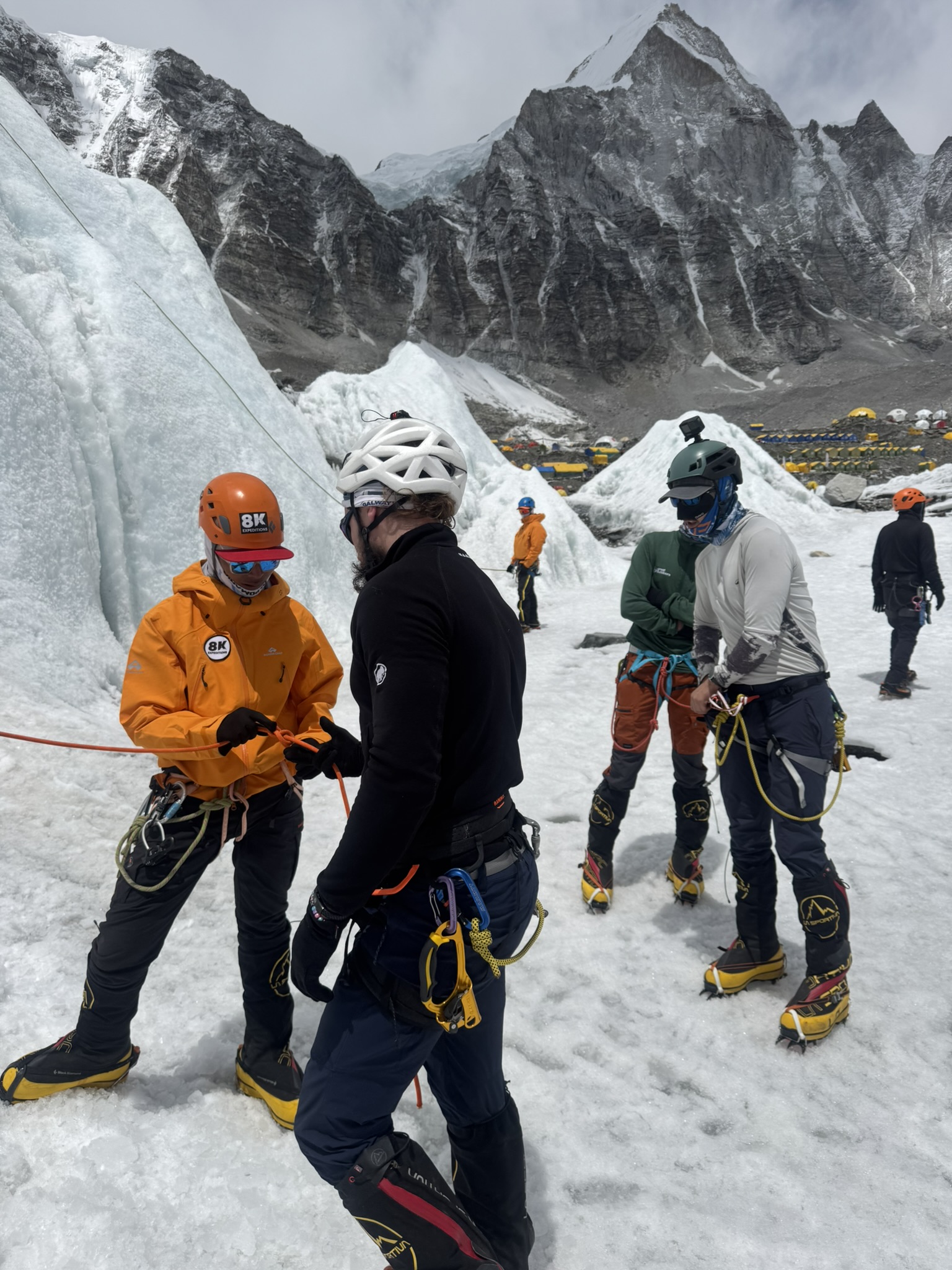
Everything above happens in seconds. What determines whether you are ready for those seconds is built long before you ever click into your bindings. Reading the avalanche forecast for your region that morning. Assessing slope angle, aspect, and recent snowfall. Carrying the right gear and testing your transceiver at the trailhead every single time, without exception. Respecting the terrain enough to turn back when conditions say no.
The slope angle deserves particular attention. Most slab avalanches release on slopes between thirty and forty-five degrees, a range that unfortunately overlaps with some of the most enjoyable skiing and climbing terrain. Learning to read a slope, to recognize wind loading, cornices, and recent cracking, is a skill built over seasons, not weekends. It never replaces professional avalanche education, but it sharpens the judgment that keeps you out of trouble in the first place.
I have led winter expeditions across ranges that demand this same discipline, and the lesson is always the same. The mountain does not care about your schedule or your summit goal. It rewards preparation and it punishes shortcuts. The climbers who move safely through avalanche terrain year after year are rarely the boldest in the group. They are the ones willing to turn around.
The Human Side of the Mountain
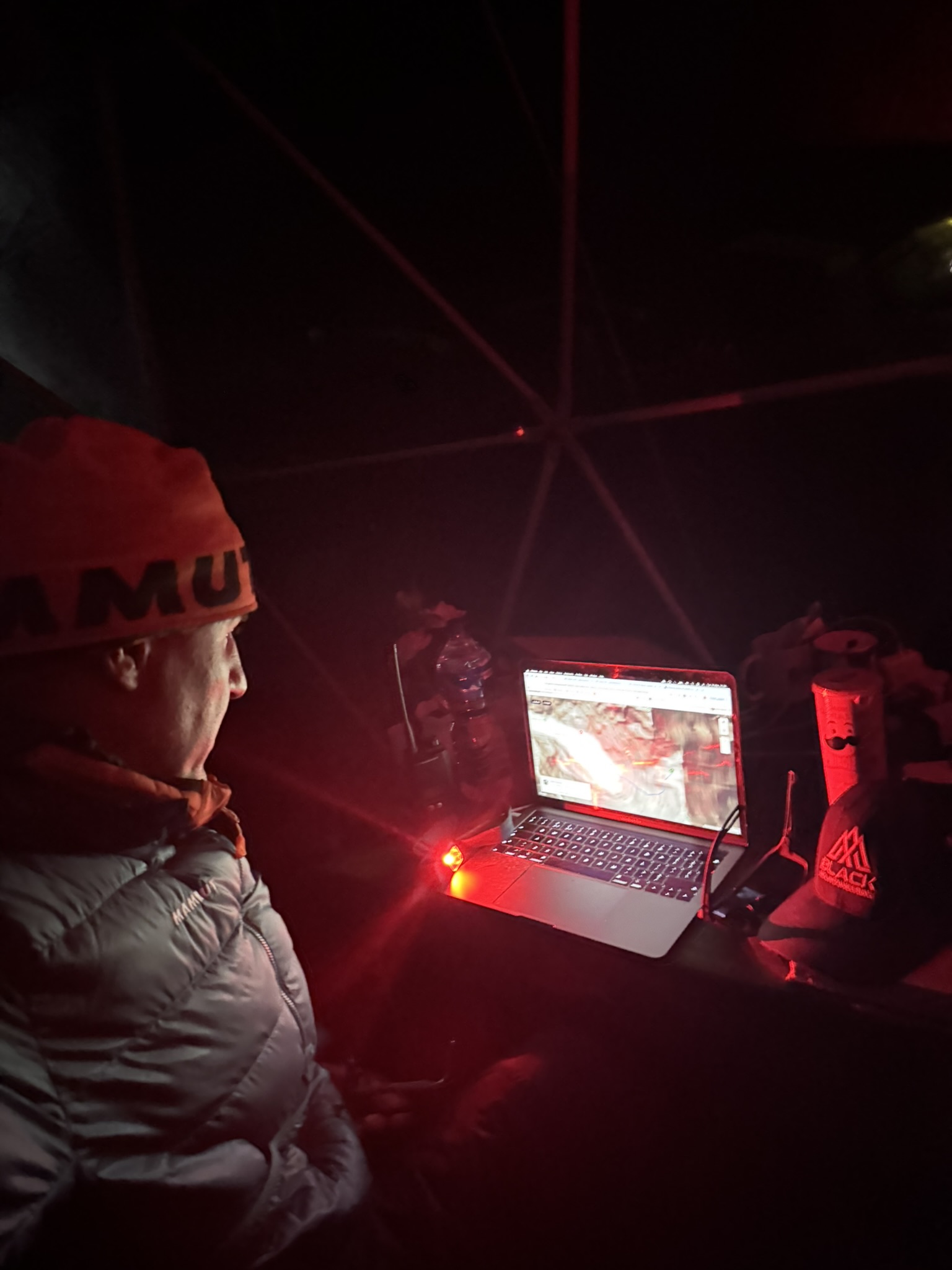
Every avalanche story is also a story about the people involved, the ones who survived, the ones who dug, and the ones who did not make it home. Behind every statistic on burial time and survival rate is a family, a team, or a community that carries the outcome forward.
This is part of why we take safety training as seriously as we do at every level of an expedition. It is not paperwork or box-ticking. It is respect for the mountain, for the people beside you, and for everyone waiting for you to come home. A well-prepared team does not just protect the individuals on the slope. It protects the wider circle of people who trust that preparation was taken seriously before anyone left the trailhead.
Key Takeaways
- Escape laterally toward the flank the instant you feel the slab release.
- Deploy your airbag immediately, not when the situation feels serious enough.
- Swim aggressively and stay on your back with feet downhill where possible.
- As the debris decelerates, cup your hands around your face to create an air pocket.
- Push a limb toward the surface if you have any movement left.
- Train companion rescue with your team before you ever need it for real.
- Read the forecast and respect slope angle warnings every single time.
Gear Checklist for Avalanche Terrain
- Avalanche transceiver, checked and tested before every outing
- Probe and shovel, carried by every member of the group
- Inflatable avalanche airbag pack
- Avalanche safety course certification, refreshed regularly
- Communication device for emergency contact in remote terrain
- Daily avalanche forecast review for the specific region and aspect
Final Thought
Winter mountains ask more of us than summer ones. They demand respect measured not in effort but in restraint, in the discipline to check the forecast, to turn around, to train for the worst even while hoping never to need it. The climbers who walk away from a slide are rarely the strongest in the group. They are the ones who trained their body to react before their mind had time to freeze.
Preparation is not the opposite of adventure. It is what makes the adventure possible to walk away from.