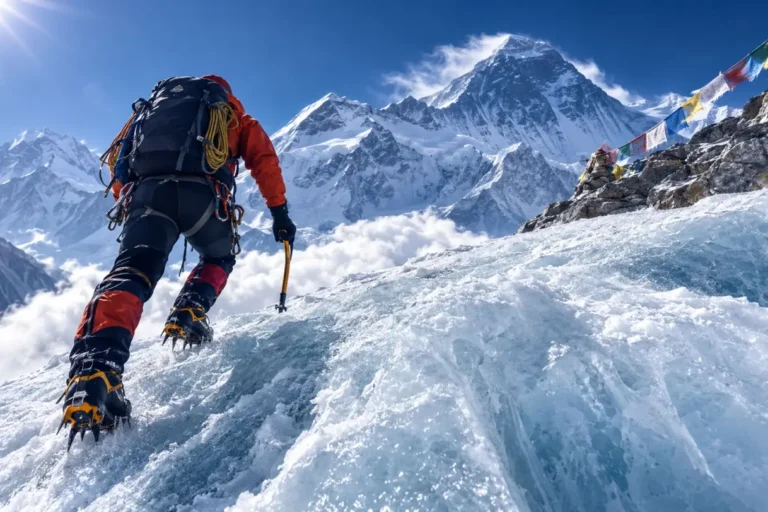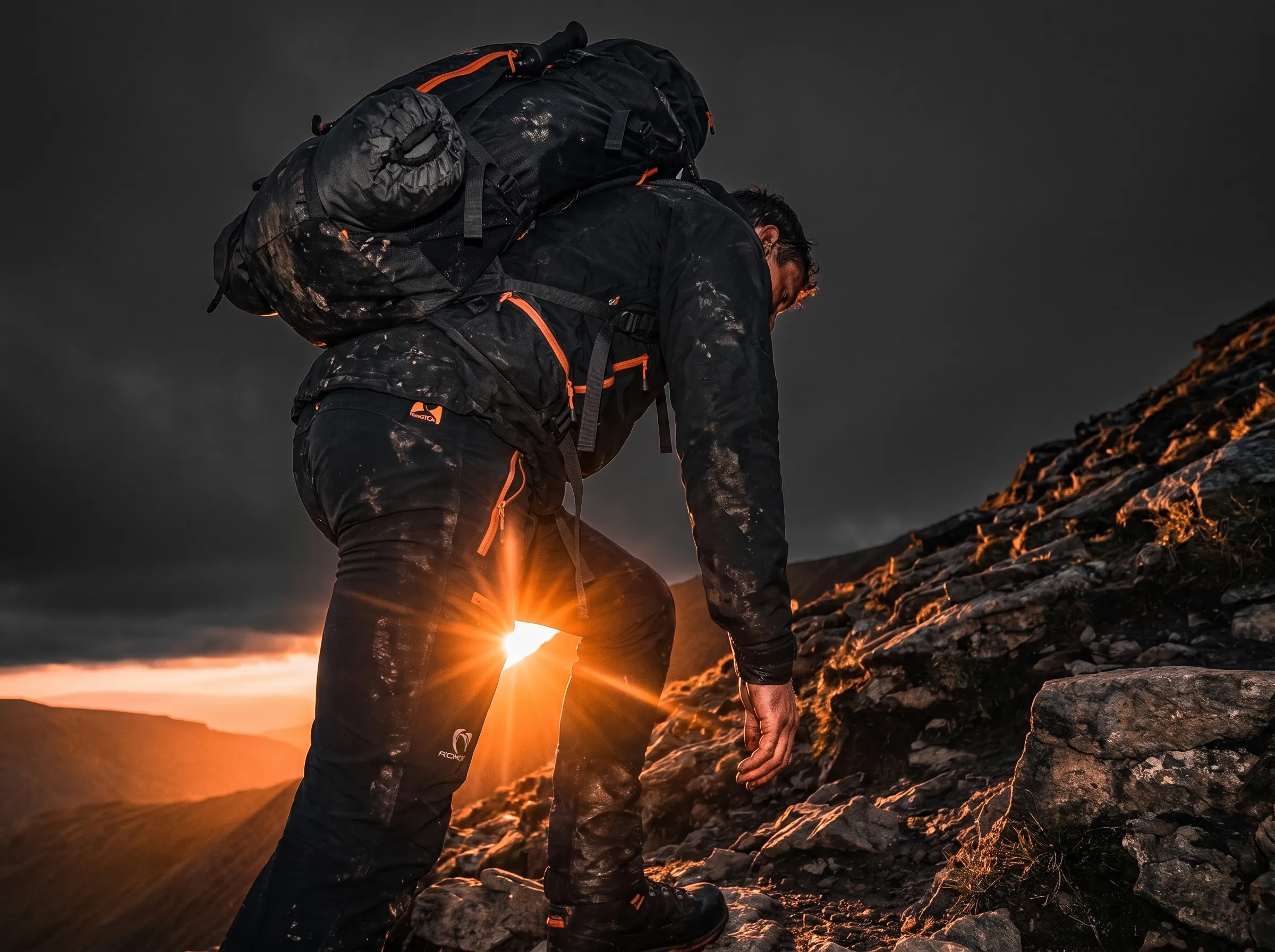
There is a moment on every big mountain when the noise stops. The phone signal fades. The conversation thins out. You start to hear your own breathing and the crunch of your boots, and nothing else matters except the next step.
On Himlung Himal, that moment usually comes somewhere above Phu Gaun, when the last village falls behind you and the valley opens toward Tibet. From there, it is just you, your team, and a mountain that very few people ever see.
Himlung Himal stands at 7,126 meters in the Nar Phu region of Nepal. It sits in one of the most isolated valleys in the Himalaya, where old trade routes and Buddhist monasteries still shape daily life. For climbers ready to step into the world of 7,000-meter peaks, it is a serious and rewarding objective.
This guide covers what the climb actually asks of you, how we run our Himlung Himal expedition, and how to prepare. I will be straight with you throughout, because that is the only way to approach a mountain like this.
Why Climb Himlung Himal
A Mountain Few People See
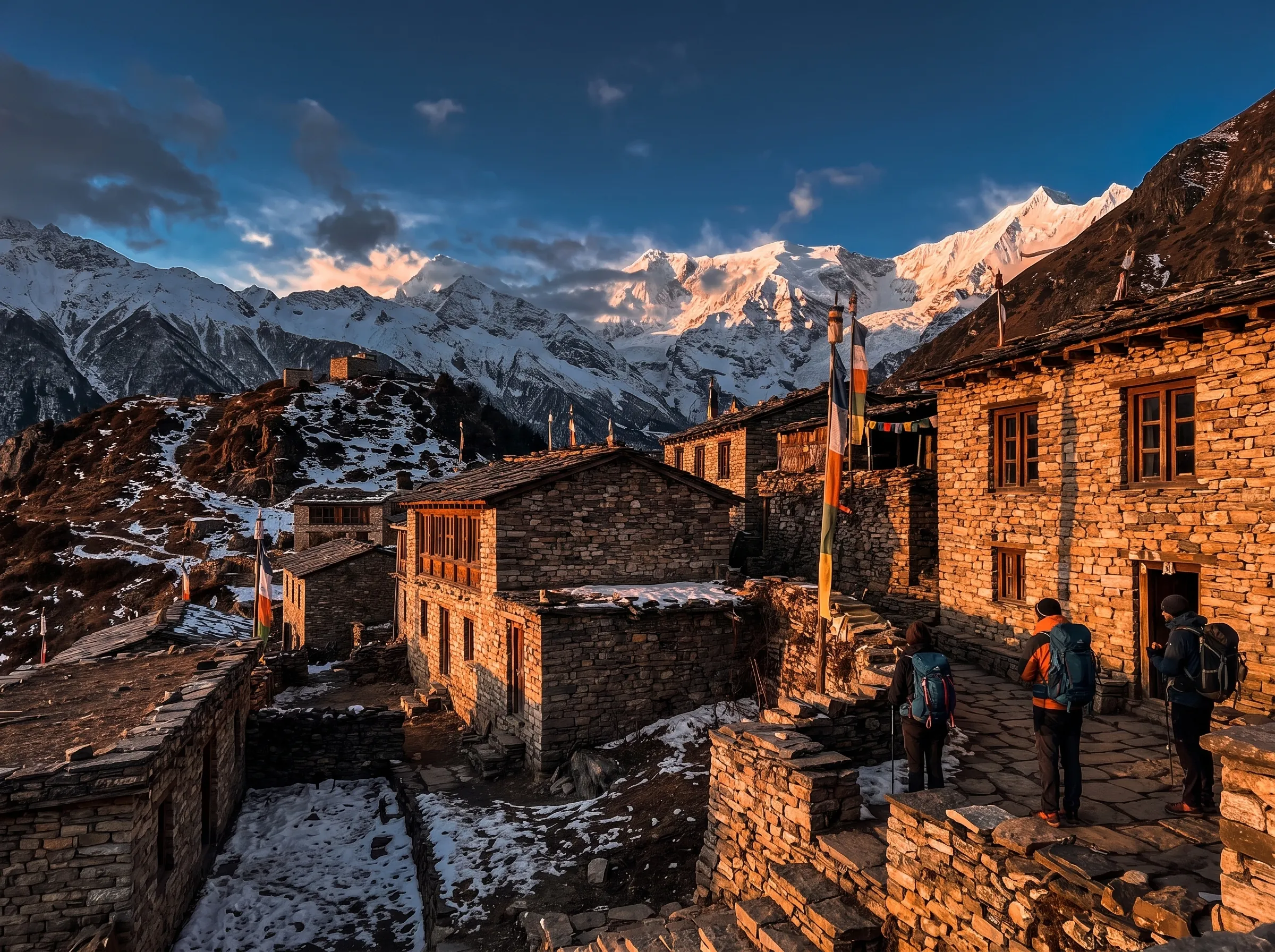
Most people who travel to Nepal never set foot in the Nar Phu valley. It is remote; it takes effort to reach, and that is exactly why it has kept its character. The villages here hold on to Tibetan culture and tradition in a way that feels untouched. You walk past prayer walls worn smooth by centuries of wind. You share tea with families whose lives are tied to the seasons and the land.
That remoteness shapes the whole experience. There are no crowds on the trail, and no queues on the fixed lines. When you climb Himlung Himal, you are climbing in a quiet corner of the Himalaya, and it rewards the people who show up with respect.
A Genuine Step Into 7,000 Metres
Himlung Himal is technically moderate, but do not mistake that for easy. The climb involves glacier travel, fixed rope sections, and exposed summit ridges. The altitude alone will test every system in your body. What makes it such a strong objective is that it gives you a complete high-altitude mountaineering experience without extreme technical difficulty.
You will learn how your body handles 7,000 meters. You will learn how to move efficiently on fixed lines when you are exhausted. You will learn patience during rotations and discipline on summit day. Among Himalayan mountaineering expeditions, it is one of the most honest teachers of what big altitude really feels like.
The Route: Kathmandu to the Summit Ridge
The Approach Through Nar Phu
The expedition runs for 29 days from arrival to departure. We meet in Kathmandu at 1,400 meters, then drive to Besi Shahar at 760 meters and on to Koto at 2,600 meters. From Koto, the walking begins.
We trek to Meta at 3,560 meters, then to Kyang at 3,840 meters, and on to Phu Gaun at 3,900 meters. At Phu Gaun we take a full rest day for acclimatization. This is not wasted time. Every day spent here pays back later on the mountain.
The approach does two jobs. It gradually builds your acclimatization, and it connects you to the people and landscape you will be living among for the next month. By the time you reach Base Camp, you should feel like you belong in the valley rather than passing through it.
Base Camp at 4,900 Meters
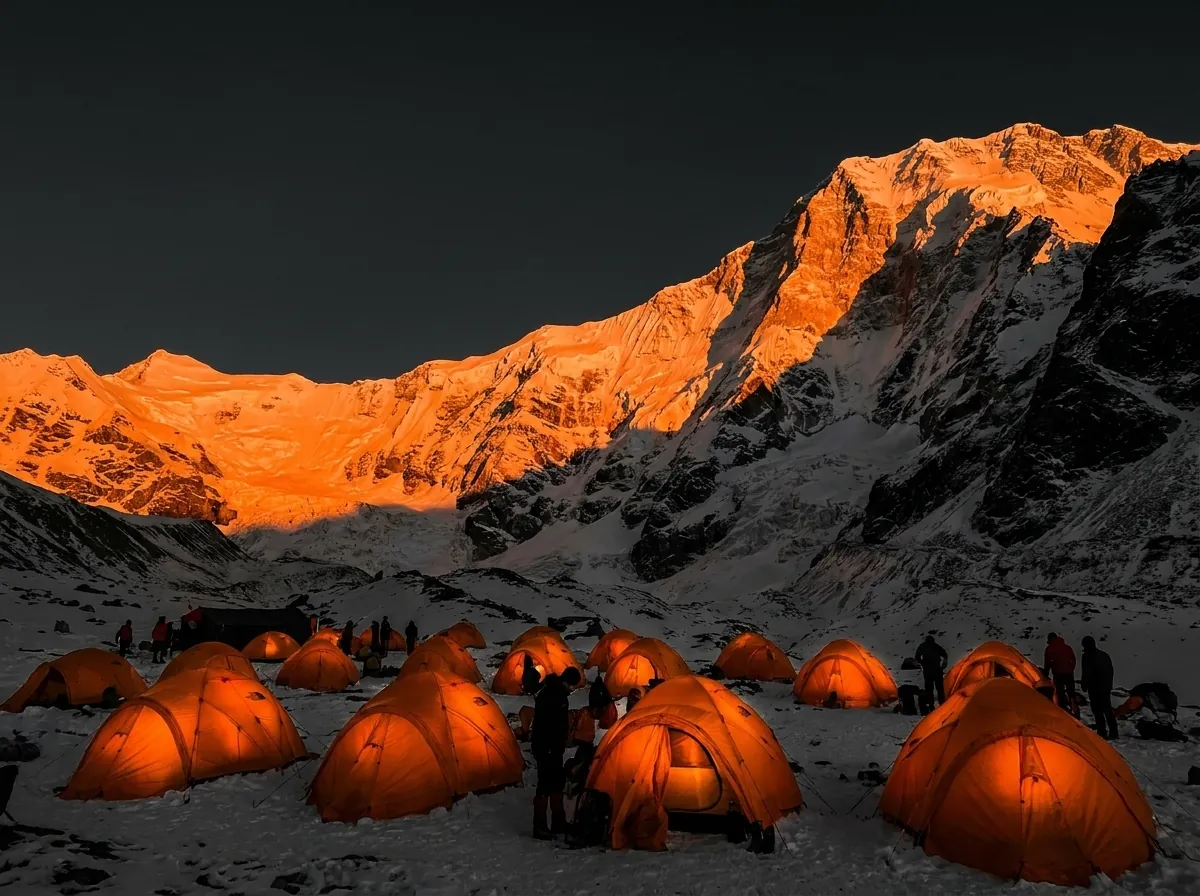
On day eight we move from Phu Gaun up to Himlung Base Camp at 4,900 meters. This becomes home. Each climber has their own tent, and our Base Camp team of experienced cooks and kitchen staff keeps everyone fed and looked after. Solar panels and a generator keep devices charged, and we carry satellite phones and radio communications for the whole expedition.
Base Camp is also where we run oxygen and gear training. We check every harness, every ascender, every crampon fit before anyone sets foot on the mountain. Small details protect big outcomes.
Rotations and the Three High Camps
Days nine through eighteen are for acclimatization rotations. We climb up through Camp I and Camp II, carrying loads and sleeping higher, then return to Base Camp to recover. It is slow, deliberate work. Carry high, sleep low, recover, repeat.
This rotation system is the backbone of a safe Himlung Himal climbing program. It teaches the body to work higher, reduces the loads you need to carry later, and builds confidence through repetition. We climb at the pace the mountain allows, not the pace a calendar demands.
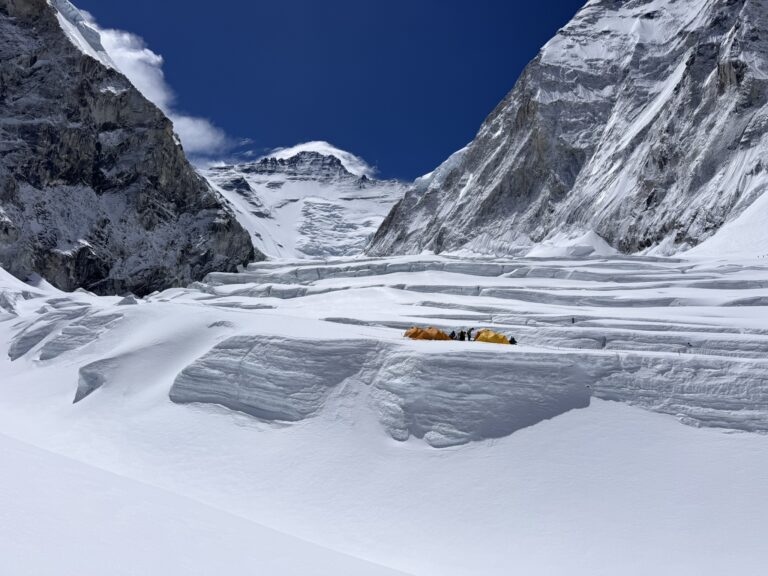
The route follows the Southwest Ridge, with three progressively positioned high camps. At the high camps, you share a tent with one other climber. It is cramped, cold, and basic. It is also where some of the strongest team bonds are formed.
Summit Day
Days nineteen through twenty-four are set aside for the summit push. That window matters. It gives us flexibility to wait for the right weather rather than forcing a date. We receive weather forecasts throughout the expedition, and every decision on timing comes back to conditions and the condition of the team.
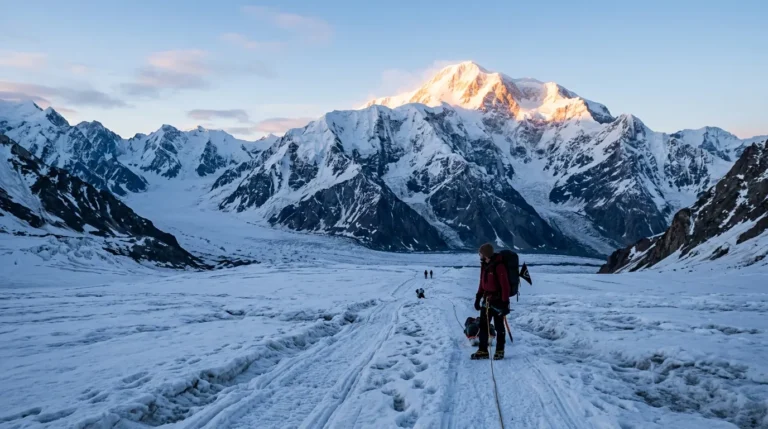
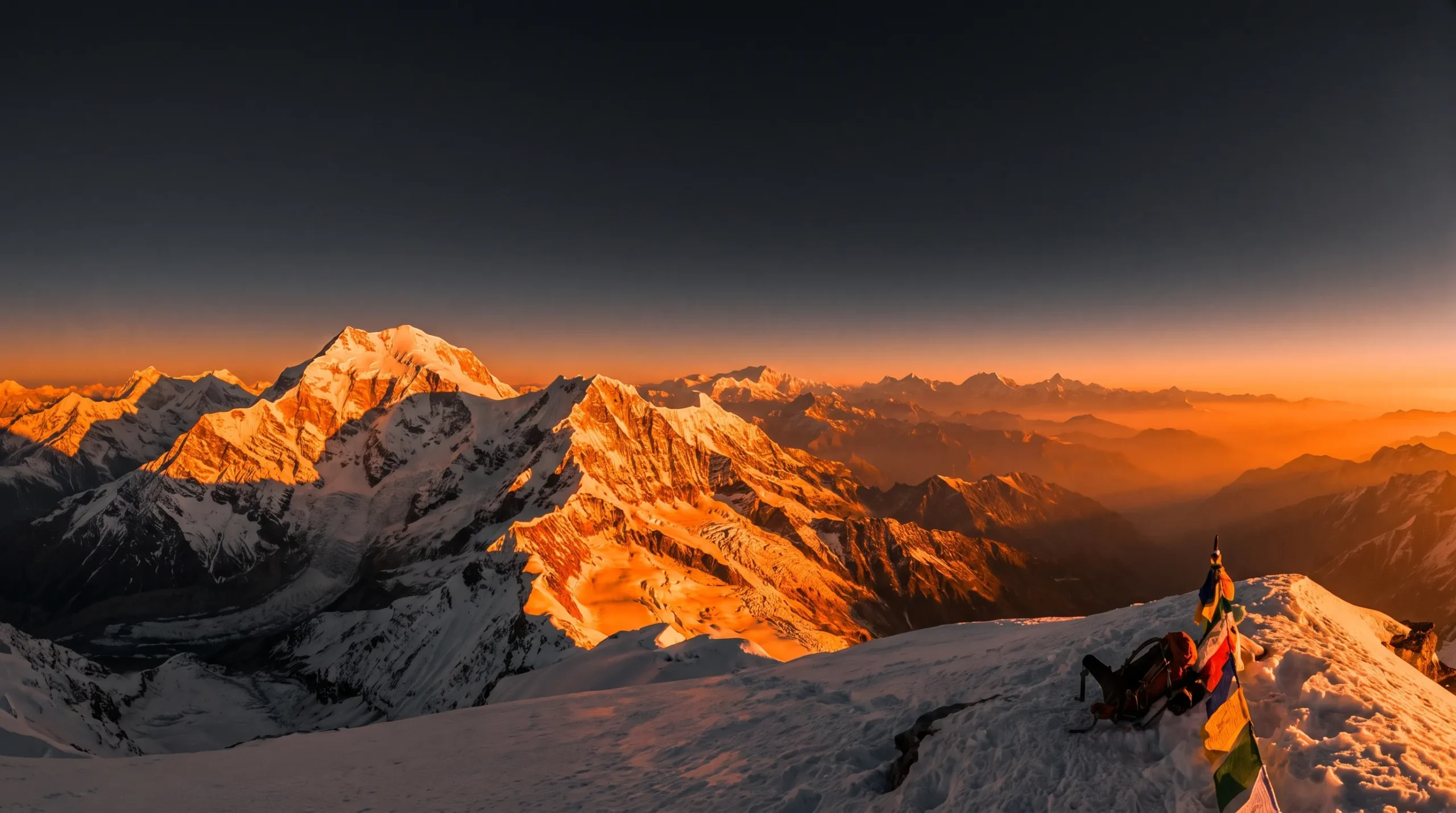
Summit day involves glacier travel and fixed rope sections along exposed ridges to the top at 7,126 meters. Our experienced Sherpa team fixes the rope and prepares the route, and every climber has a dedicated climbing Sherpa for the entire climb.
When the conditions come together and you stand on the summit, the views stretch across Annapurna II, Manaslu, Gangapurna and out over the Tibetan Plateau. It is a view you earn step by step, and it stays with you.
Then we descend. The summit is only halfway. Getting everyone back down safely is the real measure of success.
How We Run a Himlung Himal Expedition
Small Teams, Real Judgement
I lead every Himlung Himal expedition personally. We keep our teams small on purpose. A small team means better guidance to client ratios, stronger team dynamics, and a lighter footprint on the valley. It also means I know every climber: how they move, how they eat, how they sleep, and when something is not right.
That knowledge is what good decisions are made from. At altitude, the difference between a strong climber and a struggling one can show up in small ways. A slower breakfast. A quieter voice. A slight change in pace. In a small team, those signals do not get lost.
Safety Systems on the Mountain
Safety is not a slogan on this expedition. It is built into every part of the plan. Every climber has a 1:1 climbing Sherpa throughout the climb. Emergency oxygen is held at Base Camp. We carry a comprehensive medical kit for climbers and staff, satellite phones for emergency communication, and radios linking Base Camp to the mountain.
Safety margins are defined before pressure arrives. We set turnaround times and decision points in advance so that when you are tired, cold, and close to the top, the hard choices are already made. I have made those calls before, and I will make them again if they are the right calls. A summit is never worth a life.
The People Who Make It Possible
No Himalayan climb happens without the people of Nepal. Our porters carry loads up to Base Camp and back. Our climbing Sherpas fix the route and climb beside you. Our kitchen crew keeps the team fed in some of the hardest conditions imaginable.
Every member of our Nepalese team receives fair daily wages, food, clothing, and insurance. That matters to us. We also ask our climbers to travel through the Nar Phu villages with humility, to learn a little about the culture, and to leave the valley better than we found it.
Who Should Climb Himlung Himal
This is not a first expedition. We expect everyone joining our Himlung Himal expedition to have climbed at 5,000 to 6,000 meters previously. You need to be very mountain fit and very strong, with a good understanding of rope work, both ascending and descending.
If you are comfortable on fixed lines, you have handled altitude before, and you want to take a genuine step into the 7,000-meter range, this mountain was made for you. If you are not there yet, that is fine. Build the foundations first. The mountain will still be here.
Training for Himlung Himal Climbing
The 12-Week Plan
We provide a 12-week training program built specifically for 6,000 to 7,000-meter peaks. It builds steadily across the weeks and follows a consistent weekly rhythm.
Monday is a Zone 2 run, starting at 30 minutes and building to 45 minutes by the final weeks. Tuesday is strength training. Wednesday starts with hill repeats, progressing from 6 x 100 metres up to 10 x 200 metres, before moving to speed work on the flat in the later weeks. Thursday is a one-hour-long walk. Friday is a 30-minute run or bike interval session, alternating Zone 4 and Zone 2 efforts. Weekends are for trekking in the mountains, carrying weight and spending time on your feet.
Every session should include a 15-minute warm-up and a 15 to 20-minute cool-down. Twelve weeks is the minimum. If you can build a solid aerobic base before the plan begins, you will arrive at Base Camp in far better shape to handle the rotations.
The Mental Side
Fitness gets you to Base Camp. Mental resilience gets you through the weeks that follow. Rotations are repetitive. Weather delays test your patience. High camps are cold, cramped, and uncomfortable. There will be moments when you question why you are there.
Train for that too. Spend long days in bad weather at home. Get comfortable being uncomfortable. Learn to break big efforts into small, manageable pieces. The climbers who do well on Himlung Himal are rarely the fastest. They are the ones who stay calm, stay patient, and keep putting one foot in front of the other.
For the full itinerary, packing list, training plan, and entry requirements, check the Himlung Himal Expedition page.
Altitude, Health, and Insurance
Above 2,500 meters, Acute Mountain Sickness is a real risk, and it can become life-threatening if ignored. Common early signs include poor sleep, loss of appetite, shortness of breath, periodic breathing, a dry cough, and a mild headache. If you experience nausea, dizziness, or anything more severe, you tell your leader immediately. No heroics. Honest communication keeps everyone safe.
Talk to your doctor before booking, especially about any existing conditions or medications, and discuss the use of Diamox for acclimatization.
Travel insurance is mandatory. Your policy must cover medical injury or sickness, mountaineering above 5,000 meters, helicopter evacuation in an emergency, and repatriation to your country of residence. We recommend Global Rescue, our Safe Travel Partner. Carry proof of insurance so your leader can verify it.
Gear Checklist
The full packing list is in our Info Pack, but these are the items that matter most at 7,000 metres:
- Double-skin mountaineering boots rated for high altitude
- 800+ gram goose down jacket with hood, insulated pants, and an optional summit down suit
- 7,000-meter expedition mitts, plus liner gloves and shell gloves with insulated liners
- Sleeping bag rated to minus 30°C, with an inflatable pad and closed-cell foam pad
- Climbing harness, helmet, crampons, and ice axe
- Ascender with a Y rig, locking carabiners, slings, and a belay or rappel device
- Cat 4 glacier glasses and ski goggles
- Two headlamps rated between 500 and 700 lumens
- Expedition backpack of 75 liters or more and a 120-liter duffel bag
- Personal first aid kit, including Diamox after discussion with your doctor
Key Takeaways
Himlung Himal is a 7,126-meter peak in the remote Nar Phu valley of Nepal, close to the Tibetan border. The expedition runs for 29 days, with Base Camp at 4,900 meters and three high camps on the Southwest Ridge. The climbing is technically moderate but physically demanding, with glacier travel, fixed ropes, and exposed ridges. You need previous experience at 5,000 to 6,000 meters and solid rope skills. Every climber has a 1:1 climbing Sherpa, and every expedition is led personally by me with a small team. Train for at least 12 weeks, and train your patience as hard as your legs.
Conclusion: Earning 7,126 Metres
We do not conquer mountains. We earn the right to stand on them. On Himlung Himal, you earn it through weeks of patient acclimatisation, careful decisions and quiet effort alongside a team you come to trust completely.
When you walk back down through the Nar Phu valley at the end of the expedition, past the same prayer walls and the same villages, you will notice something has shifted. The valley has not changed. You have.
Rise with the mountain.