
— Expeditions
Morocco Winter Skills 7 Summits
SEVEN HIGHEST IN WINTER
Strenuous
7 Days
Atlas
Price
€1499
Per Person
Overview
Morocco Expedition Winter Skills 7 Summits is far more than a week of climbing mountains. It has been carefully designed as a complete Winter Skills Programme combined in a winter expedition, giving you the practical experience and confidence to progress into alpine and high-altitude mountaineering.
Morocco Expedition Winter Skills 7 Summits is part of the Global Seven Summit Series.
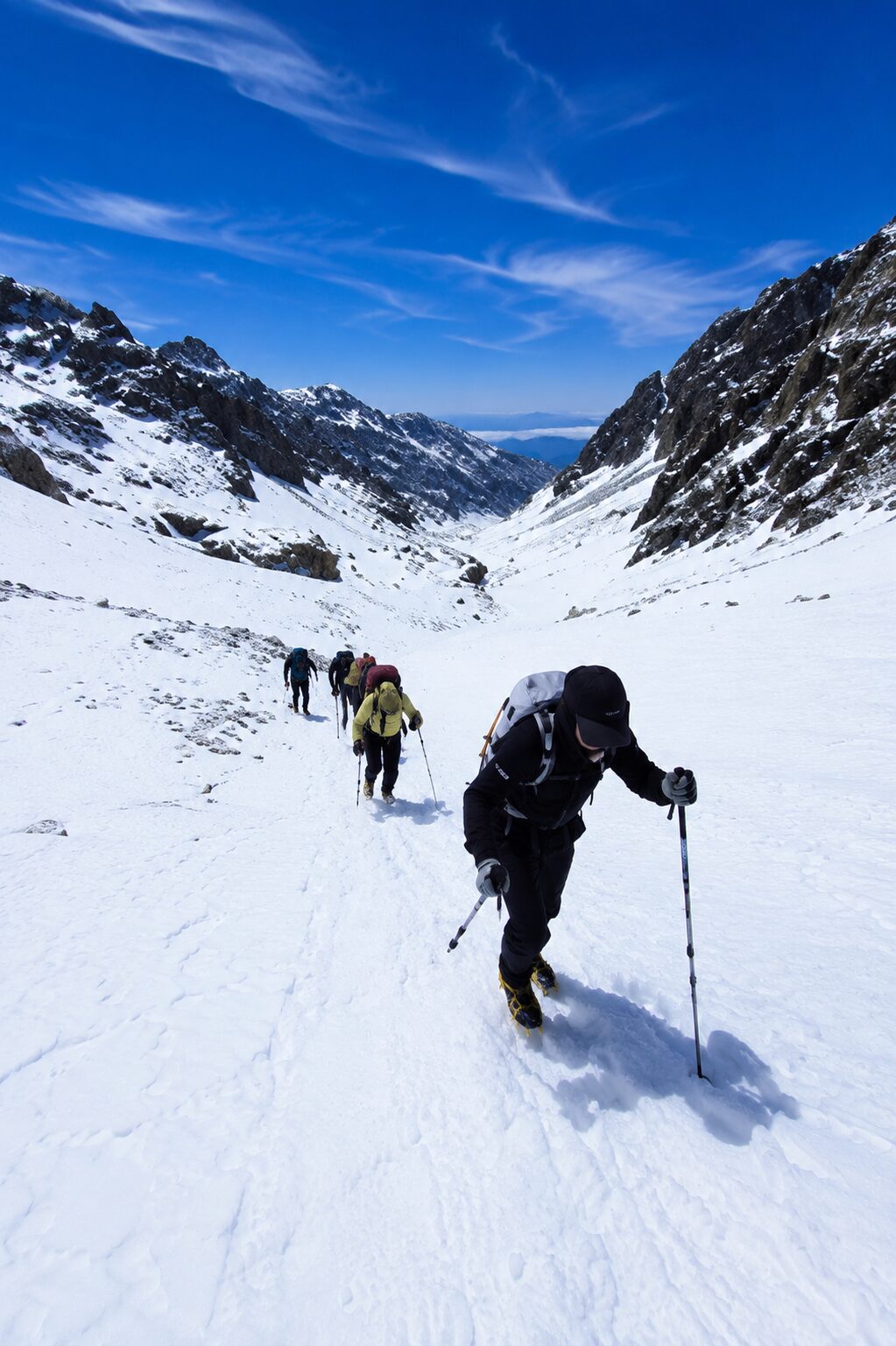
Climbing the seven high atlas peaks in winter condition while learning real expedition skills required in just seven days.
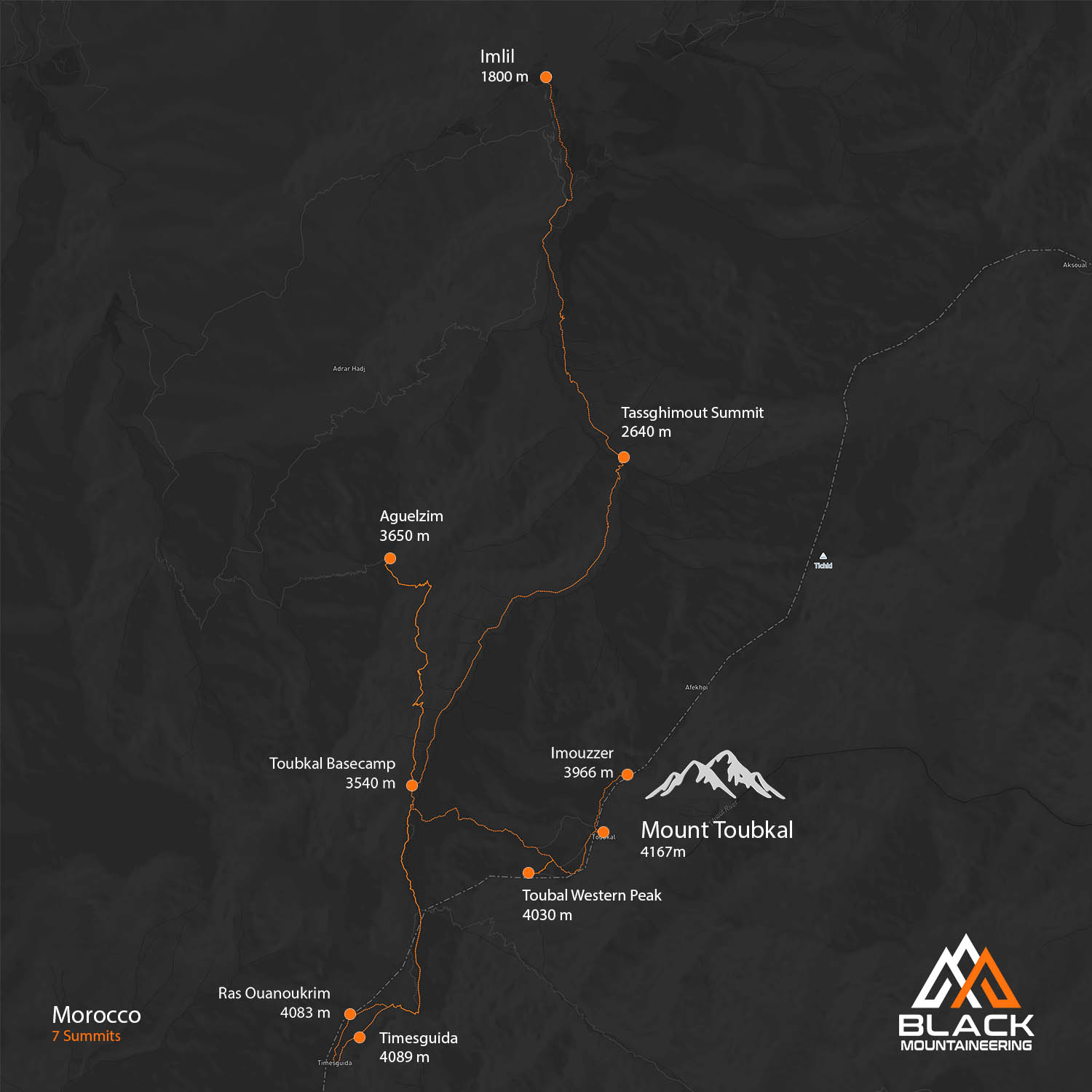
- Mt Aguelzim – 3,650m
- Mt Akioud N’bou Imhraz – 4,030m
- Mt Timzguida – 4,089m
- Ras n’Ouanoukrim – 4,083m
- Imouzzer – 4,010m
- Toubkal West – 4,010m
- Mt Toubkal – 4,167m
Within this winter expedition you will be led by our experienced UIMLA guides and WMCI Instructor.
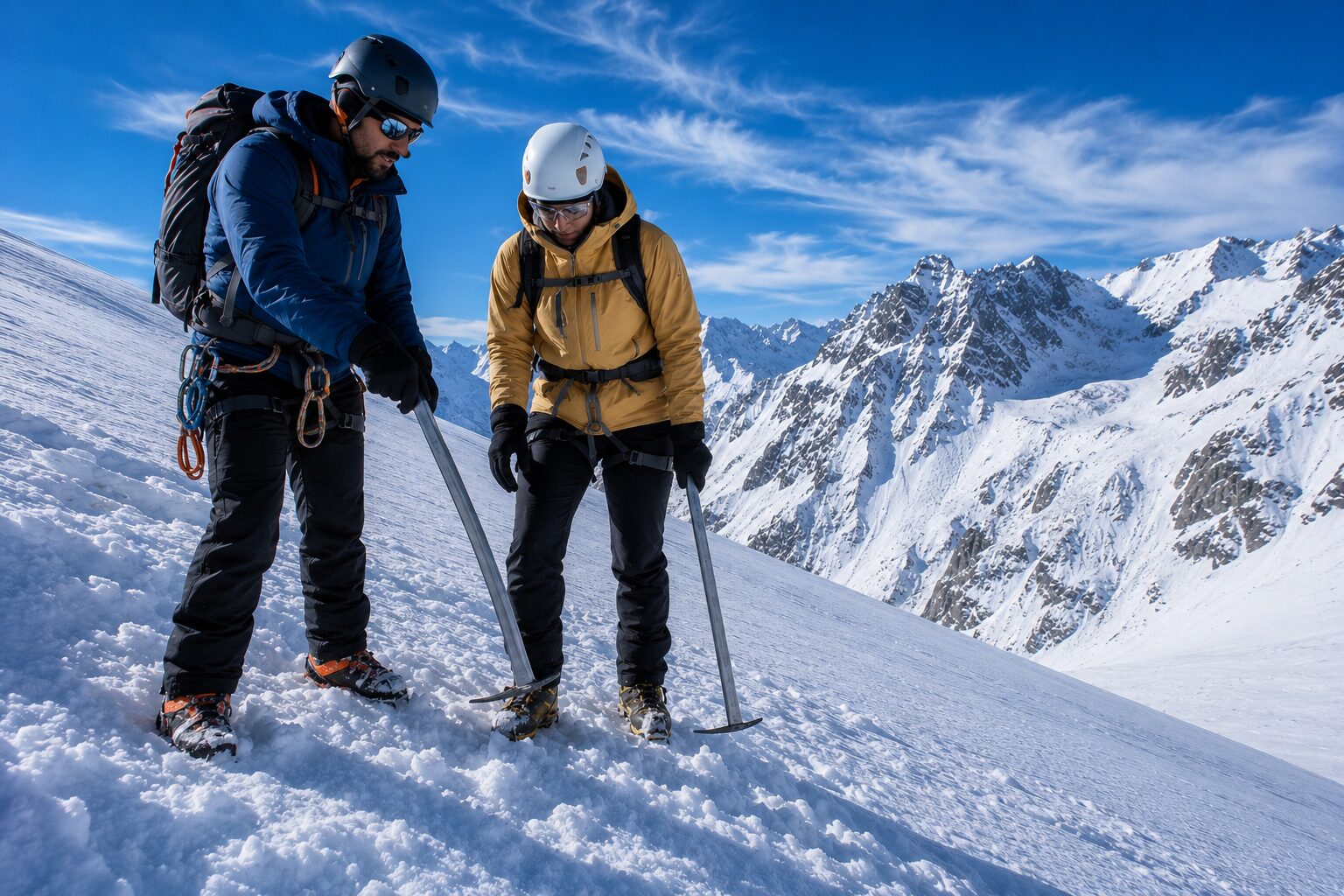
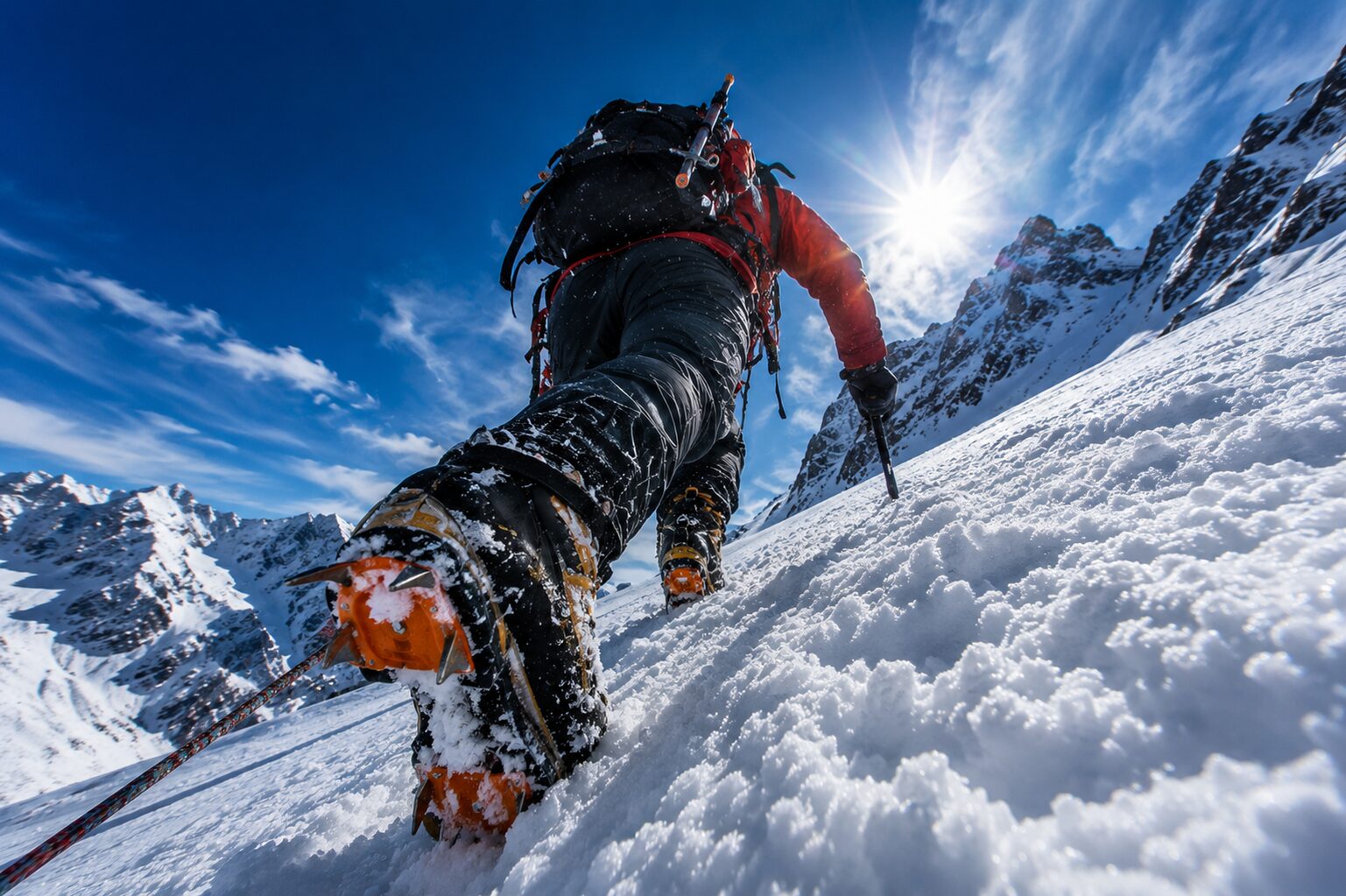
You will learn how to use crampons and an ice axe, move safely on snow and ice, self-arrest, understand avalanche awareness, improve winter navigation, and make better decisions in challenging mountain conditions.
These skills are built into the expedition each day, allowing you to learn in a real winter environment while progressing across seven High Atlas summits.
The programme is designed to prepare you for the next stage of your journey, whether that is the Alps, Mont Blanc, a 6,000-metre peak, or a future high-altitude expedition.
You will leave this expedition week with more than seven summits. You will leave with greater confidence, stronger mountain judgement, and the essential foundations for alpine mountaineering.
What You’ll Learn
Winter Equipment
-
- Winter boots and clothing systems
- Choosing and fitting crampons
- Correct use of an ice axe
- Correct use of Jumar and belay
- Packing essential winter equipment
Walking Techniques
-
- Efficient movement on snow
- Walking with crampons
- Ascending and descending steep slopes
- Traversing icy ground safely
Ice Axe Skills
-
- Holding and carrying an ice axe correctly
- Using the ice axe for balance and security
- Self-belay techniques
- Emergency self-arrest from various positions
Navigation
-
- Map and compass navigation in poor visibility
- Winter navigation techniques
- Whiteout procedures
- Route planning and decision making
Avalanche Awareness
-
- Understanding avalanche terrain
- Reading snow conditions
- Recognising avalanche hazards
- Interpreting weather forecasts and avalanche reports
- Safe route selection
Mountain Safety
-
- Winter weather assessment
- Hazard identification
- Emergency procedures
- Group management
- Communication in remote environments
Mountain Judgement
-
- Risk assessment
- Knowing when to continue or turn back
- Leadership and teamwork
- Developing sound mountain decision-making
Altitude Awareness
-
- Understanding AMS (Acute Mountain Sickness)
- Recognising the signs and symptoms of HAPE (High Altitude Pulmonary Oedema)
- Recognising the signs and symptoms of HACE (High Altitude Cerebral Oedema)
- Prevention, acclimatisation strategies, and emergency response
This course is ideal for:
- Summer hikers looking to explore winter mountains safely.
- Hillwalkers preparing for winter ascents Island peak, Mera, Mont Blanc etc
- Those planning future alpine or expedition climbing.
- Anyone wanting to gain confidence before progressing to more advanced mountaineering.
No previous winter experience is normally required, although participants should already be comfortable walking in mountainous terrain.
By the End of the Course
By the end of our Expedition Winter Skills Course you will have the confidence to:
- Travel safely on snow-covered mountains.
- Use crampons and an ice axe correctly.
- Arrest a slip before it becomes a fall.
- Navigate confidently in winter conditions.
- Understand avalanche hazards and safe terrain choices.
- Make informed decisions in changing mountain conditions.
- Plan and undertake winter mountain journeys with significantly greater competence and confidence.
At Black Mountaineering, our Winter Expedition Courses are built around our three core values—Precision, Professionalism, and Passion. We believe that technical ability alone is never enough. True winter mountaineering is about combining practical skills with sound judgement, respect for the mountains, and the confidence to make the right decision when conditions change. Our goal is not simply to teach you how to climb in winter, but to develop safer, more capable mountaineers who can enjoy the mountains for years to come.
Location
Morocco
Duration
7 Days
Route
Winter
Grade
Strenuous
Altitude
Atlas
Activity
8 hrs
itinerary
Day 1
Welcome to Morocco and the start of your Winter Skills 7 Summits Expedition.
Arrive into Marrakech, where our guide team will meet you and transfer you to your traditional riad in the heart of the city. After checking in, you’ll have time to settle in, check your equipment, and meet the rest of the team.
In the evening, we’ll enjoy a traditional Moroccan welcome dinner and expedition briefing as we prepare for the adventure ahead.
Highlights
- Arrival in Marrakech
- Equipment check
- Welcome dinner & expedition briefing
Overnight: Traditional Riad Omar, in the heart of Marrakech.
Day 2
After breakfast at 8:00 am, you’ll depart your riad at 9:00 am with our guide team for the scenic drive to the mountain village of Imlil (1,740m), where your trek begins.
Following the beautiful Mizane Valley, you’ll pass through the traditional Berber village of Aremd (1,900m) and visit the sacred shrine of Sidi Chamarouch before continuing your ascent to the Toubkal Refuge (3,200m), your mountain home for the night. Nestled beneath the towering slopes of Jebel Toubkal, the refuge offers spectacular alpine scenery and marks the perfect base for your summit attempt.
Overnight: Expedition Base Camp
Day 3
Winter Skills Training at the Refuge
After breakfast, you’ll spend the day developing essential winter mountaineering skills in a safe mountain environment. Under the guidance of our experienced instructors, you’ll learn safe movement on steep snow, step kicking and cutting, ice axe techniques, efficient crampon use, building snow belays, ascending fixed lines with ascenders, using cow’s tails correctly, and personal abseiling techniques. This practical training will prepare you for the higher summits and build confidence for the days ahead.
Overnight: Expedition Base Camp
Day 4
Today is one of the highlights of the expedition. Setting off before dawn, we make an early alpine ascent to Imouzzer (4,010m) then Toubkal West (4,020m) before continuing to the summit of Jebel Toubkal (4,167m)—the highest mountain in North Africa.
After taking time to celebrate on the summit and enjoy breathtaking views across the High Atlas Mountains, we descend to our expedition base camp for a well-earned rest.
Trek: Approximately 8 hours
Ascent: +1,100m
Descent: –1,100m
Route: Expedition Base Camp → Toubkal West (4,010m) → Jebel Toubkal (4,167m) → Expedition Base Camp
Overnight: Expedition Base Camp
Day 5
Today you’ll conquer two of the High Atlas Mountains’ finest 4,000-metre summits. Leaving camp early, we make our way to the twin peaks of Timzguida (4,089m) and Ras n’Ouanoukrim (4,083m), where spectacular views stretch across the rugged Atlas range and towards the Sahara on a clear day.
This is a rewarding mountain day that showcases the wild beauty and remote character of Morocco’s highest mountains.
Trek: Approximately 8–10 hours
Ascent: +1,050m
Descent: –1,050m
Route: Expedition Base Camp → Timzguida (4,089m) → Ras n’Ouanoukrim (4,083m) → Expedition Base Camp
Overnight: Expedition Base Camp
Day 6
Your final summit begins before dawn as we set off by headtorch for the ascent of Mt Akioud N’bou Imhraz (4,030m), one of the highest peaks in North Africa. Reaching the summit at sunrise, you’ll enjoy spectacular views across the High Atlas Mountains—a fitting finale to an incredible week in the mountains.
After descending, we’ll return to Expedition Base Camp for a well-earned homemade breakfast before trekking approximately 3 hours down to the traditional Berber village of Aremd, where you’ll experience the warmth, hospitality, and rich culture of Morocco’s mountain communities.
The afternoon is yours to relax, wander through the village, or simply soak up the atmosphere before enjoying a traditional Moroccan celebration dinner with your fellow climbers.
Trek: Approximately 8 hours
Ascent: +1,000m
Descent: –2,100m (approx.)
Route: Expedition Base Camp → Mt Akioud N’bou Imhraz (4,030m) → Aremd
Overnight: Traditional Berber Guesthouse, Aremd
Day 7
After breakfast, we depart Aremd and transfer back to Marrakech, arriving at approximately 3:00 pm.
The afternoon is free to explore the vibrant souks of Marrakech, where you can shop for traditional Moroccan gifts, spices, leather goods, and handcrafted souvenirs.
In the evening, we’ll come together for a home cooked dinner, where you’ll receive your official Seven Summit Series Winter 7 Summits Medallion as we celebrate an unforgettable week in the High Atlas Mountains.
Overnight: Marrakesh
Day 8
After breakfast, it’s time to say goodbye to Morocco and an unforgettable week in the High Atlas Mountains.
Depending on your flight time, you may have the opportunity for a final stroll through the streets of Marrakech, enjoy a traditional Moroccan coffee, or simply relax at your riad before departure.
At the appropriate time, our Black Mountaineering private expedition transfer will take you to Marrakech Airport for your onward flight home.
We hope you leave Morocco not only with seven summits conquered, but with lifelong memories, new friendships, and a deeper connection to one of the world’s most remarkable mountain landscapes.
Included
What’s Included
- 80-litre expedition duffle bag
- Welcome dinner in Marrakech
- Marrakech Riad accommodation (shared basis) with breakfast
- All airport and expedition transfers throughout the itinerary
- Elite Black Mountaineering expedition guiding team
- Private expedition cook team
- Fully supported porter team
- All mountain meals (breakfast, lunch, and dinner)
- Celebration dinner in Marrakech
- Official Winter Skills 7 Summits Medallion
What’s Not Included
- International flights to/from Morocco
- Personal travel insurance
- Guide gratuities – €100
Optional Extras
- Single room supplement in Marakesh – €80 per night
- Double or twin room extra night – €100 per night
- Sunrise Hot Air Balloon over Marrakech – €175 per person
- Private Marrakech cultural tour with local guide – €100 per group
- Private airport transfer outside the advertised itinerary – €50 per transfer
Available Dates
Requirements are:
- No previous winter mountaineering experience is required
- Previous summer hillwalking experience in mountainous terrain
- A good level of mountain fitness, capable of spending a full day in the Scottish mountains
- Comfortable walking on steep, rough and uneven terrain
- Willingness to operate in cold, wet, snowy and potentially challenging winter weather
- Appropriate winter clothing and personal equipment as detailed in your course kit list
- Participants must be physically capable of carrying their own day pack and equipment
- A positive attitude and willingness to learn and work as part of a group
12-Week Training Plan for the Expedition Winter Skills 7 Summits Challenge
This structured training plan is designed to prepare you for multi-day endurance trekking, high-altitude climbing, and challenging terrain. The focus is on cardiovascular fitness, strength, stamina, altitude adaptation, and mental resilience.
Weekly Training Schedule Overview
| Day | Activity |
|---|---|
| Monday | Strength Training + Stair Climb with Pack |
| Tuesday | Cardio (Running/Cycling) + Core |
| Wednesday | Weighted Hike (12–18 km) |
| Thursday | Strength + Endurance (Step-ups, Scrambling Practice) |
| Friday | Rest or Light Recovery (Yoga, Stretching) |
| Saturday | Long Hike (15–25 km, 1,000–1,500 m ascent) |
| Sunday | Technical Skills + Active Recovery (Swimming, Cycling) |
Phase 1
Weeks 1–4 : Building a Strong Base
Goal: Develop cardio endurance, leg strength, and hiking ability.
✅ Hiking & Trekking
- 10–12 km (6–8 miles) with a 5–10 kg pack.
- 600–800m elevation gain.
- 3–5 hours duration.
- Train slow and steady pacing (important for multi-day treks).
✅ Strength Training (2 x per week)
- Squats – 3 sets of 12 reps.
- Lunges – 3 sets of 10 reps per leg.
- Step-ups (50 cm box) – 3 sets of 12 reps per leg with a weighted pack.
- Planks – 3 x 1 min (for core strength & balance).
- Pull-ups – 3 sets of 6 (for scrambling & upper body endurance).
✅ Cardio Training
- 45–60 min runs or cycling/swimming at a moderate pace.
- Stair climbing (30 min with a 5-7 kg pack).
- Rowing (for upper body endurance and lung capacity).
✅ Technical Skills & Terrain Familiarisation
- If possible, hike on rocky, uneven terrain.
- Practice scrambling movements (use hands on rocky terrain).
- Use trekking poles efficiently.
Phase 2
Weeks 5–8: Strength, Altitude & Endurance Boost
Goal: Increase hiking difficulty, endurance, and pack weight.
✅ Hiking & Trekking
- 12–18 km (7–11 miles) with a 10–12 kg pack.
- 800–1,200m elevation gain.
- 6+ hours duration.
- Back-to-back hikes on weekends to simulate fatigue.
✅ Strength & Stability (2 x per week)
- Step-ups (50 cm box) with a 12 kg pack – 3 sets of 15 reps per leg.
- Deadlifts – 3 sets of 8 reps (for lower back strength).
- Farmer’s Carry (15 kg per hand) – 3 sets of 30m (for grip & backpack strength).
- Planks & Hanging Leg Raises (for core & stability).
✅ Cardio & Endurance
- 60 min continuous run, cycling, or swimming.
- Interval running (5x 3 min fast, 3 min slow).
- Rowing or stair climbing for 40 min with 8 kg pack.
Phase 3
Weeks 9–12 : Peak Performance & Multi-Day Trek Simulation
Goal: Simulate multi-day trekking, maximise endurance, and test gear & nutrition strategies.
✅ Hiking (Most Important)
- 15–25 km (10–15 miles) with a 12–15 kg pack.
- 1,200–1,500m elevation gain.
- Back-to-back hikes (Saturday & Sunday) – 8+ hours each day.
- Summit a local peak if possible (to simulate fatigue & altitude).
✅ Final Strength & Endurance Training
- Stair Climbing (45–60 min with 12 kg pack).
- Bulgarian Split Squats – 3 sets of 12 per leg.
- Planks & Hanging Leg Raises – 3 sets of 1 min.
✅ Technical & Mental Training
- Scrambling on rocky terrain (if possible).
- Long hikes starting at 3 AM to simulate early summit starts.
- Train in extreme conditions (cold, wind, rain, altitude exposure).
✅ Recovery & Injury Prevention
- Cold showers & ice baths to prepare for extreme temperatures.
- Stretching & foam rolling to prevent muscle tightness.
Final 2 Weeks (Taper & Recovery)
🔹 Reduce heavy training (Taper).
🔹 Focus on mobility, stretching, and rest.
🔹 Test your full gear & pack during a light hike.
🔹 Hydration & nutrition strategy practice.
Key Training Tips
✅ Train in your boots & backpack early (no last-minute surprises).
✅ Use trekking poles to protect knees on long descents.
✅ Practice slow, steady breathing at altitude.
✅ Train with varied terrain (loose rock, scree, snow if possible).
✅ Hydration & nutrition practice – Know what fuels you best.
✅ Recovery matters! – Foam roll, stretch, and prioritise sleep.
If you check all the boxes, you’re ready:
✅ Can you hike 1,500m+ with a 5-7 kg pack?
✅ Can you handle 8–10 hour hikes back-to-back?
✅ Have you trained in cold, high-wind conditions?
✅ Are you comfortable with scrambling & rocky terrain?
Use my Great outdoors
Discount code GOJB15
Bags
80-litre expedition duffle bag
Mountaineering Backpack 65L
Base Layers
Merino Wool Underwear (4 pcs)
Merino long sleeve base layer (1 pcs)
Merino long pants base layer (1 pcs)
Short Sleeve T Shirt (4 pcs)
Mid Layers
Fleece (1pcs)
Hiking shorts (1pcs)
Mid weight Hiking Pants (1pcs)
Lightweight Hiking Pants (1pcs)
Windproof/Rain Layers
Hard Shell Jacket (1pcs)
Hard Shell Pants (1pcs)
Insulation Layers
800+gram down Jacket with hood
Lite puffer jacket
Headwear
Warm Hat (2pcs)
Balaclava (1pcs)
Baseball Cap (1pcs)
Buff (2pcs)
Eyewear
Sun Glasses
Gloves
Lightweight Liner Gloves
Leather Guide Glove
Footwear
Mens Mountaineering boot
Womens Mountaineering boot
(B2 – compatible with semi-automatic crampons)
Hiking socks (4pcs)
Trekking shoes
Trekking socks (3pcs)
Refuge Shoes – crocs or sandals.
Sleeping Equipment
Lite Bag for refuge
Earplugs
Mountaineering Gear
Climbing Helmet
Ice Axe
Crampons
Climbing Harness
Ascender (left or right hand)
ATC Belay device
2 x Screw gate carabiners
Travel Items
Travel Clothes
Passport 6mts Valid
Cash
Visa Card
ATM card
Insurance
Additional snacks
Salty-sweet bars
Summit gels
Nuts
Medical/First Aid
Compeed blister packs
Sutures & steri strips
Ibuprofen
Paracetamol 500mg
Antibiotic Azithromycin 500mg
Laxatives
Imodium
Electrolytes
Nail cutter
Duct tape – Repair Kit
Hand & Feet chemical warmers
Toiletries (Personal)
Toilet Paper
Toothpaste &Toothbrush
Bio Baby wipes (2pcs)
Soap
Shampoo
Shaver
Towel
Small nail-brush
Sunscreen: SPF 50
Lip Screen: SPF 30
Aftersun
Additional Item
Headlight 500-700 Lumens
– & charing leads
Trekking poles
Water Bottles 1- liter (2pcs)
Optional Electronics
Country-appropriate plug adapters
Power Bank
Phone & charging leads
See more about our payment policy Here
On Booking your expedition our returns policy can be viewed here

Participants must have travel insurance that covers:
- Medical Expenses €10,000,000
- Baggage (optional) €3,000
- Trip Cancellation €9,000
- Personal Liability €2,000,000
- Trekking up to 4,500 metres
Bring your policy details in the event required.
We strongly recommend True Traveler.
Instructions:
Single trip – Adventure pack – Winter Sport