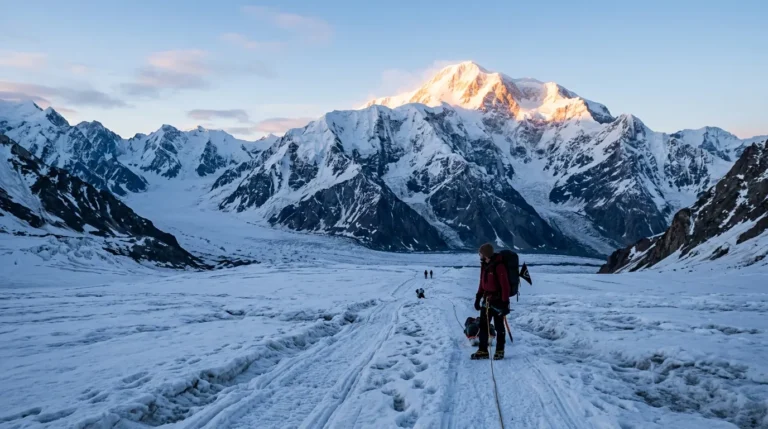
There is a particular kind of quiet that settles over Cronin’s Yard at eight in the morning before a hike begins. Boots are being laced. Packs are being weighed by hand, one last check for the things that matter. Nobody is talking about conquering anything. They are talking about the weather, the pace group they have chosen, and whether they packed enough water.
That quiet is the real starting point of the Ireland 7 Summits Series.
Seven ranges. One season, running from March through to September. A route that carries you from Carrantoohill in County Kerry, the highest point in Ireland, all the way to Errigal in Donegal, where the Seven Sisters ridge falls into the Atlantic light. This is not a single big day out. It is a structured, seven-month relationship with the Irish uplands, and it rewards people who respect that timeline rather than rush it.
Why Ireland 7 Summits Series Ranges, Not One Big Peak
Ireland does not have an 8,000-meter giant to chase. What it has instead is variety, and that variety is the entire point of this challenge. Granite in the Mournes. Glaciated Devonian sandstone in the Reeks. Ancient gneiss and schist out along the Ox Mountains. Each range asks something different of your legs, your navigation, and your patience.
That is why the challenge is built the way it is. You are not repeating the same terrain seven times. You are learning to read seven different mountains, and by the time you reach Donegal in September, you are a different hiker than the one who signed in at Cronin’s Yard back in March.
The Ireland 7 Summits Ranges, In Order
- MacGillycuddy’s Reeks, County Kerry, 21 March: Starting and finishing at Cronin’s Yard, this range is home to Carrantoohill itself, standing at 3,414 feet. Distances run from 10k to 18k depending on your grade, with an 8.5-hour hike duration. This is where the season opens and where most hikers set the tone for everything that follows.
- Mourne Mountains, County Down, 18 April: Beanna Boirche, in the Mournes, rises straight out of the Irish Sea at Carlingford Lough. Granite peaks that have stood for over 2.6 million years. Starting from Meelmore Lodge, distances stretch 13k to 20k over roughly 7 hours.
- Twelve Bens, Connemara, County Galway, 16 May: A rugged, dramatic range with Benbaun as its highest point, including the well-known Glencoaghan Horseshoe. Based at Kylemore Organic Farm and Campsite, distances run 13k to 20k over 6.5 hours.
- Ox Mountains and Nephin National Park, 6 June: Stretching across Sligo and Mayo along the western seaboard, this is ancient ground, with gneiss, schist, and granite reaching 544 meters at Knockalongy. Wild Nephin National Park sits alongside it, with the Owenduff and Tarsaghaun river systems and remote corrie lakes. Distances of 10k to 18k over 8 hours, starting from the north of Bothy Wild Camping.
- Galtee Mountain Range, 18 July: Galtymore is classified as a major mountain and counts among the 13 Irish Munros, part of a range built from sandstone and shale with 24 peaks above 100 meters. Starting from the car park at Galtymore, distances run 13k to 18k over 8 hours.
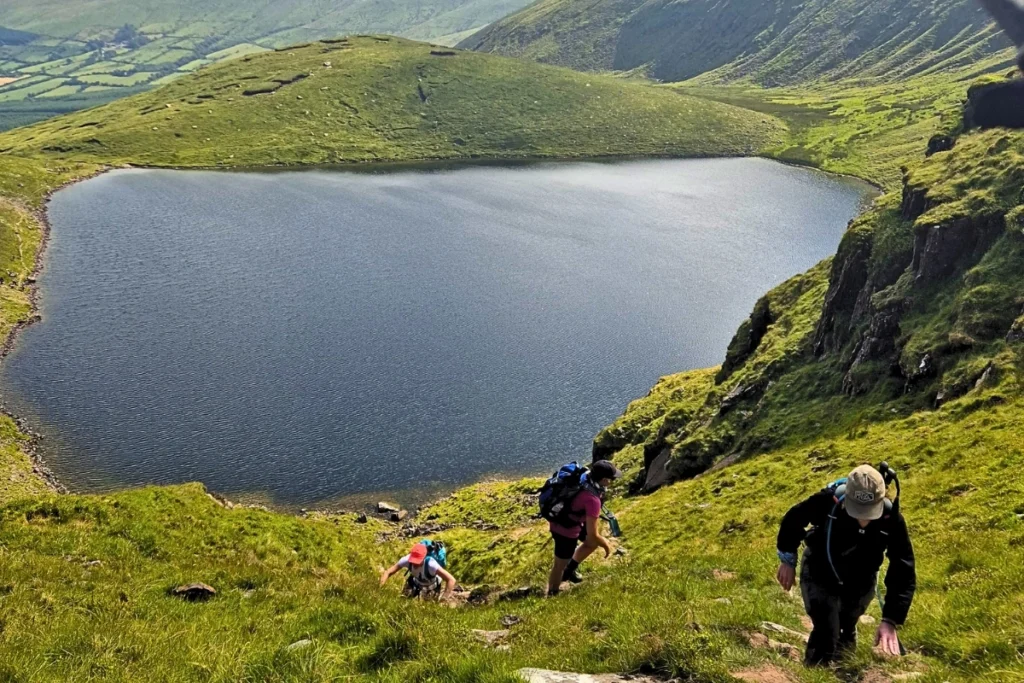
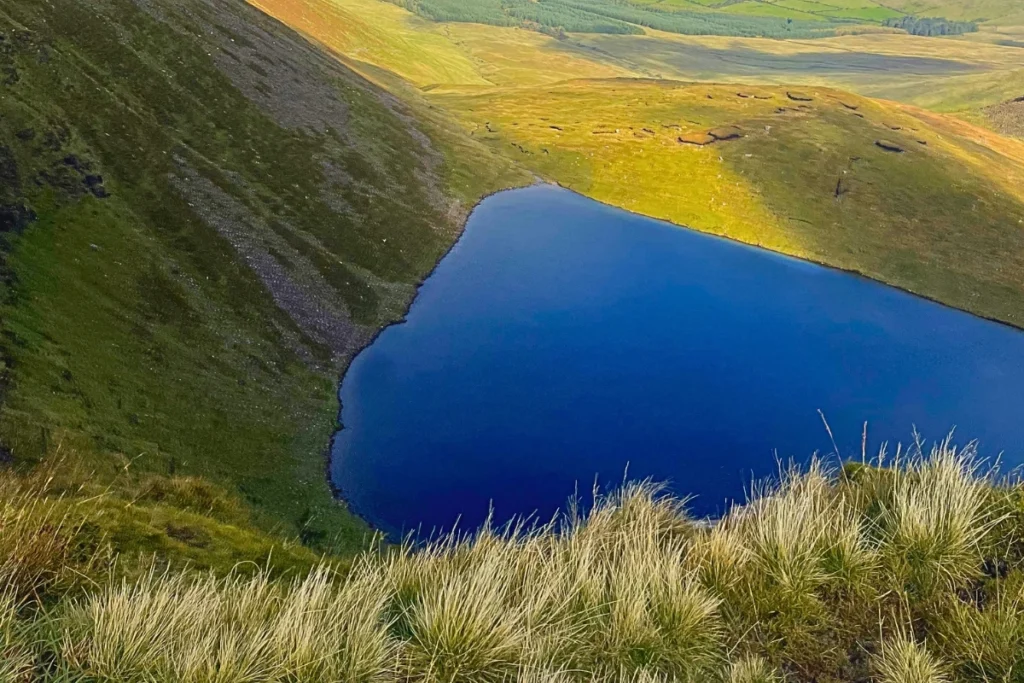
- Comeragh Mountain Range, County Waterford, 15 August: Home to Mahon Falls, an 80-meter waterfall with easy access, and Coumshingaun Lough, a glacier-carved corrie lake with a genuinely demanding hike around it. Starting from Powers The Pot, this is the longest day of the season at 10 hours, covering 13k to 18k.
- Seven Sisters, Donegal, 5 September: The season closes at Errigal, the highest point of the Derryveagh Mountains at 751 meters, alongside Muckish Mountain and the wider Glenveagh National Park. Starting from the Errigal car park, distances run 15k to 21k over 10 hours. This is where seven months of preparation gets its answer.
Understanding The Grades
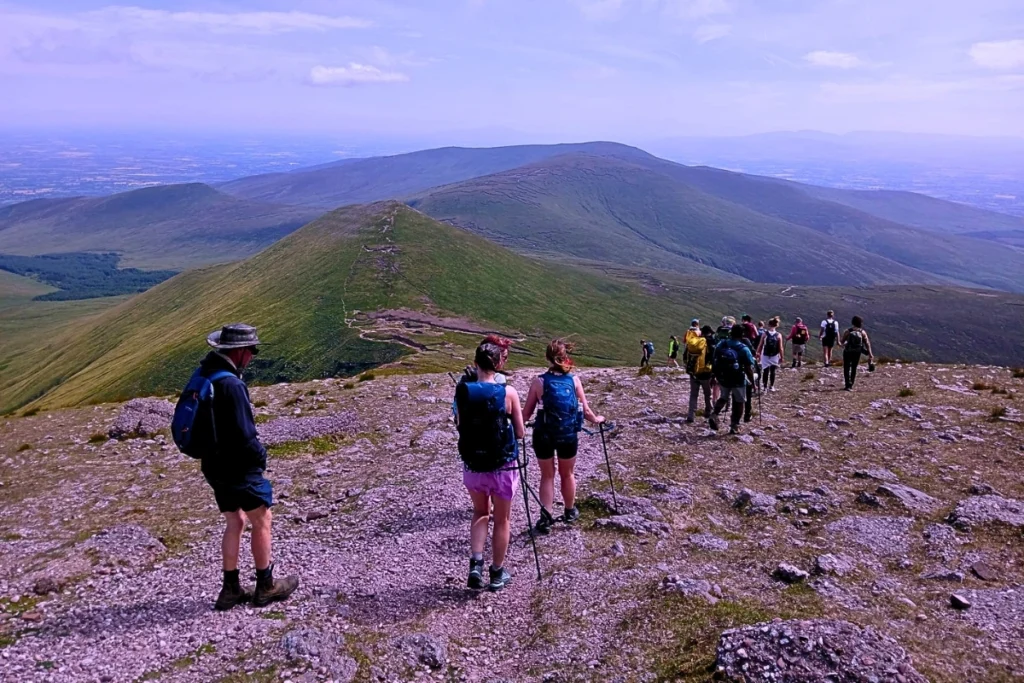
Every range within the challenge is offered across up to four grades, Standard, Intermediate, Advanced, and Advanced Plus. This is not a marketing distinction. It changes your distance, your pace, and, in the case of Advanced Plus, your required kit.
Standard and intermediate suits are for hikers who are fit, capable on uneven ground, and comfortable spending most of a day outdoors. Advanced steps up both distance and terrain exposure. Advanced Plus asks for genuine self-sufficiency and requires you to carry a compass, a map of the area, and a 120 cm, 8 mm sling as a mandatory kit, alongside everything else on the standard list.
Choosing your grade honestly matters more than choosing it ambitiously. The mountain does not care what you intended to be capable of. It only responds to what you actually bring to it.
Safety, Guiding, and What You Are Not Doing Alone
Every hike in the series is led by qualified Black Mountaineering mountain guides, with qualified first-aiders present throughout. Routes are expertly designed with the terrain and weather patterns of each range factored in ahead of time, not worked out on the day.
Alongside the core challenge, the Ireland 7 Summits Mountain Skills program offers accredited training with Mountaineering Ireland, covering practical navigation, route planning with map and compass, interpreting contour lines, mountain weather forecasting, and emergency procedures. For hikers moving toward the Advanced Plus grade, this training is not an optional extra polish. It is the foundation the grade assumes you already have.
The Community You Did Not Expect
Most participants arrive solo. Roughly eight out of every ten hikers on this challenge sign up alone, not with a group of friends. What happens across the season is that the group become friends. You share a basecamp tent in the Mournes in April. You are still trading messages with that same person by the time you reach Donegal in September.
Black Mountaineering runs Leave No Trace base camps on the eve of most hikes, close to the start point, keeping accommodation costs low and giving hikers who have never tented before a low-pressure way to try it, surrounded by people who have already done it themselves.
Key Takeaways And Gear Checklist
Before you commit to a range, or the full seven, here is what actually needs to be in your pack.
Mandatory Kit List
- Waterproof jacket and trousers
- Walking boots
- Hiking socks and trousers
- Fleece top and a lightweight puff jacket
- Backpack, 20 liters
- Water container, 1 to 2 liters
- Mountain snacks
- Gloves and a hat
Advanced Plus Only
- Compass
- Map of the area
- 120 cm 8 mm sling
Personal First Aid
- Blister patches, bandages, medical tape, plasters, and painkillers
If Camping Overnight
- Personal tent, sleeping bag, sleeping mat, head torch, pillow, camp food, spork, and platespork.
Nutrition For The Day
- Roughly 4 sandwiches, 2 chocolate bars or slices of fruitcake, and 2 liters of water with hydration salts
What Finishing Actually Means
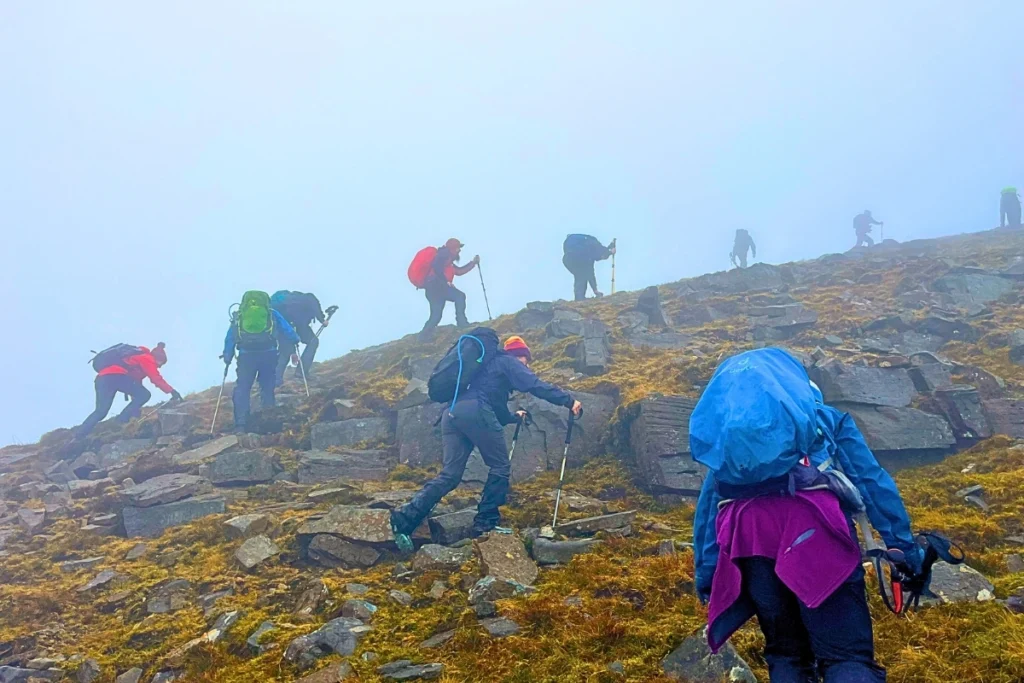
Nobody walks away from seven Irish ranges in one season unchanged. The transformation is not announced anywhere in the itinerary, and Jason will not tell you it is coming. It shows up quietly, somewhere around the fourth or fifth range, when you notice you are reading the weather before you are told it or pacing yourself without being asked to. That is the real summit of this challenge, and it has very little to do with altitude.
Join the Ireland 7 Summits Series. Book a single range from €59, or commit to all seven for €349.