6,190 Meters. No Porters. No Shortcuts.
I’ve guided climbers up Everest, K2, and now Denali more times than I can count on two hands, and I still get the same question before every Denali expedition. Climbers with 6000 m summits already behind them ask me, half joking, half serious, how hard can it really be compared to Everest?
It’s a fair question. And it’s the wrong one.
Denali isn’t Everest’s smaller cousin. It’s a different animal entirely, and treating it like a warm-up climb is how strong, experienced people end up in trouble on the Kahiltna Glacier.
The Numbers That Actually Matter
Denali rises to 6,190 m, the highest point in North America and one of the world’s seven summits. On paper that’s a modest number next to an 8000 m Himalayan giant. But paper doesn’t account for what Denali actually is.
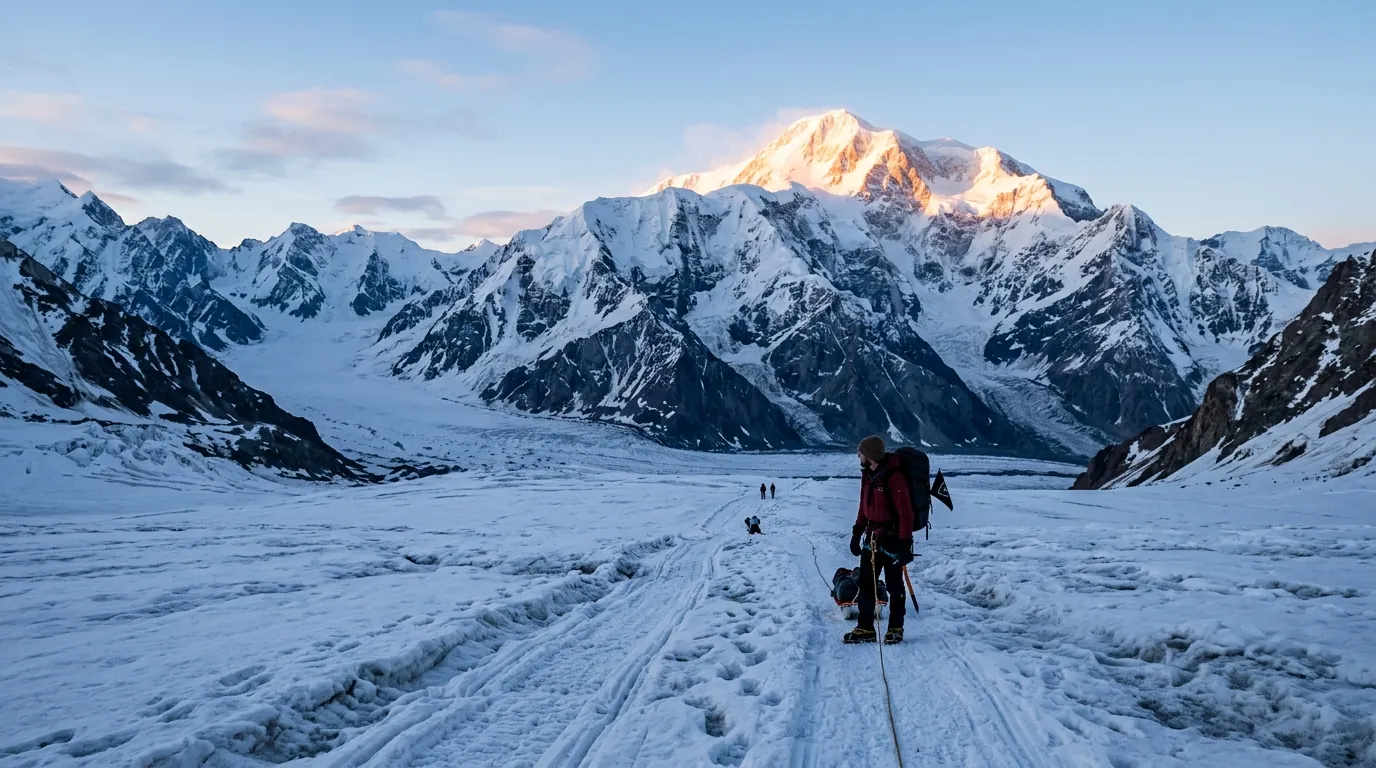
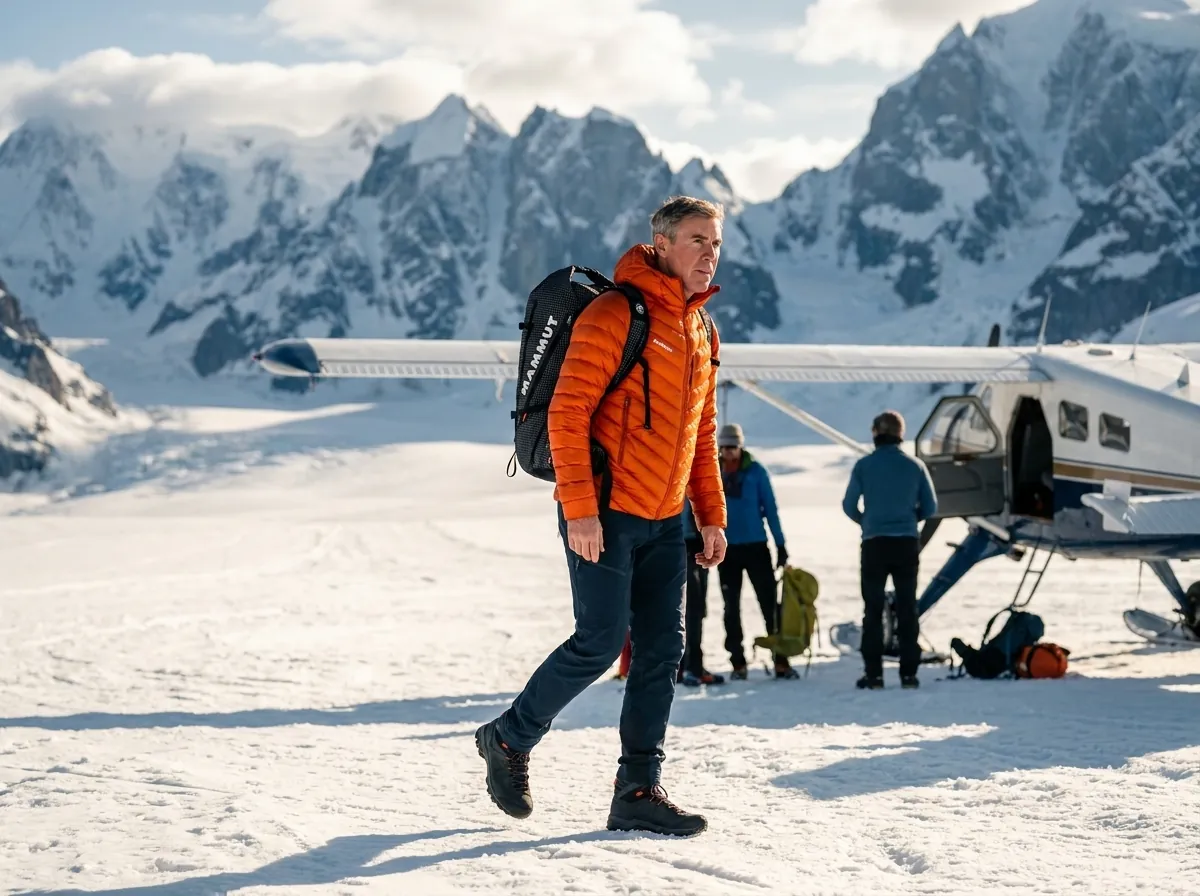
The mountain rises roughly 5,000 to 6,000 meters from base to summit, a vertical relief greater than Everest’s own rise from the Tibetan Plateau. You’re not flying into a high-altitude base camp here. You’re landing by ski plane on the Kahiltna Glacier at 2,194 m and climbing every single meter of that relief yourself.
Twenty-one days, arrival to departure. Eight to ten hours of daily activity. Grade: Very Difficult. Those aren’t marketing numbers. They’re what the mountain requires.
Why Denali Isn’t Everest’s Little Brother
Here’s where the comparison actually matters, because it changes how you should prepare.
On many guided Himalayan expeditions, climbers move with substantial logistical support. Loads get moved by other hands. Camps are often already established by the time a climbing team arrives at them.
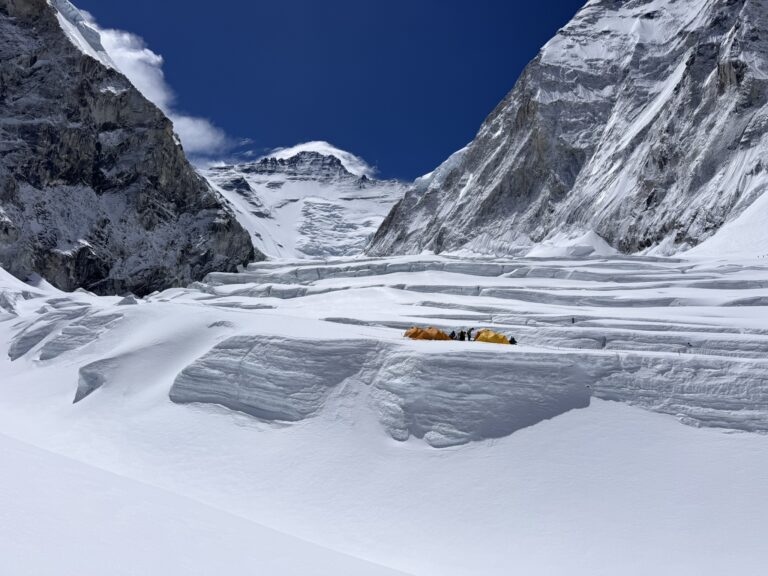
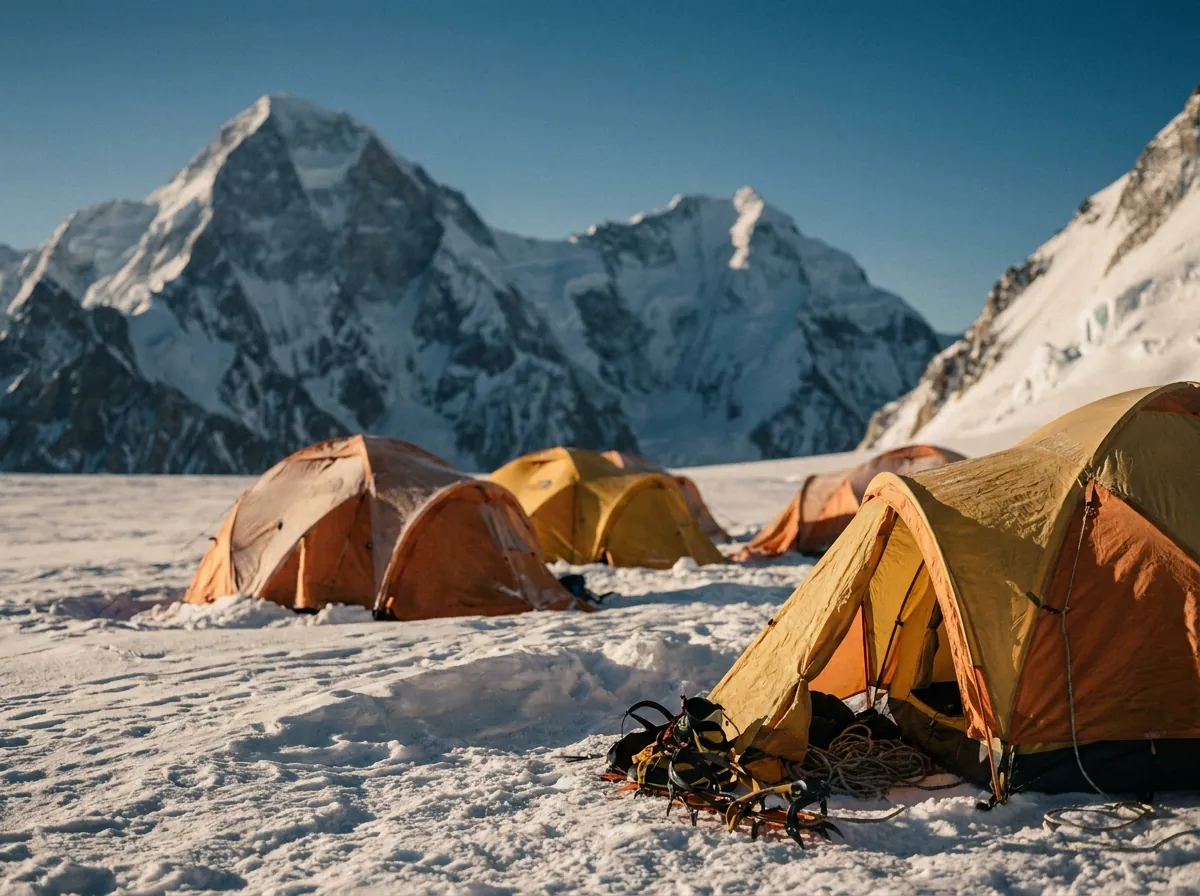
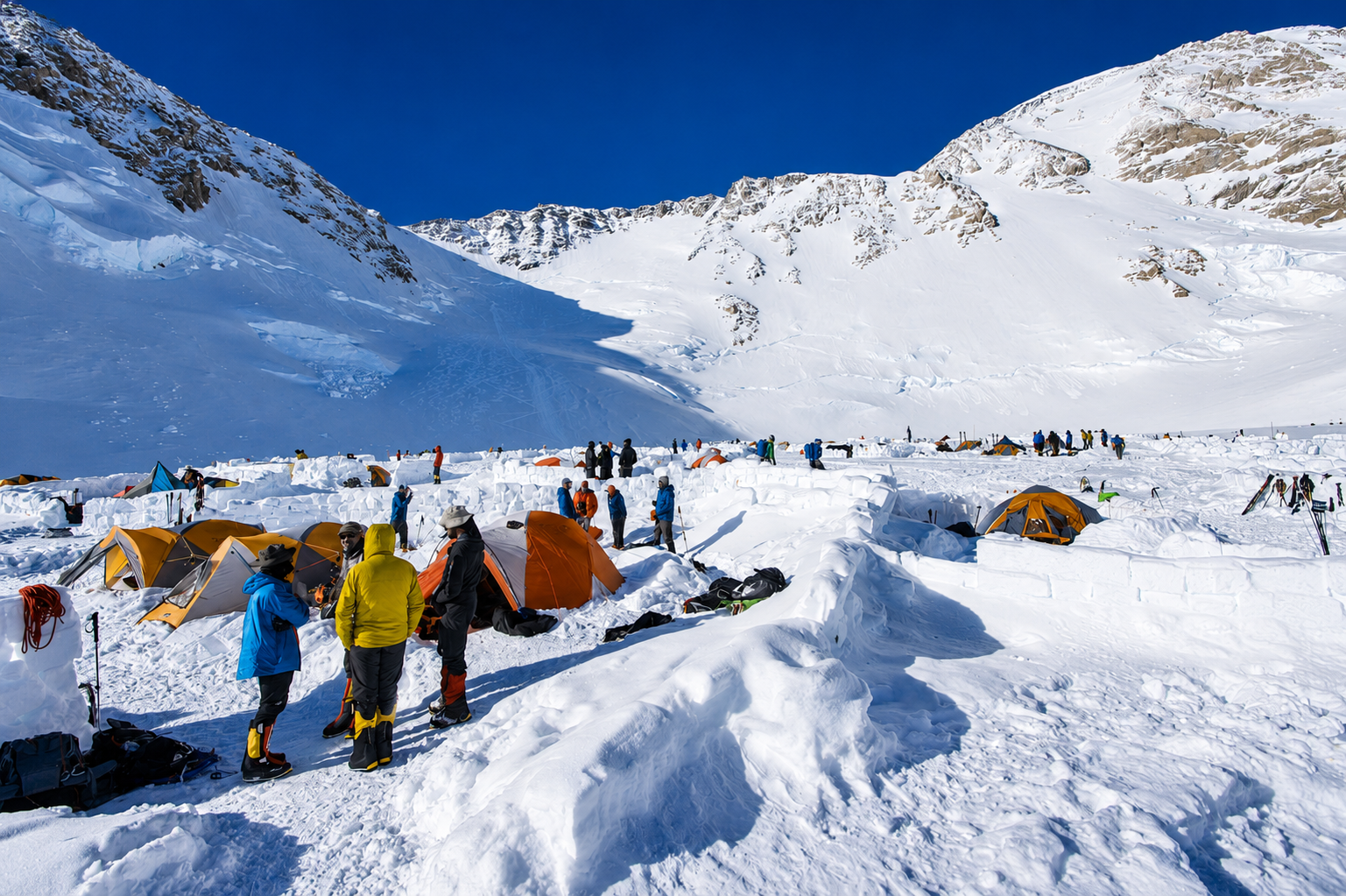
Denali strips that away entirely. There are no porters carrying your gear up the West Buttress. Every kilogram of food, fuel, and equipment that gets you from Base Camp to the summit gets there because you and your team carried or hauled it, camp by camp, cache by cache. Early in the climb, that means rigging expedition sleds and moving them roped together across crevassed glacier terrain. Above Camp 3, the sleds get left behind, and everything shifts onto your back for the push-ups on the fixed lines of the Headwall and onto the West Buttress itself.
Then there’s the cold. Denali sits far enough north that its latitude adds a real physiological penalty. Barometric pressure at altitude behaves differently this close to the Arctic Circle, meaning the mountain feels higher than its elevation suggests. Add wind that regularly reaches speeds strong enough to end a summit attempt outright, and you have an environment that punishes complacency fast.
This is the honest answer to “Denali vs Everest.” It isn’t about which mountain is taller. It’s about which one asks more of you personally, with less standing between you and the consequences of a bad decision.
What the Climb Actually Demands
A Denali expedition with Black Mountaineering moves through the mountain in stages, and every stage exists for a reason.
We begin in Anchorage, transfer to Talkeetna for registration with the National Park Service, and then fly by ski aircraft directly onto the Kahiltna Glacier. From Base Camp, the route unfolds through Camp 1, Camp 2, and Camp 3, each move built around carries and caches that let the body adapt to altitude before the load increases. Motorcycle Hill, Windy Corner, and Squirrel Hill each mark a shift in terrain and effort.
Above 14 Camp, the mountain changes character completely. The headwall protects roughly 800 vertical feet of fixed lines through 50- to 55-degree snow and ice. Above that, the West Buttress opens onto some of the most exposed terrain in North American mountaineering, leading to High Camp at 5,242 m.
Summit day itself runs 14 to 18 hours round trip, and it is entirely dictated by weather. Teams can and do wait several days at High Camp for a window that never fully guarantees itself. That waiting isn’t failure. It’s respect for a mountain that doesn’t negotiate.
To even stand at the start line, climbers need genuine high-altitude experience, including a prior 6000m summit, strong mountain fitness, comfort in glaciated terrain, and confidence with crampons, harness, rope systems, and fixed lines. A recognized winter skills course isn’t a suggestion here. It’s the baseline.
Small Teams, Real Judgment
We guide Denali with a maximum ratio of two climbers to one guide. That isn’t a marketing figure either. On a mountain where every rope team decision, every read of the weather, and every call to turn back matters, a small team means a guide who actually knows each climber’s pace, their tells when altitude starts working against them, and when to make the harder, safer call.
Key Takeaways
- Denali’s difficulty comes from self-sufficiency, cold, and total weather dependence, not just elevation
- Every climber carries and hauls their own share of the load; there is no porter system
- A prior 6000 m summit and completed winter skills training are genuine prerequisites, not formalities
- Summit day runs 14 to 18 hours and is never guaranteed; patience is part of the skill set
- Small guided teams allow for closer judgment calls in a mountain environment with little room for error
Closing Thought
Climbers arrive at Denali thinking they already understand what a big mountain asks of them. Most leave understanding they didn’t, not fully. That’s not a criticism. It’s what makes this mountain worth training for properly and worth respecting long before you ever set foot on the Kahiltna Glacier.
Practical Info
Requirements Checklist
- Prior summit of a 6000 m peak
- Strong mountain fitness with multi-day expedition endurance
- Comfort operating in remote, glaciated terrain
- Confidence with crampons, ice axes, harnesses, and rope systems
- Completed recognized winter skills training
Recommended Training Duration:
Four to five months of structured, mountain-specific training for climbers already at a strong fitness base. Those starting lower should begin earlier.
Equipment Essentials
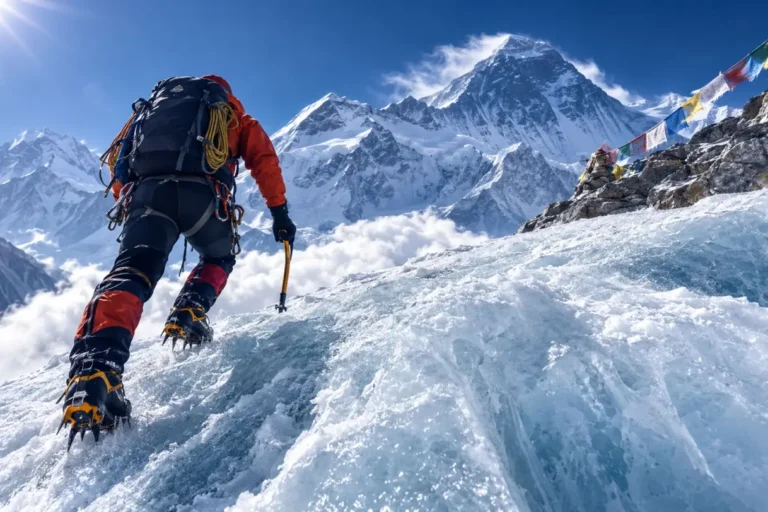
Expedition rated sleeping bag (approximately minus 29°C), 12-point crampons with anti-balling plates, mountaineering ice axe, climbing harness, UIAA approved helmet, high-altitude boots compatible with your crampons, and a large expedition backpack of 90 to 100+ litres.
Full Info Pack: