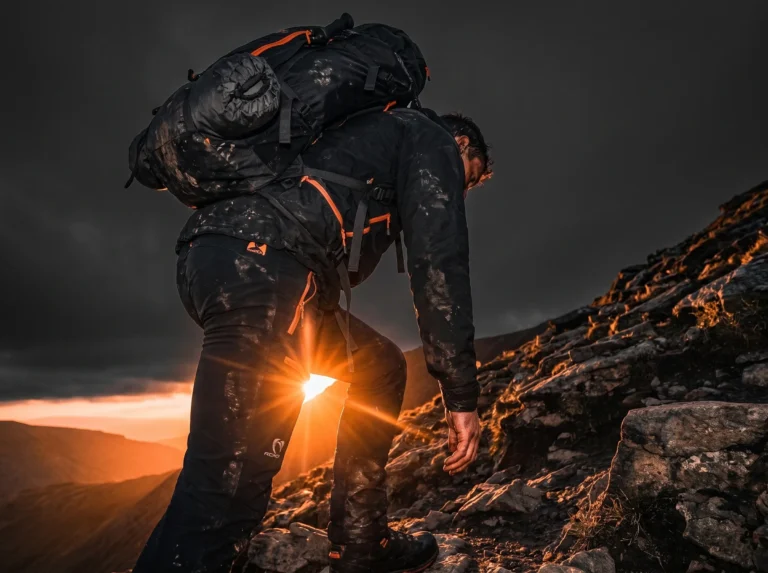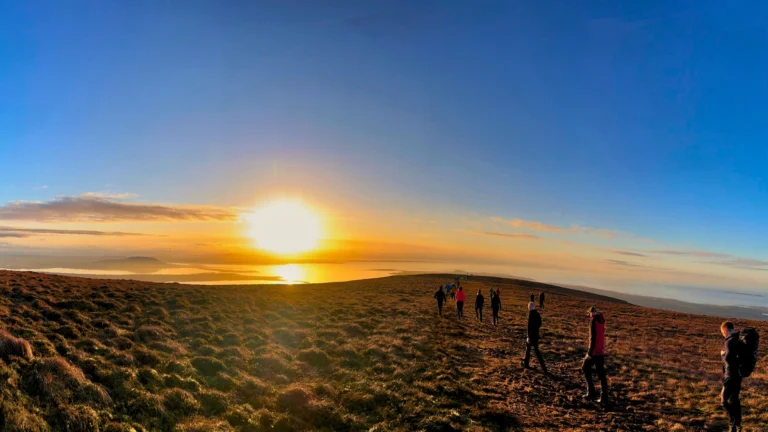
It’s 1am in a car park at the foot of Slieve Donard. Rain is coming sideways off the Irish Sea, and a small group stands in the glow of head torches, zipping up shells and stamping cold feet. Nobody says much. Before anyone takes a step, I’m already working. I check boots, count heads, and run through the timings I’ve gone over a dozen times since the forecast landed that afternoon.
That’s guided winter hiking in Ireland, and it starts long before you reach the trailhead.
People sometimes picture a guide as someone who walks at the front and knows the way. That’s part of it, but it’s the smallest part. A good guide has read the weather days out and planned where the group can drop off the hill if conditions turn. They’ve checked your kit the night before, and they’ve decided in advance the point where the day ends for anyone who can’t hold the pace. You might never see most of that work. When it’s done properly, all you notice is a day that runs smoothly on ground that doesn’t make it easy.
This article covers what a guided winter hike in Ireland should give you, how we run our Ireland Winter Hiking Series, and how to get the most out of a winter mountain day with a team around you.
Why Winter Changes Everything on the Irish Hills
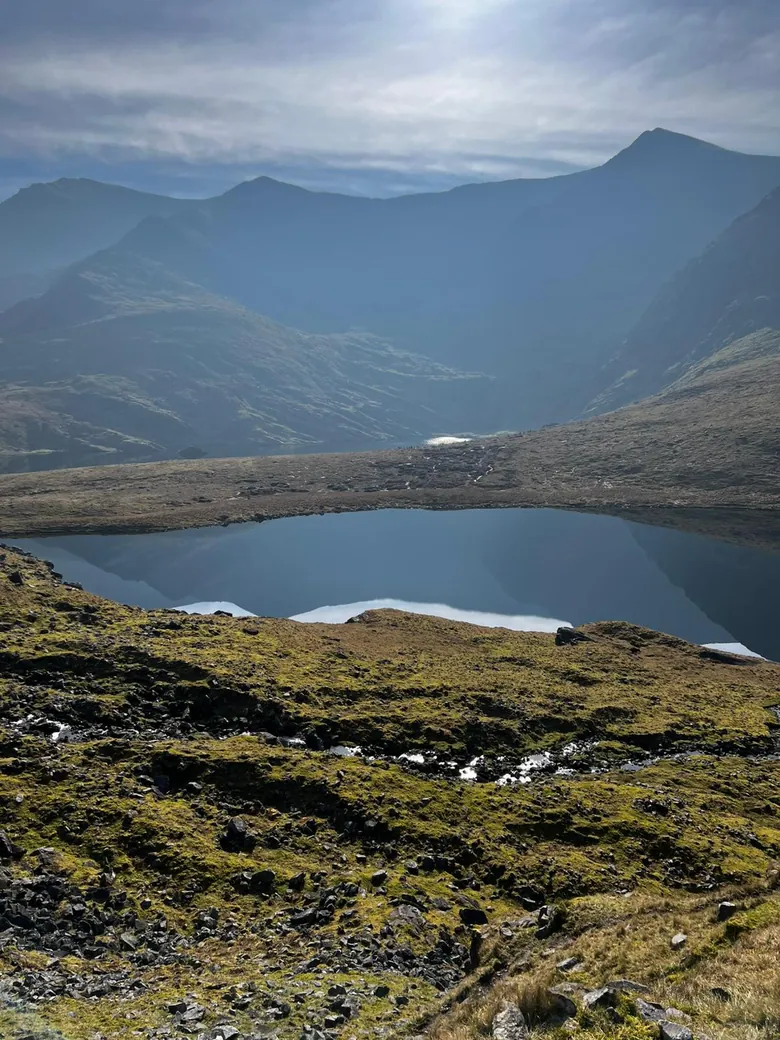
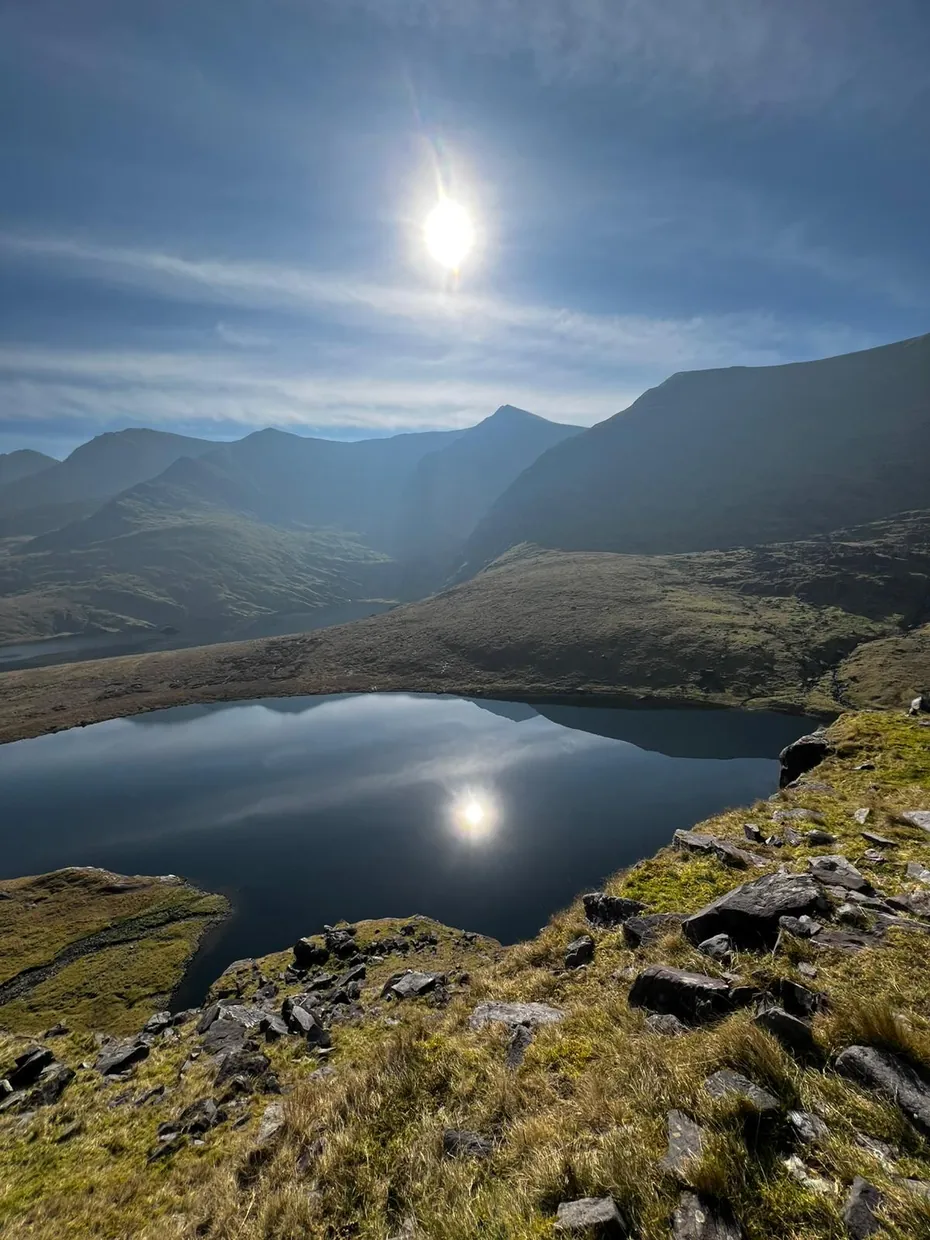
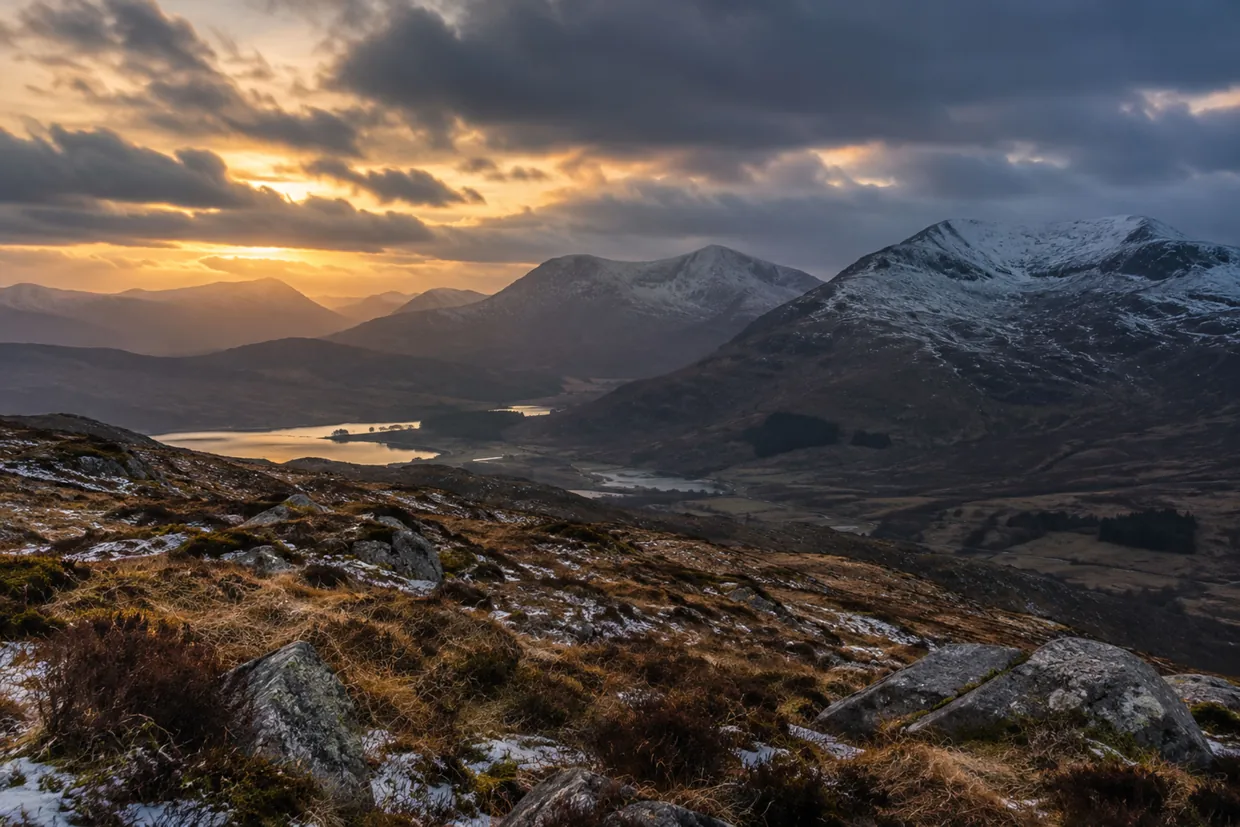
Irish mountains aren’t high. Slieve Donard stands at 850 m and Mount Brandon at 952 m. Don’t let those numbers fool you. In winter the light is gone by late afternoon, and the ground is saturated. The wind comes in off the Atlantic or the Irish Sea with nothing to slow it down. Granite that grips in July turns greasy in November, and a path you walked in summer can disappear in the cloud.
Our route sheets describe the terrain in five words: mountain, steep ground, and wet underfoot. It’s an honest summary. These are long days of sustained effort, and your margin for error shrinks as the temperature drops and the daylight shortens.
That’s why winter is the season when guiding matters most. Summer forgives small mistakes. Winter stacks them up.
What a Guide Does Before You Arrive
Reading the weather properly
I start watching the forecast for an event well before the weekend. It’s more than the headline temperature. I look at wind speed and direction at summit height, cloud base, freezing level and how fast the fronts are moving through. Each one tells me something different about how the day will go. A strong westerly on an exposed ridge is a very different problem from the same wind on the sheltered side of a wall.
Every one of our route sheets carries the same line: final route decisions remain with the guiding team and may be adjusted to suit winter mountain conditions. That isn’t small print. It’s the core of the job. The route on paper is the plan. The route on the day is the one the weather allows.
Planning the way off the hill
Every long winter route needs exits. Before I commit a group to a ridge, I know where we can drop down if the wind picks up, if someone gets hurt, or if the pace falls behind. On our Advanced Dingle route, for example, Conor Pass sits around the 12 km mark. It’s a natural checkpoint on a road, and a car waits there to take anyone who retires back to the hostel. Nobody is left to find their own way down in the dark.
Checking your kit the night before
Every event begins with sign-on and a safety briefing the evening before. For the Mourne Wall, the Advanced briefing runs at 7.00pm sharp, and the Intermediate and Standard briefing follows at 8.00pm sharp. We mean sharp. The briefing is part of the climb.
At the briefing we look at the kit, talk through the route, explain the cutoff times, and hear about any medical conditions. It’s also where you meet the people you’ll walk beside for the next eight or fifteen hours. A ten-minute conversation in a warm hostel can prevent a serious problem on a cold summit.
Why Small Teams Make Better Mountain Days
Mass participation hikes have their place. A winter mountain day, isn’t it?
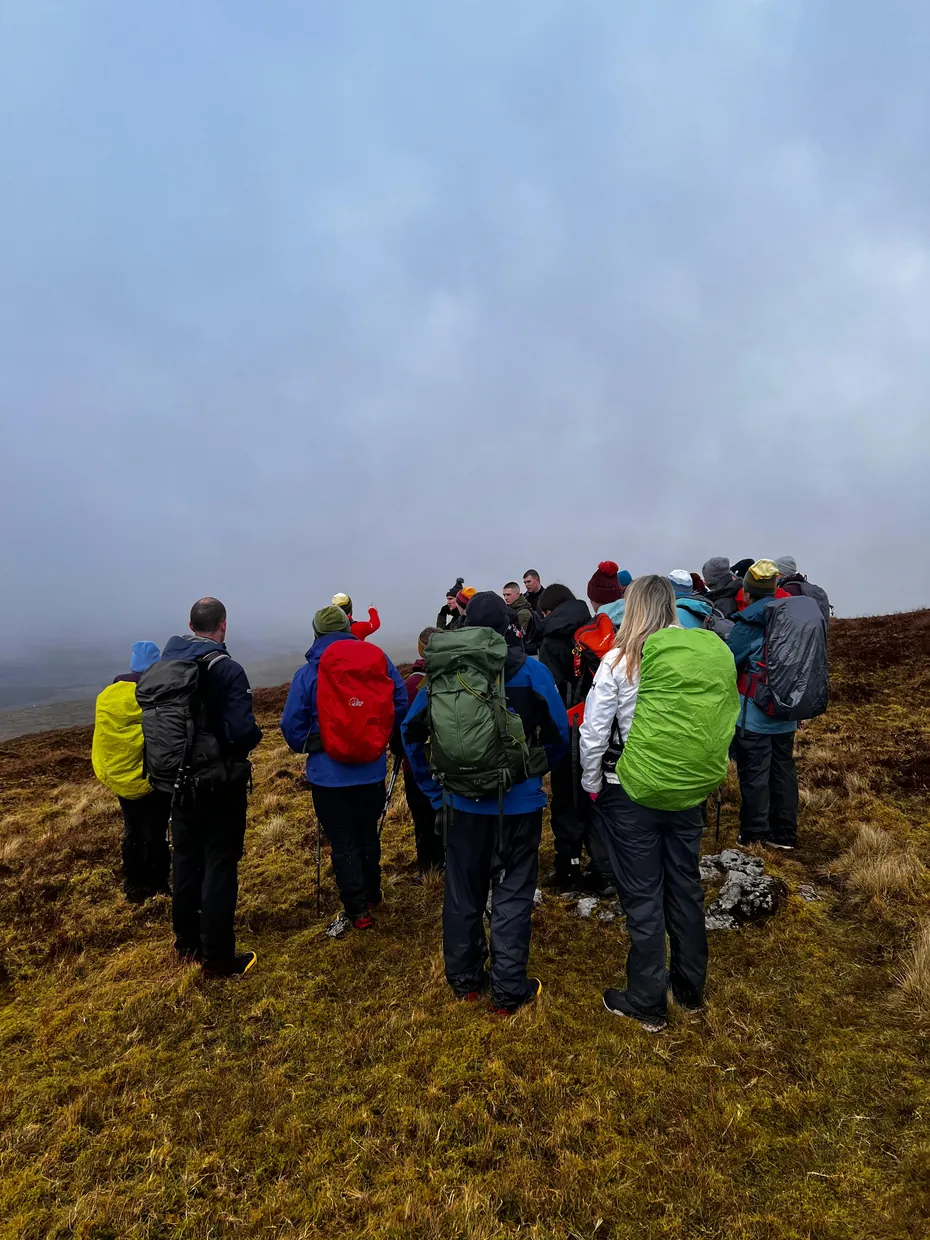
When a group is small, I know every person in it. I know who’s carrying an old knee injury, who runs cold, and who goes quiet instead of saying they’re struggling. I can see when someone’s pace drops on a climb or when they stop eating. Those small signals are often the first warning of a bigger problem, and you can’t read them in a crowd.
Small teams also move better. Fewer people means fewer stops, faster layer changes when the weather turns, and a group that settles into a shared rhythm. By the second or third summit, people start looking out for each other without being asked. Someone hands over a spare glove. Someone waits at a stile. That’s the moment a group becomes a team.
Our guidelines are simple. Stay with your allocated group. Don’t push ahead or drop behind without speaking to your guide. Be patient with different abilities. Speak up early if you’re struggling. None of that works in a big, stretched out group. All of it works in a small one.
Cutoffs: The Rule That Gets Everyone Home
How cutoffs work on our winter routes
Our longest routes run strict cutoff times. The Advanced Mourne Wall route starts at 1am from Donard Carpark, and its cutoff sits at Silent Valley, the 20 km mark, currently set at 10am. On the Intermediate route, the cutoff is at Hare’s Gap, the 12.5 km mark, at 12.30pm. On the Advanced Dingle route, it’s 10am at Conor Pass.
We confirm the final times the day before, because they depend on the weather and the ground. A cutoff on a calm, clear day can be more generous than one with a front arriving by mid-afternoon.
Why a cutoff isn’t a target
This is the part people misunderstand most. A cutoff isn’t a time to aim for. If you’re arriving close to it, you’re already behind the pace the route needs. You should reach every cutoff well ahead of time.
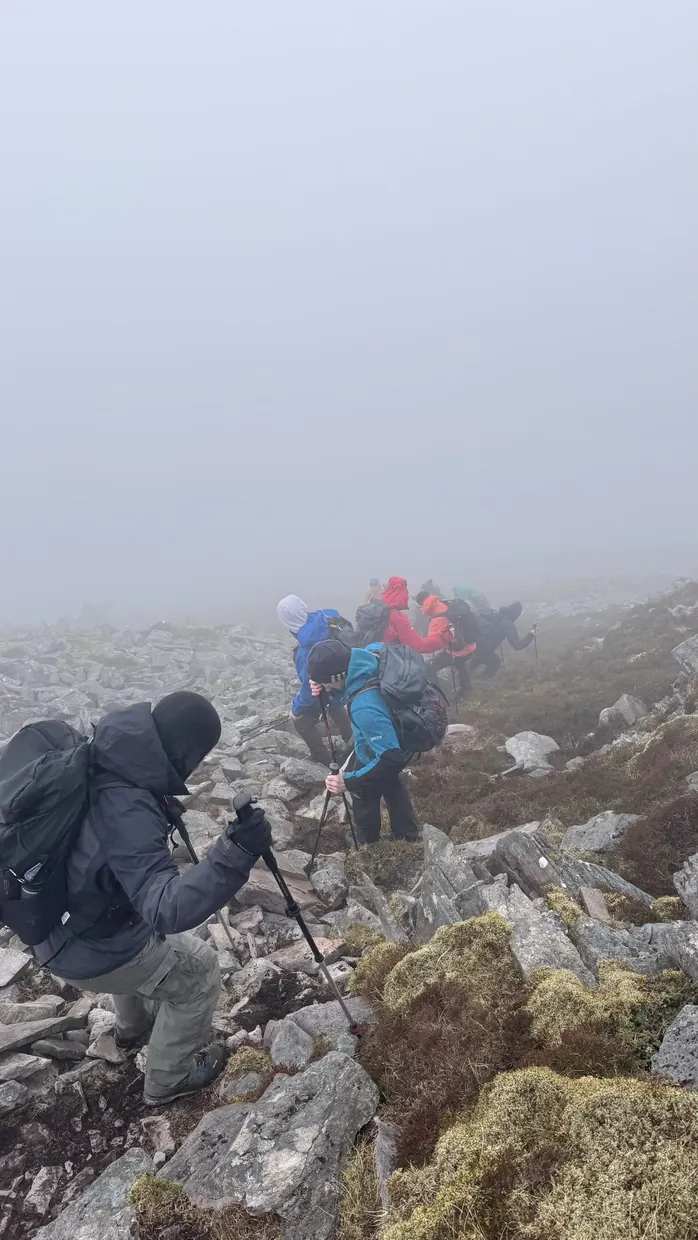
If you arrive after it, your day ends there. That isn’t a punishment. It’s arithmetic. Behind a late group lie hours of exposed ground, falling temperatures and fading light. Pushing on puts you, your guide, and the rest of the team at risk, and it can bring a mountain rescue team out on a winter night.
Why the guide’s call is final
Our guidelines are clear that the guides have the final say, and there’s no debate at a cutoff. I’ve had to tell strong, determined people that their day was over. It’s one of the hardest parts of this work, and it’s always the right call when the clock says so. The people who take it well are usually the ones who come back the next year and finish.
Choosing the Right Grade
Our printed advice gives one tip in capital letters: only select a distance you can finish. Choose wrong in winter, and you put yourself and everyone around you in harm’s way.
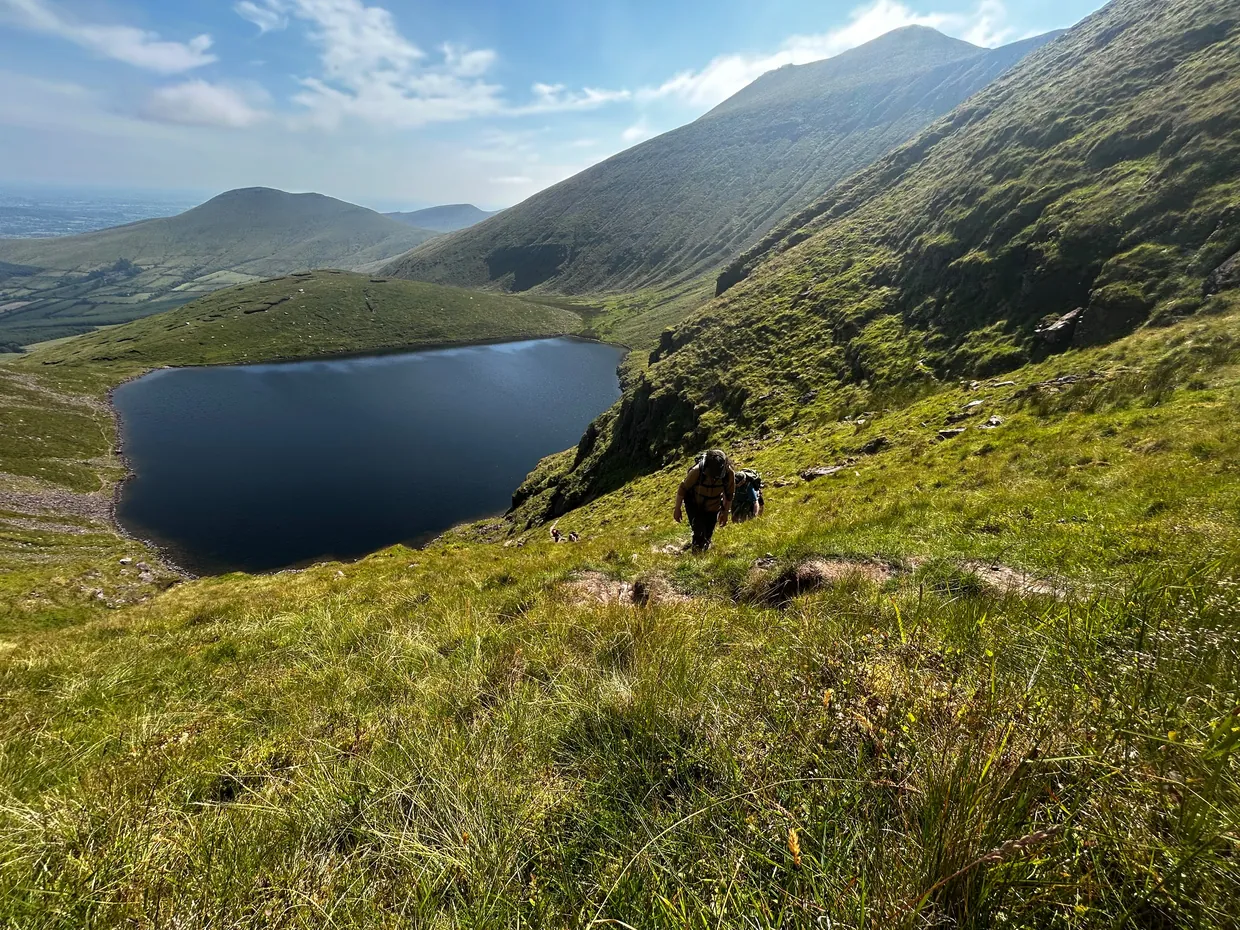
That’s why each event offers three grades. On the Mourne Wall, the Standard route covers 16 km with 1,375 m of total ascent over about eight hours. The Advanced route covers the full 35 km with 3,131 m of ascent over about fifteen hours, and it starts by head torch. Between them sits a 20 km Intermediate route.
Be honest with yourself. Think about your last long hill day, how you felt at hour six, and whether you’ve walked in proper wind and rain. If you’re new to winter hills, the Standard route still gives you a full, demanding mountain day. If you’ve put in the hours, the longer grades will test your pacing, your eating, and your patience. There’s no shame in any grade. The only poor choice is the one that doesn’t match where you’re at right now.
On the Hill: What a Guided Winter Day Feels Like
Here’s what you notice when the planning has been done well.
You notice the guide stopping the group just below a ridge to put layers on before the wind hits, not after. You notice the reminder to eat at the top of a climb when you didn’t think you were hungry. You notice the first hour feeling almost too easy, and you understand why at hour nine, when you still have something left.
You also notice what doesn’t happen. Nobody is left alone at the back in the cloud. Nobody should run short of water, because everyone was told to carry 2 liters with hydration salts. Nobody is wearing trail runners on wet granite, because we told you plainly they weren’t allowed.
Somewhere in the second half of the day, people go quiet in a different way. It isn’t fatigue. It’s focused. The noise of the week falls away, and the world shrinks to the next foot placement, the next summit, the person in front of you. That’s hard to describe, and I won’t try too hard. You’ll know it when it arrives.
Respect for the Ground and the People Around It
A guided day isn’t only about getting the group up and down safely. It’s also about how we move through the place.
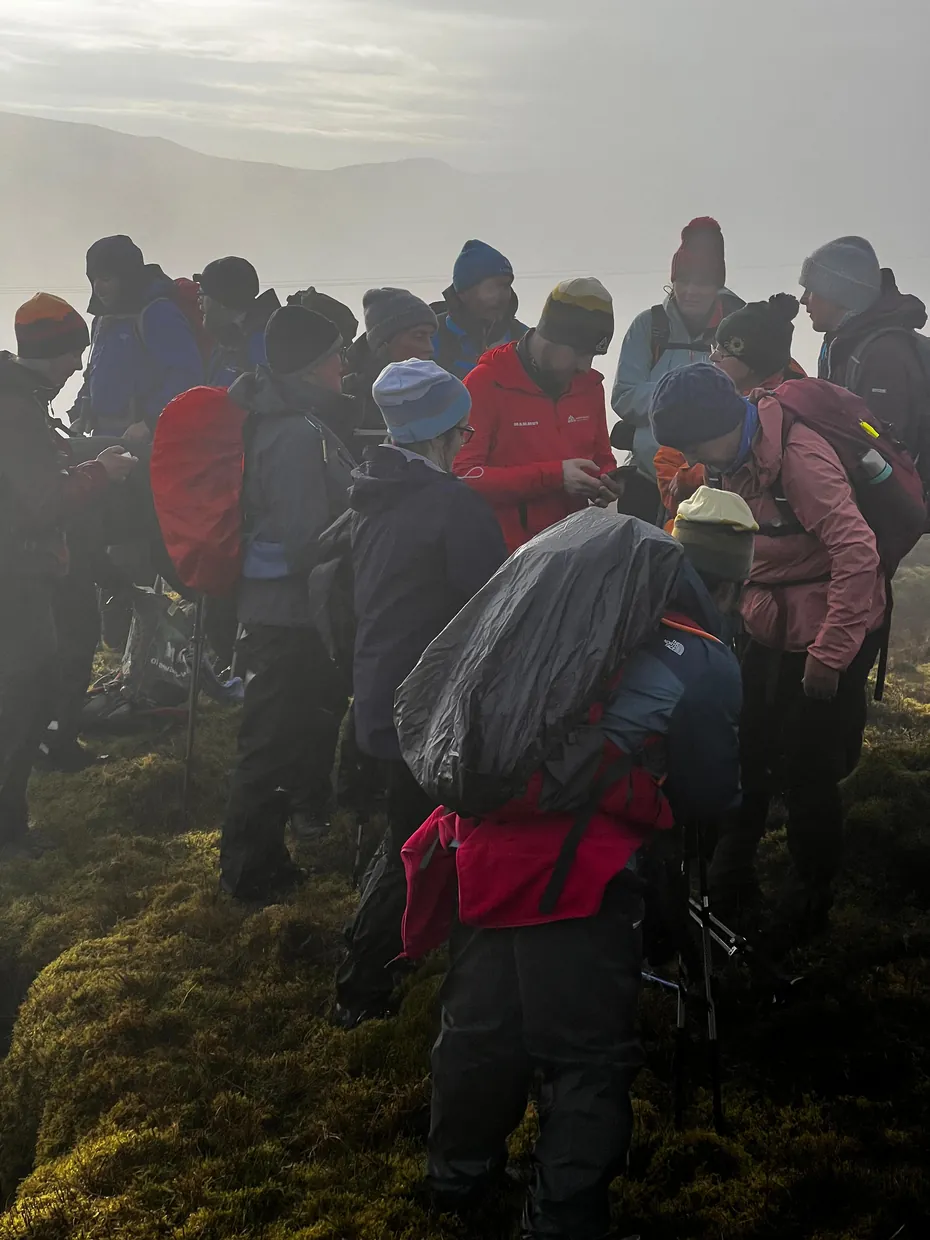
We follow Leave No Trace principles on every route. Plan ahead. Travel on durable ground. Respect farm animals and wildlife. Leave what you find. Carry everything out with you. These hills are working land for farmers and home ground for local communities, and we expect every member of the team to treat them that way.
We also plan every event with the local volunteers in mind: the Mourne Mountain Rescue Team in Co. Down and the Kerry Mountain Rescue Team in Co. Kerry. They turn out in the worst conditions, unpaid. The best thanks we can give them is to run days that never need them. As a Wilderness First Responder, I coordinate first aid on every one of our winter events, but the aim is always prevention over response.
Key Takeaways
- A guide’s real work happens before you arrive: weather, exit routes, timings, and kit.
- Small teams let a guide read every person and act on early warning signs.
- Cutoffs are safety lines, not targets. Arrive well ahead, and accept the call if you don’t.
- Choose the grade you can finish, not the one you want to talk about.
- Respect the land, the farmers, and the volunteers who keep these hills safe.
Winter Gear Checklist
This is the mandatory kit for our Ireland Winter Hiking Series:
- Waterproof jacket and waterproof trousers
- Waterproof hiking boots (no trail runners)
- Hiking socks, plus a spare pair
- Hiking trousers
- Long sleeve base layer
- Fleece, plus a spare fleece
- Light insulated jacket
- Winter gloves, plus a spare pair
- Woollen hat, plus a spare
- Buff
- 40-liter backpack
- Head torch
- 2 litres of water
- Power bank and leads
- Substantial mountain food for the full day
We also recommend sunglasses, suncream, walking poles, hydration tablets, a personal first aid kit, blister care and any medication you need.
Conclusion
The best guided days are often the quiet ones. No drama, no near misses, no stories about how close it came. Just a team that set out in the dark, moved well together, made good decisions, and came down off the hill tired, cold, and quietly proud.
That’s what a guide is for. Not to make the mountain easier, because it won’t be. To make sure you’re ready for it, and to bring everyone home.
If you want to spend a winter day on the Irish hills with a small team, a clear plan and people who take the work seriously, we’d be glad to have you with us.
See it. Believe it. Achieve it.
Jason Black