Altitude Sickness vs Cold Stress: Spot the Dangerous Warning Signs Early
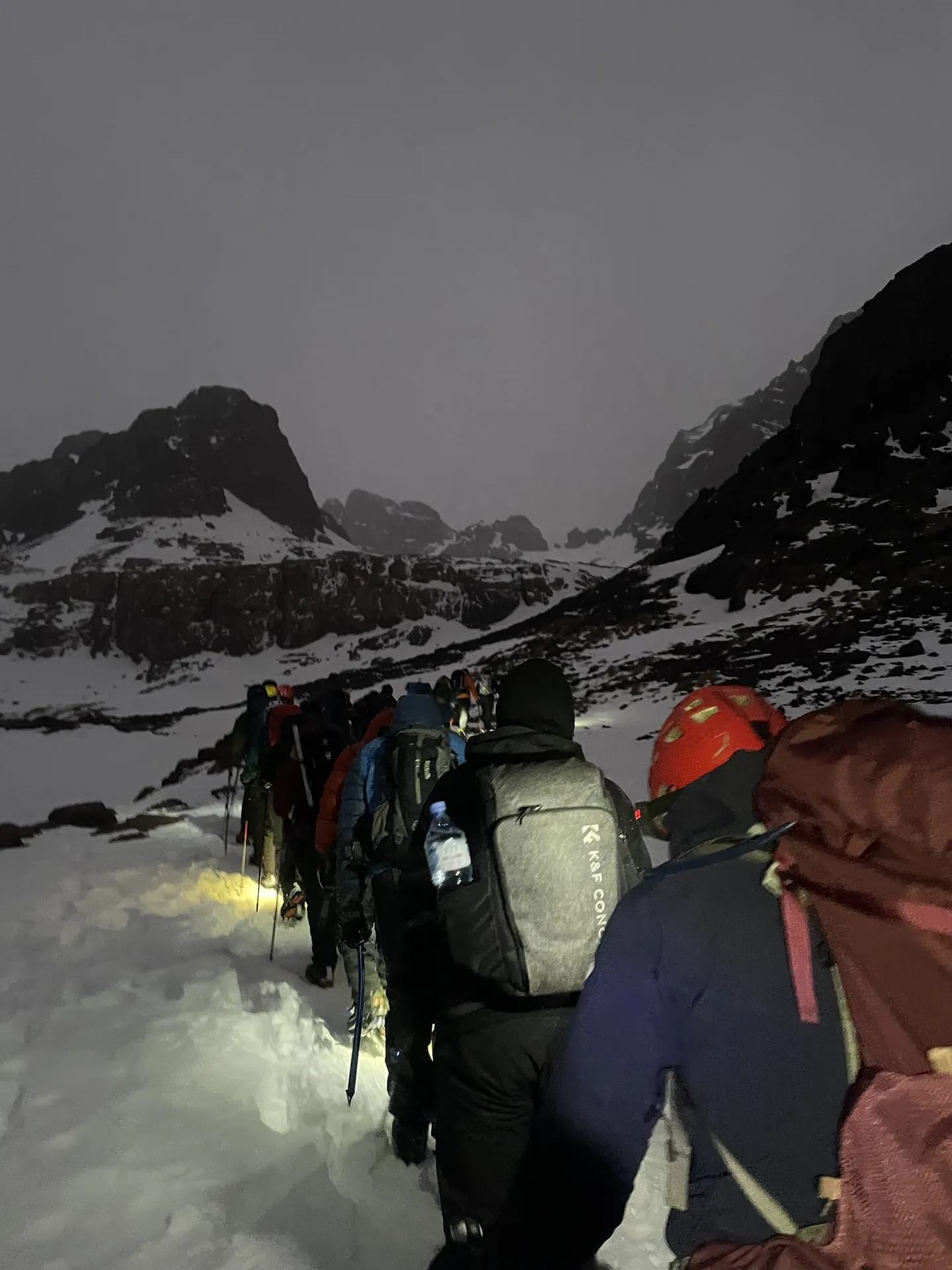
It is a few minutes past three in the morning, and the wind is picking at the corner of your tent as if it has a grudge. Somewhere in the dark above Island Peak Base Camp, at 5,100 meters, a line of headlamps is about to climb. Your head is pounding. Your fingers feel thick and clumsy on the zip of your jacket. You are tired, a little sick, and cold in a way that has settled deep in your core.
Which is it? Altitude, or the cold? And does the honest answer change what you do in the next ten minutes?
It does, every time. I have been guiding and climbing since 2007, from the wet ridges of Donegal to the Himalaya, and I have stood on top of Island Peak more than fifteen times. If there is one skill that matters more than any piece of kit, it is the ability to read your own body and the bodies of the people beside you early, before a small problem becomes a rescue. Acute Mountain Sickness (AMS) and cold stress can look remarkably alike in the first hour. The wrong guess burns time, and on a mountain, time is the one thing you cannot buy back.
This guide gives you the straight answer first, then the detail. Use it whether you are heading to the Himalaya or walking a windy winter ridge at home.
What Is the Difference Between Altitude Sickness and Cold Stress?
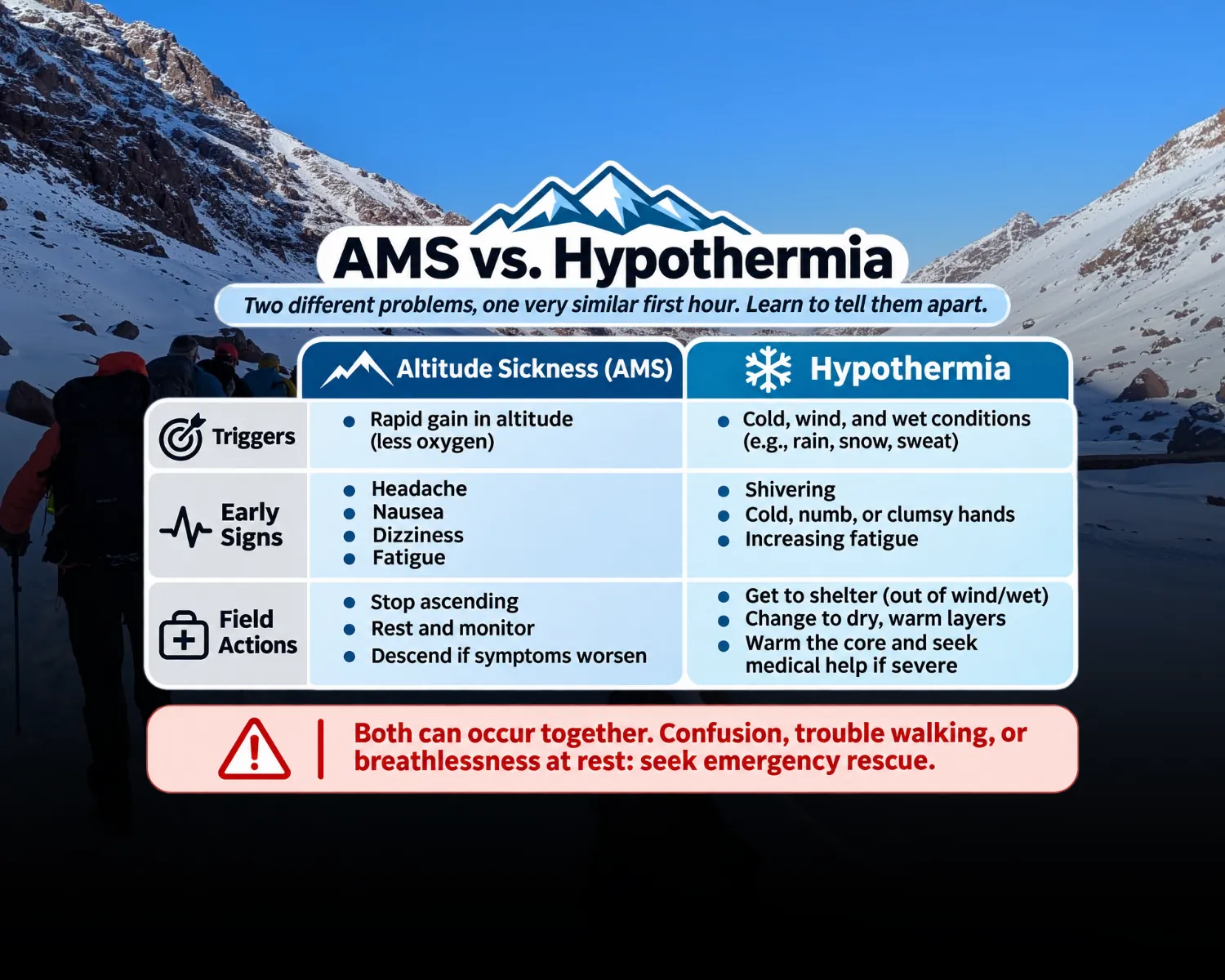
Short answer: Acute Mountain Sickness is caused by reduced oxygen as you gain elevation too quickly. Cold stress and hypothermia are caused by heat loss from wind, wet weather, low temperatures or exhaustion. AMS can appear on a warm day at altitude, and cold stress can strike on a modest hill in the rain. The two can also happen together.
| Acute Mountain Sickness (AMS) | Cold Stress / Hypothermia | |
| Primary Trigger | Lower oxygen after gaining elevation too fast | Heat loss from wind, wet clothing, low temperatures, or exhaustion |
| Typical Terrain and Elevation Context | Usually above 2,500 meters, especially after a quick ascent, on trekking approaches and high camps | Any elevation: Irish and Scottish hills in driving rain, freezing ridges, spindrift, exposed camps |
| Early Warning Signs | Headache with nausea, loss of appetite, fatigue, dizziness, or poor sleep | Shivering you cannot control, fumbling hands, grumpiness or withdrawal, stumbling, cold skin |
| Escalation Red Flags | Loss of coordination, confusion, breathlessness at rest, wet cough, severe headache that will not ease | Shivering that stops, slurred speech, clear confusion, apathy, drowsiness |
| Immediate Field Action | Stop climbing higher, rest, hydrate, and tell your guide; descend if symptoms worsen, and immediately for any red flag. | Stop, get out of the wind, change wet layers, insulate from the ground, eat and drink something warm and sweet, add heat to the torso, and call for help if confused. |
This table is a field aid, not a medical diagnosis. It sits alongside proper first aid training and the advice of your doctor.
Recognizing Altitude Sickness Early: What AMS Feels Like
The early symptoms most climbers ignore
AMS usually announces itself quietly. After gaining height, particularly on the first day or two at a new elevation, you may notice:
- A headache that is persistent, often worse in the evening or first thing in the morning
- Nausea or a sudden loss of appetite
- Unusual fatigue, beyond what the day’s effort explains
- Dizziness or lightheadedness
- Disturbed sleep, with restless nights and strange breathing patterns
A headache plus any one of the others after gaining altitude is enough to treat as AMS until proven otherwise. That is the simple logic behind most field scoring systems, including the Lake Louise score.
Why you never push through
Every season I meet someone who does not want to say anything. They are keeping pace with the group, or they do not want to be the reason the team slows down, or the summit window feels too precious. I understand it. I have felt it myself. But pride is the quietest symptom on the mountain, and it is the one that does the most damage.
Pushing higher with AMS does not make you tougher. It risks turning a manageable problem into a dangerous one. Our approach to every high-altitude expedition, including Island Peak, is built around slow, deliberate acclimatization: rest days in Namche Bazaar and Dingboche, acclimatization hikes, and the old principle of climbing high, sleeping low. The Island Peak itinerary climbs from Kathmandu at 1,400 meters to Dingboche at 4,410 and Chhukung at 4,730 before base camp at 5,100, with time built in on purpose. If you want the full picture of how that works, our Island Peak climbing guide walks through the route and the key stages. For general altitude sickness prevention, the same principles hold on any mountain.
A commonly recommended rule once you are above about 3,000 meters is to keep your sleeping elevation gains modest each night and to add a rest day every so often. Hydrate, eat well, and report how you feel at every briefing.
When it becomes more serious
AMS is a spectrum. Mild AMS often settles with rest, fluids, and time at the same elevation. Moderate to severe symptoms, or symptoms that get worse as you go higher, are a different story.
Watch for these signs that point toward the more serious conditions, High Altitude Cerebral Edema (HACE) and High Altitude Pulmonary Edema (HAPE):
- Loss of coordination, such as being unable to walk a straight line heel to toe
- Confusion, strange behavior, or unusual irritability
- A severe headache that medication does not touch
- Breathlessness at rest, a persistent cough, or a gurgling or wet sound in the chest
- Extreme fatigue, or blue tinged lips
These are red flags. The treatment is descent, and the sooner the better, with oxygen and medical support where available. Do not wait to see if it improves overnight. Our approach to dealing with high altitude sickness is always the same: tell your guide the moment something feels wrong, and let the team respond early.
Recognizing Cold Stress, Windchill, and Hypothermia Early
Wet, windy, and the reality of Irish and UK hills
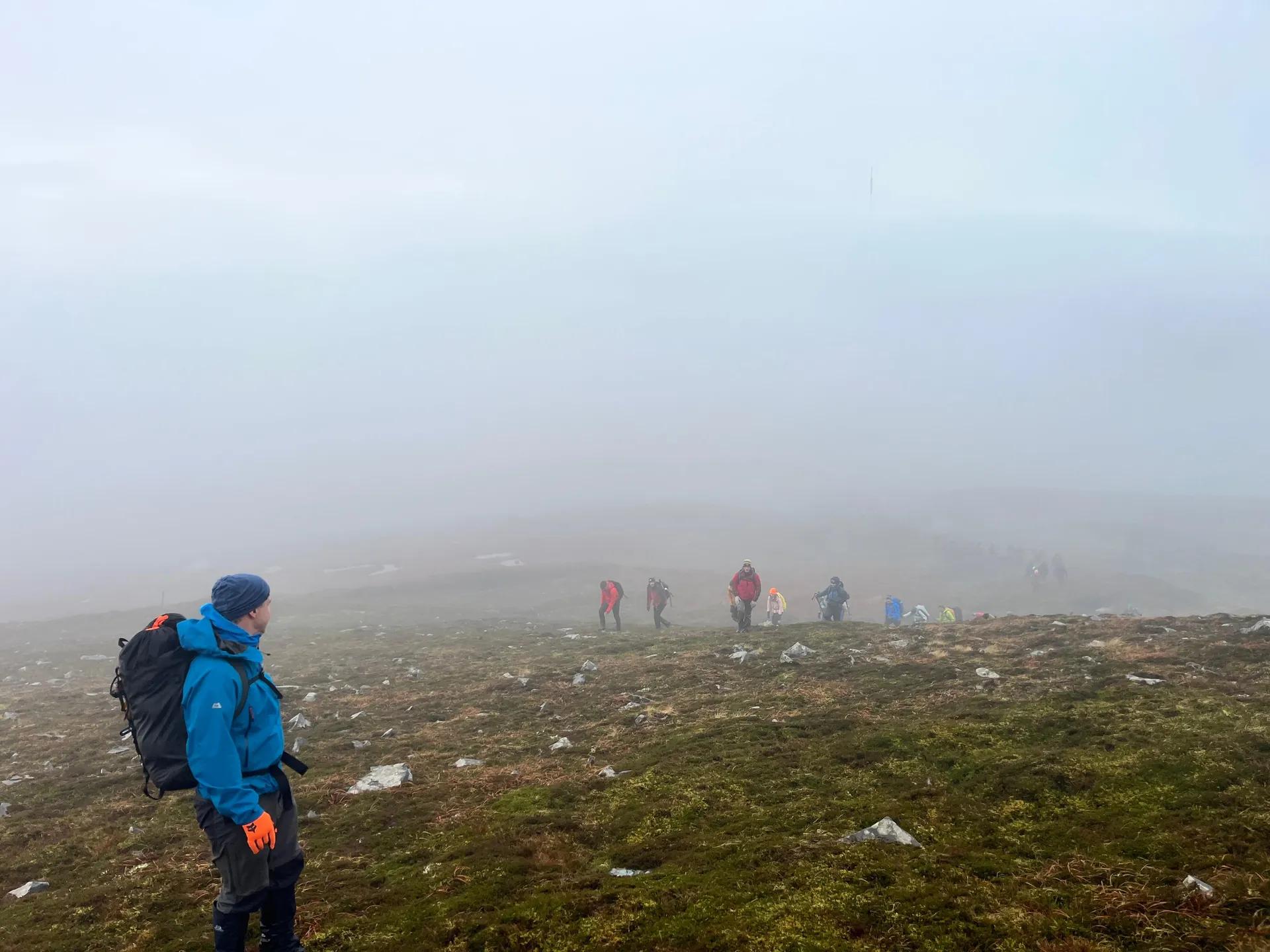
Hypothermia has a reputation as a high mountain problem. It is not. Some of the coldest I have ever felt was on a wet, windy day on a modest Irish ridge, with rain driving sideways off the Atlantic and every layer slowly soaking through. Wind strips warmth from your skin. Wet clothing loses much of its insulation. A low temperature does not need to be extreme if you are wet, tired, and underfed.
The same applies on a freezing Himalayan ridge or a high camp, where spindrift finds every gap in your clothing and the first light is still hours away. If you are walking in winter conditions at home, our notes on recreating in wintry conditions and our guide to guided winter hiking in Ireland are good places to build your habits.
The early cues
Cold stress builds in steps. Early cues include:
- Shivering that you cannot suppress
- Fumbling hands, trouble with zips, buckles, or a phone
- Stumbling, a clumsy gait, or loss of coordination
- A change in mood: quiet, grumpy, or suddenly apathetic
- Slurred or slowed speech
- Pale, cold skin, especially the hands, feet, and face
Mountaineers sometimes call the early signs the “umbles”: stumbles, mumbles, fumbles, and grumbles. They are easy to dismiss because they look like ordinary tiredness. If someone on your team starts doing several of these at once, stop and take it seriously.
One important warning: if a person has been shivering hard and then stops, but they are still cold and getting drowsy, that is not recovery. That is the body running out of options, and it is an emergency.
How cold, wet layers and fatigue compound.
Cold, wet and tired is a bad trio. As fatigue builds, your body makes less heat. As layers get damp, they lose their insulating power. As the wind rises, heat loss speeds up. At altitude, add the effects of low oxygen on judgment and appetite, and you have a situation where it becomes harder to notice you are in trouble.
This is why managing layers early matters. Add insulation before you are cold. Keep a dry set of gloves and a warm hat in reserve. Eat and drink little and often, and choose a sleeping bag with a rating that suits the conditions.
Side by Side Field Scenarios: When Symptoms Overlap
Real mountain days are messy. Here are four situations to think through. They are illustrative scenarios, not a diagnosis.
Scenario 1: The slow climber with a headache at a high camp
A teammate falls behind on the way up from Chhukung. They have a headache, feel a bit sick, and are quiet. It is cold and windy, and they have not eaten much.
Is it AMS, or is it cold, dehydration, and low blood sugar? The honest answer is: it could be either, or both. Warm them up, get food and a hot drink in, change any damp layers, and reassess in twenty to thirty minutes. If the headache and nausea fade and they perk up, cold and fuel were likely the main issues. If the headache stays or they remain nauseous or unsteady after you have sorted warmth and food, treat it as altitude and tell your guide. Do not go higher.
Scenario 2: Sluggish, stumbling, and silent on a wet ridge
You are on a winter Irish hill. It has rained for hours. Your friend has gone quiet, is stumbling a little, and is fumbling with the map case. There is no altitude issue at this elevation.
This is cold stress until proven otherwise. Stop, shelter from the wind, swap wet layers, insulate from the ground, add food and a warm drink, and get them moving only when they are warming. If speech gets slurred or they become confused, this is a hypothermia emergency: call for help, and keep insulating them.
Scenario 3: Cold and altitude together
A climber at high camp is shivering, has a throbbing headache, and struggles to coordinate their gloves. Cold stress is clearly present. But altitude may be adding to the picture.
Treat the cold first, because it is the fastest to fix. Then check the altitude signs. Are they steady on their feet after they warm up? Is their thinking clear? If coordination or clarity does not return as they warm, treat it as a serious altitude problem and begin to descend with a guide’s support.
Scenario 4: The confident one who says they are fine
Someone keeps pace, speaks in short sentences, and insists they are fine. But they have stopped eating, fumbled a carabiner twice, and answered a simple question slowly.
This is where small team accountability matters. Ask them a few simple questions. Ask them to walk a straight line. Have a second teammate agree on what you are seeing. When in doubt, assume the worst and act early.
A simple sorting routine
When you cannot tell, use this order of operations:
- Stop and get out of the wind.
- Warm: fix wet layers, add insulation, and get warm fluids in.
- Feed: sugar and food within reach.
- Hydrate.
- Reassess after a short window, around twenty to thirty minutes.
If cold stress was the main cause, most people would noticeably improve. If a headache, nausea, imbalance, or confusion remains, assume altitude, stop going up, and involve your guide. If you see any red flag for HACE, HAPE, or severe hypothermia, skip the waiting and act.
Small Team Decision Making: Knowing When to Turn Around
On our expeditions, a high-altitude medic, satellite communications, and a strong ratio of Sherpa guides to climbers are part of the safety system. On Island Peak we run a two-to-one ratio. But the best systems still depend on honest people. Our guides make the final calls on weather, pace, route, and turnaround times, because team safety comes before any single summit. Distress must be reported straight away. That is not a rule to limit you. It is a promise we make to each other.
Small teams are powerful when they behave like a team. Agree on how you will check in. Look at each other’s faces, hands, and speech at every break. Share what you notice, kindly and plainly. Check weather updates, and keep gear and layers ready before you need them, not after.
This is the core of how I think about mountaineering. Turning around when health or conditions say so is never failure. It is the mark of someone who understands the mountain. The mountain does not owe you a summit, and no summit is worth a life.
Key Takeaways
- AMS is caused by low oxygen after gaining height. Cold stress is caused by heat loss. They can happen together.
- A headache plus nausea, fatigue, dizziness, or poor sleep after gaining altitude should be treated as AMS.
- Uncontrollable shivering, fumbling hands, stumbling, and mood changes are early cold stress signs.
- If you are not sure, stop, warm, feed, hydrate, and then reassess. Symptoms that remain after you fix the cold point to altitude.
- Never go higher with AMS symptoms. Descend for worsening symptoms and immediately for any red flag.
- Shivering that stops while a person is still cold and drowsy is an emergency.
- Layers, food, and fluids are your first line of defense against both problems.
- Honest communication with your guide and teammates is a safety tool.
- Turning around is sound judgment, never failure.
Practical Next Steps and Expedition Preparation
If this guide has made you think about your own preparation, a few next steps are worth considering.
For cold and wet weather skills, our Scottish Expedition Winter Skills course and the Ireland Winter Hiking Series give you real practice in the conditions that matter. The Mountain Skills courses are another sound foundation for navigation and decision-making.
For fitness and physical readiness, the Mountaineering Training Guide is a good place to start. Make sure your first aid kit is ready by reading about essential first aid gear and the health concerns every hiker and climber should know.
Conclusion: Listening Early Is the Skill
The mountains are patient. They will wait for you to get fitter, to acclimatize, to learn your layers, and to read the sky. What they will not forgive is a climber who ignores what their body is saying.
Altitude sickness and cold stress are not signs of weakness. They are the mountain’s way of speaking, and they speak quietly at first. The climbers I admire most are not the ones who never feel them. They are the ones who notice early, speak honestly, and make the call to stop or turn around without shame.
That is what it means to rise with the mountain. You do not rise by pushing against it. You rise by listening, walking alongside the people you trust, and getting everyone home to climb again.